Use this resourceModels
- Purpose
- Starting with the original map, six diagrams develop reinvestment, liquidity and exit, consumption and fulfillment, ledgers and budgets, and participant value. A final integrated map connects the entities, contracts, cash, rights and feedback.
- Conditions for use
- Check that the subject, objective and constraints fit the task. Confirm any conditions that the article does not specify.
- Models
- Elements, relationships and assumptions
- Evidence and validation limits
- This article presents a framework for studying and designing a mechanism. Ratios, valuations, time horizons and exit arrangements in the diagrams require verification against the relevant entities, contracts and operating evidence. No separate external-validation result is recorded for this article. Publication does not establish effectiveness; check the evidence, assumptions and limits in the text.
- Version
- V2.0 · Revised 2026-11-07
- Original diagrams and files
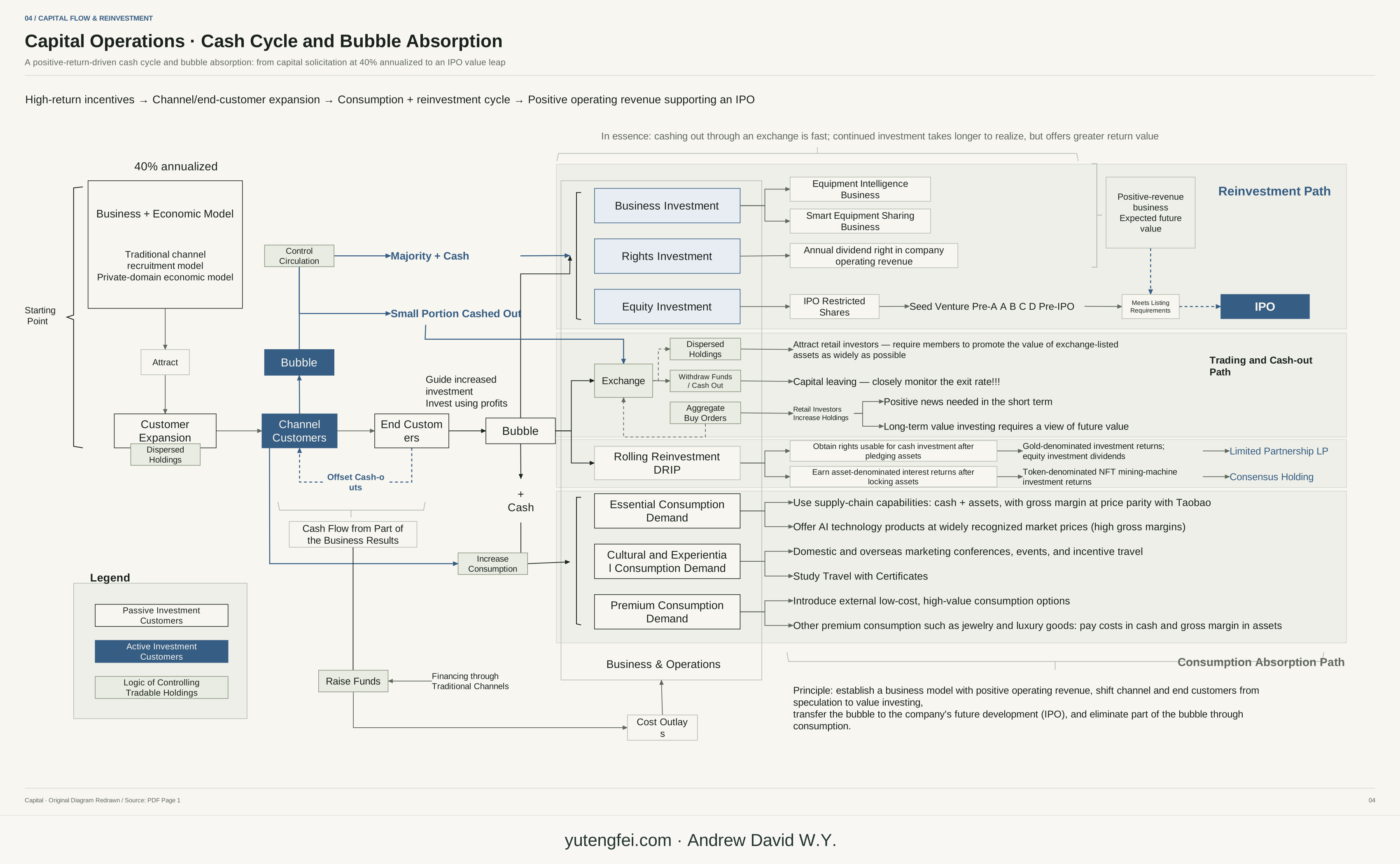
- Figure 1: The original capital mechanism map: the initial overall structure
- Download the original editable diagram (English)
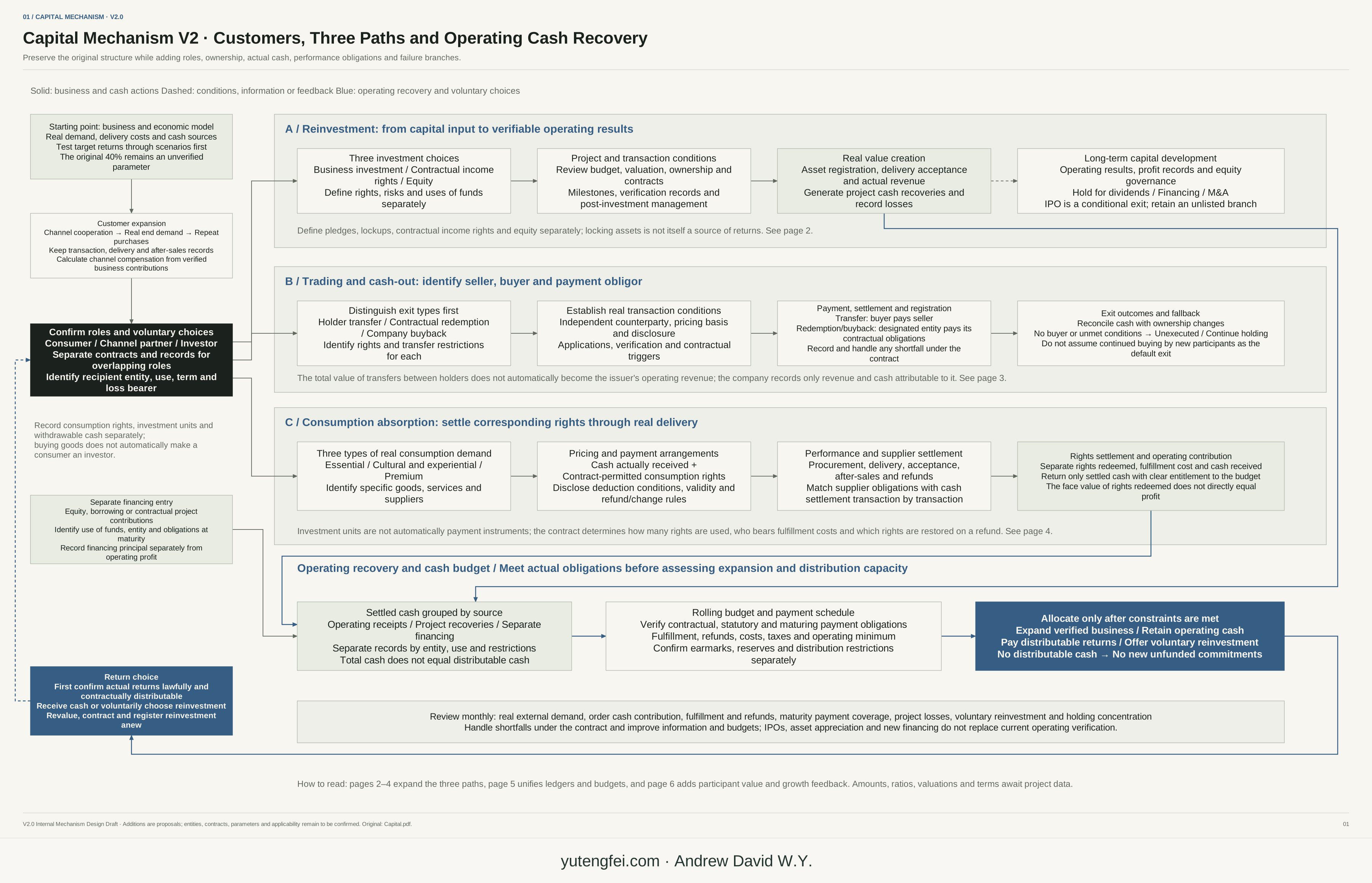
- Figure 2: Overview: entry, three pathways and operating cash return
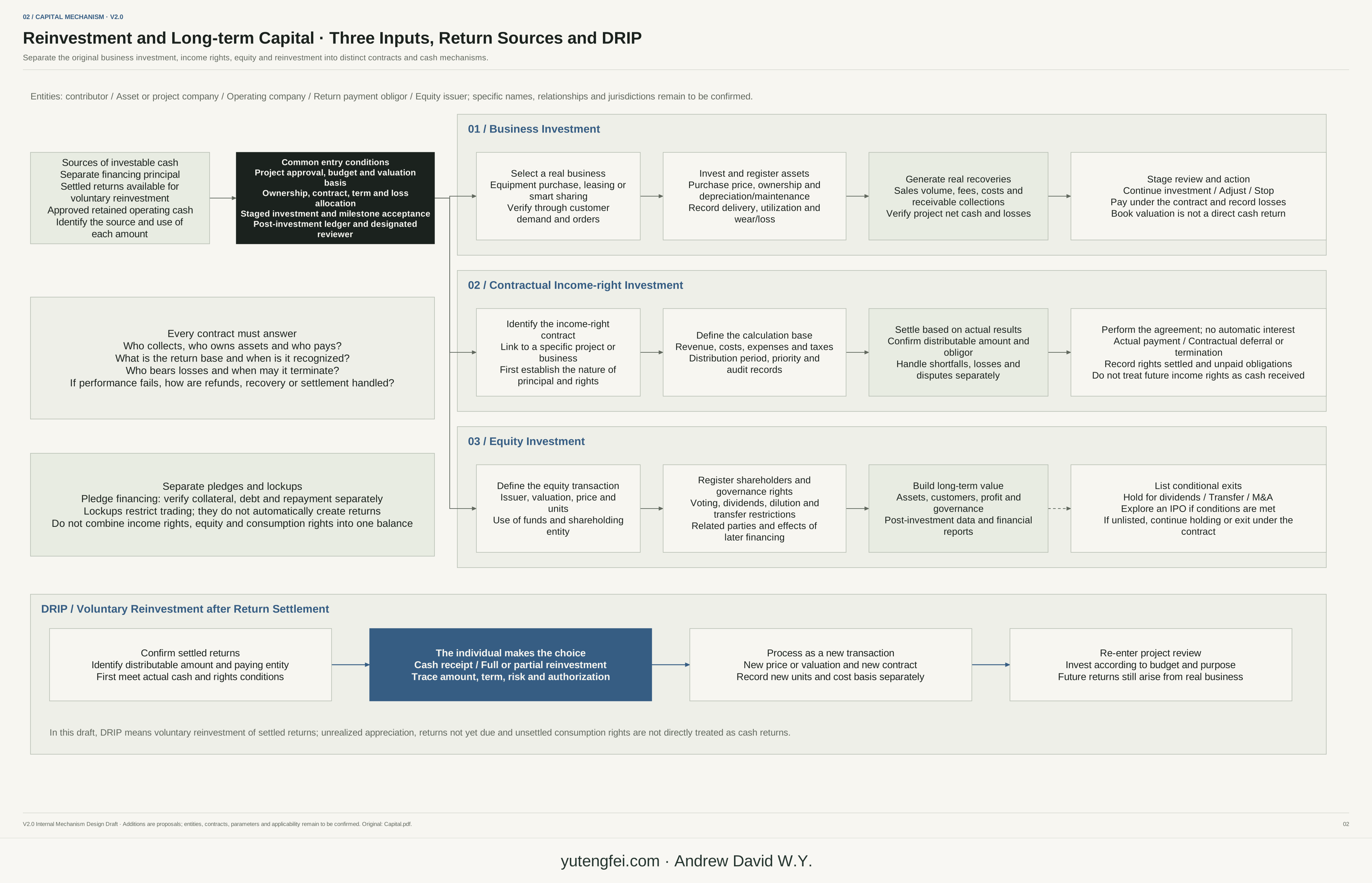
- Figure 3: Reinvestment and long-term capital: from investment to actual returns
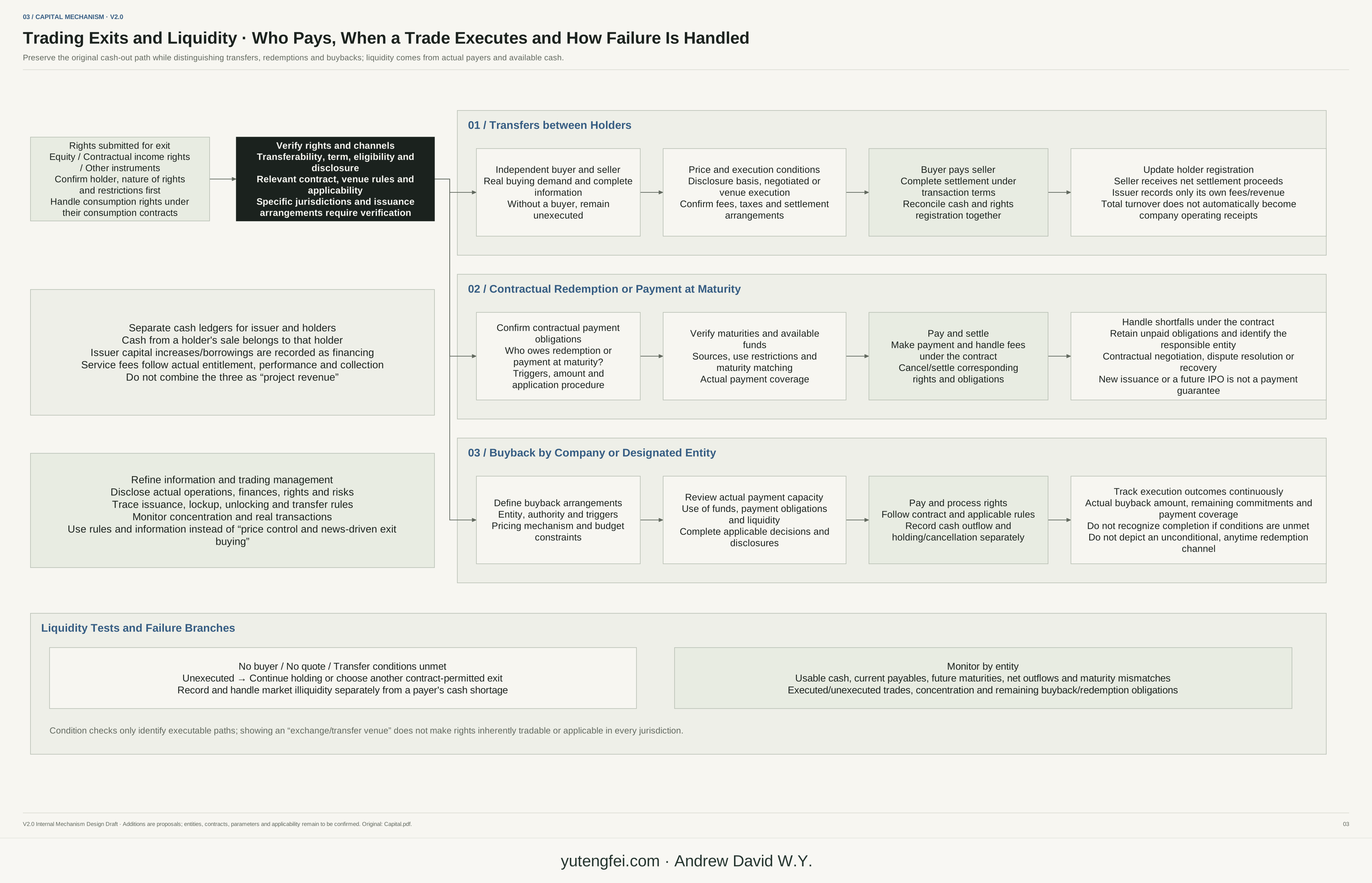
- Figure 4: Liquidity and exit: transactions, payments and changes in rights
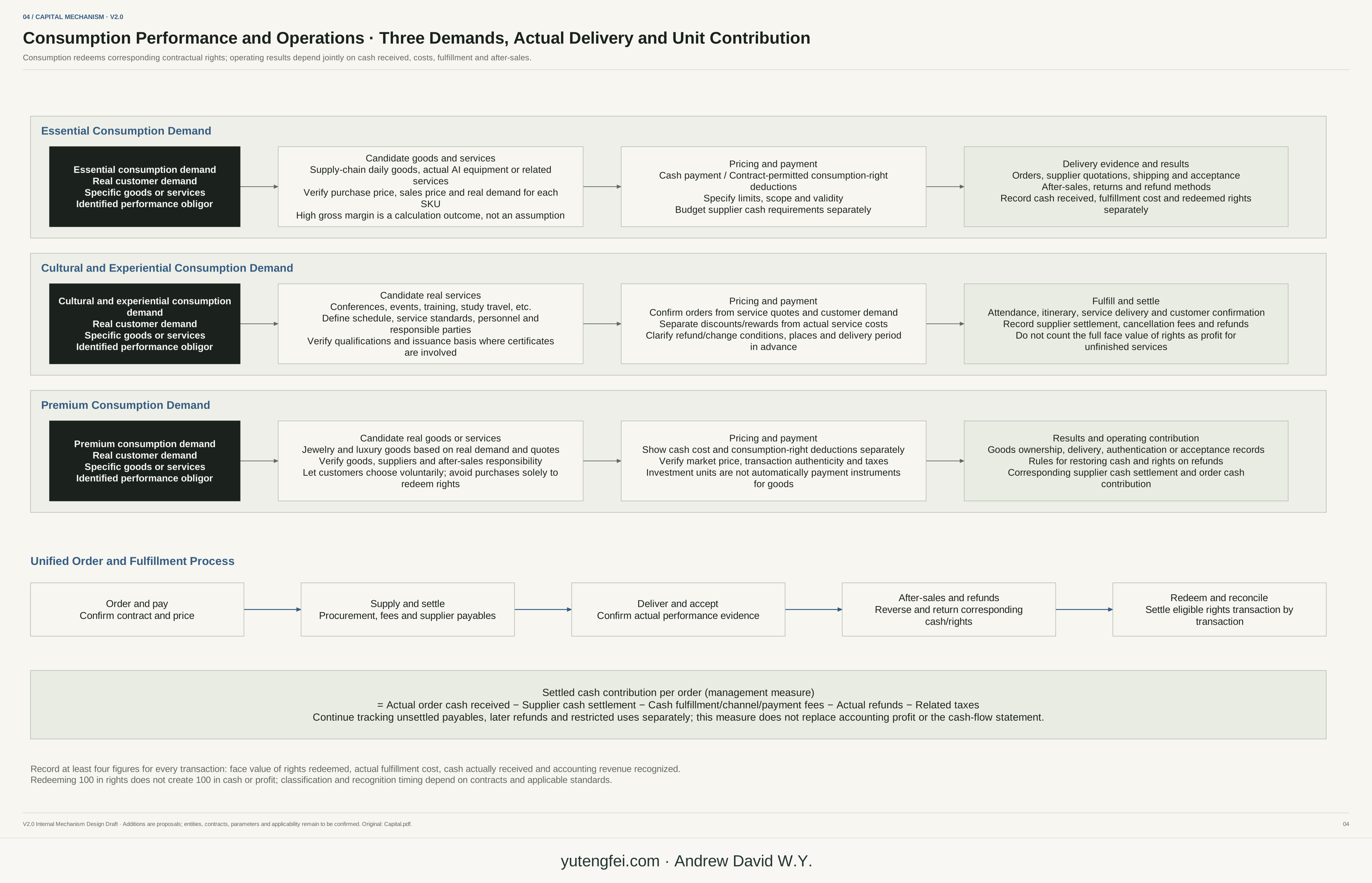
- Figure 5: Consumption and fulfillment: real demand, delivery and settlement
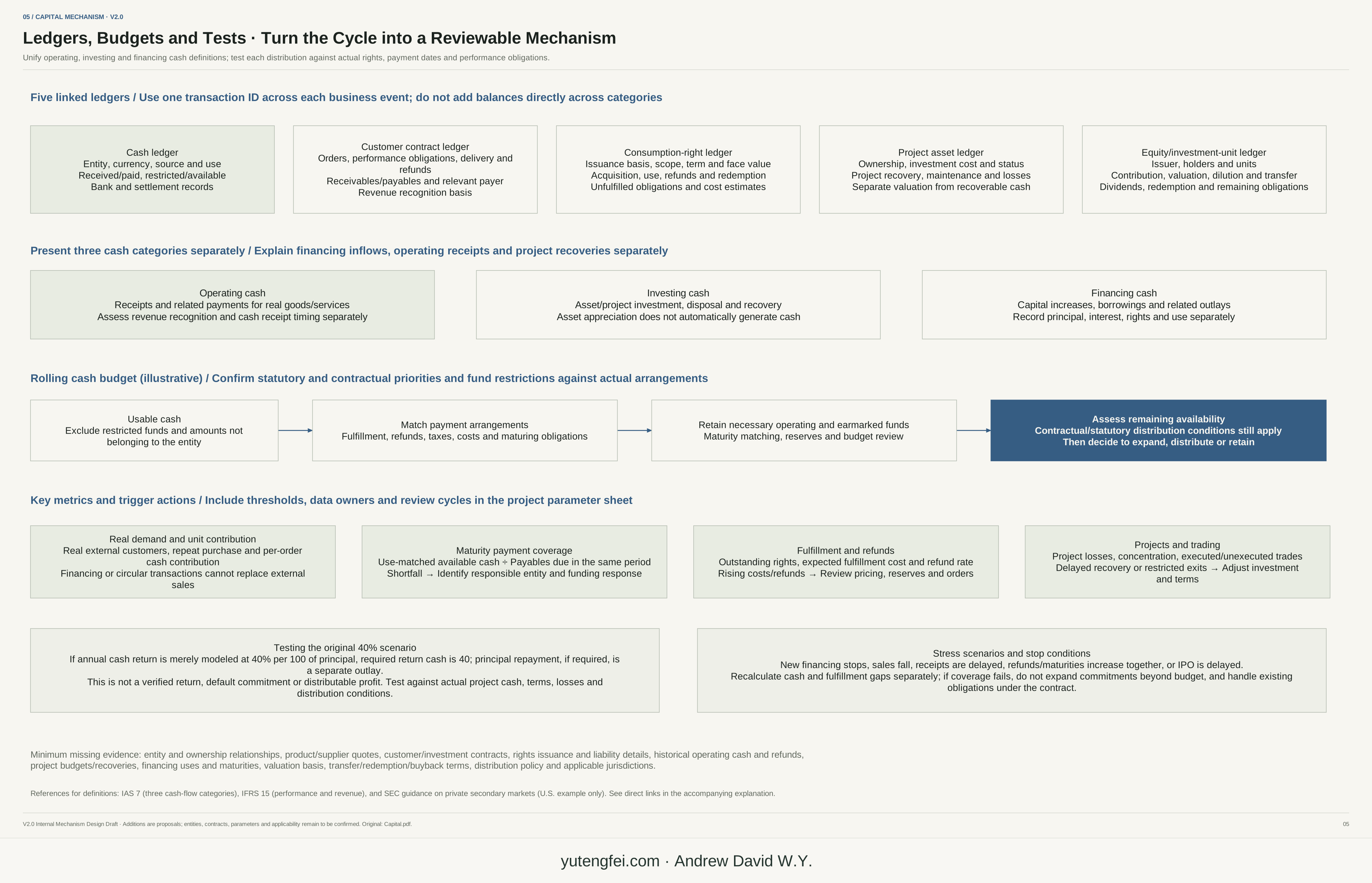
- Figure 6: Ledgers, budgets and review: connect every business event to cash planning
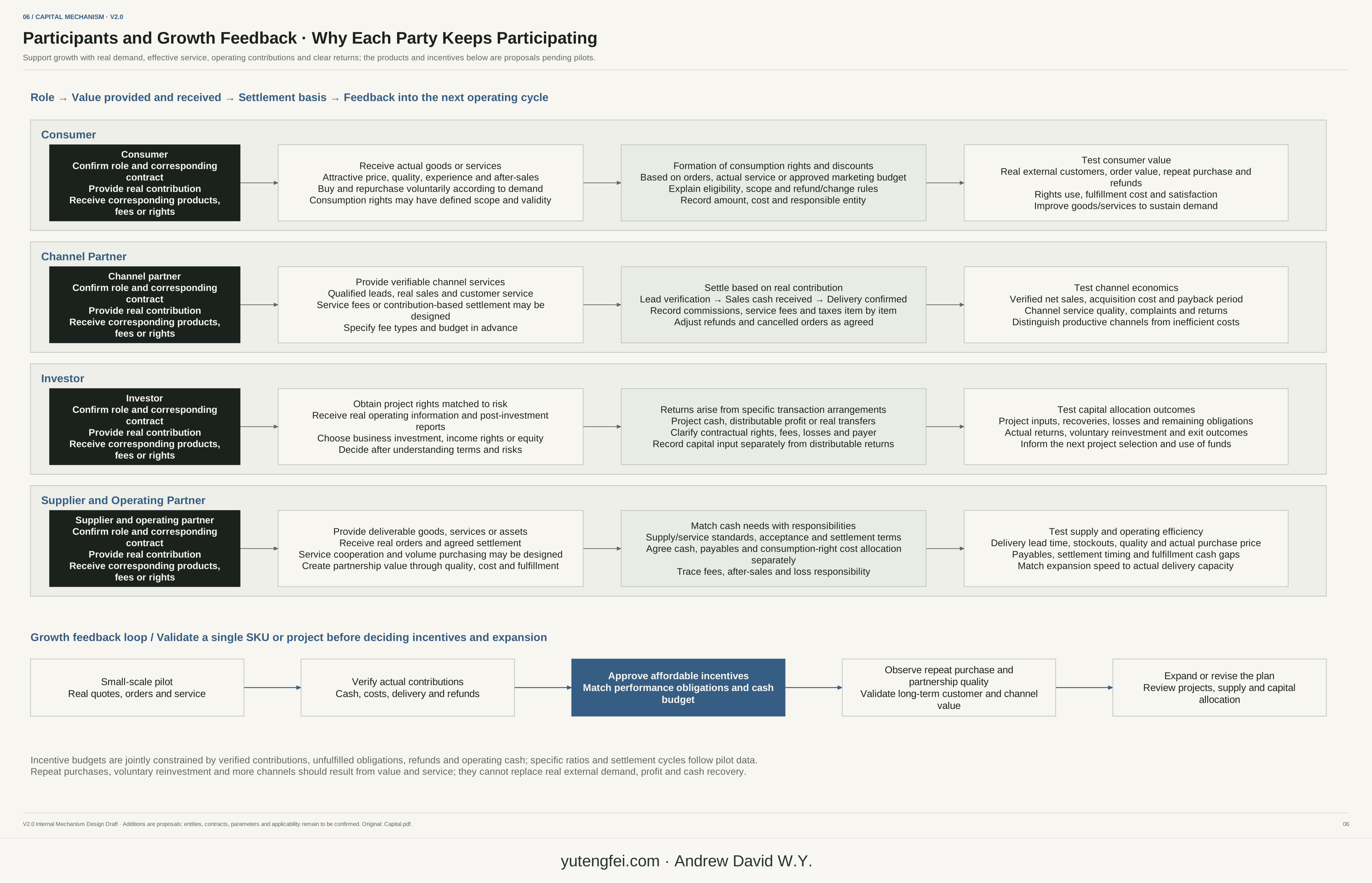
- Figure 7: Participant value and growth feedback: from value to continued cooperation
- Download the six editable diagrams (English, six pages)
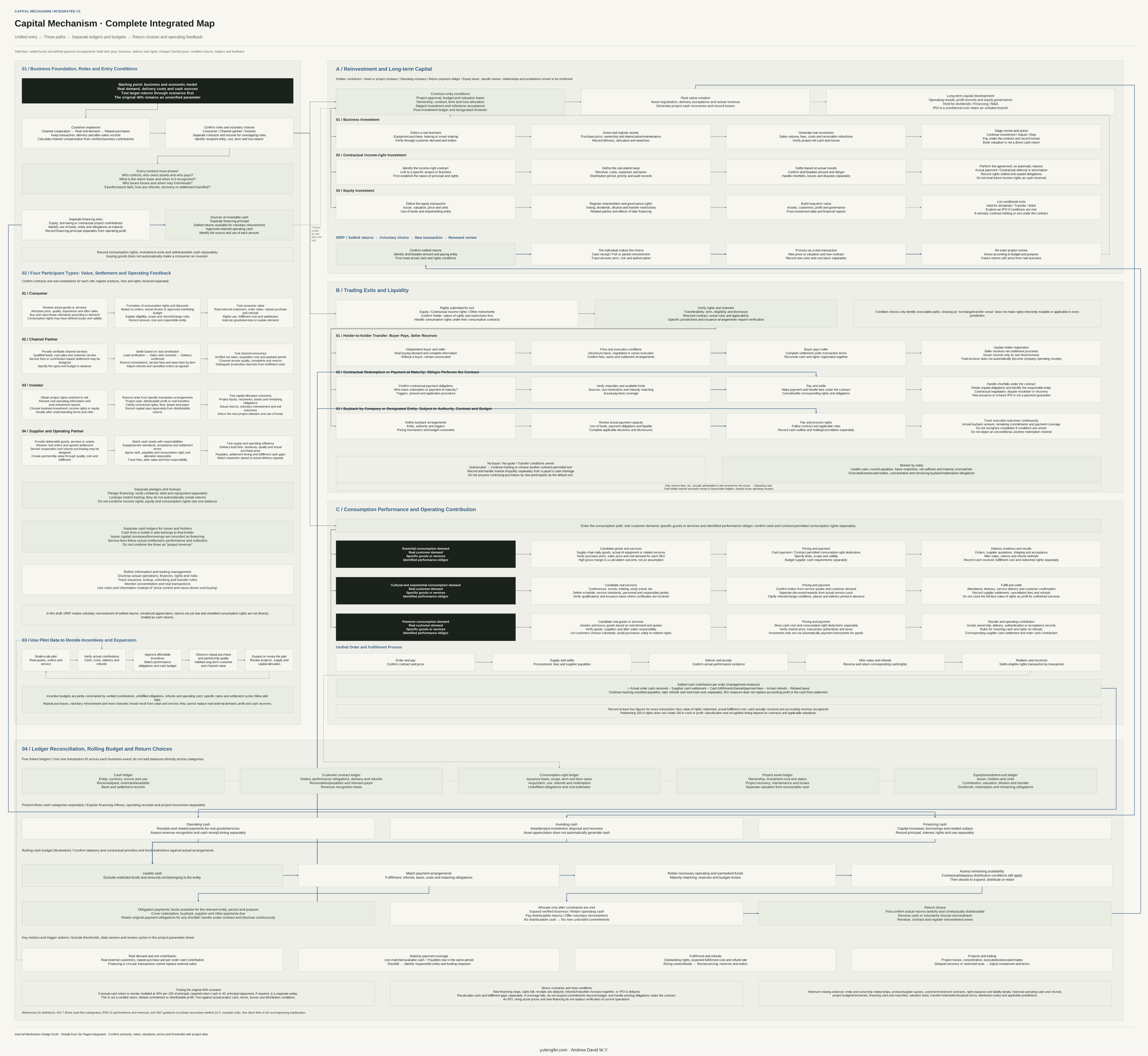
- Figure 8: Complete mechanism map: bring all six parts together
- Download the complete editable mechanism map (English, one page)
This is a readable, citable knowledge resource, not an installed Skill. When using it with AI, retain its sources and limits and review the output.
CC BY-NC-ND 4.0 · Applies to original text unless otherwise stated; excludes third-party materials. Downloading or machine reading does not extend the existing license or separately authorize derivatives, commercial use or model training.
When studying a capital model, I usually start by drawing it.
Where does money enter? What does it become? Why would participants choose to stay? How do operating results support the next round? Once these relationships appear on the same map, ideas that previously seemed sound on their own must begin to explain one another.
A map helps us see the whole. The next task is to explain every arrow: who acts, what moves, which conditions apply, what record is created, and what happens if the expected result does not occur.
In this study, I retain the original structural logic. I begin with the original map, develop it through six diagrams, then bring those parts back into one complete mechanism map. The aim is to connect capital entry, business operations, rights, participant value and long-term development in a structure that can be checked over time.
1. Put the overall relationships on one map
The first map brings customer development, incoming funds and three subsequent pathways together: further investment in businesses or assets, exit through transactions, and the fulfillment of corresponding needs through real consumption. Operations also connect with costs, financing and later investment.
This structure offers a useful starting point: capital, operations and consumption can be studied within a single process.
Reading from left to right shows how participants enter. Reading back from the right asks whether the different pathways can produce actual results. Following the lower part of the map asks whether those results can support costs, fulfillment and the next round of arrangements.
I am interested in whether these connections hold. Attracting customers still needs to lead to real demand. An investment needs an explanation of how value will be created. An exit needs a counterparty or a paying entity. Reinvestment needs resources that have actually become available.
Ratios such as the 40% in the original map are initially treated as scenario parameters. Once a ratio is set, work backward: how much actual cash must each investment recover, over what period, with what costs and losses, and under which payment and distribution conditions? Where principal must be repaid, that repayment also needs a separate schedule.
The overall structure connects the questions. The detailed mechanism supplies answers that can be carried out and checked.

Download the original editable diagram (English)
2. Start with the overview: distinguish entry and the three pathways
The second diagram is an overview of the six parts that follow.
It starts with real demand, fulfillment costs and cash sources. Channels connect with customers. Customers test products by buying and using them. Investors provide resources on defined terms. One person may hold several roles, with separate contracts, responsibilities and rights for each.
Before entering any of the three pathways, two things therefore need to happen: confirm the role and explain the transaction.
Buying a product creates the relevant consumption relationship. Investing in a project creates a specific investment relationship. A holder seeking an exit enters the corresponding transaction or contractual process. Each choice returns to its own basis; different balances should not be combined into one universal account.
Pathway A examines how invested money passes through real business activity to generate recoveries and long-term value. Pathway B examines transfers, redemptions and buybacks under defined conditions. Pathway C examines the delivery of goods and services and the settlement of corresponding consumption rights.
The pathways can interact during operations, but each interaction needs an explanation. A company may sell products and invest in projects, for example. Product receipts, project recoveries and financing proceeds still need separate records of their sources and uses.
The bottom of the map then connects those records to the budget: first establish what has actually been received, which obligations exist and what must be retained; then judge how much can be allocated next.
Entry establishes roles and conditions. The pathways define specific actions. The budget connects results with the next decision.

3. Trace reinvestment to real value creation
Before making a further investment, establish who receives it, what it will fund, and what rights the investor obtains.
Business investment may begin with equipment, supply capacity, leasing or a specific service capability. It raises questions about procurement, ownership, delivery, utilization, maintenance and collection. Acquiring an asset is followed by observing whether it is used effectively, whether customers will pay, and whether cash is actually recovered.
Contractual revenue or return rights require a clear calculation basis. Which business do they relate to? How are revenue, costs, expenses and taxes determined? What are the settlement periods and priorities? Who is obliged to pay, and how are losses and disputes handled? These terms determine what the contract means in practice.
Equity investment extends the view to the company's long-term accumulation. As assets, customers, profits and governance develop, investors participate in dividends or other arrangements according to their holdings and applicable conditions. Later financing may alter their stakes, while transfers and exits have their own conditions. These need to be considered together.
The three arrangements can be compared within one investment framework, while their rights remain separately defined. Pledging involves security, debt and repayment terms. A lockup restricts transfer. Neither generates business returns by itself.
After returns have been settled, DRIP can be considered: voluntarily reinvesting settled returns that meet the relevant conditions. The individual may receive cash or reinvest all or part of the amount. Reinvestment is a new transaction, with a new price or valuation, contract, units and cost basis, followed by a new project review.
Long-term capital arrangements may include continued holding, dividends, real transfers, mergers and acquisitions, and an IPO when the necessary conditions are met. If the company remains unlisted, operations, disclosure and existing contracts still continue.
Returns from one round create a new choice. Investment in the next round still requires a fresh judgment.

4. Explain the transaction and payment relationships behind an exit
When discussing liquidity, I first ask who ultimately pays whom.
A holder-to-holder transfer is a real transaction between a buyer and a seller. They check the rights, information, price and transaction conditions. The buyer pays the seller, and the holder register changes accordingly. The seller's settlement proceeds belong to the seller. The issuing entity records only fees or income attributable to itself.
Without an independent buyer, the transfer may remain unexecuted. Whether the holder continues holding or uses another contractually permitted route requires a separate judgment. A trading channel also needs genuine demand, complete information and executable settlement conditions.
Contractual redemption or payment at maturity requires identifying the entity obliged to pay. The trigger, calculation, application procedure and source of payment are checked against both the contract and actual payment capacity. Once payment occurs, the corresponding rights and obligations can be settled.
A buyback by a company or another agreed entity additionally involves its authority, pricing mechanism, procedures and budget. A proposed buyback and a paid buyback are different states. Execution to date and remaining commitments need ongoing records.
All three routes may produce cash for a holder, but the underlying relationships differ. The first principally depends on a transaction between buyer and seller. The other two also require checking a specific entity's payment obligations and resources.
If funds are insufficient, existing obligations remain recorded. The responsible entity, shortfall and subsequent contractual handling cannot disappear from the map. A lack of buyers and a paying entity's lack of money also need separate records so that appropriate action can be considered.
A clear exit pathway explains its conditions, payer, settlement and any unfinished state.

5. Connect consumption to goods, services and fulfillment
A consumption pathway begins with people choosing real goods or services that they want.
Essential, experiential and premium consumption are three directions for further study. Daily goods and equipment require checks on purchase prices, selling prices, quality and use. Conferences, training and study travel require clear services, personnel, schedules and delivery standards. Jewelry and other premium goods require checks on the goods, quotations, suppliers and after-sales responsibility.
A category is only a starting point. For each product or service, continue asking who needs it, why they would buy it, who delivers it, how much cash is needed, and how cancellations or refunds are handled.
Payment may include actual cash and, within contractual limits, consumption rights. Deduction limits, scope, validity and cancellation or refund terms should be explained in advance. Whether investment units may be used for payment is a separate arrangement that requires its own basis.
From the order onward, procurement and supplier settlement, delivery and acceptance, after-sales service and refunds, and rights usage and reconciliation form a continuous record of the same business event. A face value assigned to rights cannot obscure the supplier's cash requirement.
I suggest observing at least four numbers for every transaction: the face value of rights used, the actual fulfillment cost, the cash actually received, and the revenue recognized in the accounts. They answer different questions about rights settlement, resources consumed, cash inflow and revenue recognition.
For management purposes, the settled cash contribution of an order can also be checked: actual receipts less cash paid to suppliers, fulfillment and channel costs and other cash expenses, actual refunds and related taxes. Unpaid obligations, subsequent refunds and restrictions on use still require tracking.
Consumption can then inform operations: which products generate repeat purchases, which services are delivered reliably, which orders use too much cash, and how procurement and pricing should change next time.
Real consumption connects demand, delivery, settlement of rights and operating contribution.

6. Bring the pathways together through ledgers and budgets
Once the pathways are developed, another difficulty can emerge: one business event leaves numbers in several places, each apparently correct, yet they do not reconcile.
I therefore place five kinds of records together: cash, customer contracts, consumption rights, project assets, and equity or investment units. A common transaction identifier links them, while changes in money, contracts, rights, assets and units are recorded separately.
An order can link a receipt, an amount payable to a supplier, fulfillment records and the use of rights. An investment can link its funding, asset registration, project recoveries, holder units and remaining obligations. Starting from any balance should make it possible to trace the original activity.
Cash is then presented separately for operating, investing and financing activities. Financing makes funds available. Asset disposals or project recoveries create their own cash movements. Goods and services generate their own receipts and payments. Changes in asset valuation also remain distinct from actual cash.
The rolling budget follows: exclude restricted funds and amounts that do not belong to the entity; compare fulfillment, refunds, costs, taxes and obligations falling due; retain necessary operating and earmarked funds; then assess the remaining amount and its conditions.
Having cash does not immediately establish that it can be distributed. Before deciding to expand, retain or distribute, check the entity, period, purpose, contract and applicable conditions. Redemption and buyback payments also need matching resources belonging to the relevant entity.
Review can focus on four groups of indicators: real demand and unit contribution, coverage of payments falling due, fulfillment and refunds, and projects and liquidity. Each group should have a responsible person, review cycle and trigger for action. If sales decline, collections are delayed, financing stops or an IPO is postponed, recalculate cash and fulfillment shortfalls before adjusting new arrangements.
Ledgers allow results to be reconciled. Budgets give the next decision a basis in actual resources.

7. Relate participant value to reasons for continuing cooperation
For a mechanism to continue operating, it must also explain why each kind of participant would keep working with it.
Consumers seek worthwhile goods, services and experiences. Channel partners provide qualified leads, real sales and customer service in return for the relevant fees. Investors provide capital and bear agreed risks in return for corresponding rights and information. Suppliers and operating partners provide goods, services or assets in return for orders and agreed settlement.
What each party receives differs, as does the basis for settlement. Connecting contributions, rights and responsibilities item by item helps stabilize participation.
Discounts or consumption rights need a basis in orders, actual services or an approved marketing budget. Channel compensation should be traceable through lead verification, collected sales and confirmed delivery, with contractual adjustments for refunds or canceled orders. Investment returns refer back to specific projects, contracts and real transactions. Supply cooperation needs clear standards, acceptance, cash requirements, after-sales responsibility and allocation of losses.
Growth feedback begins with a small pilot. Obtain real quotations and orders, complete delivery, reconcile cash, costs and refunds, and then assess affordable incentives. Observe repeat purchases, channel quality and supply efficiency before deciding to expand, revise or stop a new arrangement.
Growth has two directions here. Better value and service can encourage continued participation. The real records that participation creates also help operators improve products, channels, supply and capital allocation.
Repeat purchases, voluntary reinvestment and more partners may result from this process. They still need to be tested against external demand, delivery capacity and cash results.
Cooperation has a basis for continued development when participants receive value corresponding to actual contributions and agreed terms.

Download the six editable diagrams (English, six pages)
8. Return to the complete mechanism map and check every arrow
Finally, bring the six parts back into one map.
The left side contains the business foundations, participant roles and entry conditions. The right side develops reinvestment, liquidity and exit, and consumption fulfillment in turn. The lower part connects five ledgers, three cash categories, rolling budgets and feedback. Participant value and pilot results continue to inform operating decisions.
The map can be read in three passes.
First, follow entities and rights. Take one business event and identify the consumer, channel, investor and supplier, together with the specific entities receiving money, owning assets and making payments. Check that the contracts and registrations correspond.
Second, follow actual resources. Where does an investment go? Who pays whom? What has arrived, and what remains receivable, payable or unfinished? Operating cash, investment recoveries and financing proceeds are tracked separately.
Third, follow decisions and feedback. Which conditions allow the next step, and who confirms them? If results differ from expectations, how should products, projects, time horizons and budgets change? Reinvestment returns to project review as a new transaction. An incomplete exit retains its status. Fulfillment and refunds continue back to the order and budget.
Solid arrows show business execution and actual money movements. Blue emphasizes cash and settled returns. Dashed arrows connect conditions, reconciliation and feedback. Keeping their meanings distinct helps discussion distinguish business activity, cash and expectations.
For a specific project, the map still needs real entities, contracts, quotations, project budgets, historical cash records, maturity schedules and applicable jurisdictions. Ratios, valuations, periods and indicator thresholds should become reviewable parameters based on this evidence.
I hope these diagrams offer a way to keep working: understand the overall relationships, make each connection concrete, and return after execution to revise the original judgment using actual results.
A complete mechanism means that someone takes responsibility for each stage, every right has a basis, every cash amount has a source, and every unfinished state can continue to be handled.

Download the complete editable mechanism map (English, one page)
Further reading: How Can Industry Operations and Capital Arrangements Support Each Other? · The Four-Ecology Governance Model