
Capital Services

Listings, Mergers & Restructuring

Agree on the path and responsibilities before pursuing a listing or acquisition.

Compare pathways, screen targets and coordinate due diligence and specialists for listing preparation, acquisition of listed entities, restructuring and asset integration. Connect control, transaction conditions, closing and subsequent governance so management can assess progress.

Understand the question first, then agree the scope together.

For whom

Businesses and transaction decision teams preparing for capital markets, acquiring a listed entity, integrating industries or assets, or undertaking cross-border acquisitions.

My role

I research pathways, compare targets, discuss structures and coordinate the project with businesses, transaction parties and specialists. Legal, audit, tax, valuation, securities filings and formal transaction activities are undertaken by the relevant commissioned professional entities.

Scope of work

Choose a service around the actual question. The scope and outputs depend on what we agree together.

01

Listing readiness and market options

Review business, finance, ownership, governance and internal controls, and assess IPO, listed-entity acquisition and reverse-merger conditions. OTC trading, entity acquisition and exchange listing are assessed separately; a subsequent NASDAQ or NYSE pathway requires independent verification.
02

Entity and target screening

Build criteria around industrial fit, control, funding, entity conditions and historical liabilities. Turn resource lists into evidence-based comparisons before selecting due-diligence candidates.

03

Due diligence and specialist coordination

Organize business, asset, contract, financial and authorization materials. Define jurisdictions, review scope, sources and versions, and follow up legal and tax issues, specialist feedback and next actions.

04

Structure, control and closing

Discuss consideration, ownership, entities, funding and control. Coordinate confirmation of terms, decisions, approvals and prerequisites, and record negotiation and closing evidence. Businesses and transaction parties retain decision authority.

05

Asset and operating integration

Clarify business and asset boundaries, connecting organization, ownership, governance and disclosure. Specialists verify consolidation, tax and formal disclosure; subsequent financing, IR or STO work is arranged separately.

WORK SAMPLES

See the work, then discuss how to collaborate.

Explore diagrams, research arguments, sample files and work records connected to these services. Read the sources and inspect the tools to judge their relevance to your question.

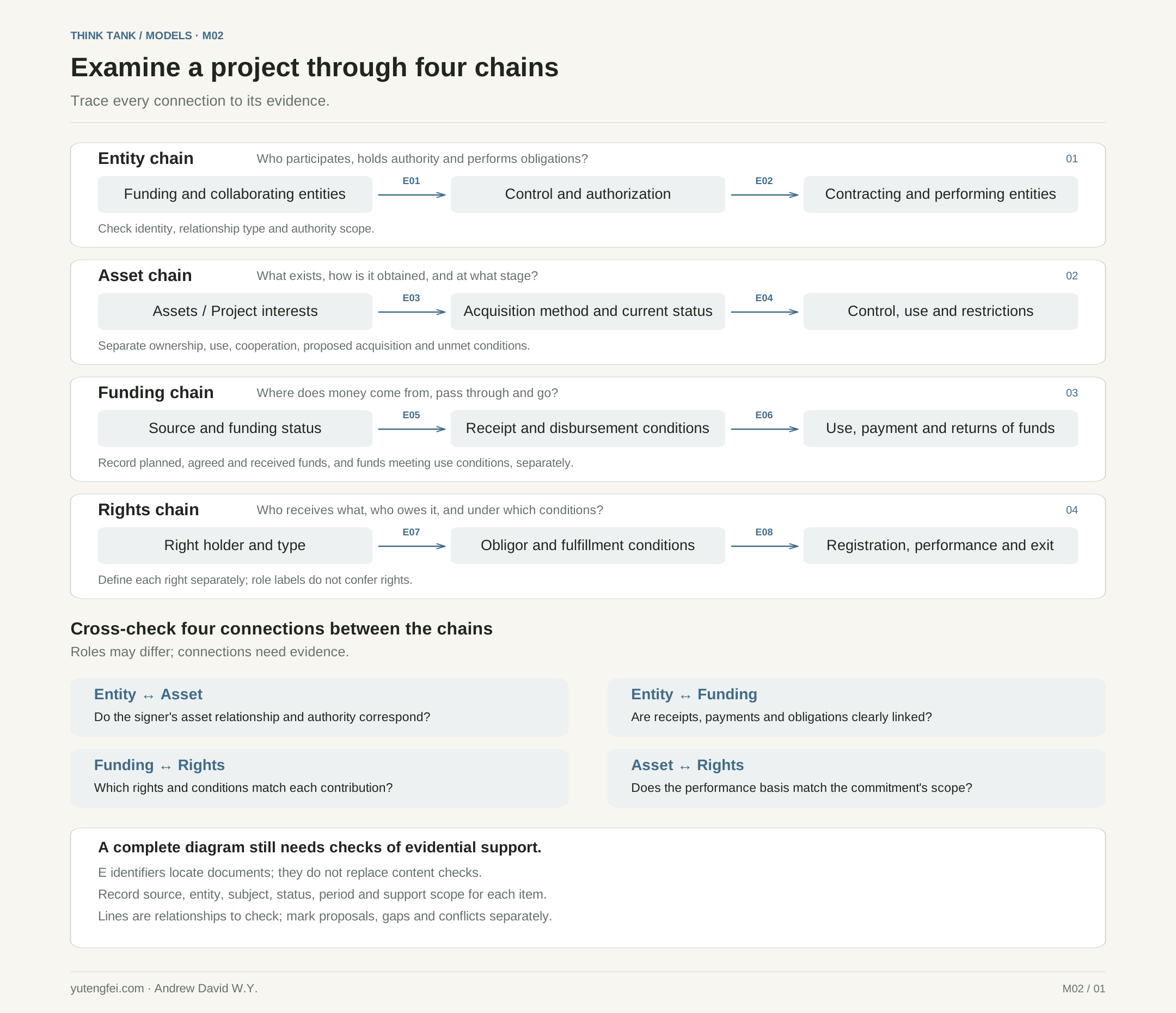
Early-stage capital project review

Proposed model
Understanding a Project Through Four Chains: Entities, Assets, Funds and Rights

Research argument · source excerpt

A diagram can show a complete set of relationships. Evidence determines how much we can say about those relationships.

Understanding a Project Through Four Chains: Entities, Assets, Funds and Rights Revised · V1.0

Method awaiting validation

Four questions I check first when reviewing project materials

The method sets out reference steps; this collection does not present results from a real pilot.

Reference workflow · Listings, Mergers & Restructuring

  1. Confirm objectives
  2. Compare and screen
  3. Specialist verification
  4. Implementation and integration handover

These are reference steps for the service; the actual scope and outputs are agreed before work begins.

Completed public material

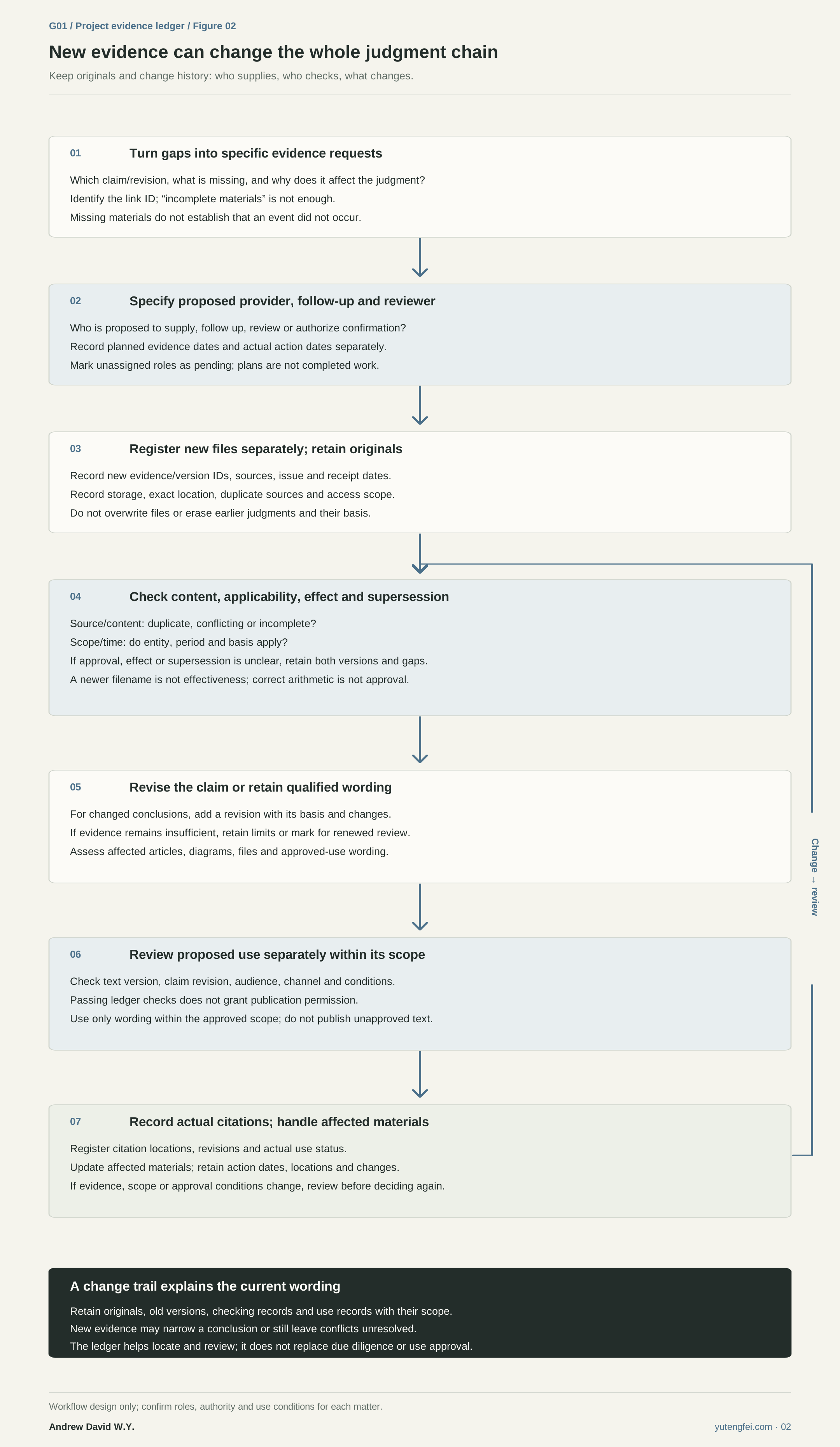
Project evidence ledger: trace every conclusion to its sources

The completed items are public files and tool samples; this does not establish acceptance of a client project.

Expand the file sampleProject evidence ledger: trace every conclusion to its sources

How the work progresses

01

Confirm objectives

Define markets, business and capital objectives, funding and control needs.

02

Compare and screen

Assess conditions and agree candidate directions and the next scope.

03

Specialist verification

Organize due diligence, documents and transaction conditions, recording open issues.

04

Implementation and integration handover

Track agreed milestones and review outputs and subsequent governance responsibilities.

Potential outputs

  • Pathway comparisons, readiness requirements and milestones.
  • Target criteria, comparison records and due-diligence checklist.
  • Transaction discussion paper, control and authorization maps.
  • Materials, specialist responsibilities, responses and closing coordination records.
  • Integration, governance adjustments and subsequent capital roadmap.
Clear roles and verified prerequisites.

Implementation depends on business conditions, applicable rules, specialist review and agreements. Coordination does not replace legal or audit opinions, securities qualifications or transaction decisions. No listing, closing, financing, valuation or return outcome is promised.

Common questions

Does acquiring a listed entity mean admission to the target exchange?

No. Entity acquisition, public trading, asset arrangements and listing have separate conditions and require market-specific assessment.

Can we work together if lawyers, auditors or a target are already in place?

Yes. Select research, structuring, information or closing coordination according to existing preparation, preserving current specialist responsibilities and defining additional work.

How are fees, timing and acceptance determined?

Advisory fees, consideration, transaction expenses and third-party costs are agreed separately. Acceptance relates to reports, comparisons, documents and coordination, without guaranteeing a listing or closing.

Specialist solutions

Related services

Start a conversation

Start with
your actual question.

Understand the question first, then agree the scope together.

What to prepare for our first conversation

  • Business, finance, ownership and governance overview.
  • Target markets, pathways, targets and existing specialists.
  • Transaction purposes, funding, control and asset arrangements.
  • Authorized decision makers, information readiness and timing requirements.

A brief overview is enough for the first email. Detailed materials can follow once we agree how to proceed.

SEARCH