Project materials often arrive one piece at a time: an introduction, a few photos, then contracts, budgets, licences and different versions of a plan. Each tells us something, but their relationships may remain unclear.
Which company is doing the work? Which assets have been obtained? Is funding in place? What rights will the participants ultimately receive? These questions may still be unresolved.
The more materials we have, the easier it is to follow their story. An industry chain, an organizational diagram and a development target may look complete together. To move forward, however, we still need to know what connects each relationship.
I would begin with four things: entities, assets, funding, and rights and obligations.
Who is doing it? What do they rely on? Where will the money come from and how will it be used? What rights and obligations correspond to each participant?
These questions give the materials a place. They also help distinguish supported points, statements made only in a proposal, missing evidence and matters that cannot yet be assessed.
1. Establish what this review must answer
Before reading, clarify the question: is this a preliminary business review, preparation for a collaboration discussion, or development of a formal plan? Does it concern a group, one company or a specific project? What date do the materials represent?
Without that alignment, documents covering different scopes can easily be used to support each other improperly.
A group introduction may not establish ownership of a particular project's assets. One project's operating results do not represent the group's financial position. An old document may explain history, but its current relevance still needs checking.
I first write one sentence: Which question about which entity or project, at which stage, is this review intended to answer?
Then register filenames, providers, creation dates, versions, relevant entities/projects and intended evidential purposes. Mark unknown dates or versions explicitly; do not guess validity from the order in which files were sent.
The system need not be complex at the outset. Every subsequent conclusion should have a traceable source.
2. Who is doing what?
An introduction may mention a group, brand, project, platform and several companies. Examine their relationships separately.
Ask who initiates, operates, signs contracts, receives payments, holds assets and bears the obligations behind commitments.
One entity may perform several roles, or the roles may be split. Make the correspondence explicit.
If one company signs and another operates, identify their collaboration arrangements, each party's authority to make commitments, and how responsibilities connect. Appearing in one group diagram does not establish these relationships automatically.
Keep two levels of records: each entity's identity, and the relationships between entities.
Registration documents may establish identity. Shareholding, control, cooperation and authorization each require evidence matching the relationship. A diagram explains intended design, but documents must still distinguish an existing structure from a proposed one.
Once entities are clear, assets, funding and rights can be assigned to the appropriate parties.
3. What assets support the work, and what is their current status?
For each asset, ask what it is, where it is, who holds it, how far it is currently usable and how the project is connected to it.
Already owned, used through cooperation, proposed for acquisition and planned for construction are different states. Record them separately even when they appear on one industry-development diagram.
Equipment photos can show the site; they alone establish neither ownership nor use in the project. A proposed-acquisition list describes intended scope. Signing, satisfaction of conditions and completed handover require corresponding evidence.
Beyond an asset's name, I focus on three items:
- Basis of acquisition or use: ownership, lease, cooperation, proposed acquisition, or another specified arrangement.
- Current status: discussions, signed agreement, completed handover, construction, trial operation or operation, recorded separately.
- Scope and conditions: which entity may use it, during what period, for what activities, and subject to which limits or prerequisites.
Operating figures must also match assets and periods. Design capacity, actual output, sales and cash collected describe different things. An expected capability must not become an operating result already achieved.
This step establishes what the project actually relies on and which conditions the next step still requires.
4. Where does funding come from, and how will it be used?
Separate funding sources, uses and status.
Planned total investment, planned external financing, and funds actually received and usable under their conditions are different amounts.
A uses-of-funds table does not establish that funding is secured. An expression of intent, signed agreement, actual receipt and satisfaction of use conditions cannot all become one “completed” status.
Trace who provides the money, who receives it, on what basis and under which conditions, and to whom it is then paid for which purpose.
For transfers among companies or projects, check agreements, uses and records to prevent double counting the same money.
Time matters too. Money received today may not cover every stage, and a long-term overall budget does not represent expenditure available in the current period.
Clear statuses reveal whether the gap concerns a funding source, delivery conditions, a use budget or disbursement arrangements. Follow-up then becomes more specific.
5. What rights and obligations does each participant have?
“Participation”, “cooperation”, “partner” and “sharing” describe a direction. Actual arrangements need more detail.
Does the participant receive services, payment for goods, business remuneration, project proceeds or long-term rights such as equity? Who owes the obligation, under what conditions is the right obtained, how is it recorded, and when and how is it fulfilled?
Check each right's basis and treatment separately. Consumption, service cooperation, funding contributions and equity participation do not convert into each other merely because they share a label.
I examine three correspondences:
Contributions and rights. What does the participant provide, what is agreed in return, and are the calculation scope and conditions explicit?
Commitments and responsible entities. Who makes the statement in the introduction, who must actually perform, and what authority and agreement support it?
Rights and performance records. After an arrangement is proposed, identify its stage, conditions already met and records still missing.
Check duration, exit, transfer, breach and dispute arrangements against the applicable terms. Where evidence is insufficient, keep the question open for the appropriate professional. Promotional language must not fill the gap with a conclusion.
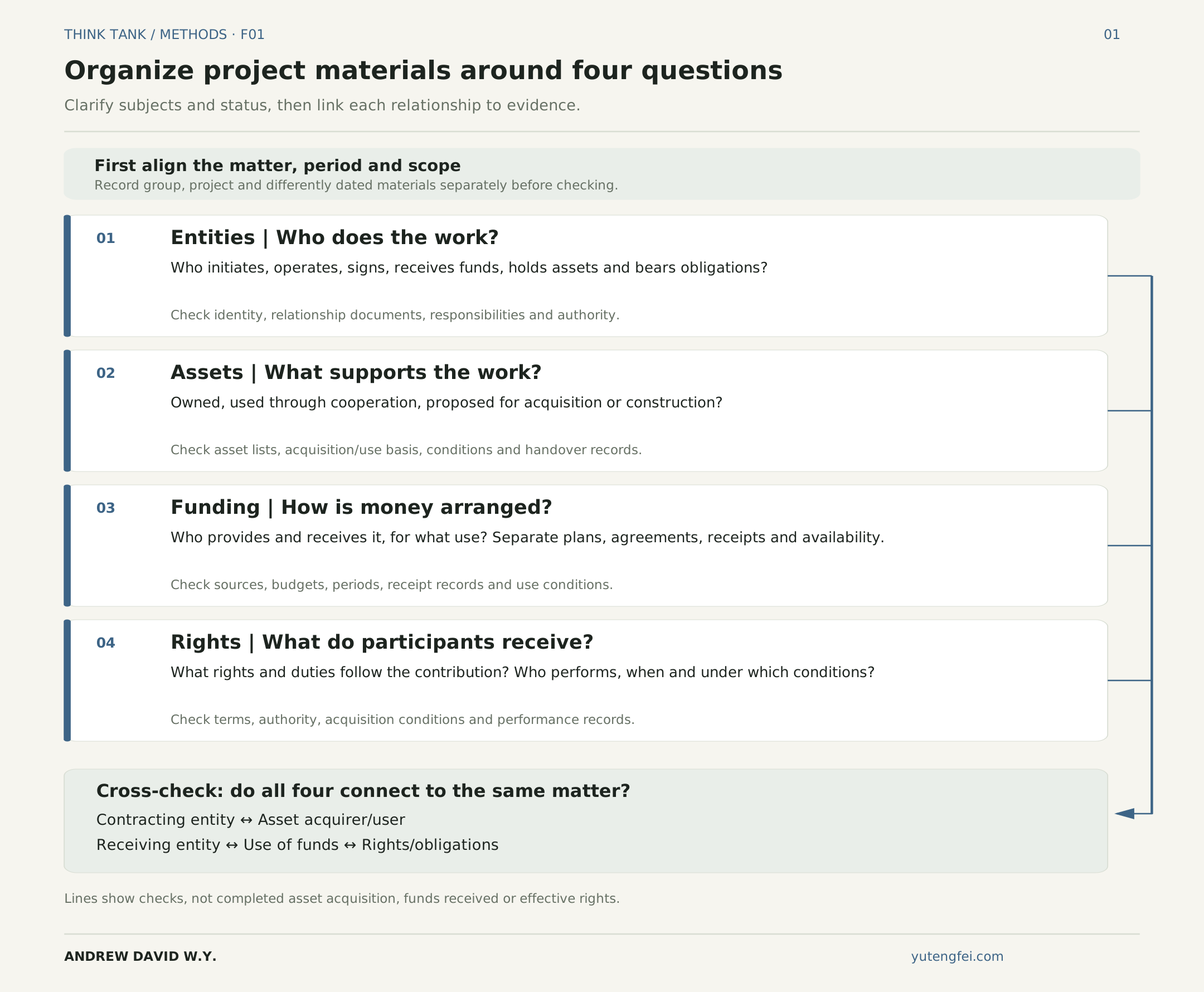
Figure 1 checks relationships within the same matter. Lines indicate correspondences to verify; they do not establish asset acquisition, receipt of funds or effective rights.
6. Connect the four questions and find the breaks
After answering them separately, check them together.
Consider this set of materials. The scenario illustrates the method only and represents no real project.
An introduction says the project plans to start production; an equipment list shows another entity holds the equipment; a cooperation agreement has outstanding effectiveness conditions; a budget includes equipment investment; participant materials describe sharing future operating results.
Together, these describe an arrangement proposed for advancement. They do not yet connect how the equipment enters the project, whether conditions are met, who pays, who receives operating results or how participants benefit.
The assessment should therefore be specific: equipment lists and cooperation materials exist, but some acquisition/use conditions remain unconfirmed. Do not state that the project has fully acquired the assets and meets every operating requirement.
The next evidence is then clear: acquisition/use authority, records showing conditions were met, payment arrangements and formal explanations of participant rights.
An absent document does not establish that an arrangement does not exist. A description in a document does not establish that the stated current position is adequately supported.
Keep both distinctions in mind.
7. Turn missing evidence into answerable, checkable requests
“Materials incomplete” offers little direction. Another batch of introductions may arrive without resolving the original questions.
Specify the fact to confirm, evidence required, provider and criterion for accepting the supplementation as sufficient.
A practical order has three levels:
| Priority | Resolve first | How to use it |
|---|---|---|
| First: core judgments | Material gaps in entity relationships, key assets, funding sources and rights conditions | Obtain key evidence before making decisions based on it |
| Second: execution | Business details, itemized budgets, schedules, delivery conditions and responsibilities | Add items as execution is designed, checking consistency |
| Third: presentation and archiving | Clear attachments, consistent names, captions, versions and indexes | Assemble a usable package once core facts are clear |
This is a working order, subject to each issue's importance. A licence, technical conclusion or professional confirmation that determines whether work can proceed belongs earlier; it cannot mechanically be left as an attachment to obtain later.
For every gap, record at least question, evidence required, provider, current status, expected date and acceptance result.
If a person or date is unconfirmed, mark it “to be determined”. Do not promise on someone else's behalf or turn unknowns into settled facts to make a table look complete.
Recheck new materials for entity, applicable date/version, scope of support and conflicts with older documents. Receiving a file and resolving a question are separate statuses.
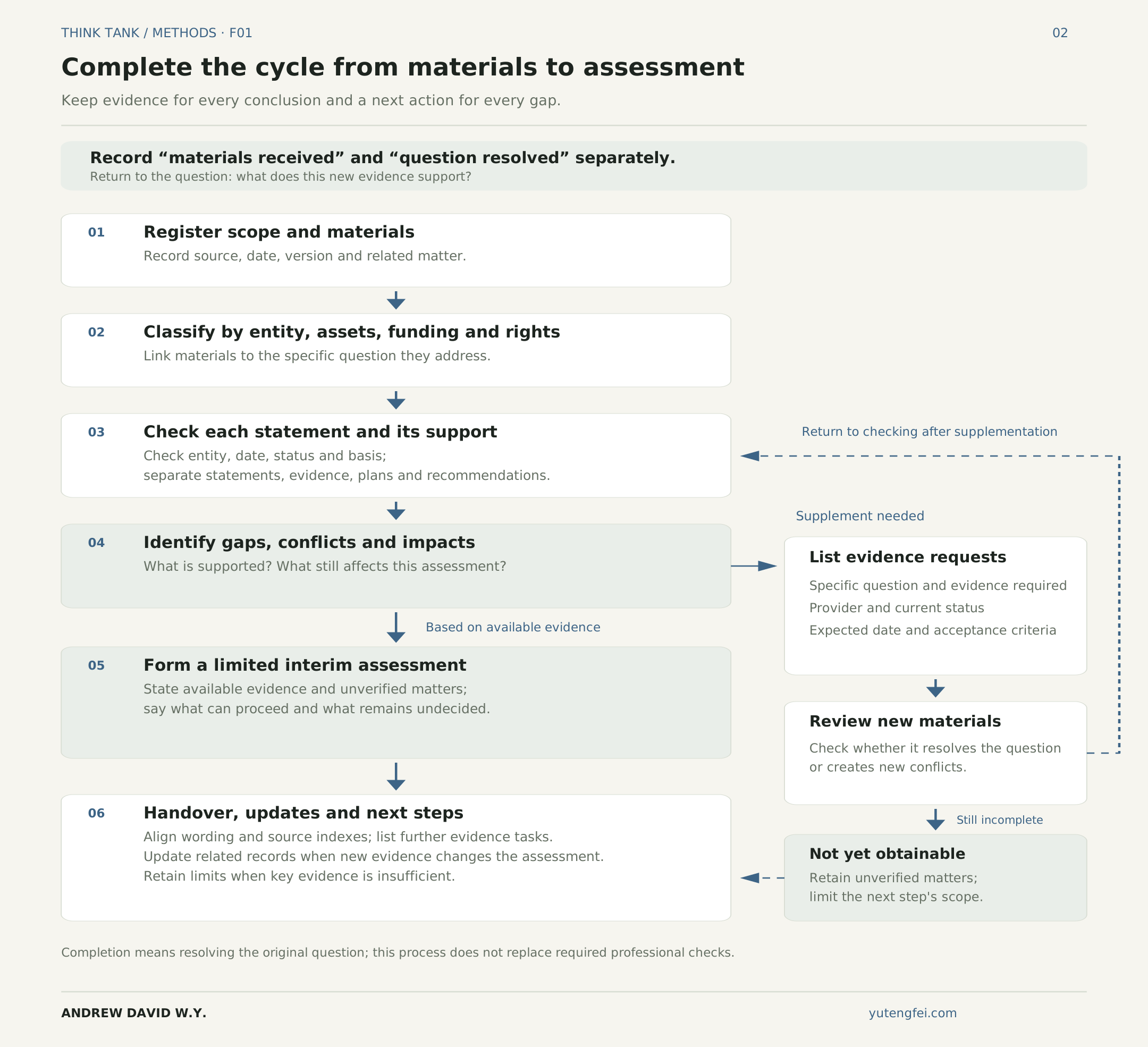
Figure 2 connects gaps, additional evidence and acceptance. Insufficient key evidence may allow only a clearly limited interim judgment; pending matters must not quietly become affirmative conclusions.
8. Make the handover usable
After one review cycle, the next person should see the evidence available, gaps remaining, possible next actions and matters that still cannot be determined.
Deliverables can be simple: entity/relationship, asset-status, funding-arrangement and rights tables, with source indexes and evidence requests.
Label the nature of each important conclusion:
- For a source statement, identify the document making it.
- For checked content, specify the scope and date verified.
- For calculations, retain units, calculation basis and assumptions.
- For unfinished plans, retain conditions and current status.
- State recommendations from this review separately from existing arrangements.
This lets another person continue, revise plans or add materials. If new evidence changes the interpretation, the relationships show where updates are needed.
This also reflects my approach of “complexity, simplicity, ease and diagrams”: lay out materials and relationships, identify the few questions affecting outcomes, turn them into checkable steps, and show the steps and relationships visually.
Closing
Understanding a project means connecting scattered materials to the same matter.
Clear entities identify responsibility; asset status shows what supports advancement; funding arrangements expose conditions and gaps; clear rights let participants understand what they are joining.
Start by listing evidence and questions under these four headings. Say only what can be confirmed, and assign remaining evidence requests to specific people. That gives subsequent action a basis.