A business can face a familiar sequence as it grows: customers want the product, but delivery capacity falls behind; the team wants more capacity, but funding is not arranged; the money finally arrives, but the operating plan has changed.
Operations and capital continually affect each other. In discussion, however, they are often treated separately. Operating teams focus on products, orders and delivery. Capital discussions focus on financing, valuation and exit. Each has its own logic. Within one project, the two need to connect.
I would start with a specific question: which operating capability is this capital arrangement meant to improve?
Then ask what resources are needed, when they should be committed, what costs and responsibilities follow, and how the effect will be checked.
The reverse question matters too: do the operating results support the original capital arrangement? If circumstances change, what should happen next?
I understand the relationship in both directions: operations provide a basis for resource allocation, capital arrangements support implementation, and results inform the next decision.
1. Identify the operating constraint first
Saying a company needs money leaves important questions unanswered. Which part of the funding is missing, and what problem is it meant to solve?
Is the business buying materials to deliver existing orders, or developing a new capability? Have payment cycles lengthened, or has the product not yet won customer acceptance? Is equipment lacking, or is existing equipment underused?
These situations may call for very different responses.
Some need additional investment. Others first need changes to processes, customer terms or the product. Some projects have a sound basis but lack resources. Others still need to test demand and costs.
If the problem has not been identified, rapid financing may fund an untested direction. What began as a small experiment can become a large commitment that is difficult to reverse.
I would describe the operating problem in one concrete sentence: what capability is missing, what result is affected and what action is proposed to improve it.
“Grow the business” is too broad. “Existing orders take too long to deliver; equipment modifications and staff training are proposed to improve delivery” gives us something to examine.
Will those modifications address the constraint? Is customer demand continuing? Are the materials, people and supporting conditions available too?
A clear operating gap gives the capital discussion a defined purpose.
2. Examine the money and its conditions together
Once the operating need is clear, identify the resource gap: how much is needed, when, where it may come from and on what terms.
A capital arrangement involves more than receiving money. It also brings a term of use, a cost, rights, governance responsibilities and continuing obligations. Each condition enters the operating process.
Repayable funding needs a repayment schedule considered alongside operating cash receipts. Arrangements changing equity need clear rights, responsibilities and expectations for continuing cooperation. An industry partner's proposed resources and coordination also need checking against what that partner can actually provide.
If capability takes time to build while the funding requires rapid recovery, the timetable may create pressure. Conversely, a short-term working-capital need warrants consideration before committing to rights arrangements with much longer effects.
I would discuss the following in one table.
| What operations must explain | What the capital arrangement must address |
|---|---|
| Which capability is to improve | The specific uses of money and other resources |
| How long it takes for input to produce results | The fit between funding term, payments and recovery |
| Which conditions are established and which need testing | The initial commitment and evidence needed for further commitments |
| What happens if results fall short | Responsibilities, deviations and existing obligations |
| How the effect of the input will be assessed | The records, measures and review procedures |
The table does not select the best financing method. It allows operating needs and capital terms to be checked against one another.
3. Trace the input through to operating results
The contribution of capital to an industry needs to be assessed through specific changes.
Did equipment improve delivery capacity? Did a new system shorten reconciliation time? Did a partner make supply and service more stable? Did additional sales spending lead customers to keep buying?
These questions need actual records.
Money entering the enterprise means a resource has arrived. Using it as planned is implementation. Changes in products, delivery, quality and cash collection begin to show operating results. Keeping those levels separate makes it easier to locate a problem.
Construction may finish on time while customer use and payment lag. Sales may rise along with receivables, leaving considerable cash pressure. Higher capacity may also require more procurement, inventory and staffing, changing the original funding estimate.
Results therefore cannot be assessed through one growth figure alone.
Accounting provides a useful distinction: IAS 7 separates cash flows into operating, investing and financing activities. Cash obtained through financing and cash generated by ordinary operations need separate observation. IFRS Foundation: IAS 7
An operating team also needs the next connections: what the money funded, which capability formed, what revenue and expenditure followed, how much cash was collected and what obligations remain.
To assess whether a capital arrangement helped, trace it back through use of funds, implementation and operating results.
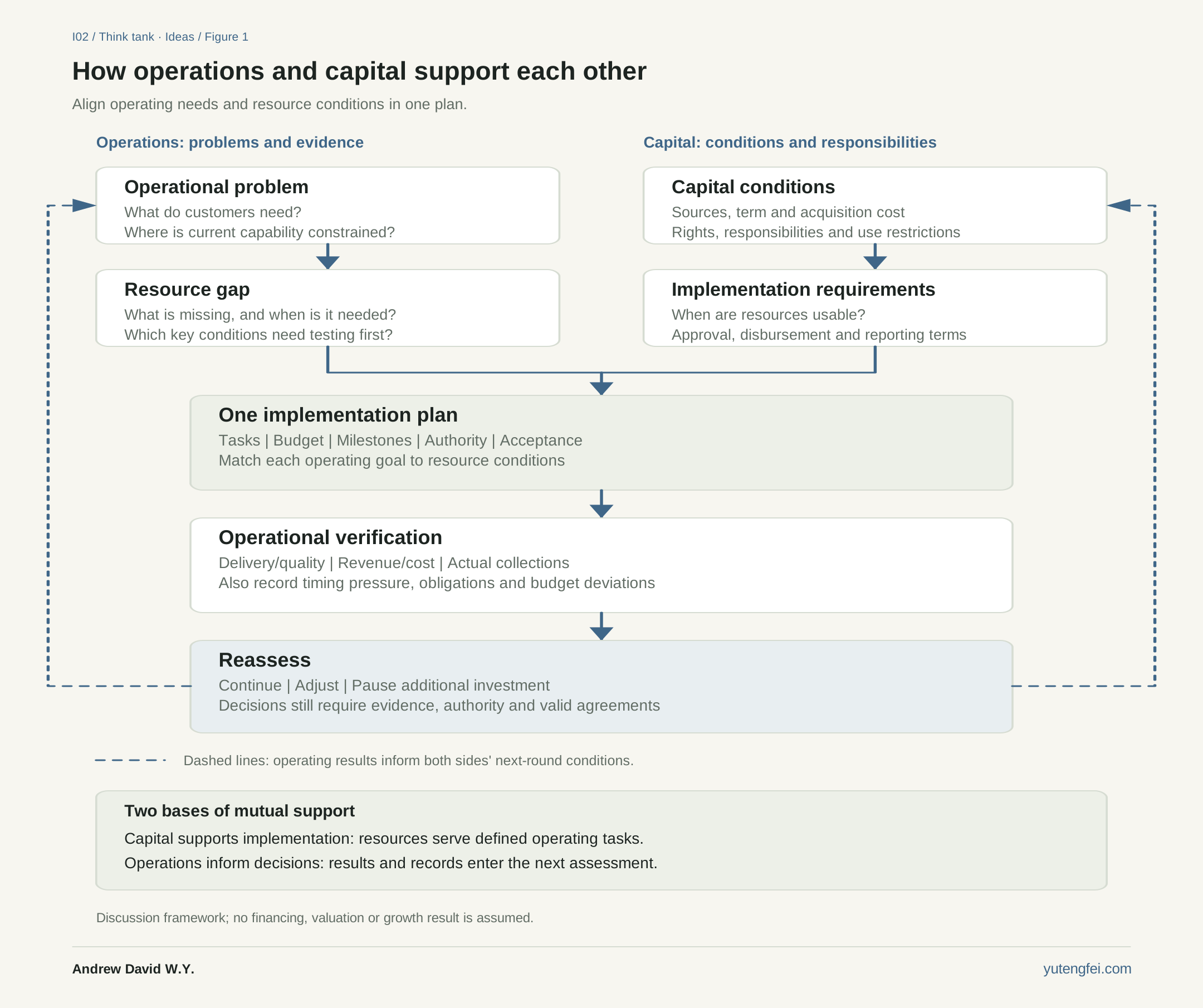
Figure 1 shows two workstreams that need to be checked against each other. Operating evidence informs the next assessment; further resource allocation still depends on actual conditions.
4. How operating results support the next capital assessment
Operations can provide both cash and verifiable evidence for the next capital discussion.
Customer demand, delivery records, cost changes, actual collections and the stability of cooperation help explain whether an earlier judgment held, what further investment would address and what remains uncertain.
Separate two relationships here.
The first is resources. After relevant costs, obligations, operating needs and authorization requirements have been addressed, the available part of operating cash may be considered for further investment. The amount and use still need separate confirmation.
The second is evidence. Clearer operating records give the enterprise and potential partners a more concrete basis for discussing the next stage: which capabilities exist, which inputs remain under testing and what needs adjustment.
Better evidence can improve discussion and judgment. It does not decide whether another party will invest, nor guarantee financing, a higher valuation or an exit opportunity.
Market conditions, transaction terms, governance and each party's risk assessment all affect the outcome.
I therefore see the next capital arrangement as a new assessment. Earlier experience can help, while earlier conclusions must face new facts.
5. Bring governance into the project with the investment
Connecting operations and capital also requires clarity about who may decide the next step.
Who proposes the use of funds, checks the budget, approves it, implements the commitment and reports changes? If the plan changes, who confirms the adjustment, and which changes require agreement from others?
These arrangements affect whether the project can proceed on its original terms. Unclear sources, uses, rights and obligations make consistent operating decisions difficult. Without implementation records, resource providers also have little basis for deciding how to continue cooperating.
The OECD governance principles connect oversight of strategy, budgets, major capital expenditure, operating performance and risk. A useful lesson is to consider resource commitments alongside continuing oversight. The responsible organizational level still depends on the actual structure and applicable arrangements. G20/OECD Principles: Responsibilities of the Board
In practice, I suggest retaining four connections:
- Each major input has a defined operating task.
- Each implementation stage has a responsible person and verifiable results.
- Each resource arrangement has corresponding rights, obligations and conditions of use.
- Each important adjustment has a decision basis, appropriate authority and an update record.
These connections help capital continue supporting operations and allow operating changes to reach decision-makers promptly.
6. Connect the two through a hypothetical scenario
This scenario was written to explain the relationships. It does not describe a real enterprise or project.
Suppose a manufacturer has long delivery times for existing orders. Its team proposes modifying equipment to improve delivery capacity and prepares an additional funding arrangement.
“Expand capacity and revenue” is not enough to explain why the investment is needed or how it will be implemented.
I would break it into steps.
First, examine orders, equipment use and delivery records to establish whether equipment is the main constraint. Then check the modification plan, staff training, material supply and customer acceptance conditions. Estimate the time from commitment to actual cash collection.
Use that timetable and those implementation conditions to discuss the use of funds, available funding term, cost and each party's responsibilities. Establish checkpoints for modification, trial operation, customer delivery and cash collection.
If trial operation meets the agreed targets and the customer completes the relevant acceptance process, assess the next investment stage under the effective arrangements.
If the equipment is improved but order demand changes, reassess the scope of expansion. Existing contractual obligations remain subject to their arrangements. Whether to make further commitments is a separate decision.
If delivery improves but cash collection is delayed, investigate payment terms, acceptance disputes and the customer's circumstances. Increased output alone cannot establish that the whole project has achieved its objectives.
In this example, operations define a problem, capital arrangements help secure resources, governance and records connect implementation, and actual results inform the next assessment.
Working through the relationship brings discussion to the points where judgment is needed.
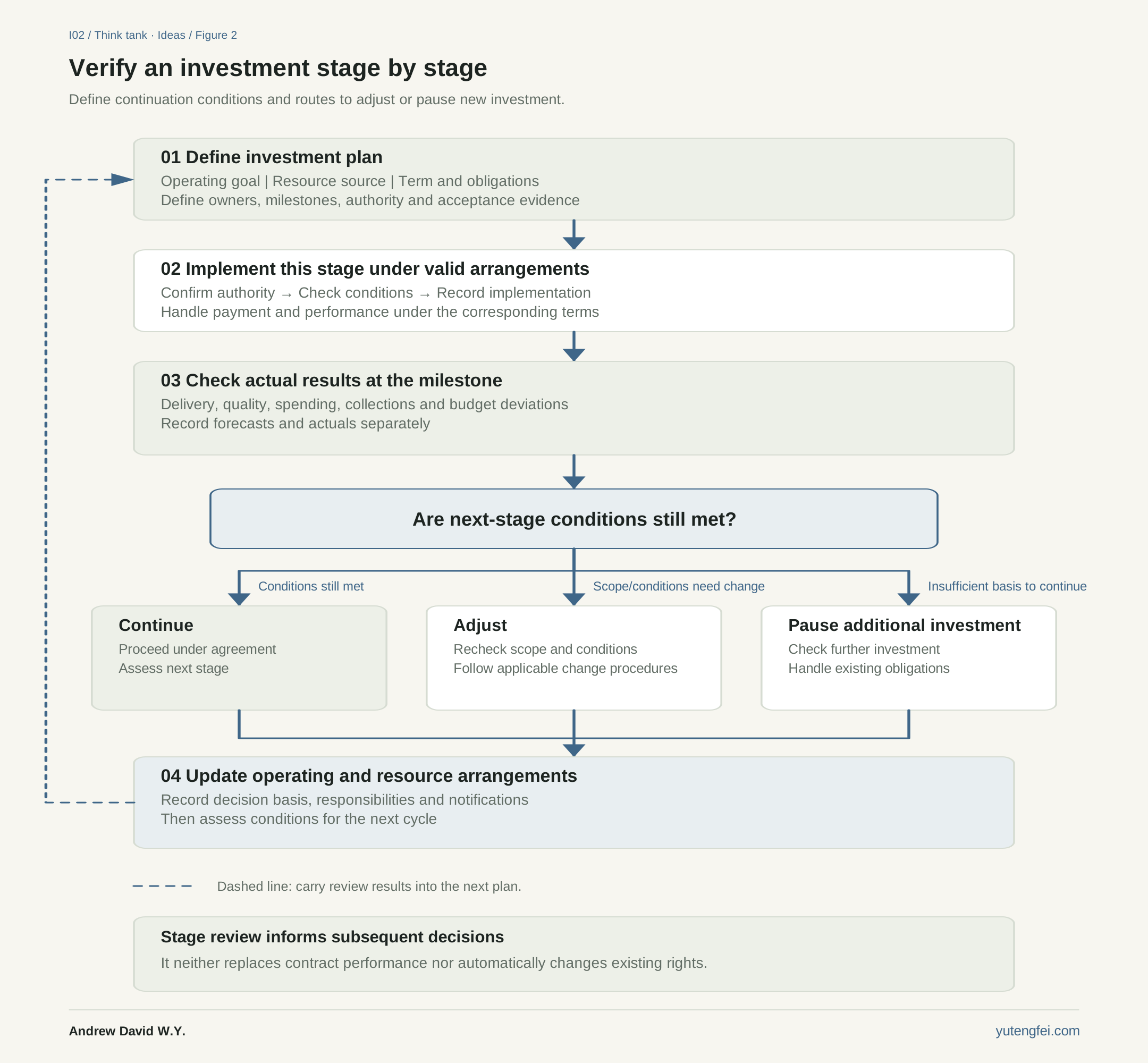
Figure 2 is a framework for implementation discussions. Pausing or adjusting additional investment requires the appropriate authority and effective agreements. It does not automatically suspend existing payments or other obligations.
7. Reassess when conditions change
Changing conditions are not unusual. What matters is whether the change reaches the assessment in time.
I suggest reviewing three questions separately.
Does the operating reason still hold?
What has changed in demand, costs, delivery and collections? Has the original constraint improved, or has a new one emerged?
Can the resource conditions still support the arrangement?
Do available funds, restrictions, terms, supporting inputs and obligations still fit the operating plan?
How should the next decision be confirmed?
What evidence and approval are needed to continue, adjust or pause additional investment? What needs renegotiation with partners, and how will existing obligations be handled?
Clear answers support both continuation and adjustment. When results deviate, reducing the scope or changing the sequence can also be a responsible operating and resource decision.
Keep the connections open to review
Mutual support between operations and capital depends on connections that can be checked.
Operations should explain the problem the resources are intended to solve. Capital arrangements should explain the conditions and responsibilities involved. After implementation, actual results should test the original judgment.
I want an enterprise to become increasingly clear about why it is investing, what the input improved and what will inform its next decision.
Continually answering those questions gives the relationship between industry and capital a firmer basis.