The company introduction is finished, the website is live, and the presentations, brochures and videos are ready. Later, different materials describe different service scopes, cooperation terms have changed, and old files are still being forwarded. Someone asks which version can be used, and the search for files and responsible people begins again.
I think use and maintenance should be considered when business content is first created.
What is the enterprise doing? What has happened, and what remains planned? How much should be explained to different audiences? Who confirms the content, and where must it change when the facts change? Connecting these questions makes materials useful over time.
Keep facts consistent while adapting the explanation to the audience. Assign an owner to each item and trace the effects of every change. This reference plan can begin with one business activity and expand as needed.
1. Lay out the existing materials before rebuilding them
Inventory the website, introductions, product information, sales presentations, videos, diagrams and attachments the team regularly sends. Record who uses each item, its audience, purpose and current maintainer.
Then check the content. Do several versions of a business figure use the same period and scope? Does a service description match what can actually be delivered? Does “already cooperating” refer to discussions, signed documents or actual business activity?
Separate two distinctions: receiving materials does not verify their contents, and finishing the text does not authorize publication.
Keep unresolved questions and identify who will supply the missing information. Designers should not turn scattered materials and missing facts into a complete-looking story.
The inventory should identify what remains usable, what needs evidence, what is outdated, what belongs in internal discussion and what has been recreated repeatedly.
Prioritize materials currently in use that could mislead. Clarify those before deciding how many new files or channels to create.
2. Support positioning with facts, and retain the limits of those facts
An enterprise needs to choose how it wants to be understood: whom it serves, the problem it addresses, the capabilities it relies on and its desired direction.
Positioning gives the explanation a main line. A positioning statement does not replace business evidence.
For example, “connecting resources across several locations” should be followed by which resources and which service arrangements actually exist. “We aim to build a nationwide service network” remains a direction; another page should not casually turn it into existing nationwide coverage.
I suggest recording frequently used content under four types.
| Type | Information to establish | How to use it |
|---|---|---|
| Checked business facts | Source, date, statistical or business scope and confirmer | Cite within the confirmed scope and recheck when conditions change |
| Positioning and value proposition | Audience, emphasis and authorized confirmation | Organize the explanation; specific capabilities still need facts |
| Objectives and development plans | Intended result, current progress and necessary conditions | Retain their status as objectives or plans rather than completed outcomes |
| Examples and explanations | What they explain and whether they are fictional | State the purpose; do not present them as the enterprise's existing cases |
Retain units, periods, populations and necessary conditions with every figure. An impressive number taken out of context can mean something different to a reader.
Consistency means these basic meanings stay aligned. Disagreement should lead back to the evidence and authorized confirmer, rather than a contest over which sentence sounds strongest.
3. Layer content so different audiences can find what they need
Customers, partners and employees have different questions. Sending everyone the same long presentation often buries the important material.
Begin with three layers.
The organizational layer explains who the enterprise is, whom it serves, what it does and how its activities relate. The business layer explains a specific problem, the solution offered, what cooperation is required and the boundaries. The situational layer selects what is needed for a particular visit, product explanation or cooperation discussion.
Keep the references between these layers traceable.
Customer introductions should use the confirmed service scope. Cooperation documents should use the same fulfilment conditions. Recruitment materials should explain actual roles and working relationships. The emphasis can differ while the underlying facts stay consistent.
A short video may cover less and direct readers to a fuller explanation. Conditions that materially affect understanding still belong in the current material; do not assume the audience will discover them in another file.
Apply the same principle to languages. Confirm the meaning first, then adapt expression and layout. Check names, units, dates, statuses, conditions and diagram text together. Record unfinished translation scope rather than treating an old translation as synchronized with a new source.
4. Build shared assets that can be reused and traced
Shared assets can comprise business fact records, confirmed content items and usable visual templates.
Fact records hold source references, confirmation status and permitted use. Keep originals internally under access controls. Public-content creators should receive what they need, rather than placing all raw materials in a public folder.
A content item might be an introduction, service explanation, indicator definition or cooperation condition. Give it a stable ID and record the current version, owner, audience, review date or expiry condition, and materials that cite it.
A service-scope change can then lead from that record to the related web pages, presentations, images and downloads.
Visual templates handle hierarchy, tables, captions, diagram statuses and connectors, and mobile reading. Test real long titles, complex tables and different languages before choosing reusable styles.
Colours and graphics may have a design rationale, but they still need usability checks. Keep proposed directions separate from approved standards; a complete-looking proposal should not automatically become a formal departmental rule.
Useful templates make clear what can change and what must remain. New data must retain units. A shorter version must retain necessary conditions. Another language must still display properly.
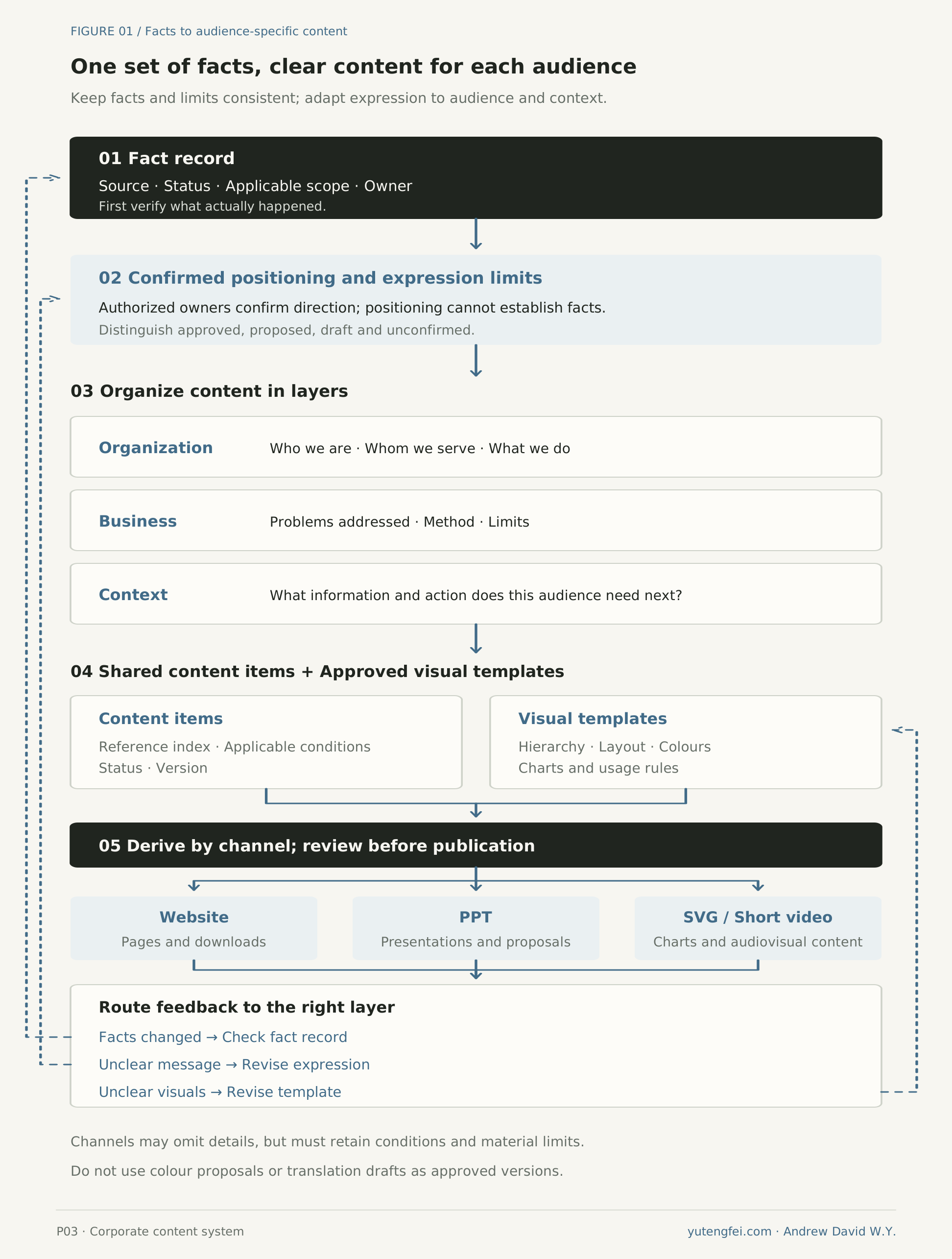
Figure 1 is a reference structure. Share facts and core meanings while varying detail by audience. Feedback should return to the content layer actually affected.
5. Define responsibilities, then connect review and publication
One person may perform several tasks in a small team. Clarify what they own at each step and whether they have authority to confirm it.
The business owner checks scope, data and status. The content owner organizes hierarchy, meaning and audience versions. Designers and producers check visuals, text-image relationships and actual presentation. An authorized confirmer decides whether the content may be published within a specified scope. The channel owner puts it in the right place.
Bring in relevant specialists for matters requiring dedicated confirmation. Do not leave every question to the final signatory, or treat a brand review as a replacement for business verification.
The process may run from business submission and checking through writing, production, responsible-party review, authorization, publication and checking the actual pages and files.
Retain specific conclusions: what is confirmed, what needs revision, permitted channels and audiences, and the conditions limiting use.
If production changes a figure's meaning, removes necessary conditions or turns a plan into a fact, return that item for confirmation. Pure layout changes can be checked for visual quality and readability without restarting unrelated reviews.
After publication, open the actual page and download. Has the body changed while the diagram still shows old data? Does the download button still point to an old presentation? Is it readable on a phone, and can other languages reach the same content item?
6. Trace one change to every affected material
First explain what changed, then assess its reach.
A changed fact, an original error, expired permission, reader misunderstanding and an awkward layout can all trigger revisions, but they need different responses.
If truthfulness or permission is in question, suspend the affected content's continued use while checking its basis. A layout issue calls for a layout correction and a check against unintended content changes. Other valid content need not be suspended.
Once the new item is confirmed, follow its references to build an impact list: web text, diagram labels, subtitles, translations, downloads and sales presentations. Assign an owner and status to each.
Replace what can be replaced and open it to check. Disable entries that must be withdrawn. For materials already distributed and not recoverable, record their destinations, notify reachable users and explain the new basis and permitted use.
“Notified,” “replaced” and “checked” are separate statuses. Unreachable recipients or unchangeable copies remain open matters. Updating a source file alone does not close the task.
Retain withdrawn working versions and historical evidence internally with reasons and relationships. Routine public entries should point to the current usable version for the relevant language and permission scope. Historical reports that genuinely need to remain public should retain their original content with clear dates, status and scope. A newer file version does not make outdated data current.
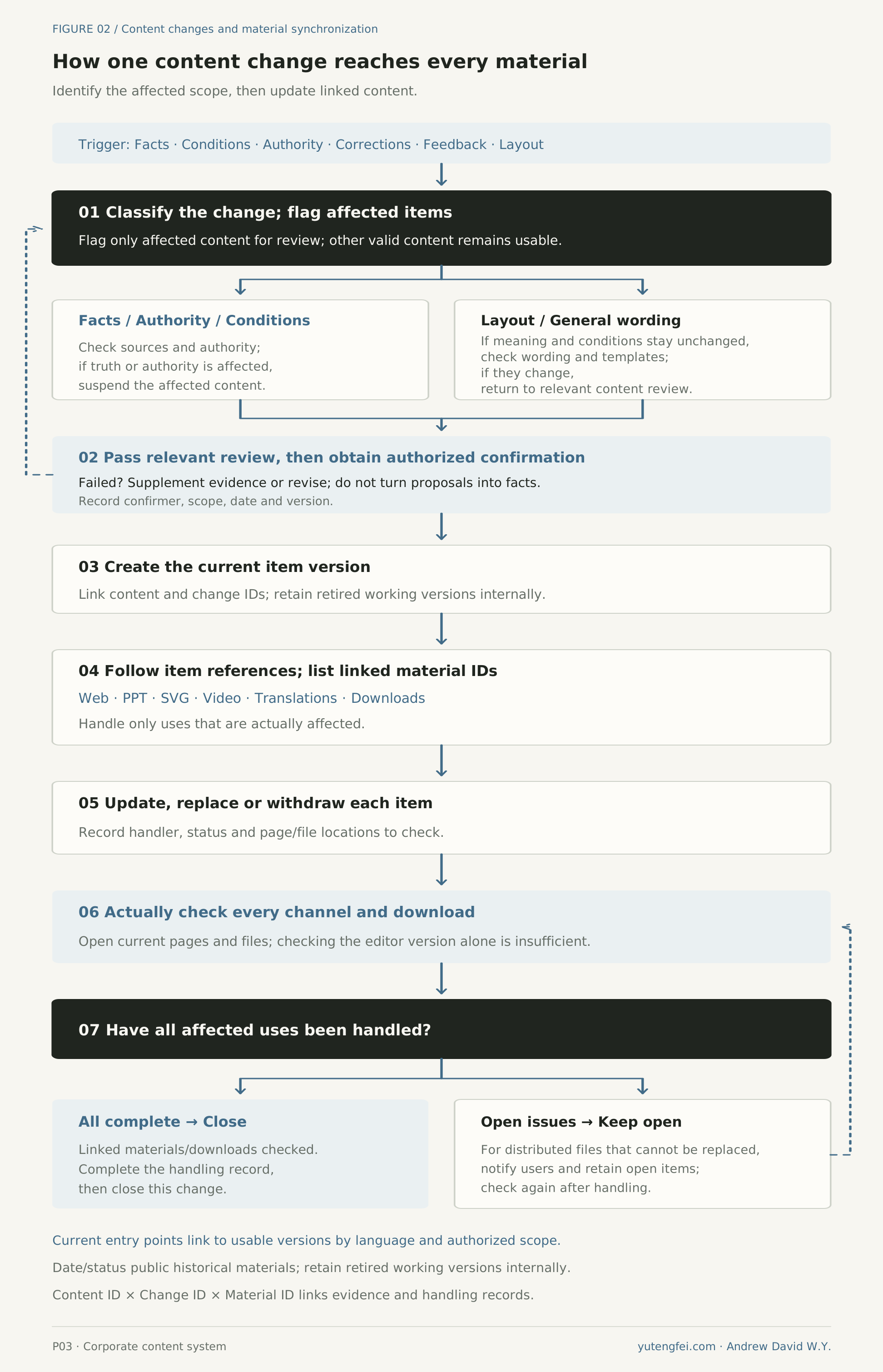
Figure 2 handles changes according to the affected content. Confirming a new item, updating its derivatives and checking live results are recorded separately. Assign unresolved matters explicitly so the status reflects what has actually been handled.
7. Test the method with a service-scope change
Imagine a fictional equipment-maintenance company. It previously offered on-site service in one region and now adds another. The new region initially covers only some equipment types and requires appointments.
Check staff availability, equipment coverage, appointment conditions and the start date, with confirmation by the appropriate business owner. Record the scope in the content item, then identify introductions needing revision.
The service page can explain the regional differences in detail. The company introduction can update coverage while linking to those details. Sales presentations can select content for the customer's location. Include coverage markers in diagrams, downloads and other languages in the impact list.
If a short video says “on-site service in a new region,” retain the equipment and appointment conditions. Editing must not leave an unrestricted promise.
If a particular equipment type later cannot be serviced in the new region, address content making that commitment and review who received it. Valid information about other regions can remain in use.
This provides a useful exercise: can one factual change lead to every related material, an owner for each and a way to confirm the actual update?
8. Start with a small content system that can keep operating
There is no need to cover every business, channel and language at once.
Choose one frequently asked-about activity whose facts can be checked. Prepare a standard explanation, a common presentation and a public page. Identify shared content, additional detail and owners.
Then perform a real update or controlled exercise: trace references, complete reviews, replace files, notify users and check results. Exercises should use clearly labelled fictional content rather than sending test promises to real audiences. Fill gaps in responsibility and records before expanding.
Maintenance needs both routine reviews and event triggers. Check stable content at an appropriate interval. Changes in service scope, important conditions or permission should trigger review promptly, without waiting for a redesign. Set intervals and effort according to change frequency, use and risk rather than a universal number of days.
Separate resources for content organization, design, translation, channel maintenance and daily review. Each new channel adds a maintenance responsibility.
Acceptance should examine delivery and updates, but also whether users can find the current version, explain the service correctly and identify readers' remaining questions. Publication counts, views and material counts alone do not demonstrate business improvement.
Take one item currently in use. Identify its evidence, owner, reference locations and next review condition. Then change it and see whether all affected materials can change with it. Completing that cycle gives business content a basis for continuing maintenance.
Download the accompanying Organizational Content System Implementation and Maintenance Checklist