A project introduction usually seems to contain everything: who leads it, who operates it, what equipment is involved, how much will be invested and what partners may share.
After reading it, the project may feel clear. Yet several questions still need answers before moving forward: who contracts externally, who owns the assets, whose account received the money, and who must fulfil each commitment?
I think drawing the relationships is a useful start. Every name and line needs a basis. Where the drawing cannot continue, stop and ask.
This article provides a practical exercise. With a wholly fictional set of materials, draw an initial diagram, obtain further information, revise it and explain why your judgments changed.
Work alone or with two or three people. Leave the reference answer until later so you have a genuine opportunity to think.
1. What do the four chains examine?
Entities, assets, funds and rights are separated to organize the review. They are the observation dimensions for this exercise. The drawing style may vary; the relationships and evidence should be clear.
| Chain | First questions | What the diagram should show |
|---|---|---|
| Entities | Who participates and takes responsibility, and how are they related? | Entities, working roles, contractual or control relationships and their basis |
| Assets | Which asset, who owns or uses it, and what stage has been reached? | Specific objects, ownership and use, acquisition method, delivery and other unconfirmed statuses |
| Funds | Who pays whom, how much, for what purpose, and with what status? | Payer, recipient, amount, nature, period and payment conditions; separate intentions, agreements and actual transfers |
| Rights | Who may require what from whom, and under which conditions? | Rights holder, obligated party, content, triggers and performance status |
The chains cannot be drawn in isolation. Compare the customer order's contracting party, the receipt record's recipient, the equipment agreement's user and the party responsible for performance.
If names differ, ask why. There may be a documented agency, lease or cooperation arrangement, or the materials may be incomplete. Mark the location when evidence is not yet available.
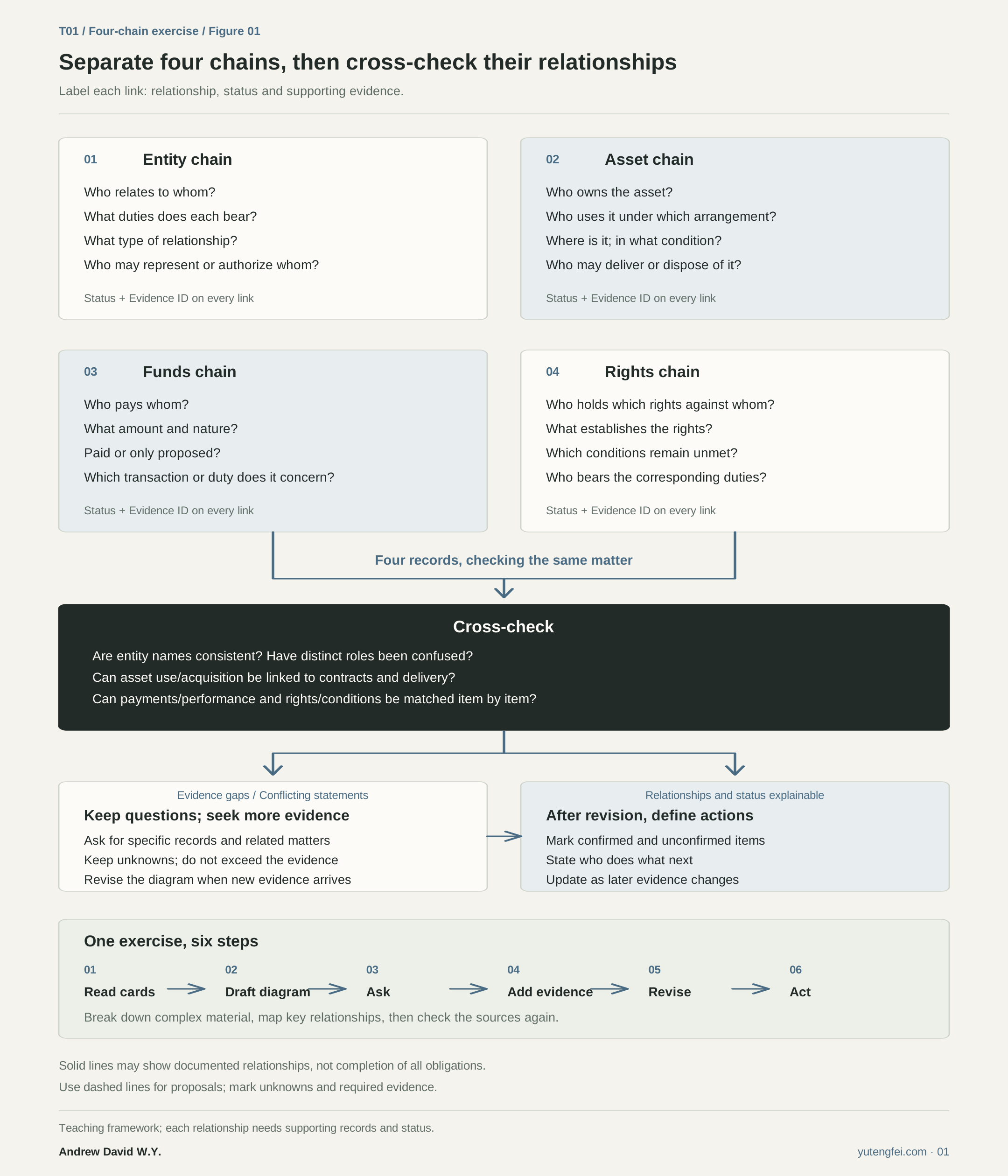
Figure 1 offers a way to read materials and draw relationships. Read solid lines, dashed lines and unverified markers together with the cited materials and specific performance status.
2. Establish the exercise rules
The setting is a packaging-service pilot. A, B, C, D and E stand for five fictional entities. Every document, transaction and amount was created for this teaching exercise. None is a real company record or voucher.
There are three rounds.
Round one: read the initial packet and draw. Use cards E01–E06 to record supported relationships while retaining uncertainties.
Round two: question the diagram and record gaps. Exchange diagrams with a partner, or use the questions below if working alone. Specify what additional information each gap requires.
Round three: open the supplementary packet, revise and explain. Read E07–E10, change specific connections, retain what remains unknown and produce an action list.
Get paper or a worksheet ready. Even a few lines should be your own work. Comparing after drawing helps reveal where you moved too quickly.
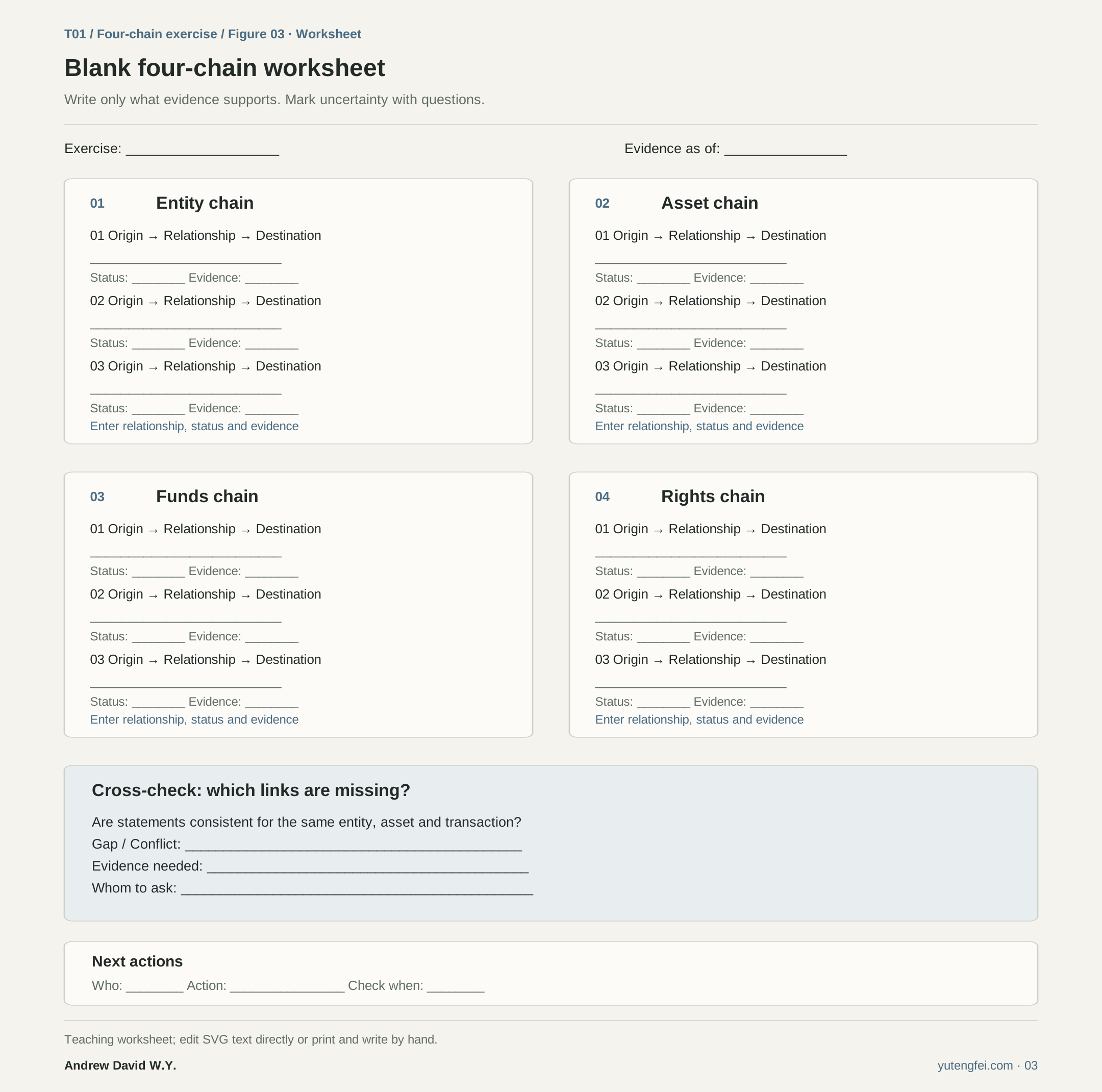
Open the four-chain worksheet · Download the blank exercise diagram as SVG
3. Round one: what can these six cards support?
The initial packet contains document summaries, a unilateral expression of interest, presentation claims and a receipt record. Their evidential nature differs. Read them individually before joining them into a complete story.
E01 | Project introduction
Provided by Company A.
The introduction says A leads the packaging-service pilot and B handles daily operations; equipment has been secured and cooperation funding is in place. It provides no shareholding relationships, equipment list or funding details.
E02 | Equipment quotation
Sent by Company C to Company B.
It lists a sale price and specifications for packaging equipment, stating that it is for discussion and that the transaction method and terms depend on a formal contract. The initial packet includes no contract, payment or delivery evidence.
E03 | Summary of a signed customer order
Provided by Companies B and D.
B will provide D with a batch of packaging services. D pays an RMB 80,000 advance, with subsequent settlement based on service and acceptance under the order. The initial packet includes no completion or acceptance materials.
E04 | Simulated bank receipt record
Provided by Company B.
B's account received RMB 80,000 from D, identified as the service advance for the E03 order. The initial packet contains no other evidence of funds received.
E05 | Unilateral cooperation-interest email
Sent by Company E to Company A.
E proposes investing RMB 200,000 and discussing a share in operating results. The recipient entity, nature of the funds, payment conditions, corresponding rights and exit arrangements await written agreement. The initial packet has no formal bilateral cooperation document or receipt record.
E06 | Meeting excerpt
Record of a discussion between A and B.
A leads planning and B proposes to operate; specific duties, fees and authority depend on a separate signed document. The excerpt does not confirm A's shareholding in or control over B, or establish authority to dispose of equipment.
Begin drawing
Write the five entities separately and place the objects from the materials beside them. For every line, add the relationship, status and evidence ID.
A signed order supports recording that contractual relationship. Whether services are complete, payment is settled or other conditions remain must be checked separately. Marking a whole document “complete” should not turn every matter mentioned into an accomplished event.
Use dashed lines for proposals and “unverified” for unsupported relationships. Other legends are acceptable if a reader can understand the same system consistently.
Produce three things in round one: an initial four-chain diagram, a gap list and a short explanation of what can and cannot currently be concluded.
4. Round two: question the basis for each line
Before polishing the layout, work through the lines with these questions.
What does A mean by leading the project? Planning, operating or controlling another entity? Which card supports the relationship you drew?
How far does a quotation addressed to B establish the equipment arrangement? What supports the quotation, signed transaction, payment, delivery, ownership and use respectively?
Why did the money reach this account? Which order or agreement does it relate to? Have you counted the same funds again as another new source?
How much of the proposed cooperation is defined? Who receives the funds, when are they payable, what rights follow, and what remains under discussion?
Does the rights chain identify responsibility for performance? If the diagram says someone “may receive a result,” who must provide it, under what conditions and through which process?
The unanswered questions are worth keeping.
“Missing materials” is too vague. Specify, for example: the equipment acquisition method cannot yet be established; a formal agreement and delivery evidence are needed to determine whether the line should show purchase, lease or another arrangement.
Then the person collecting materials knows what you are asking.
5. Round three: how does further evidence change the judgment?
After completing the initial diagram and gap list, open the supplementary packet E07–E10.
Do not delete the first diagram and start again. Retain it and record three changes:
- Which unknown does a new card explain?
- Which earlier judgment needs correction, and was it originally too broad?
- What remains uncertain after the new materials, and what must be asked next?
Further evidence gives every judgment an opportunity to be corrected. Some connections become clearer, broad statements split into separate matters, and some locations remain unverified.
Explaining those changes matters more than adding nodes.
Afterwards, open the reference solution and assessment criteria. The reference diagram is available in that file and the collapsible area of the illustrated review page so you can work before comparing.
6. What should you check in the reference diagram?
Your layout may differ. Compare relationships, directions, statuses and evidence first.
For entities, position at the top is not proof of control. For assets, physical location is not ownership. Trace funds to the payer, recipient and specific event. Show both the holder of a right and the party responsible for fulfilling it.
Check the connections between chains particularly carefully. Does received money have a corresponding obligation? Has a use arrangement been expanded into authority to dispose of an asset? Has proposed funding become confirmed equity or an allocation too early?
The following reference diagram is for after the supplementary review. It retains unresolved matters and distinguishes actual events, contractual provisions and arrangements not yet implemented.
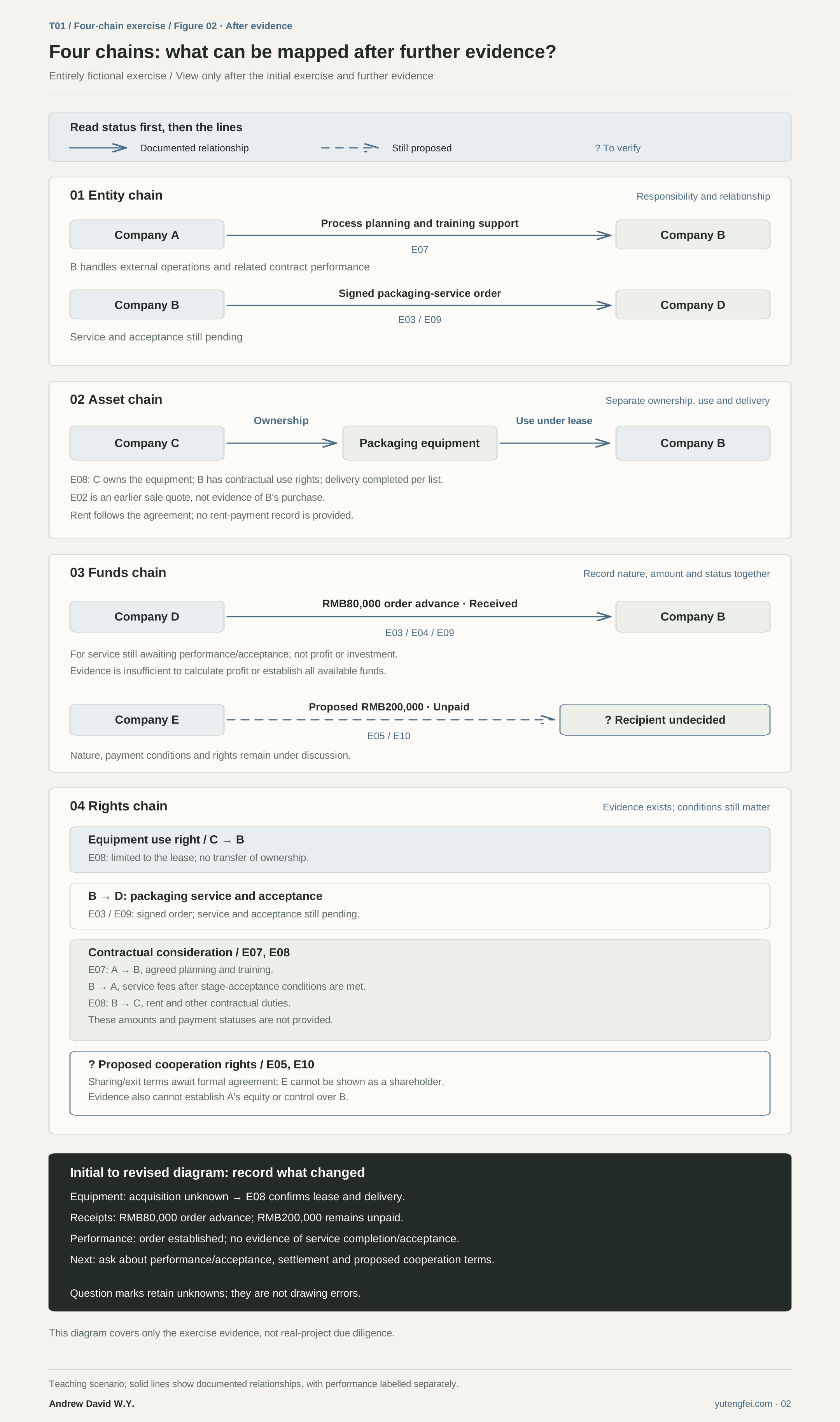
Figure 2 represents only this exercise's materials and does not replace verification in a real project. Funds received, performance pending, unpaid and undefined are different statuses.
7. Turn the result into next steps
Explain the project in ordinary language to someone who did not draw it. Start with relationships that can be confirmed, then the remaining gaps. Do not turn proposed arrangements into established facts while speaking.
Choose the two or three gaps that most affect judgment. Write actions specifying the question, the role to approach, the document needed and the check to perform when it arrives. If the actual owner or timing is not agreed, retain a pending status.
The exercise develops a way of working: lay out the materials, identify key relationships, state questions clearly, and communicate through both a diagram and an action list.
A diagram that identifies gaps is already useful. It gives discussion a specific location and later evidence somewhere to go.
Then try it with your own work materials. For each line, ask where the evidence is, whether the status is right and whether the other chains correspond. Draw what can be supported and retain questions for the next check.