After Bringing In AI, What Capability Does the Company Keep?
While drafting V2.0, I looked at handover decisions, how three work documents can agree and how one actual workflow could test today's result and the capability left for next time.
Reading & sharing
I've been putting together V2.0 of my research on rebuilding operating capability with AI. The further I got, the more I wanted to know what a company actually keeps after the work is done.
Using AI to prepare a document may save time. Can the next colleague use it straight away? Can somebody else do the job next time? If I can't answer those questions, I still need to see how much this round's speed will help the next one.
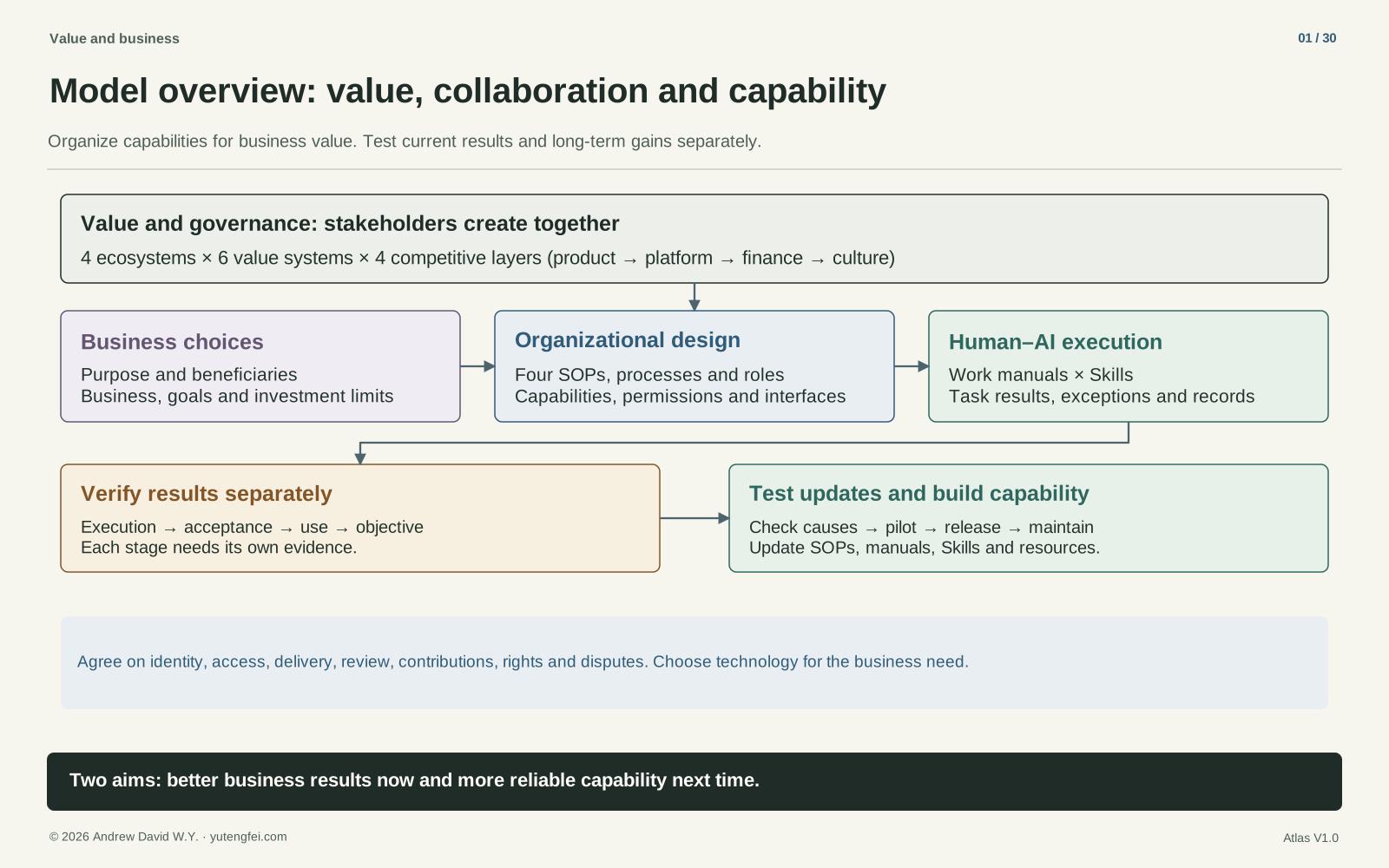
Organize capabilities for business value. Test current results and long-term gains separately. · Zoom in ↗
Start with the handover
Say a research brief has been delivered and its sources checked. The next person needs it to make a decision. If an approval or key piece of data is still missing, that decision has to wait. The brief's quality is one question. Readiness for the next step is another. Fix the brief if it's incomplete. If the next step is blocked, find the person who can coordinate the resources or make the decision.
I think the distinction matters. In everyday work we can say “done” for submission, acceptance, use by the next team or achievement of the business objective. When something goes wrong, we end up tracing back to see where it actually stopped.
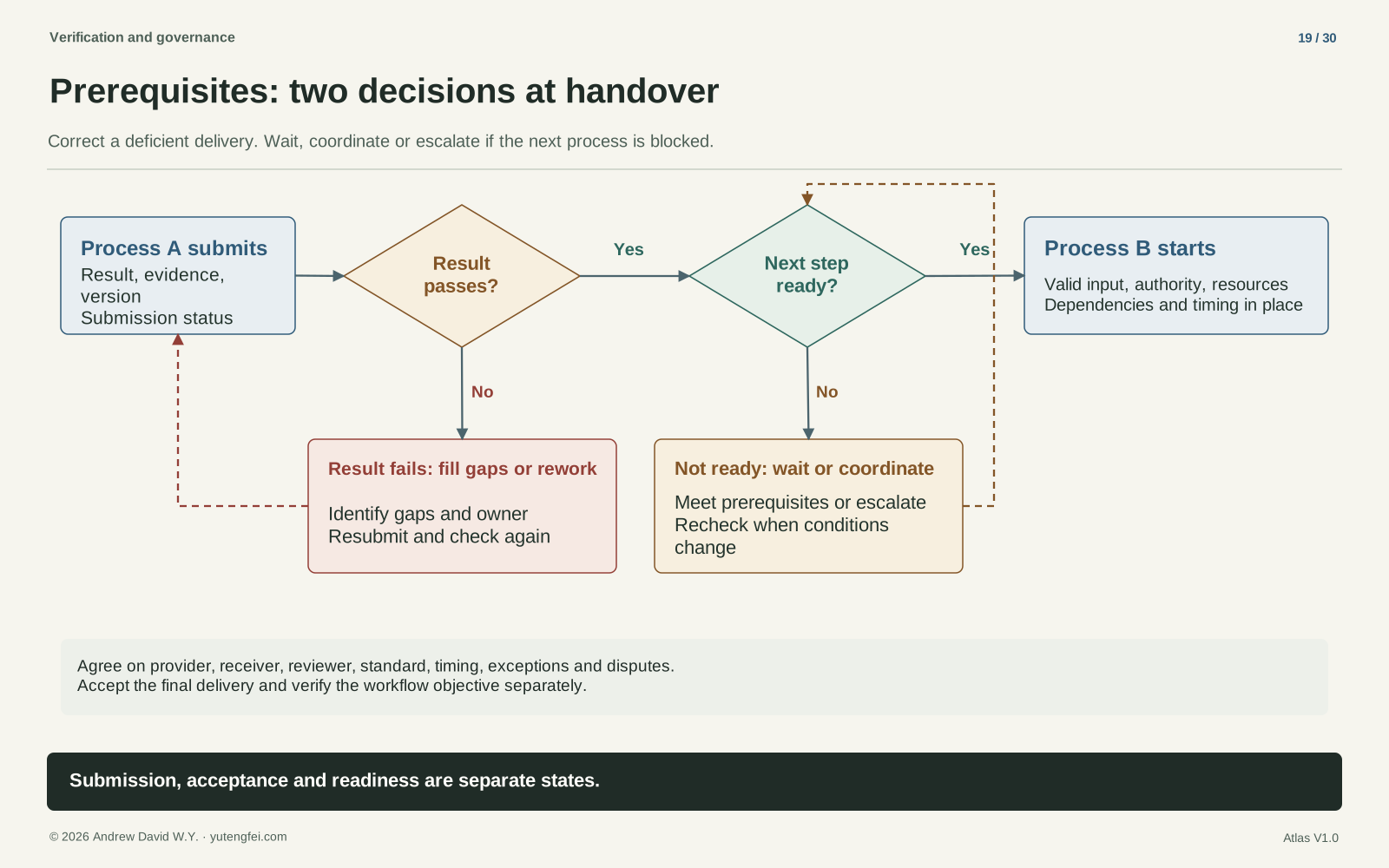
Correct a deficient delivery. Wait, coordinate or escalate if the next process is blocked. · Zoom in ↗
Take the three documents back to the work itself
The role description gives the result the person owns. The manual explains how to do the work and when and to whom to hand it over. The evaluation rules specify what evidence counts. When the documents are written separately, someone can follow the manual and still be evaluated against a different standard.
With AI involved, I want the human manual and the AI Skill to refer to the same acceptance requirements. Who does the work and how can change. Agree first on what the result needs to meet and when a person needs to confirm it.
Try it on one business workflow
Pick a workflow with a clear result and record the baseline. Look at quality, waiting, rework, human takeover and costs, then check whether a customer or internal user could actually use the result. Once it's done, ask someone else to run it using the manual or Skill left behind. That gives us a way to see whether the experience can be reused.
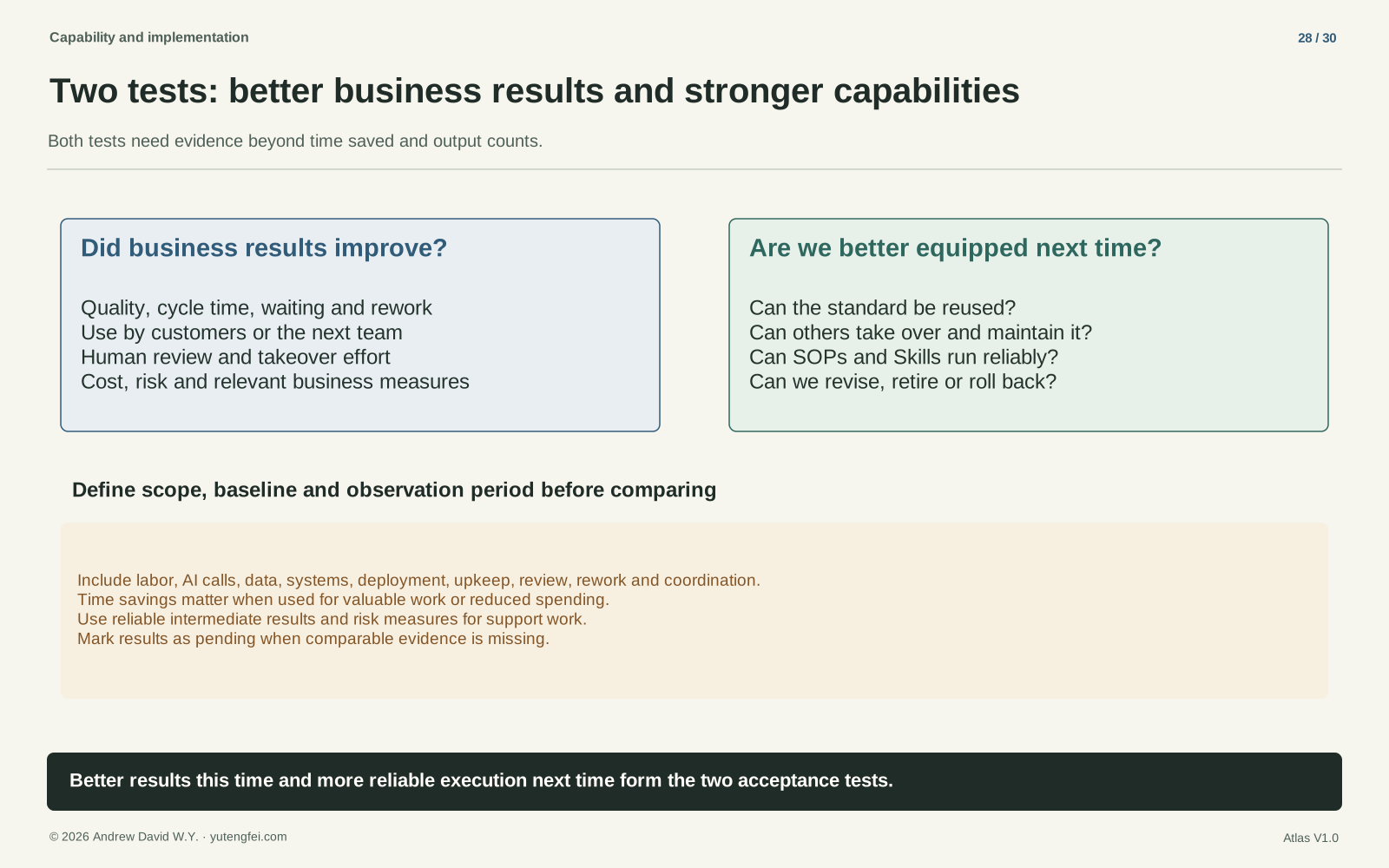
Both tests need evidence beyond time saved and output counts. · Zoom in ↗
The framework and atlas are ready for testing in actual work. The fourteen chapters and thirty diagrams, from stakeholder value and four-direction SOPs to result evidence and reusable capability, are in Rebuilding Enterprise Operating Capability with AI.