A night walk at Hong Kong’s Cattle Depot Artist Village: red-brick buildings in To Kwa Wan
On October 23, 2026, a walk near Harbour Plaza 8 Degrees in To Kwa Wan brought me to Cattle Depot Artist Village: red-brick buildings, green windows and a blue sculpture between the towers.
Reading & sharing
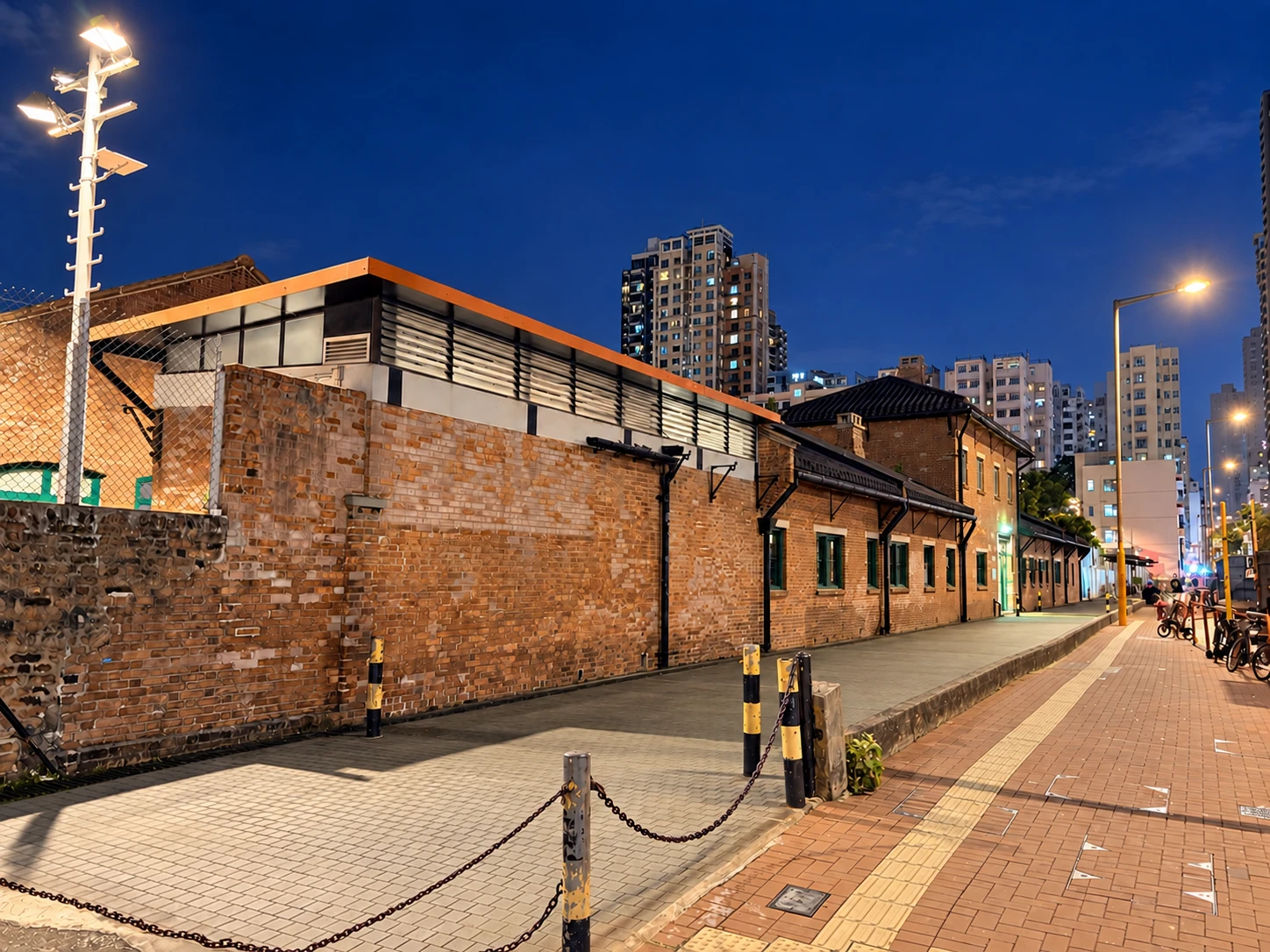
October 23, 2026, Hong Kong. I had attended a meeting the day before and was staying at Harbour Plaza 8 Degrees in To Kwa Wan, Kowloon. With a little free time in the schedule, I went for a walk nearby.
I had no itinerary and no sights to tick off. I just wanted to get out of the meeting room and look around the neighbourhood. That was how I came across Cattle Depot Artist Village.
Old buildings beside the towers
Hong Kong has always felt fast to me. Meetings, work, traffic and tightly packed high-rises make it easy to get caught up in the pace.
Cattle Depot Artist Village felt different. Low red-brick buildings, green doors and windows, some curved rooflines and some pitched roofs. Under the lights, I could see the wear on the bricks and window frames.
Looking up, I could see residential towers behind them. The new buildings and old houses stood close together. Neither was hidden away. From that spot, it was easy to see Hong Kong at two scales: a city growing upwards, and older buildings still holding their place at street level.
I think places like this are worth walking through. There is no single attraction you have to see. The buildings, streets and everyday life are interesting together.
The name has a real history
I later checked Hong Kong government information and learned that this was formerly the Ma Tau Kok Animal Quarantine Depot. Built in 1908, it served as a slaughterhouse and quarantine facility. In 2001, the front portion was converted into an artist village for artists and arts organisations.
The use changed from animal quarantine to making art. The old buildings stayed.
I like that. Giving a place a new use does not have to mean demolishing everything that was there. The red-brick walls, windows, doors and rooflines are still here, so we can get some sense of what the place used to be.
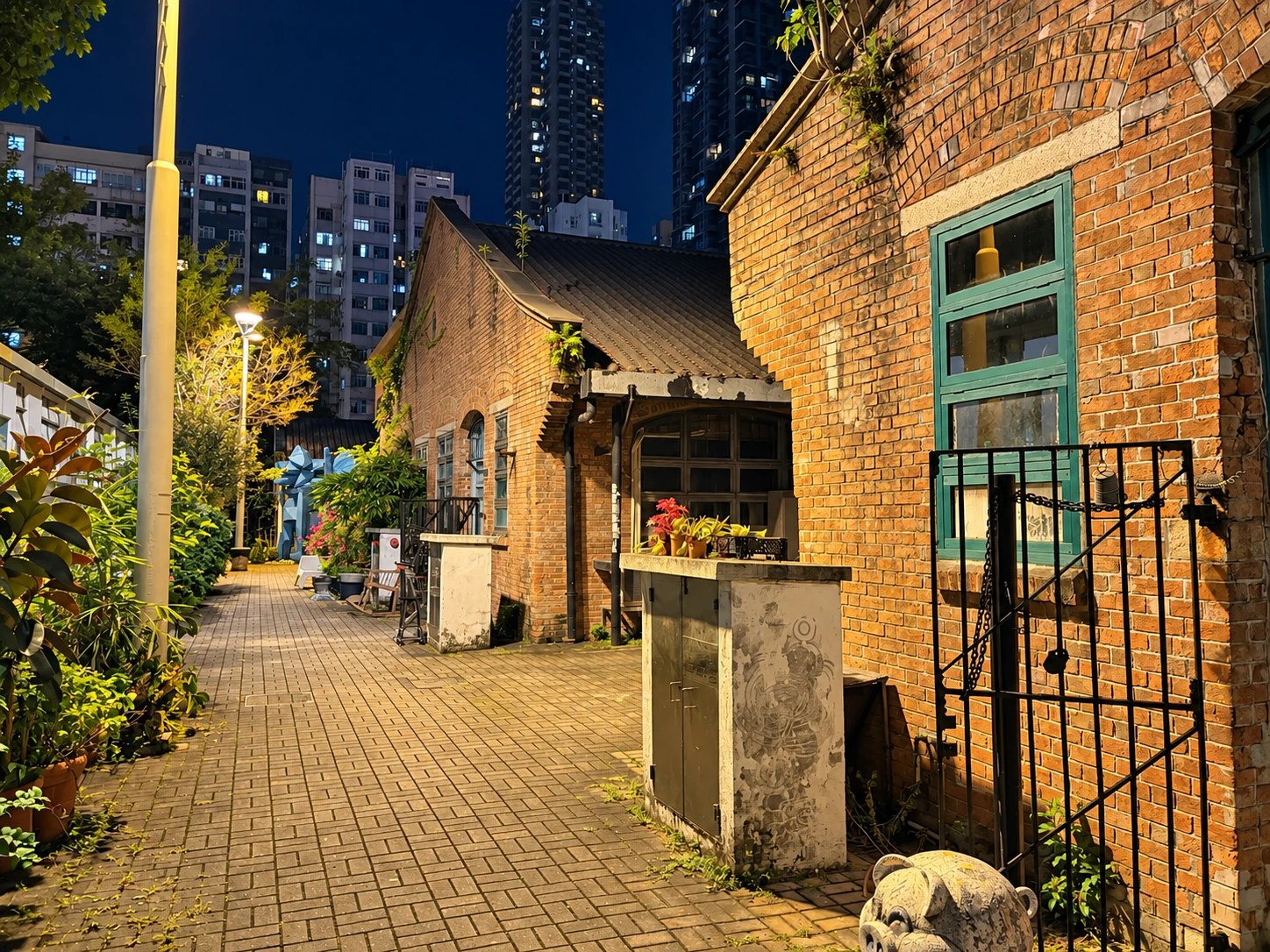
Walls, plants and a work I stopped to look at
Further along the paths were potted plants and flowers. Beside the old walls were chairs, iron gates and art installations. These are also artists’ workplaces, so a walk around should respect the people using them.
One large blue sculpture held my attention. It had many sharp folds, as though assembled from geometric shapes, with flowers beside it and an old building behind.
I stopped to take a few photographs. Sometimes there is no need to explain a work immediately. Looking is enough to begin with.
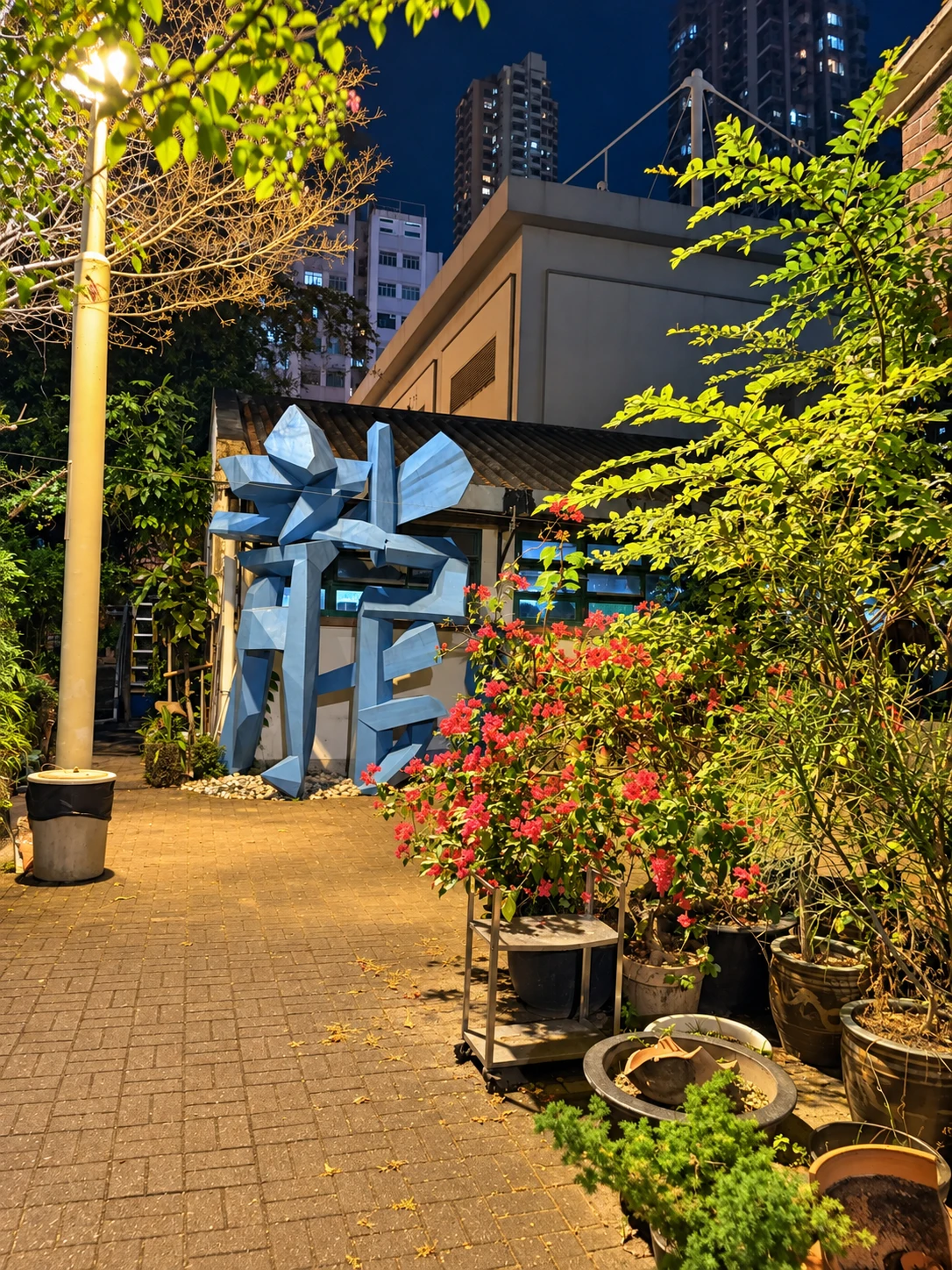
This account focuses on the buildings and outdoor spaces. Under the night lighting, the red brick, green windows and plants stood out. Walking slowly helped me notice the details.
Leave a little time for yourself on a work trip
I came to Hong Kong for a meeting. Cattle Depot Artist Village was not in the plan. I was staying nearby, had some time, and went for a walk.
Increasingly, I feel there is no need to fill every free moment on a business trip. Walking around and seeing a city beyond its meeting venues is worthwhile too.
Hong Kong has capital markets, towers and busy commercial districts. It also has neighbourhoods like To Kwa Wan and red-brick buildings more than a century old. Seeing them together gives a fuller picture of the city.
I did not visit a major attraction that evening. Looking back through the photographs, I remember red-brick walls, green window frames and a small path between the towers. That is enough for me.
Notes from this visit
I visited on October 23, 2026. Cattle Depot Artist Village is at 63 Ma Tau Kok Road, To Kwa Wan, Kowloon, Hong Kong. I was staying at Harbour Plaza 8 Degrees and walked around the area in my free time outside the meeting schedule.
If you are nearby, it works well as a neighbourhood walk without an overfilled itinerary. Individual studios and exhibition spaces have their own arrangements. My evening visit does not mean every space is open to visitors at night. Before going, check the Hong Kong Development Bureau’s introduction to Cattle Depot Artist Village.
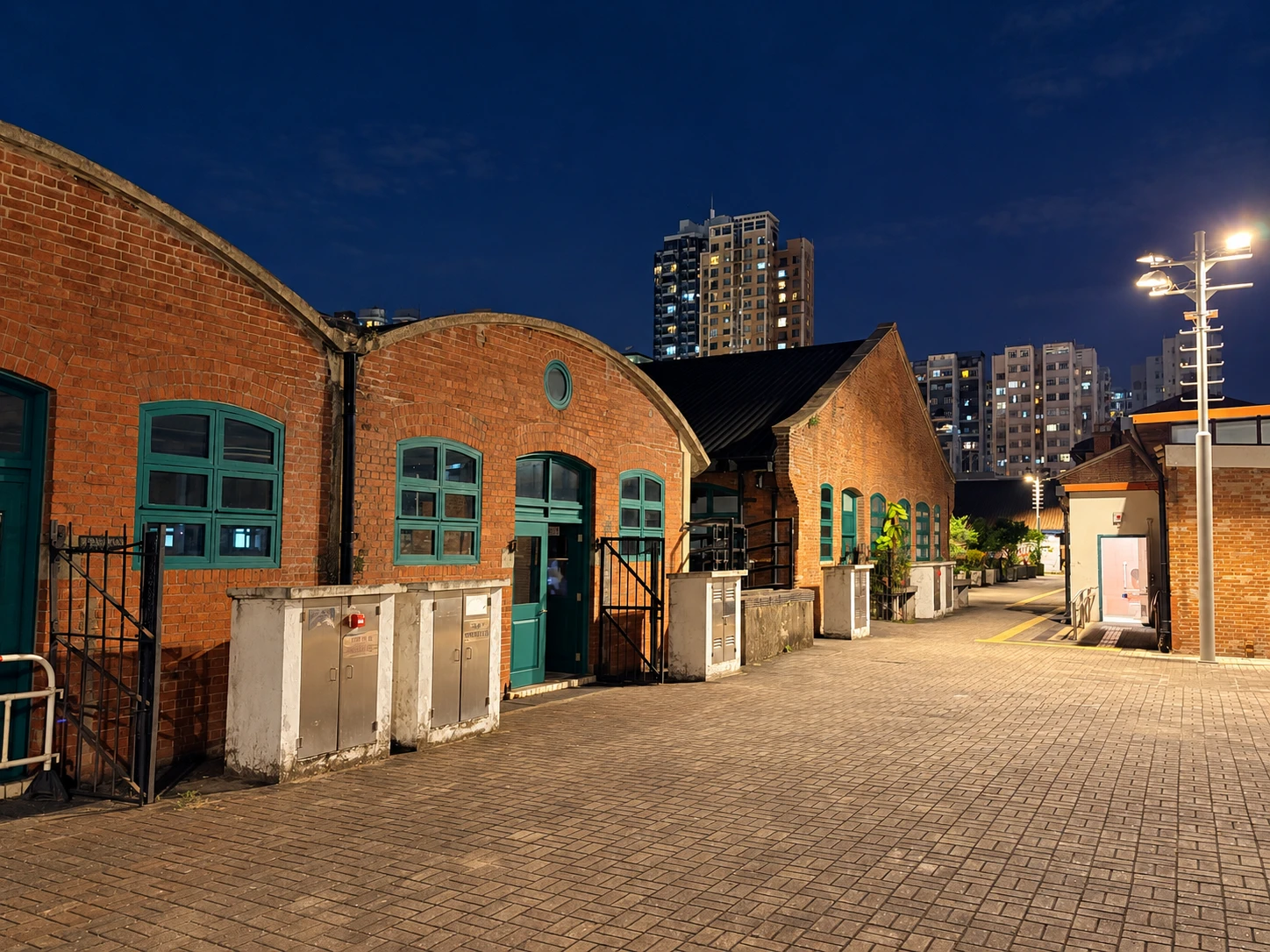
Photographs taken by the author on October 23, 2026. Displayed versions use AI outpainting and night-scene adjustments; two bystanders were removed from the street view. Expanded areas are not documentary evidence of architectural details. Each photograph links to the original.