An enterprise's results usually depend on many people's work. Some provide money, some develop products, some find customers and some deliver the work. Others keep handling the less visible tasks that still have to be done.
They all help create value. When it is time to distribute the rewards, a question follows: who decides?
Can someone who contributes more decide to take more? Can the person running the business make arrangements on everyone's behalf? If everyone has a view, how does the team reach a decision it can carry out?
I think it helps to separate three questions: who created value, how contributions are assessed, and who has authority to decide this particular allocation.
These questions are connected. Contribution should be an important basis for allocation. A contribution record alone, however, does not establish who may approve an arrangement, how far that authority extends or who is accountable for the decision.
My view is that an allocation should be decided by a person or body with clear authority over the matter and accountability for the decision. The people concerned should be able to provide evidence, understand the rules that affect them, express their views and use a clear review process.
These are my reflections and proposals on organizational governance. In a particular enterprise, we still need to examine what is being allocated, existing agreements, the organization's authorization procedures and applicable rules. Saying that everyone created value together does not settle those arrangements.
1. Start by identifying what is being allocated
Many disputes begin before the subject has been agreed. One person means remuneration already promised, another means an additional award, another means future equity, and another means participation in decisions. They may all use the word “rights” while discussing different things.
Separate the subjects first.
| Subject | What needs checking first | How it enters the discussion |
|---|---|---|
| Existing commitments, such as wages, supplier payments and service fees | The obligations already established, their conditions and performance to date | Handle them under the relevant agreements and applicable requirements. Do not arbitrarily recalculate them using a new scoring scheme. |
| New bonuses, awards or operating incentives | Where the resources come from, the available scope and who confirms the rules | Propose, assess, approve and implement arrangements within a defined scope and authority. |
| Long-term interests, such as equity | Who provides them, how they are granted, when they take effect and what responsibilities apply | Use the appropriate formal arrangements and procedures. A contribution assessment does not itself grant rights. |
| Participation in governance | Which matters people may understand, discuss, propose, review or decide | Define participation channels separately from final decision authority. |
This is a basic step, but it is easily skipped.
Revenue also has costs, existing obligations, necessary investment and continuing operations behind it. Before discussing an additional incentive, identify its source and scope. If the available amount has not been established, arguing over a percentage may produce a number with no practical basis.
Deductions and amounts retained also need a basis agreed in advance or appropriately confirmed. Once results are known, “development needs” should not become a last-minute reason to change the amount available for allocation.
Customers, employees, suppliers and channel partners can all contribute to the business. Distinguish rewards already received, outstanding commitments and possible additional sharing. Know which contribution an assessment is addressing. This helps avoid double counting without overlooking work that does not appear directly in sales figures.
Once the subject is clear, we can identify the relevant evidence and the level at which a decision belongs.
2. Make contributions visible, then assess them carefully
I would start with four questions: who did the work, what did they do, what resulted from it, and how long did the contribution continue?
Then consider the responsibility they carried, the risks they faced and the role of their input in the business at that time.
Bringing in an order is a contribution. Delivering it on time, resolving quality problems and helping a customer continue working with the business also create value. Some inputs produce visible results immediately. Others need time before their effects can be assessed.
A single measure for everyone can miss important work. Sales alone may undervalue delivery and service. Hours alone may not capture difficulty or actual results.
I prefer to define the roles and tasks first, then choose appropriate evidence. Check facts where they can be checked. Explain the reasons where judgment is needed. Retain uncertainty where something cannot yet be confirmed.
A score can support discussion, but it still contains choices: what was recorded, what was left out, why a weight was chosen and how continuing contributions are considered.
Those choices should be open to questions. Putting a calculation into a system does not remove the need to check the source records and rules. Automation can reduce repetitive work. It cannot settle whether the rules are reasonable or the authority is clear.
A clearer contribution assessment gives allocation a stronger basis. Who may make which decision still requires a separate check of authority.
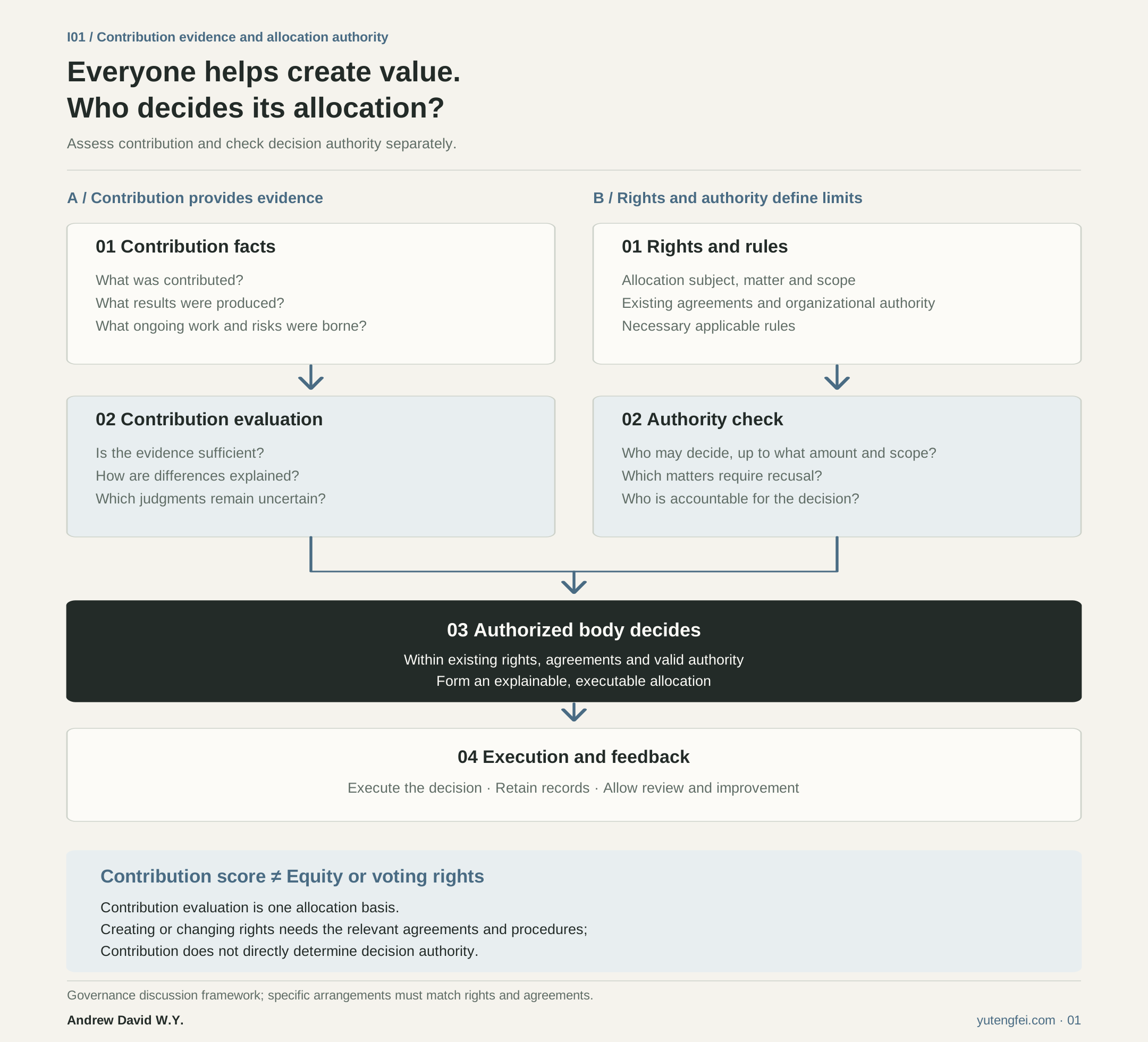
Figure 1 separates contribution evidence from the basis of authority. The two must align for the specific allocation. An assessment does not automatically become equity or decision-making rights.
3. Connect decision authority to a specific matter and responsibility
“Who decides?” needs more than a name. What may that person decide? Where does the authority come from? Where does it end?
An operating manager may be authorized to approve an ordinary award. Long-term interests, changes to existing agreements or resources beyond the established scope may require different authority and procedures.
Preparing a proposal does not necessarily give someone authority to approve it. Providing contribution data, assessing contributions, confirming a budget, approving an arrangement and making a payment are distinct tasks. A small team may assign several tasks to fewer people, but the responsibilities still need to be distinguished.
I suggest making at least four things explicit:
- Scope: what kind of allocation is being decided, for whom and for which period.
- Basis of authority: the effective agreement or organizational procedure providing authority, and whether it covers this matter.
- Limits: how far the decision may go, and who handles matters beyond those limits.
- Accountability: who explains the basis, checks it, approves the arrangement, implements it and keeps records.
If a decision-maker will benefit from the outcome, there should also be a way to handle the conflict of interest. Depending on the matter and organization, that may involve an independent check, a different approver or recusal under an established procedure.
I am not proposing one fixed structure for every enterprise. The point is that authority should have a traceable basis and clear limits, with someone responsible for explaining each decision.
4. Separate rule-setting, individual decisions and review
A working mechanism needs to handle at least three levels of work.
First, establish the rules.
Which matters enter the allocation, what evidence is used, who confirms it and what requires reconsideration? Explain these before individual cases wherever possible, including how the rules may be changed.
Second, handle individual matters under those rules.
Check whether the information is sufficient, the records are accurate, the conditions are met and the calculation is correct. A person with the appropriate authority then makes the decision. Established rules should be applied consistently.
Third, handle errors and objections.
A missing record calls for a factual check. A calculation error calls for examination of the formula and its basis. A decision alleged to exceed its authority calls for an authorization check. Different problems need suitable routes for resolution.
These levels may be assigned separately or connected through a simpler arrangement in a small organization. The person concerned should still know who will handle the issue, on what basis and how a response will be provided.
In particular, distinguish correcting the current case from changing rules for future cases.
An incorrect record can be corrected under the applicable procedure. If discussion shows that a rule needs improvement, identify who approves the change, when it applies and how people will be informed. Editing one number in a table does not automatically rearrange existing rights or previous outcomes.
If the current rule itself is disputed, that issue should still go to a person or body with the relevant authority. It should not automatically be deferred to the next period.
5. Give participants an appropriate way to take part
Clear decision authority should be accompanied by appropriate participation.
People can supplement records of their contributions. Relevant roles can be consulted on an assessment proposal. There should be a route to explain calculations and outcomes affecting the person concerned. Matters with broader effects may also warrant representative participation, consultation or periodic review.
Participation should fit the matter. Giving an opinion, understanding the evidence, requesting review and making the final decision serve different functions.
Transparency also needs boundaries. People should be able to see the rules and evidence relevant to them, while respecting others' personal information, business confidentiality and reasonable information limits. People should not be denied their own calculation details in the name of transparency. Nor should transparency mean publishing everyone's records without distinction.
These arrangements may not eliminate disagreement. They give disagreements a process with evidence and a response.
6. Walk through a hypothetical example
The following scenario was written specifically to explain the approach. It does not describe a real enterprise or allocation.
Suppose a small service team agrees a special award arrangement in advance. After a batch of projects, a proposal will consider customer development, delivery quality and continuing service within an established resource limit. An appropriately authorized manager will approve it. Existing wages and supplier payments remain subject to their original arrangements.
The operating manager organizes the records and proposes an award. A delivery team member notices that work resolving an after-sales problem has been omitted.
The first step is to supplement the work record and check whether the work occurred, which period it belongs to and whether it falls within the agreed assessment scope. Then examine whether the assessment and calculation need adjustment. The issue concerns contribution facts and application of the rules.
A channel partner then asks to exchange this award directly for company equity.
That concerns a different kind of interest. Whether authority for the special award also covers a long-term equity arrangement needs a separate check. Recognition of a contribution does not turn award approval into a completed equity grant. The suggestion may be considered, but it needs the procedure appropriate to that interest.
Finally, the team finds that the original rule does not explain continuing service clearly enough.
Improving the rule requires a separate discussion. Someone with the appropriate authority must confirm when the change applies and notify the people concerned. Investigation of the omitted record continues under the relevant basis, while the later rule change has its own record.
One discussion has raised three issues: a contribution record, the type of interest and a rule change. Separating them makes it possible to identify who should handle each issue, what to check and how to proceed.
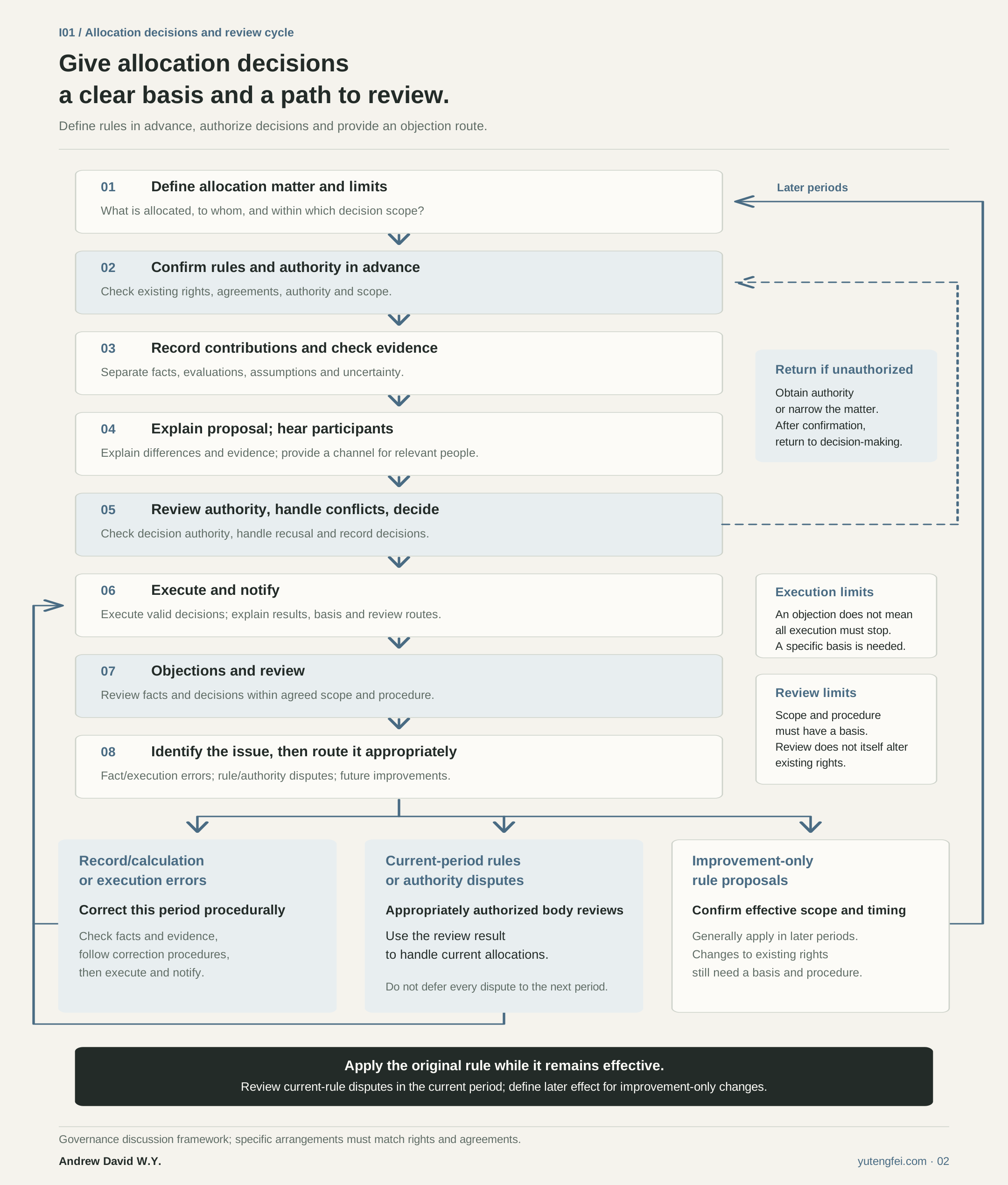
Figure 2 presents a governance proposal. Contribution records, questions of authority and improvements to future rules are handled separately. Internal review should not close participants' existing legitimate channels for raising concerns and seeking resolution.
7. Test an existing arrangement with three questions
When examining an allocation mechanism, I suggest starting here.
First, what is being allocated, and are its basis and source clear?
Are existing commitments, new incentives and long-term interests handled separately? Do contribution records correspond to the scope of resources available?
Second, who has authority to decide, and are the limits and responsibilities clear?
Who proposes, checks, approves and implements? Who handles matters outside the scope? How are personal interests in the outcome handled?
Third, if someone disagrees, how can they raise the issue and who reviews it?
How are record errors, calculation differences and disputes over authority handled? How are outcomes explained, and how are future rules changed?
Clear answers give percentages, scores and systems a stable basis. Where the answers are missing, address those gaps first.
Continuing to test the arrangement
My understanding of shared creation and shared rewards connects collective effort with specific decisions. Contributions deserve serious consideration. The basis of a decision should also be explainable.
Fairness is difficult to settle in a single sentence. We can begin by making the facts, evidence, authority and review arrangements behind each allocation concrete. Participants should understand how their input is treated and where they can take a question.
That gives the mechanism a chance to be tested and improved through continuing cooperation, gradually building trust.