The introduction is updated, but the webpage is not. The Chinese changes, while the English remains old. A sentence removed from the article reappears when someone shares the poster. Many content problems arise where these pieces fail to connect.
I think external content needs a shared starting point: establish what the facts are now, then find every place they have been expressed.
1. Keep one fact record, with wording suited to each audience
Keeping one current account of a fact does not require every poster and article to use identical sentences. Customers need to know how to use something; partners care about collaboration; specialist readers also need conditions and evidence.
Wording may differ, but the entity, date, stage, quantitative basis and limitations must not contradict each other. Assign identifiers to key facts and record the original basis, verification scope, current wording and limits that should not be extended.
For “the system is live”, establish whether it is a demonstration, a trial or a full service; who may use it; and which functions remain unavailable. Designers and translators need these facts before deciding how to present them.
2. Review specific sentences for specific uses
Record the proposed original wording, fact identifier, source version, exact document location, status and verification date. Then add the audience, channel, planned publication time, reviewing role, basis of authority and conditions of validity.
“The business team has seen it” is insufficient. It must be clear which version, sentence and use they reviewed. Fact checking, professional review and final publication approval may involve different roles; one “passed” status cannot replace the whole process.
Some content may be used within limits; some needs further evidence; some must be put on hold. The conclusion must match the specific audience and purpose. Materials permitted for an internal meeting cannot simply be treated as public website content.
3. Fix the source version before production
Fixing a version establishes a clear baseline for this production. Record the text, diagrams, attachments, sources and approval basis, so that a designer does not copy one sentence from a chat today and another from an old presentation tomorrow.
A fixed version does not mean the facts can never change. When they do, reopen the review and record the differences and affected scope. An unconfirmed “latest version” is still only a version awaiting action.
If the original wording is unclear, return to the fact record for confirmation. Designers and translators should not fill the gap by making commitments for the business. Stage words such as “proposed”, “expected”, “completed”, “may apply” and “approved” must not disappear just to make a sentence read more smoothly.
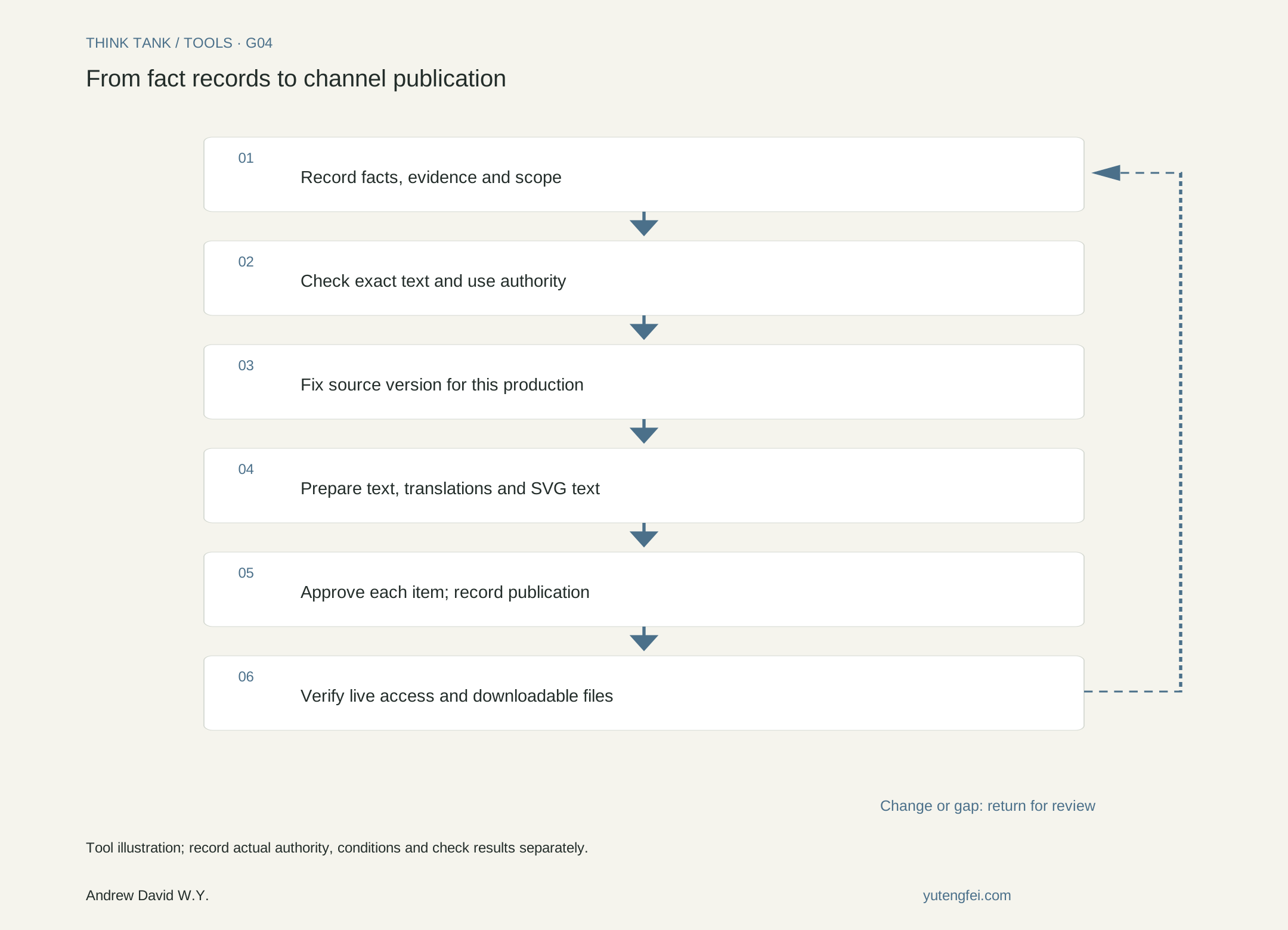
Download SVG: From fact records to publication across channels
4. Review translations and text inside graphics together
Translation checks must cover the subject, conditions, tense, currency and amount units, and strength of responsibility as well as literal meaning. “Being prepared” cannot become “already provided”, nor can “conditional use” become “available at any time”.
A change to the article may also require changes to its title, summary, SVG text, image captions, downloads and sharing graphics. Include the places that actually reference the same fact; do not overlook them because they use a different file type.
For each language, record the source version, translation version, check results and unresolved questions. Recheck affected translations when the source changes substantively. Giving an old translation a new date does not make it synchronized.
5. Work through a fictional change
The organizations, functions and dates below are for teaching only and do not represent real brands or projects.
Suppose a simulated organization’s document F01 states: “The booking tool is being trialled within a limited scope and is open only to invited users.” This account is used on a Chinese webpage, in an English introduction and in one SVG. The review covers only those three material versions, and publication staff register each actual location.
Someone then proposes changing the button to “Everyone can use it now”. That changes who has access; it is more than a copy edit. First obtain the basis for the scope change and confirmation from an authorized person. Without that basis, retain the original limited wording and leave the new version pending verification.
Now suppose the trial is suspended. On receiving a valid notice, register its basis, time and affected locations. Suspend the relevant access points within the applicable authority, update the current fact statement, and check translations, SVGs and downloads. Keep the old wording as internal history, and stop presenting it as the current public account.
Updating one webpage does not complete the work everywhere. Record actual updates, verification and outstanding locations individually. Replacing a webpage also cannot make files already downloaded disappear from everyone’s devices.
6. Connect publication records to change notices
Publication records should retain at least the material identifier, language, file version, real URL or location, publication time and verification result. Record a successful upload separately from an actual page update. If cached content or old attachments remain, continue handling them rather than closing the task.
A change notice identifies the fact to change, affected materials, proposed responsible role and next verification time. If the person responsible is unconfirmed, mark the assignment as pending. Do not promise a date on someone else’s behalf.
Begin verification at the most important public access point, then follow the reference list. Handle withdrawals and corrections within the actual authority and retain records. Different channels may handle deletion, caching and historical retention differently; describe the actual limits of the action taken.
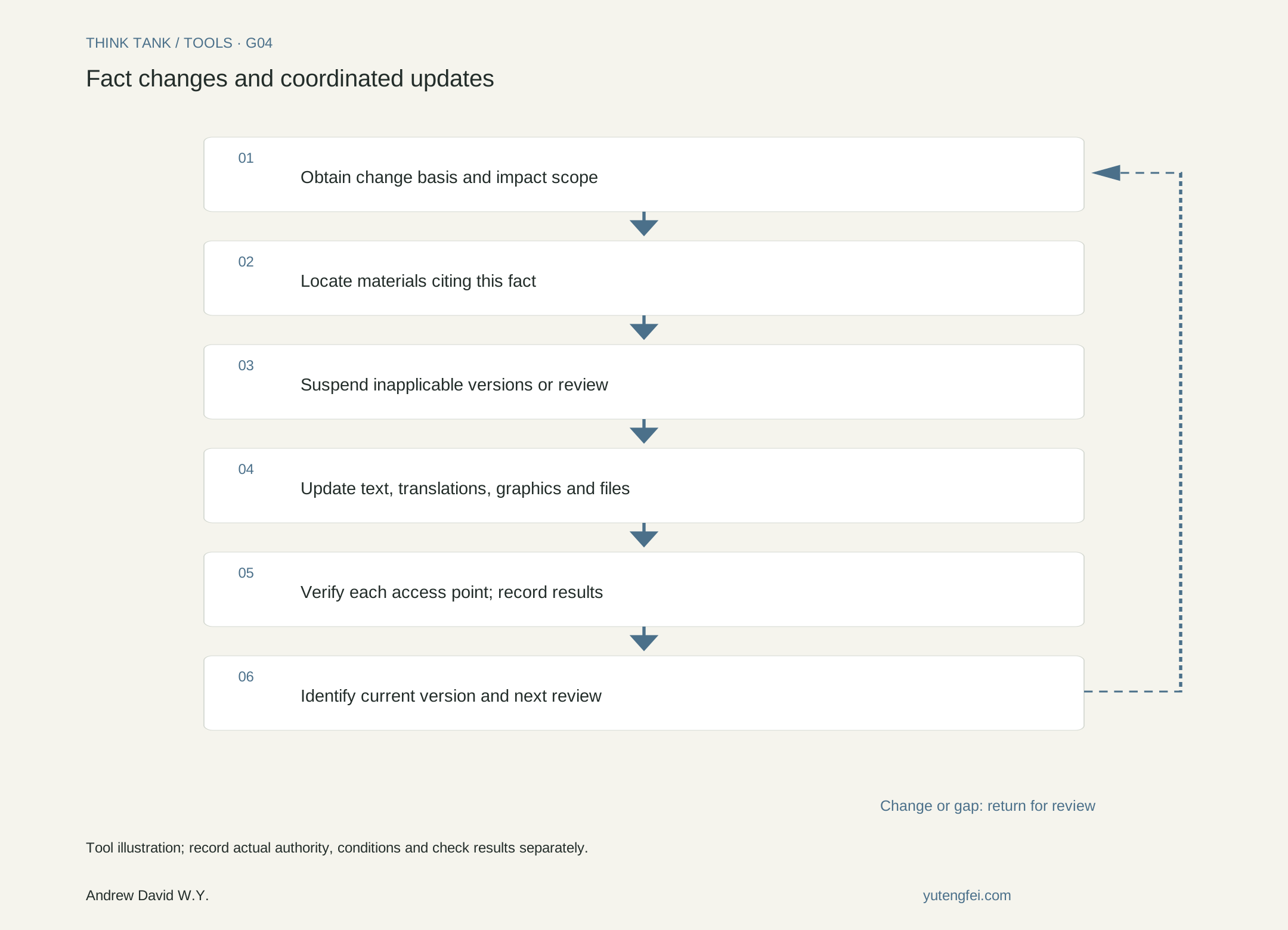
Download SVG: Fact changes and coordinated updates
7. Start with a frequently repeated statement
Take a sentence that appears repeatedly on the website, in presentations and on posters. Recover its basis, establish its current scope and list all actual reference locations. Try changing it once and check whether the related materials can be updated with it.
The table connects the original evidence, current wording, confirmation authority, production version and public location. Traceable updates let the next person identify which files can still be used.
Organize scattered materials, place key facts in shared records, turn verification and updating into practical steps, and then draw the relationships. Apply this work to every actual publication.