After a listing, an enterprise still has business to run, cash to manage and projects to advance. It also needs to fulfil the applicable governance and reporting responsibilities so investors can understand its current position.
If these activities run separately, they can lose touch. Operations changes a project while finance records the original budget. A report is public but communication materials still use old data. Investors repeatedly ask a question that management never receives in full.
I think the annual plan should connect these matters: what the company intends to do, the resources required, which obligations fall due, what may be communicated and who handles a change.
Give operations clear responsibility, disclosure an evidential basis, communication a defined scope and changes an owner. The following working plan can be adapted to the company concerned.
1. Establish the applicable requirements before filling the calendar
Companies whose securities trade publicly may have different statuses and obligations.
First establish the issuing entity, security class, actual market, reporting status and fiscal year. Check exchange listing, over-the-counter quotation, issuance arrangements and continuing reporting separately. A stock symbol alone does not justify applying an entire calendar.
In the United States, foreign private issuers have reporting arrangements that differ from those of domestic reporting issuers. The use of Form 20-F and Form 6-K, and exceptions to quarterly reporting rules, depend on the issuer's actual status. They should not all be assigned identical quarterly filings. See SEC Form 20-F, Form 6-K and 17 CFR 240.13a-13.
Prepare an applicability register. For each item, record its basis, trigger, actual deadline, prerequisites, owner, confirmation authority and evidence of completion. Revisit it if the market or reporting status changes.
Specialists establish the applicable requirements; the working team connects the actions. Filing a report, making it publicly available, completing a meeting and delivering a notice may be different statuses.
Include internal operating meetings, but keep their dates separate from statutory and market-rule deadlines. Monthly checks and quarterly reviews can be organized as needed; an internal meeting does not replace an obligation that must actually be fulfilled.
2. Clear operating plans provide continuing substance for communication
Organize the annual operating plan around business results, cash, projects and risks.
Business results cover products or services, customers and delivery, alongside revenue, profit and operating cash flow. Signing an order, recognizing revenue, earning profit and receiving cash are different events.
Cash planning should identify existing funds, expected collections, required expenses and restrictions. Proposed financing, signed subscriptions, completed closing, receipt of funds and eligibility to use them also need separate statuses.
For projects, specify the intended stage, owner, conditions, resources and acceptance method. If additional funding is needed before launch, retain that condition rather than describing full execution in the plan or public introduction.
Assign risk ownership. If customer payments change, costs rise, construction is delayed or funding conditions are unmet, who verifies the event, assesses its effects and decides the next step?
Compare targets, budgets and actual results without combining them into one figure. Explain deviations and responses, then let the operating and disclosure owners assess whether public information is affected.
Investor communication can explain this real work: how revenue is created, why cash changed, which conditions affect project progress and how management plans to respond. That is more useful than an account disconnected from operations.
3. Run a calendar and an event-triggered process together
A calendar suits work that can be prepared in advance. Four working windows may help; they are not necessarily four fixed quarters.
| Working window | Main work | Records or deliverables |
|---|---|---|
| Annual preparation | Check applicable obligations; establish operating objectives, budget, projects, risks and communication themes | Annual tasks, responsibilities, resources and indicator definitions |
| Rolling review | Check business, cash, projects and unresolved matters; record changes | Internal operating records, variance explanations and escalation items |
| Applicable reporting and governance milestones | Prepare reports, deliberations and other required procedures, then connect public communication | Resolutions, reports, public records and confirmed communication materials |
| Annual review and next-cycle preparation | Compare targets, results, performance and feedback | Findings, ownership of unresolved matters and the next annual plan |
Work backwards from each deadline to allow for business information, financial checks, audit or other specialist work and necessary deliberation. Do not wait until the due date to discover unmet prerequisites.
The other track handles events that may occur at any time.
Important business changes, unusual funding developments, notices from regulators or market authorities, and errors in public materials should enter an identification and escalation process. Authorized owners and specialists should promptly assess materiality, disclosure and timing.
For Nasdaq-listed companies, applicable rules include requirements for public release of material information and advance notification of certain events. These cannot simply wait for the next results presentation. This is a market-specific example; determine the company's actual obligations separately. See Nasdaq Rule 5250 and IM-5250-1.
An event may require changing the communication calendar. The calendar prepares the work; the event process handles change. Both should use the same fact records and responsibility register.
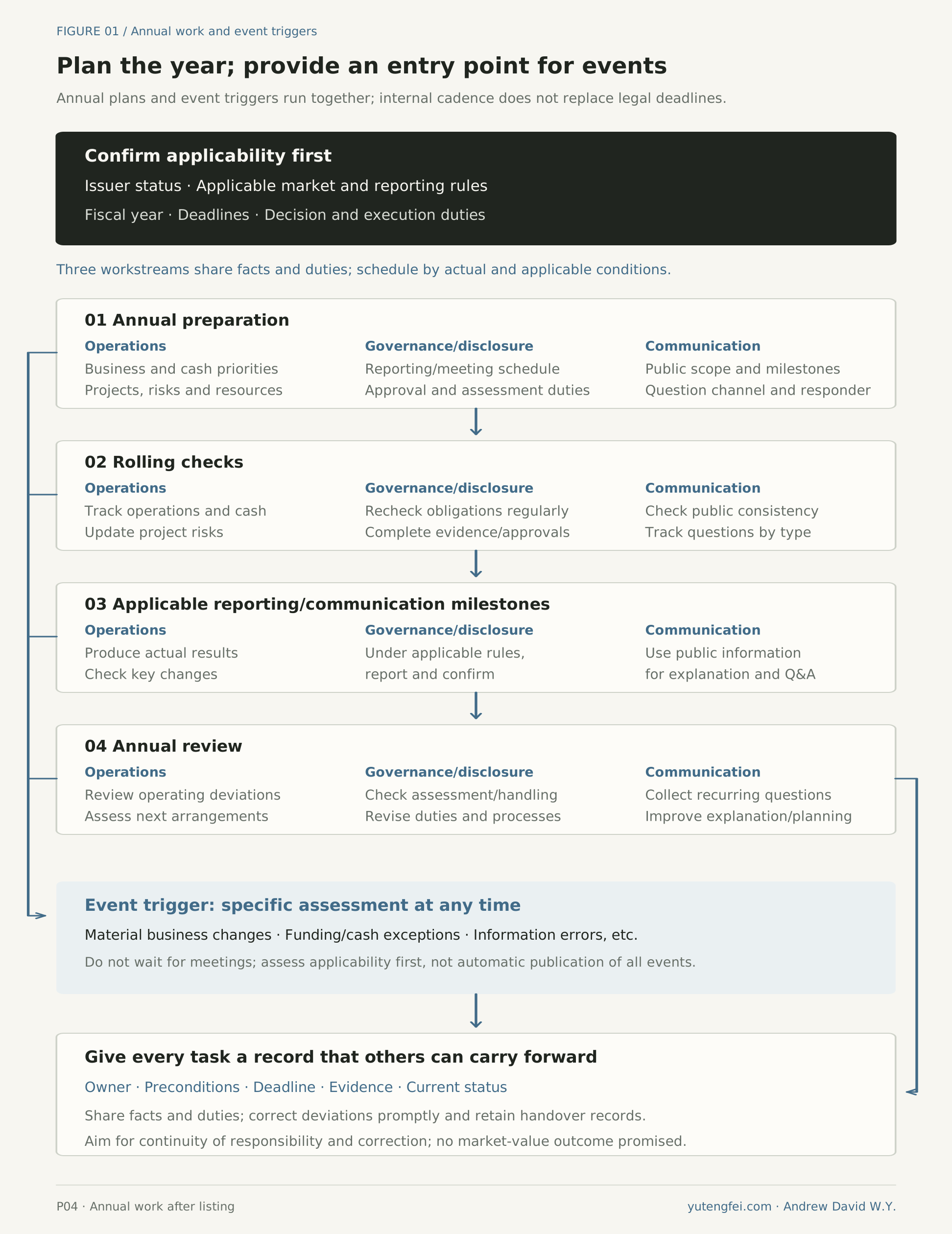
Figure 1 is a reference for organizing work. Set internal review frequency as needed. Execute reporting, governance and notification items according to their actual conditions and deadlines.
4. Establish what may be said before communicating
An investor's question may fall into three situations.
First, the facts are already public and the response adds no new meaning. Explain them within their original period, scope and conditions, and provide a traceable source.
Second, the facts are unverified. Record the question, assign verification and internal feedback, and defer the uncertain part. Do not invent a number or progress update to sustain the conversation. If potentially material nonpublic information is also identified, escalate immediately alongside fact-checking rather than waiting for verification to finish.
Third, the question may involve material nonpublic information. Refer it to the authorized disclosure owner and specialists for assessment and applicable treatment before arranging ordinary investor communication. If applicable rules permit withholding disclosure, retain the basis, confidentiality arrangements and reassessment triggers. Communication staff should not independently shelve the matter indefinitely.
If no disclosure obligation is triggered, record the reasoning and recheck conditions, then handle the information under authorization and confidentiality requirements. This differs from an existing obligation for which deferral is permitted, and does not mean anyone is free to speak publicly.
Within its scope, U.S. Regulation FD requires simultaneous public disclosure for intentional selective disclosure of material nonpublic information and prompt disclosure under the rule for non-intentional disclosure. Foreign private issuers are excluded from its issuer definition. Applicability of this rule and other reporting or market obligations require separate assessment. See 17 CFR 243.100–243.101.
Turn this routing into an internal practice: confirm topics and materials beforehand, identify authorized speakers and promptly refer nonpublic matters to authorized people. Special contexts such as confidential transactions need their own applicable arrangements rather than being mixed with ordinary public investor communication.
“Already public” is not a permanent permission to repeat without review. An old forecast carries its original date and conditions. Saying today that it “still stands” may convey new information. SEC guidance specifically discusses whether reaffirming a forecast adds material information. See SEC Regulation FD Interpretation, Question 101.01.
Check timing, conditions and intervening changes when reusing content. Preserve a historical reference as historical. Complete the appropriate assessment before making a new confirmation.
5. Connect disclosure with communication, then return feedback to operations
After the required filing, notice or public release, check actual availability and consistency with the communication materials.
An investor-relations page can help people find and retrieve information. Updating a web page does not automatically fulfil every applicable disclosure procedure. Check presentations, images, subtitles, languages and downloads together.
Specify each communication activity: topic, public materials, speakers, access arrangements and which confirmed materials may remain available afterwards.
Keep the questions themselves in the follow-up record, then route them.
If readers do not understand, improve the explanation or access to public information. Send verification questions to the relevant operating and finance personnel. Management should assess business suggestions against actual authority and resources.
Receiving a suggestion does not mean making a commitment. Distinguish receipt, verification, evaluation, decision and execution, and identify questions that cannot yet receive a public answer.
Accidental disclosure or a potentially material error in public information should be escalated immediately and handled within applicable timelines and procedures. Retain the facts and correction history; do not quietly overwrite the website or wait for the annual review.
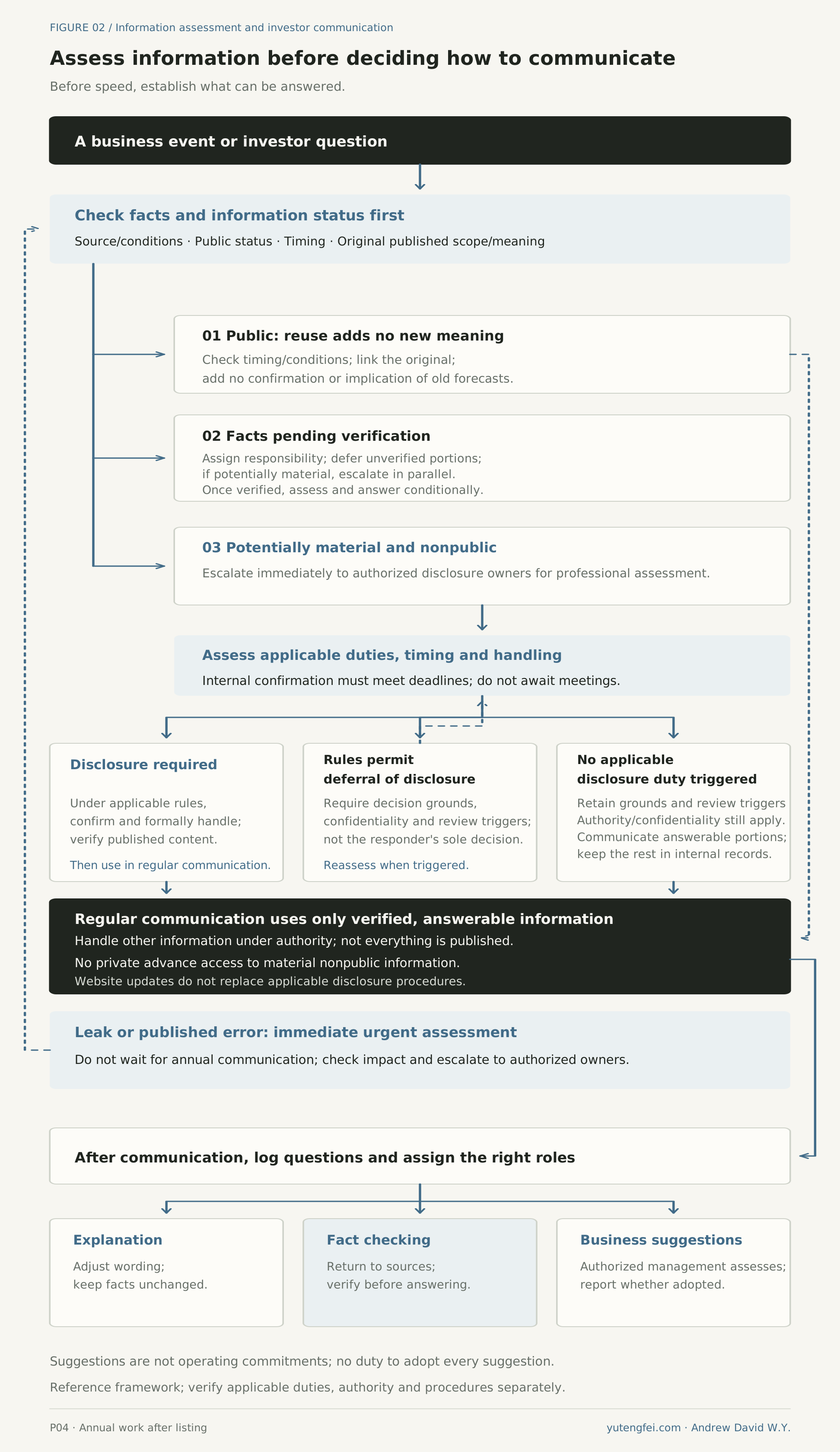
Figure 2 is a reference for ordinary investor communication. Assign fact verification and potentially material nonpublic information separately. Internal review must not overrun applicable response deadlines.
6. Use checkable indicators for operations, obligations and communication
At annual review, return to the purpose of each activity before selecting records.
| Area | What to observe | Definitions to retain |
|---|---|---|
| Operations and cash | Actual results, operating cash flow, fund use and project progress | Entity scope, period, currency, accounting or business definitions, and targets versus actuals |
| Governance and disclosure | Applicable tasks, deadlines, completion and error handling | Applicable basis, trigger time, evidence of completion and reasons for delay or unresolved status |
| Investor communication | Findable public materials, accurate routing of questions and recurring misunderstandings | Question categories, status, answer sources, observation period and record coverage |
| Market observation | Relevant price, trading and holder-structure changes | Data sources, security class, period and statistical method |
Market changes can suggest questions. Price, volume, valuation or returns should not be promised as outcomes the team can guarantee or used alone as proof of communication effectiveness.
A price change after an event may reflect operations, the industry, macroeconomic conditions and trading. Record it for further study rather than concluding that the event “created” a particular amount of market value.
Completion rates need a denominator. Count items actually due in the period and retain unfinished ones. Do not erase delay by changing the calendar after the deadline. If no item applies, state that rather than entering an unsupported percentage.
For answered questions, check accuracy, whether the answer resolved the issue and what remains under verification. Response and event counts measure effort and reach, not understanding or trust by themselves.
7. Follow a fictional project delay across the responsibilities
Suppose a fictional equipment manufacturer plans a new production line with funding conditions, equipment arrival and trial-operation milestones. Delivery slips, and some funds remain unavailable for use.
Operations records the delay and actual status. Finance checks expenditure, available funds and later cash needs. The project owner proposes feasible options.
At the same time, assess disclosure implications, the relationship to prior public statements and applicable obligations. Begin promptly under the event process rather than waiting for a completed internal monthly report.
Authorized people decide project adjustments through the appropriate procedure. Where disclosure is required, complete it, then use communication materials to explain causes, effects, conditions and next steps. A new date that cannot be confirmed remains undetermined.
If investors ask whether the entire year's business is affected, the answer still needs evidence. Explain what can be checked, continue assessing the rest and do not create a forecast merely to provide a complete-sounding response.
Later review should examine timely detection, ownership, accurate funding statuses, fulfilment of obligations, misleading old materials and execution of the revised project.
8. Connect one task from beginning to end first
Choose an actual reporting milestone or a publicly announced project and trace the work.
List the sources of operating information, reviewers, decisions requiring authorization, procedures with deadlines, subsequent communication and feedback owners. Record deliverables, dependencies, substitutes and evidence at every step.
Check whether staffing, budgets and external specialist support can sustain the work. If only one person understands a critical responsibility, or materials must be found in a rush every time, strengthen the arrangement.
At year-end, retain targets versus actuals, reasons for changes, completed decisions and unresolved matters. Assign continuing owners and next review conditions so unfinished work enters the next year rather than disappearing with a new calendar.
Take one operating change and follow it through governance assessment, disclosure, investor communication and subsequent execution. When that relationship is traceable, the annual plan has reached daily work.
Download the accompanying Annual Work Plan and Indicator Definitions Table
Rule examples checked on 19 October 2026. This article offers a reference for organizing work. Relevant specialists should determine the specific obligations, dates and procedures against the company's status and the rules then in force.