First developed on May 10, 2016. This page presents the current edited diagrams and explanation, preserving the model’s underlying structure while clarifying the terminology and relationships between its systems.
This model is built around stakeholder participation and shared value creation. It brings resource collaboration, customer engagement, organizational governance, and capital operations into a unified framework. It describes how an enterprise connects resources, develops products and services, generates market returns, and supports the continued development of its ecosystem through benefit distribution and reinvestment.
The model comprises four ecosystems, six value systems, and three structural layers. At its center, the Core Value Hub and Stakeholder Mechanism connect value creation, value realization, and value distribution.
Reading the Model: Start with the Framework, Then Explore the Relationships
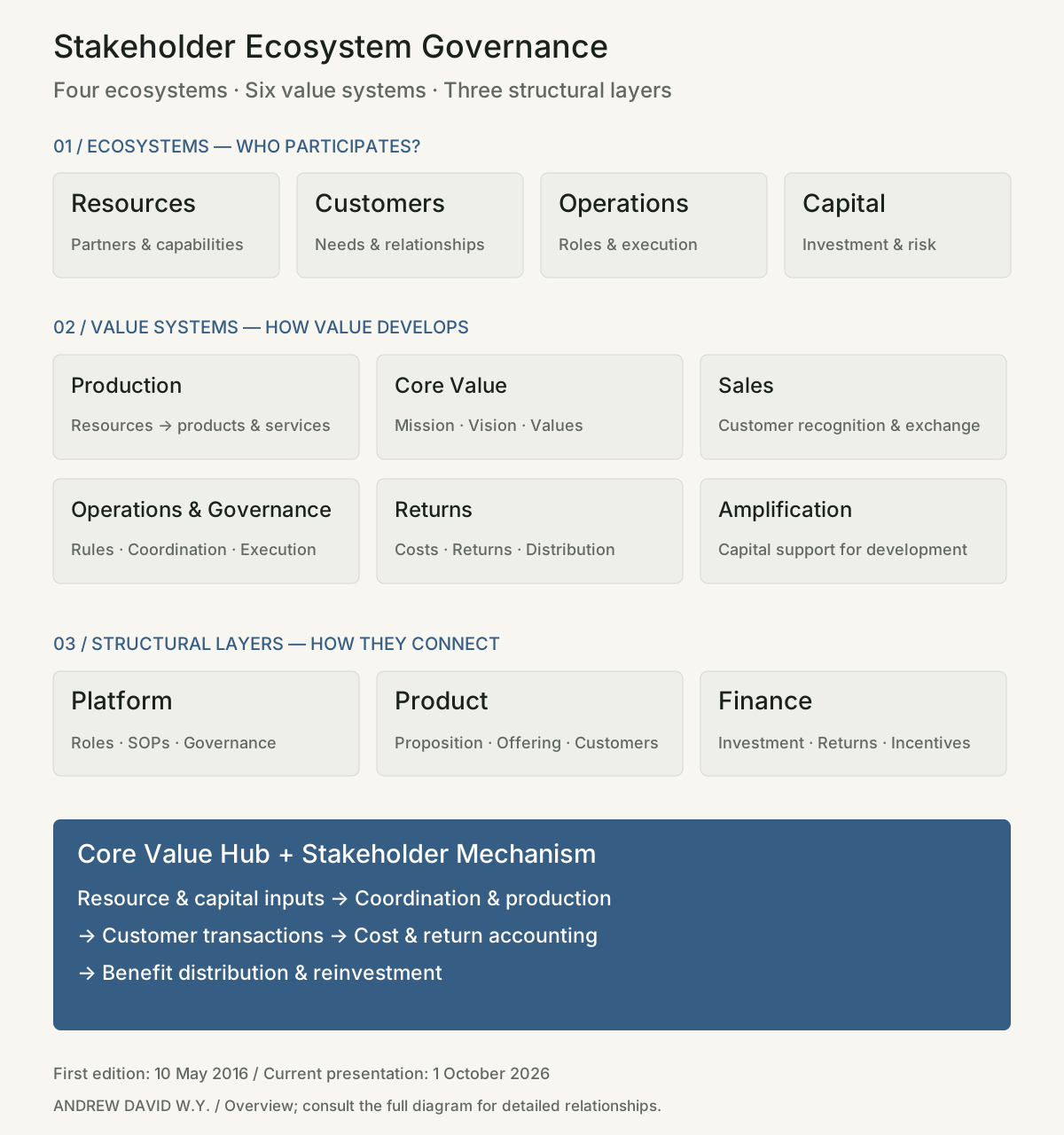
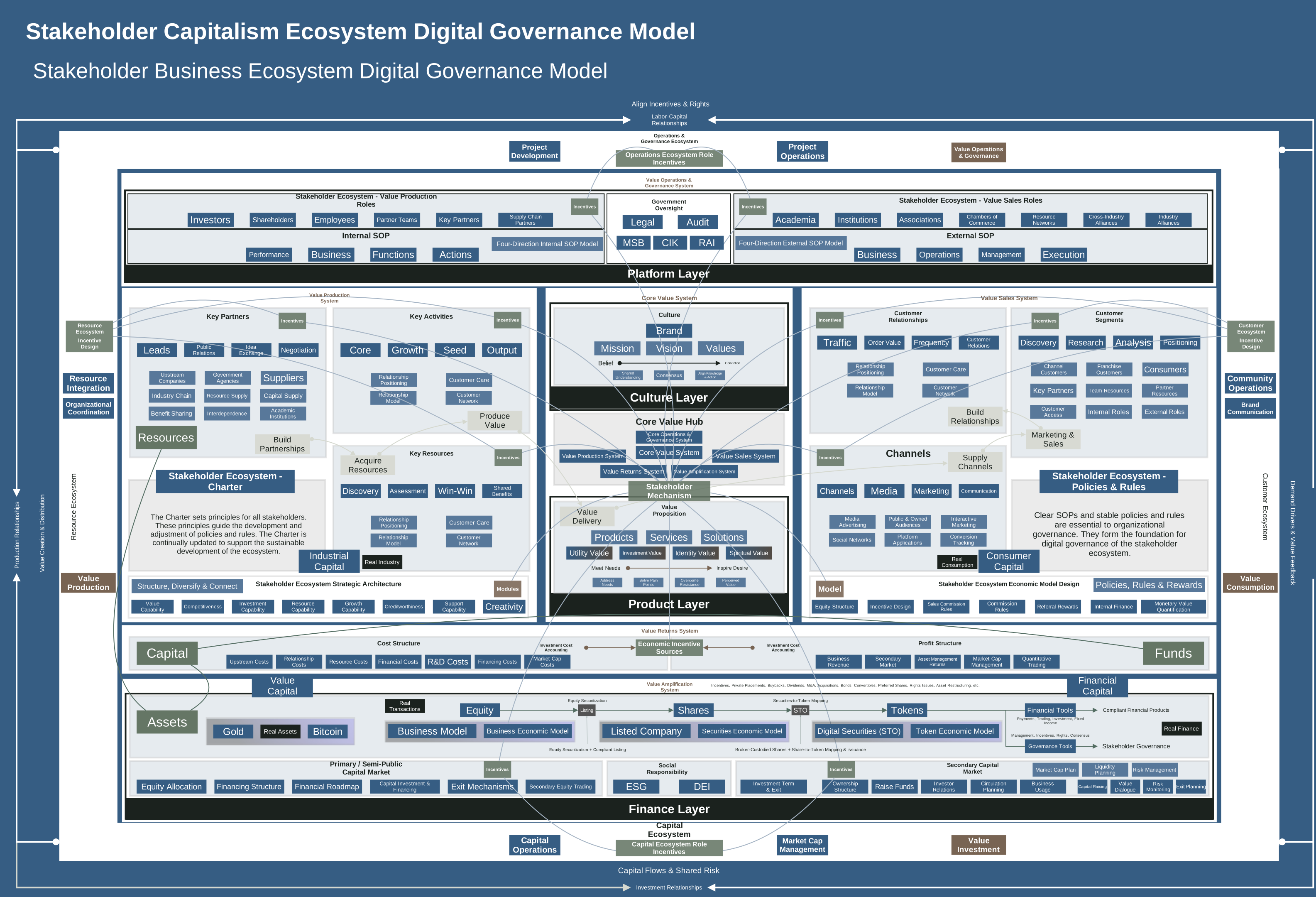
1. Four Ecosystems: Defining How Stakeholders Participate
Resource Ecosystem
Who do we work with, and what enables us to create value?
The Resource Ecosystem brings together investors, shareholders, employees, partner teams, suppliers, upstream and downstream companies, and other partners. Resource integration and organizational coordination establish the capabilities and conditions required for business activities.
Customer Ecosystem
Who do we create value for, and how do we build lasting relationships?
The Customer Ecosystem centers on Customer Relationships, Customer Segments, and Channels. It identifies customer needs and coordinates products, services, marketing, communication, and customer care to translate the Value Proposition into market recognition and purchasing activity.
Operations & Governance Ecosystem
How do we organize collaboration and ensure execution?
The Operations & Governance Ecosystem uses role assignments, internal and external standard operating procedures (SOPs), a shared Charter, policies and rules, and incentive design to translate stakeholder collaboration into business operations, management, and execution.
Capital Ecosystem
How do we fund development and allocate returns and risks?
The Capital Ecosystem connects business development with financial arrangements through capital investment, cost accounting, return structures, and capital operations. It supports ongoing business development, value distribution, and subsequent investment.
2. Six Value Systems: Connecting the Value Process
| Value System | Primary Role | Main Components in the Diagram |
|---|---|---|
| Value Production System | Convert resources and capabilities into products and services | Key Partners, Key Activities, Key Resources, and Stakeholder Ecosystem Strategic Architecture |
| Core Value System | Establish a shared direction and define the value the ecosystem pursues | Culture, Brand, Mission, Vision, Values, Core Value Hub, and Value Proposition |
| Value Sales System | Secure customer recognition and turn products and services into transactions | Customer Relationships, Customer Segments, Channels, and Stakeholder Ecosystem Economic Model Design |
| Value Operations & Governance System | Establish collaboration rules and translate strategy into execution | Stakeholder roles, Government Oversight, internal and external SOPs, policies, and incentives |
| Value Returns System | Account for inputs and outputs and establish a basis for returns and distribution | Cost Structure, Profit Structure, Investment Cost Accounting, and Economic Incentive Sources |
| Value Amplification System | Explore capital and financial arrangements that support further value development | Capital markets, equity and securities arrangements, Financial Tools, Governance Tools, and Social Responsibility |
The six systems work together. Operations and governance establish the rules for collaboration. The Core Value System provides a shared direction. Value production creates the offering, and value sales realizes its market value. The Value Returns System clarifies costs and returns, while the Value Amplification System supports further development.
3. Three Structural Layers: From Governance to Business and Capital
Platform Layer: Establishing the Basis for Collaboration
The Platform Layer defines the roles involved in value production and value sales. Internal and external SOPs, together with relevant oversight arrangements, establish the operating framework for the ecosystem.
Product Layer: Turning Shared Value into an Offering
Guided by the Mission, Vision, and Values expressed in the Culture Layer, the Core Value Hub establishes a coherent Value Proposition. Resources, business activities, customers, and channels are then coordinated to deliver products, services, and solutions.
Finance Layer: Connecting Business Outcomes, Capital, and Distribution
Building on the Cost Structure and Profit Structure, the Finance Layer organizes capital investment, return incentives, Financial Tools, and Governance Tools. These arrangements connect business development with capital support.
4. The Core Mechanism: Shared Value Creation and Aligned Interests
The Core Value Hub connects the six value systems, enabling participants in the resource, customer, operations, and capital ecosystems to work toward a shared direction. The Stakeholder Mechanism links participation, contributions, rights, and incentives, providing a basis for sustained collaboration.
The relationships around the diagram express four dimensions of ecosystem coordination:
| Relationship | Corresponding Principle |
|---|---|
| Production Relationships | Value Creation & Distribution |
| Consumption Relationships | Demand Drivers & Value Feedback |
| Labor-Capital Relationships | Align Incentives & Rights |
| Investment Relationships | Capital Flows & Shared Risk |
Together, these relationships provide the foundation for the ecosystem’s continued operation.
5. Digital Governance: Making Collaboration and Distribution Traceable
Following this model, digital governance can establish records and management processes for stakeholder roles, collaboration workflows, resource inputs, business outcomes, and rights and benefit allocations. This allows contributions to be identified, execution to be tracked, and returns and incentives to be calculated according to agreed rules.
The operating cycle can be expressed as:
Resource and capital inputs → Organizational coordination and value production → Products, services, and customer transactions → Cost and return accounting → Benefit distribution and reinvestment.
The model aims to sustain stakeholder collaboration under shared rules: resources enable an offering, the offering responds to demand, business activities generate returns, and those returns support participants and the next cycle of development. This creates a basis for continued value creation across the ecosystem.
6. Applying the Model to Real Work
Begin with one defined business or ecosystem organization, rather than creating a large program for every system at once.
- Define the shared objective. Specify the people served, the Value Proposition, and the current problem to address.
- Examine participation. Identify actual participants across the four ecosystems and check what they contribute, undertake, and expect.
- Trace the value process. Follow the six systems from resources to offerings and from transactions to returns, recording gaps and accountability.
- Establish rules and records. Clarify workflows, accounting definitions, decision authority, distribution conditions, and review dates before selecting digital tools.
Digital records provide evidence for checking contributions, processes, and results. They do not automatically create equity, capital, or rights to returns. Specific rights and distributions depend on rules and agreements confirmed by the parties. Financial tools should serve actual business and governance objectives rather than replace value creation.
This model supports organizational observation and design discussions. The capital, financial, and governance tools in the diagram are arrangements for further examination; the diagram alone does not establish that a product has been implemented or that an operating outcome has been validated.