From Tailings to Cash: Managing Returns at Every Stage
Reflections on return potential, process management, and using data to identify problems and verify improvements across a gold tailings operation.
Recently, I organized our gold tailings project into two logic diagrams. One maps the full process from sourcing material to producing gold, selling it, and collecting payment. The other identifies the variables that affect returns at each stage and the metrics different stakeholders need to watch.
Drawing these diagrams helped me work through a question: how do we turn a project's potential returns into actual results, step by step?
1. Managing the entire chain brings both return potential and operational difficulty
Our approach is to organize and manage the entire operation ourselves: sourcing, extraction and loading, transfer and drying, plant processing, gold recovery, sales, and payment collection.
The appeal is straightforward. Bringing key stages in-house creates an opportunity to reduce outsourcing fees and the margins paid to intermediaries, retaining more value within the project. This is especially relevant in processing and refining, where control over the operation allows us to identify and recover the value in the material more carefully.
Beyond gold, other precious metals may provide additional returns if their content, recovery conditions, and settlement channels are verified. The value may look small in a single batch, but accumulation over time deserves careful accounting. Any such contribution must be supported by assays, actual recovery, and settlement results, with the additional recovery costs deducted.
To me, the potential for higher returns comes from control over the whole value chain. How much of that value we ultimately retain has to be demonstrated through operations. In-house production still requires equipment, people, energy, maintenance, and working capital. Avoiding outsourcing fees is only part of the calculation.
The difficulty increases along with that control. We now have to handle the coordination, handoffs, and exceptions that third parties might otherwise manage. Can sourcing keep pace? Can drying match dispatch schedules? Can transport maintain continuous feed? Can production run reliably? Can the gold be sold and payment collected promptly? Every stage connects to the next.
Strong performance at one stage does not guarantee a smooth operation overall. Material arriving faster than the plant can process it builds inventory. Production capacity waiting for delayed deliveries sits idle. Gold delivered to a buyer without payment received still ties up capital.
Managing the full chain requires a clear understanding of the overall logic, control over the operating rhythm, and consistent attention to daily processes.
2. Break down the process to make responsibilities and handoffs concrete
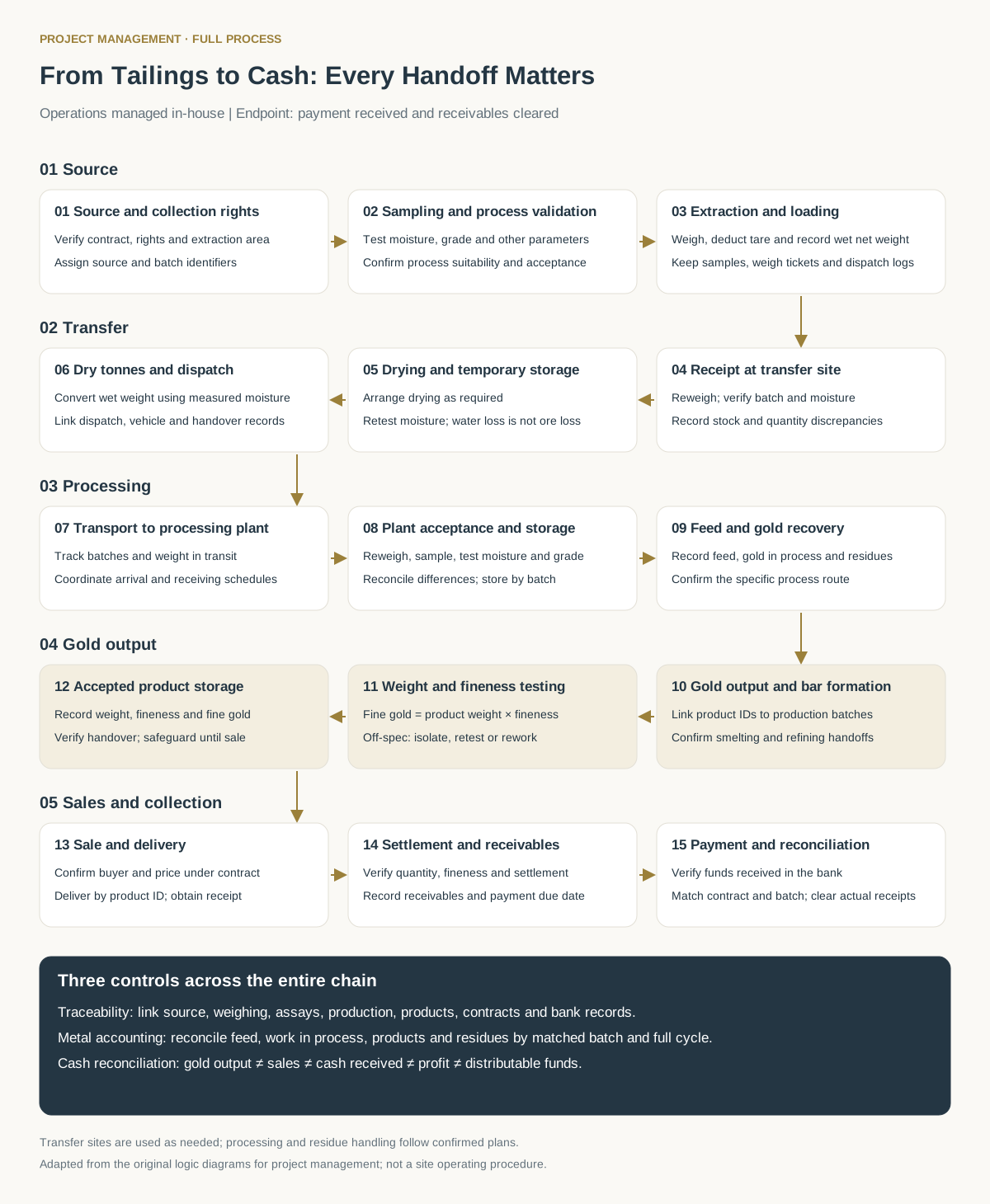
The flowchart continues all the way to payment collection. After gold is produced, it still needs to be weighed, tested for fineness, stored, delivered, settled, and matched against receivables. The cash cycle for that round of operations is complete only when the money has actually been received.
When breaking down the process, I focus on what each step receives and delivers, who is responsible, what records are retained, and who handles deviations.
For example, the same batch is weighed at the source, the transfer site, and the processing plant. A reduction in weight after drying may reflect moisture removal, measurement differences, or material loss. To distinguish these causes, we need wet weight, measured moisture, and dry-tonne equivalents, reconciled on a consistent basis. Comparing two weighbridge readings alone can easily mistake water loss for ore loss.
There is also a time lag between feed entering the process and gold being produced. Today's output may come from earlier feed, while some gold remains in work in process. Recovery therefore needs to be reconciled over matched batches and complete production cycles. Dividing today's gold output by today's feed is not enough.
These details may seem minor, but they determine whether the project can be managed accurately. Batch IDs, weigh tickets, samples, assays, production logs, product IDs, sales contracts, and bank records need to connect. Otherwise, when results fall short of expectations, tracing the problem becomes difficult.
The value of a full-process diagram is to turn an intended operating model into steps that people can execute, hand over, and verify.
I believe every project deserves this kind of attention. Whether the business involves mining, products, services, or another activity, we can follow the path from inputs to outputs and from delivery to payment, examining where value is created, costs arise, and time is consumed.
Many management problems sit between two stages: the first team considers its work complete, while the next has not truly taken over. Making those handoffs clear, with responsibilities, standards, and exception handling, gives the project a foundation for sustained operation.
3. Once the logic is clear, identify the variables that drive returns
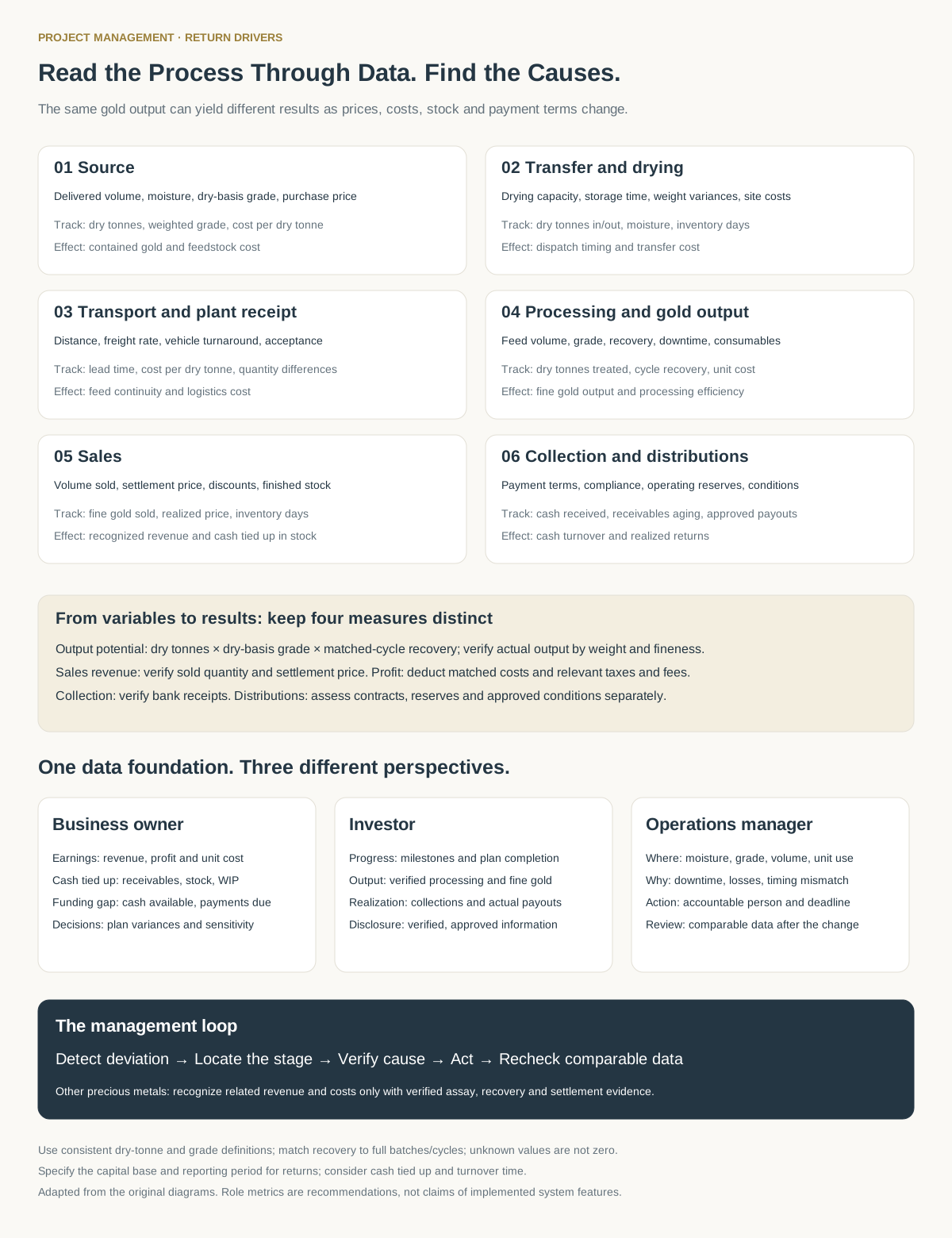
The process diagram explains how work moves through the project. The variable diagram helps explain why results change.
At the source, we track actual deliveries, moisture, dry-basis grade, and purchase price. In transfer and transport, we examine drying capacity, inventory holding time, delivery lead times, and unit costs. In processing, we look at throughput, recovery, downtime, and consumption. In sales and collection, we monitor settlement prices, unsold stock, payment terms, and actual receipts.
Together, these variables affect output, cost, and cash turnover. More gold does not necessarily mean a proportional increase in profit. Healthy profit can still leave cash tied up in inventory and receivables. When discussing a rate of return, we also need to specify the capital base and measurement period. Receiving the same return in six months or two years has different implications for capital efficiency.
The management approach I want to build is this: use data to understand the process, use the process to locate problems, and use data again to verify whether the changes worked.
First, make deviations visible. Throughput below plan, rising unit costs, and longer collection cycles should be detected promptly.
Second, trace the causes through the process. Lower gold output may reflect weaker feed grade, insufficient supply, more downtime, or changes in processing cycles and gold held in work in process. We need to verify the measurement basis and locate the affected stage before deciding what to change.
Third, turn each adjustment into an action that can be reviewed. Who owns it? When will it be completed? Which metric should improve? After implementation, compare data on the same basis and check whether the improvement lasts. We also need to account for changes in grade, price, or production cycles that might create an apparent improvement.
For example, if unit freight costs rise, examine loading quantities, moisture, vehicle waiting time, and dispatch arrangements. If underloading is the confirmed cause, adjust loading and scheduling, then check freight cost per dry tonne, delivery lead time, and feed continuity. Lower freight costs should still support reliable production.
That is how data becomes part of decision-making.
4. Give different stakeholders the relevant view of the same facts
Data across the chain should reconcile, while different roles need different levels of detail.
The business owner needs to understand earnings, where cash is tied up, and whether the next stage will face a funding gap. The owner also needs to see how changes in key variables affect returns.
Operations managers need specific deviations: which batch was unusual, which stoppage reduced output, which consumption item exceeded expectations, and who should resolve the issue by when.
Investors are more concerned with project progress, verified output, and whether collections and returns are being realized. External reporting should follow a defined disclosure scope.
All three views depend on the same reliable facts. Consistent definitions and traceable processes give both internal management and external communication a sound basis.
5. Build the ability to realize returns consistently
Working through these two diagrams made the tradeoff clearer to me: managing the entire chain creates more room to retain value and brings more responsibility for execution.
A project's returns ultimately come down to specific batches, costs, deliveries, and payments. The more complete the chain, the more attention it requires to detail, coordination, and timely resolution of exceptions.
I intend to apply this thinking to other projects as well: map the complete chain, identify the key variables, assign responsibilities and records to each stage, use data to detect problems, trace their causes through the process, and verify improvements with new data.
This is the capability I want to build: sound judgment about expectations, control over execution, and verification of results. Returns should be supported by evidence, improvements should be repeatable, and the project's potential should translate into realized value.
Published from
Perfect Place Sukhumvit 77 · Bangkok metropolitan area, Thailand
Community location, not an exact house marker. Open in OpenStreetMap ↗