Abstract
Stakeholder governance has become central to debates about stakeholder capitalism, yet research remains fragmented about the configurations through which non-shareholder stakeholders gain authority and firms become credibly bound to stakeholder claims. We systematically review 171 articles in management and related fields to develop a framework organized around stakeholder authority (i.e., the participatory rights or recognized standing through which stakeholders can engage in governance), and firm commitment (i.e., the obligations organizations assume toward stakeholder claims in ways that are costly to reverse or ignore). We identify five recurring configurations: (a) disclosure and evaluation; (b) monitoring and verification; (c) contracting, formal rules, and adjudication; (d) governance rights; and (e) rule-making rights. These configurations generally move from informational authority and very weak firm commitment to constitutional authority and very strong firm commitment. We also identify two off-diagonal configurations—constrained authority and embedded commitment—that reveal how authority and commitment need not align. Our framework distinguishes stakeholder governance that remains largely symbolic from arrangements that create durable constraints on organizational discretion. We conclude by outlining a research agenda on institutional settings, organizational forms, transitions across governance configurations, and the implications of learning dynamics for stakeholder authority and commitment.
Keywords
stakeholder governance; stakeholder authority; firm commitment; stakeholder theory; corporate governance; social evaluations and stakeholder management
Corporate governance has long been understood as the set of mechanisms through which organizations allocate authority, define accountability, and coordinate the interests of resource providers (Aguilera, Desender, Bednar, & Lee, 2015; Aguilera & Jackson, 2010; Hillman & Dalziel, 2003; Shleifer & Vishny, 1997; Walsh & Seward, 1990). Yet, dominant frameworks in this tradition have concentrated overwhelmingly on shareholders, explaining how owners monitor managers, discipline opportunism, and secure returns on investment (Edmans, 2014; Goranova & Ryan, 2014; Hoskisson, Hitt, Johnson, & Grossman, 2002; Shleifer & Vishny, 1986). As firms face intensifying demands for accountability to employees, communities, customers, suppliers, and broader publics (Freeman, Harrison, & Wicks, 2007), two questions have become increasingly important: How do organizations govern their relationships with non-shareholder stakeholders? Which governance configurations grant stakeholders authority, and when do such arrangements credibly constrain organizational action? This tension captures a central empirical puzzle for management research: organizations increasingly claim stakeholder orientation, but it remains unclear when, how, and with what consequences stakeholders gain authority over organizational decisions. The “new stakeholder theory” (Barney & Harrison, 2020; McGahan, 2021, 2023) sharpens this puzzle: “while the theory is based on firms making credible commitments to stakeholders, it is unclear how such commitment may be achieved” (Helfat, Kaul, Ketchen, Barney, Chatain, & Singh, 2023: 1369).
In response, the notion of stakeholder governance (Bacq & Aguilera, 2022; Boulongne, Young-Hyman, & Berrone, 2026; Bridoux & Stoelhorst, 2022; Stoelhorst, 2023) has emerged as one of the most consequential but contested concepts in contemporary management scholarship. On the one hand, Amis, Barney, Mahoney, and Wang (2020) argued that a theory of stakeholder governance is needed precisely because modern value creation routinely involves stakeholders beyond traditional corporate boundaries. On the other hand, Bebchuk and Tallarita (2020) claimed that stakeholder governance can be illusory if it expands managerial discretion without enforceable constraints or clear accountability to any stakeholder group.
Three recent developments have elevated the importance of stakeholder governance. First, regulatory and normative pressures for stakeholder accountability have intensified. From the European Union’s Corporate Sustainability Due Diligence Directive (CSDDD) and India’s Companies Act, Section 135, to stakeholder-oriented legal forms such as Sociedad de Beneficio e Interés Colectivo (BIC) in Colombia or Entreprise à Mission in France, the institutional environment increasingly allows (and in some cases requires) firms to formalize their relationships with non-shareholder constituencies (Hiller, 2013). Second, the debate over stakeholder capitalism (Harrison, Phillips, & Freeman, 2020) has exposed a gap between rhetorical commitments and governance arrangements that render such commitments meaningful (Bebchuk & Tallarita, 2020; Mayer, 2018). Firms routinely invoke stakeholder language while lacking mechanisms to translate it into constraints on managerial discretion. Third, emerging organizational forms, from worker cooperatives to decentralized autonomous organizations (DAOs), are experimenting with radical alternatives to shareholder-centric governance, generating natural variation in stakeholder authority and in the commitments that organizations make to sustain such authority over time (Abadi & Brunnermeier, 2024; Berrone, Fosfuri, Gelabert, & Gomez-Mejia, 2013; O’Mahony & Ferraro, 2007). These developments bring renewed attention to relational and informal arrangements through which stakeholder claims are governed, especially in settings where trust and reputation substitute for, or complement, formal governance rights (Dyer & Chu, 2000; Park & Luo, 2001; Xin & Pearce, 1996).
Yet, the intellectual landscape surrounding stakeholder governance remains fragmented. Despite sophisticated frameworks for understanding how shareholders monitor and discipline firms (e.g., Aguilera, Filatotchev, Gospel, & Jackson, 2008; Bushman & Smith, 2001; Shleifer & Vishny, 1997; Walsh & Seward, 1990), the mechanisms through which non-shareholder stakeholders exercise authority have received little systematic attention. Moreover, stakeholder theory has advanced rich normative arguments for why firms should attend to stakeholder interests (Freeman, 1984; Freeman et al., 2007; Phillips, 2003) but has only recently grappled with the governance configurations through which such attention becomes institutionalized (Bridoux & Stoelhorst, 2022). Research on specific stakeholder relationships (labor institutions, community engagement, supply chain compliance) likewise has proliferated without a unifying framework to connect disparate findings (Chen, Kacperczyk, & Ortiz-Molina, 2012; Dorobantu & Odziemkowska, 2017; Fauver & Fuerst, 2006).
In parallel, prior reviews have illuminated insightful components of stakeholder governance (Table S1). For instance, Laplume, Sonpar, and Litz (2008) comprehensively traced the evolution of stakeholder theory research from Freeman’s (1984) foundational work to 2007, identifying key themes such as stakeholder identification, salience, and firm-stakeholder relationships. Kujala, Sachs, Leinonen, Heikkinen, and Laude (2022) conceptualized stakeholder engagement as a managerial activity rather than a governance arrangement that allocates authority, while De Bakker, Rasche, and Ponte (2019) concentrated on the governance of multi-stakeholder initiatives rather than firms. These reviews provide important foundations, but they leave open a distinct governance question: How do organizational-level arrangements allocate stakeholder authority and make firms’ commitments to stakeholders credible?
Our review addresses the gaps identified in the aforementioned work by building on Bacq and Aguilera’s (2022: 30) definition of stakeholder governance: “the organizational-level mechanisms that design the participatory rights and responsibilities assigned to the multiple stakeholders of an organization.” This definition anchors our review by identifying mechanisms as the concrete arrangements through which stakeholder governance is enacted. At the same time, it points to two design properties that allow these mechanisms to be compared. First, the notion of participatory rights directs attention to stakeholder authority, that is, the rights or standing that determine how stakeholders can participate in governance. This may involve access to information, opportunities for voice or recourse, or formal decision and rule-making rights. Second, the notion of responsibilities directs attention to firm commitment, that is, the extent to which an organization becomes constrained in recognizing, honoring, or sustaining claims towards stakeholders in ways that are costly to reverse or ignore. Extending this foundation, we analyze the intersection of these two design dimensions and generate a typology of stakeholder governance configurations reflecting different combinations of stakeholder authority and firm commitment.
We do so by conducting a systematic review of 171 articles on stakeholder governance from leading academic journals and organizing findings around these two analytically distinct dimensions. We identify five recurring configurations that range from weaker to stronger forms of stakeholder authority and firm commitment. Across these configurations, authority and commitment often co-evolve. As stakeholder authority strengthens, firms become more constrained in their ability to ignore or reverse stakeholder claims. Yet, our framework also identifies configurations in which authority and commitment do not align. In some cases, stakeholders are granted relatively strong participatory rights while firm commitment to the stakeholder claims at stake remains comparatively weak. In others, firms make credible commitments to stakeholders without granting those stakeholders corresponding authority. We refer to these configurations as constrained authority and embedded commitment, respectively.
Our review offers several main contributions at the intersection of stakeholder theory and corporate governance scholarship. First, we respond to calls to develop stakeholder governance theory (Amis et al., 2020) by distinguishing stakeholder authority from firm commitment and specifying practices where they intersect. This distinction addresses the criticism that existing frameworks conflate stakeholder influence with firm constraints (Bridoux & Stoelhorst, 2022; Spitzeck & Hansen, 2010) and helps specify how credible commitment to stakeholders may be achieved through institutional and governance design (Helfat et al., 2023).
Second, we offer a research agenda that addresses both theoretical and practical challenges in stakeholder governance. By mapping the reviewed literature around stakeholder authority and firm commitment, we show that prior research has concentrated on configurations in which authority and commitment tend to move together, while paying less attention to configurations in which they do not align. These off-diagonal configurations matter because they reveal different governance challenges. In constrained authority, stakeholders may receive governance rights, but lack the information or organizational support needed to use them effectively (Bourlier-Bargues, Gond, & Valiorgue, 2024; Brown & Dillard, 2015; Radoynovska, 2025). In embedded commitment, organizations may make durable commitments to stakeholders without granting those stakeholders corresponding authority over decisions (Hashimoto, 1979; Lucas, Grimes, & Gehman, 2022; Serres, Hudon, & Maon, 2022).
Finally, building on our conceptual framework, we outline a research agenda that identifies opportunities to examine how stakeholder governance varies across institutional settings and organizational forms, how formal and informal arrangements combine, and how organizations transition between configurations as stakeholder authority and firm commitment evolve over time.
Review Scope and Method
Our review is structured around the core organizing principles of the level of authority granted to non-shareholder stakeholders in governance processes and the level of firm commitment to stakeholder claims. To develop this framework, we conducted a systematic review of stakeholder governance research across the management and organization literature, broadly defined. We began by searching the Web of Science and Business Source Premier databases, restricted to peer-reviewed, English-language journal articles. We developed search terms by combining keywords related to stakeholders (i.e., stakeholder*, employee, customer, community, cooperative, hybrid, b-corp, benefit corporation, government, steward*, state, and supplier) and governance (i.e., governance, owner*, voice, orientation, right*, engagement, board*, and democracy), and other phrases related to stakeholder governance (including informal arrangements such as guanxi, relational governance, and network governance).
To focus on the most conceptually and empirically relevant literature, we narrowed the sample to the Financial Times 50,1 commonly recognized as the leading journals in the field, resulting in 7,799 articles. After removing duplicates and non-substantive pieces (e.g., editorials, commentaries, and articles with only peripheral references to stakeholder governance), two authors independently screened all abstracts by coding the articles as “yes” if they should definitely be included, “no” if they should definitely be excluded, and “maybe” if potentially relevant in the review. To be included in our review sample, an article had to explicitly identify a non-shareholder stakeholder constituency and examine either the authority granted to that constituency, the firm’s commitment to stakeholder claims, or a governance arrangement linking the two. Because most of the 7,799 records were clearly outside the review’s scope, the two coders agreed on the large majority of screening decisions. Disagreements arose mainly over whether a stakeholder or governance arrangement was central to a study or merely mentioned as an example. Screening inconsistencies and articles coded with “maybe” were resolved by reading full texts and discussing them until full consensus was achieved. We present the list of search keywords and the coding scheme in Tables S2 and S3, respectively (in the online supplemental material). The final sample consists of 171 articles.
We categorized articles based on the levels of stakeholder authority and firm commitment in stakeholder governance arrangements. “Stakeholder authority” captures the participatory rights specified in each governance arrangement, including access to information, opportunities for voice or recourse, and formal decision and rule-making rights. “Firm commitment” captures the durability of the organization’s commitments to stakeholders. Coding articles along these two dimensions allowed us to map how authority and commitment are combined across stakeholder governance configurations, and to identify cases in which they do not align. Two authors and a research assistant independently coded the articles (see Table S3 for the coding scheme), identifying the article type (conceptual or empirical), the stakeholders involved, the decision domain where stakeholders had authority, firm commitment level, firm type, and geographic focus. The initial inter-coder agreement on the classification of articles along the two dimensions was 94.2% before reconciliation. The coders resolved inconsistencies during the coding process by re-reading the texts and discussing them until full agreement was reached.
The reviewed articles were published between 1979 and 2026 in 39 journals (Table S4). Over 110 articles are empirical studies, largely examining U.S. firms. Over 40% of the articles focus on contracting, formal rules, and adjudication, followed by governance rights (21%) and monitoring and verification (11%; see Table S5). In Table S6, we provide a list of all the articles reviewed for this study.
A Typology of Stakeholder Governance Configurations
Corporate governance concerns the distribution of rights within an organization, that is, the allocation of authority across its various stakeholders, including shareholders (Aguilera & Jackson, 2003; Shleifer & Vishny, 1997). Such authority may originate from within the organization itself or from external forces, whether informal relational pressures or formal regulatory requirements. In examining stakeholder governance, we focus specifically on the participatory rights or standing allocated to stakeholders by these arrangements, while firm commitment captures how durably organizations are bound to these stakeholder claims.
Our typology organizes stakeholder governance configurations around these two dimensions. “Stakeholder authority” refers to the institutionally recognized standing or participatory rights that specify how a focal stakeholder constituency may engage in organizational governance2 (Bacq & Aguilera, 2022; Hirschman, 1970; Klein, Mahoney, McGahan, & Pitelis, 2019). “Firm commitment” captures the obligations a firm assumes toward its stakeholders in ways that are costly to reverse or ignore (Bebchuk & Roe, 1999; Williamson, 1983). Commitments that remain voluntary and revocable are weak; they are strengthened by informal obligations or enforceable rules that are difficult to change.
We conceptualize stakeholder authority as a spectrum from (a) informational participation, where stakeholders have recognized access to information or the capacity to observe and evaluate organizational conduct (informational authority), to (b) organized opportunities for stakeholders to raise concerns and trigger questioning through review processes and oversight routines (advisory authority), to (c) enforceable recourse, where stakeholders can invoke rules, standards, or adjudication processes that require responses without granting them final decision authority (procedural authority), to (d) formal decision rights embedded in governance structures through votes, seats, or ownership (controlling authority), to (e) the ability to revise the governance system itself (constitutional authority). By contrast, we assess firm commitment by the cost of reversal: commitment is very weak when obligations remain voluntary and revocable at will, and strengthens as reversal becomes costlier. Very strong commitments are embedded in an organization’s founding rules and cannot be abandoned without rewriting them.
The combinations of these two dimensions define what we call stakeholder governance configurations. Across the reviewed articles, the dimensions tend to move together: configurations that grant stakeholders stronger authority typically also involve commitments that are more difficult to reverse. Yet, the two dimensions are analytically distinct; stakeholders may hold participatory rights that are not matched by equally durable firm commitments, and firms may make durable commitments to stakeholders who lack corresponding authority. Distinguishing the two dimensions enables us to compare configurations that the literature treats separately and to identify configurations in which authority and commitment lie off the diagonal, which we call constrained authority and embedded commitment.
Stakeholder Governance Configurations
Drawing on our systematic review of 171 articles, we identified five recurring configurations of stakeholder governance: (a) disclosure and evaluation; (b) monitoring and verification; (c) contracting, formal rules, and adjudication; (d) governance rights; and (e) rule-making rights. We also identified two off-diagonal configurations: constrained authority and embedded commitment. Figure 1 maps the typology: the five configurations lie along the diagonal, with circle size reflecting the number of reviewed articles, and the two off-diagonal configurations lie off it. For each configuration, we identify the level of stakeholder authority, the corresponding strength of firm commitment, and the governance arrangements through which the configuration is typically enacted. Within each configuration, we organize the reviewed literature into clusters of related studies. Table 1 provides an overview of the configurations and sample articles for each cluster.
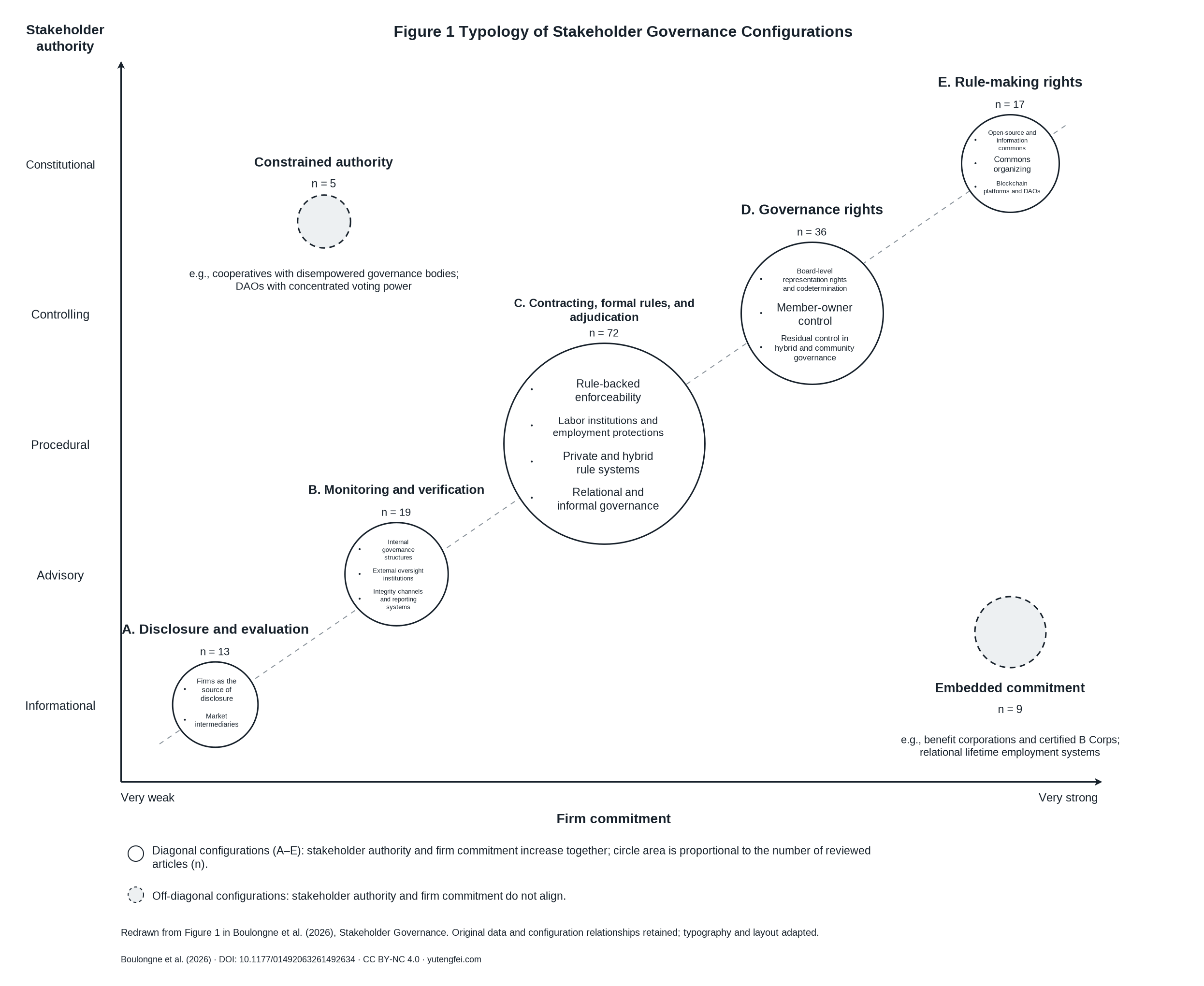
Figure 1 has been redrawn in this page’s language. Circle areas remain proportional to the original sample counts; the tables provide the full textual detail.
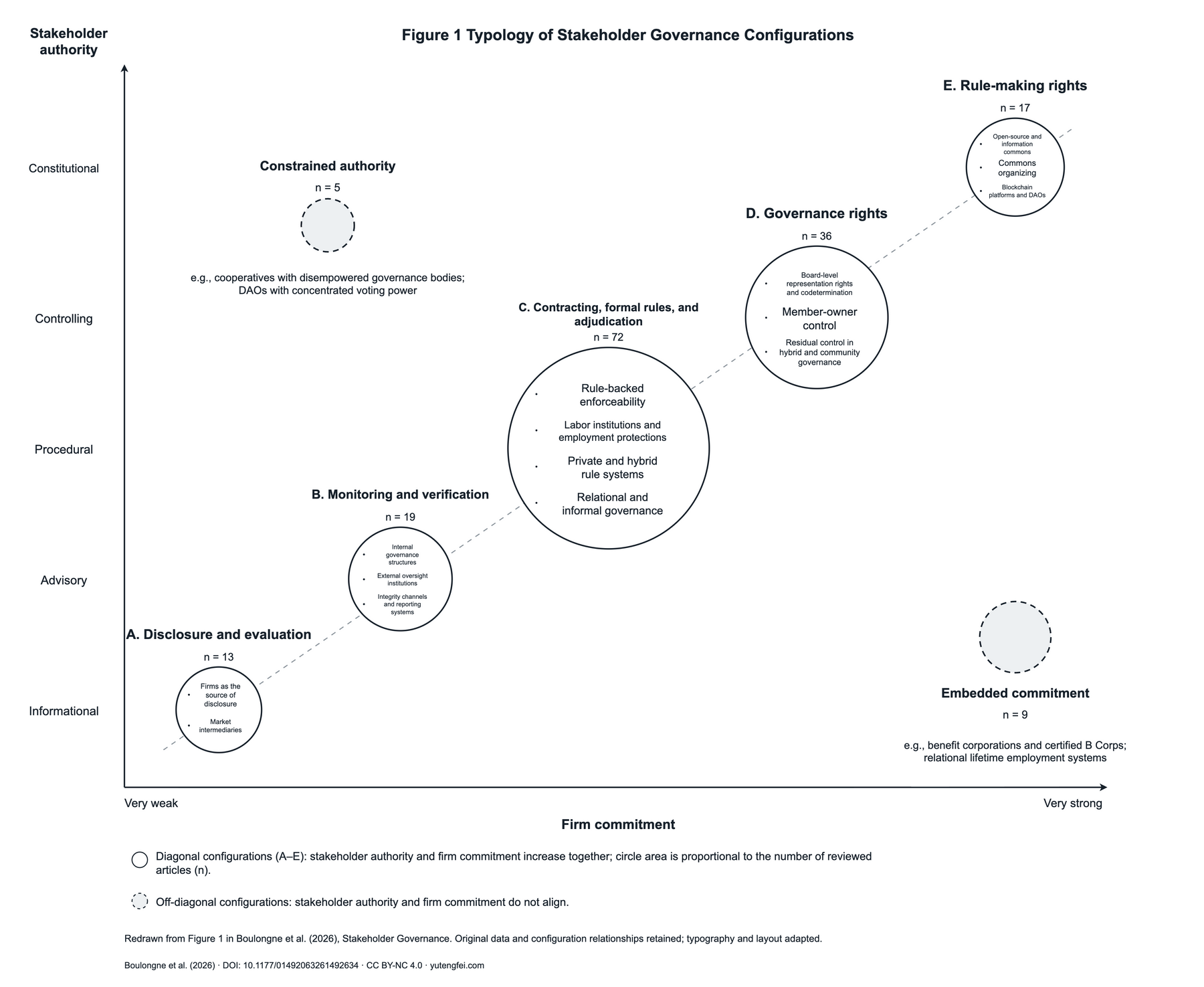
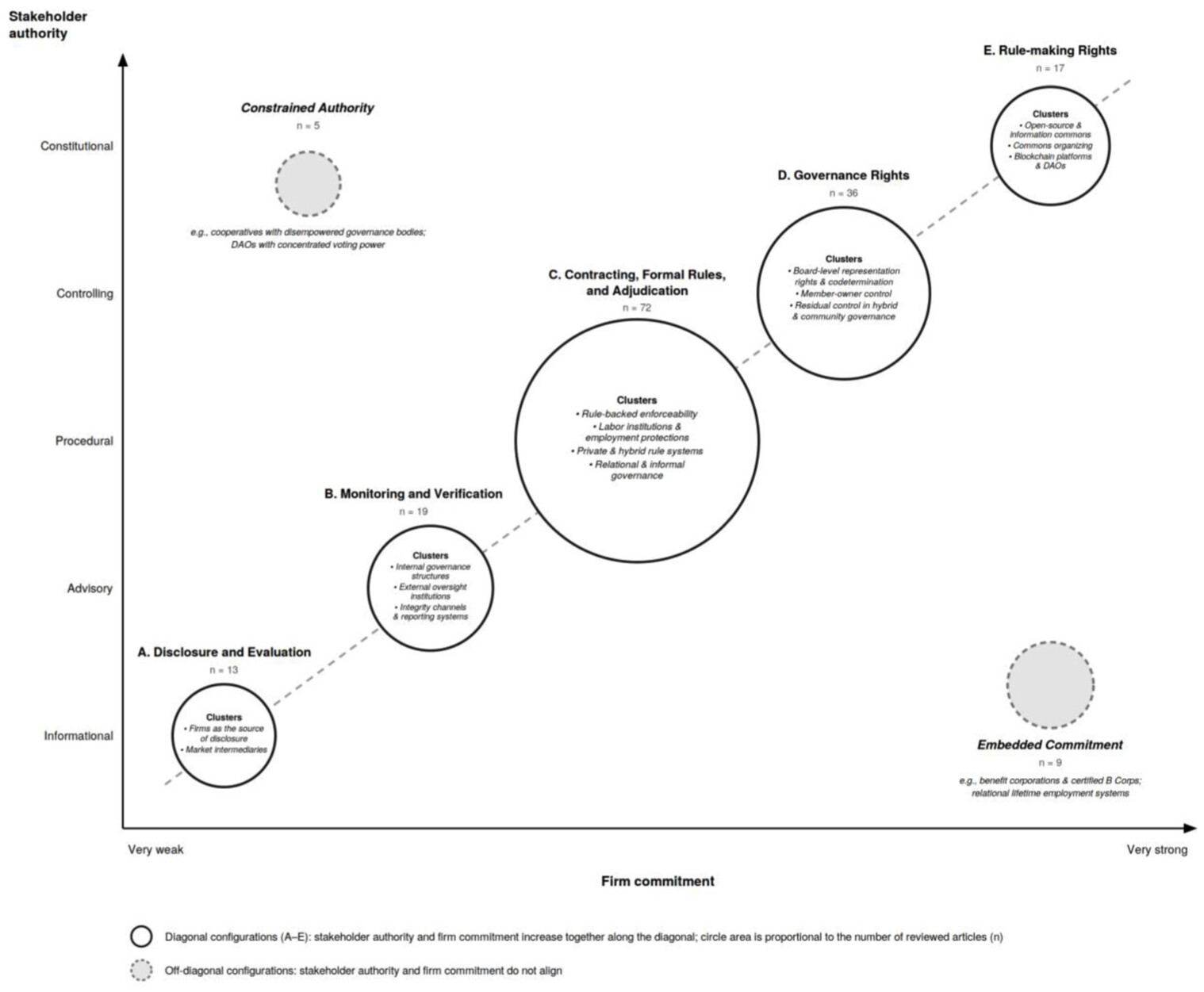
Figure 1 Typology of Stakeholder Governance Configurations
- Disclosure and Evaluation
- n = 13
- Monitoring and Verification
- n = 19
- Contracting, Formal Rules, and Adjudication
- n = 72
- Governance Rights
- n = 36
- Rule-Making Rights
- n = 17
- Constrained Authority
- n = 5
- Embedded Commitment
- n = 9
| Stakeholder Governance Configuration | Stakeholder Authority | Firm Commitment | Stakeholder Governance Practices | Typical Stakeholders Involved | Organizational Forms (Geographic Focus) | Research Clusters and Sample Articles |
|---|---|---|---|---|---|---|
| Disclosure and Evaluation | Informational | Very weak | Transparency and reporting | Employees, market intermediaries, broader public and civil society | Publicly traded firms (often U.S.-based firms) | Cluster 1: Firms as the source of disclosure: Baker, Larcker, McClure, Saraph, and Watts (2024); Boone, Starkweather, and White (2024); Flugum and Souther (2025); Okhmatovskiy and David (2012) Cluster 2: Market intermediaries responsible for comparative evaluations: Bradley, Mao, and Zhang (2022); Rowley, Shipilov, and Greve (2017) |
| Monitoring and Verification | Advisory | Weak | Triggering/activating review, questioning, and follow-up | Internal oversight actors (e.g., audit and governance committees), employees and their representatives, external oversight institutions (regulators, auditors, and audit-like institutions) | Public corporations and listed firms; audit-facing organizations in public and nonprofit sectors (contexts with dense oversight infrastructures) | Cluster 1: Internal governance structures: Clegg, Pitsis, Rura-Polley, and Marosszeky (2002); Gendron and Spira (2009); Sharma, Borah, Haque, and Adhikary (2025); Unerman and Bennett (2004) Cluster 2: External oversight institutions responsible for formal review: Cassell, Dreher, and Myers (2013); Duguay (2024); Hastig and Sodhi (2020) Cluster 3: Integrity channels and reporting systems that trigger scrutiny: Bowen, Call, and Rajgopal (2010); Heineman (2007); Möhlmann, Gregory, and Henfridsson (2025); Trinkaus and Giacalone (2005) |
| Contracting, Formal Rules, and Adjudication | Procedural | Moderate | Standards, certifications, MSIs, regulation, and dispute resolution | Employees and their representatives, regulators and other state actors, civil society actors and multi-stakeholder organizations | Corporations; firms embedded in supply chains and transnational production networks; multi-actor governance arrangements (predominant in the United States, but also found in international or multi-country organizations) | Cluster 1: Rule-backed enforceability: Abramov (2010); Dorobantu and Odziemkowska (2017); Kassinis and Vafeas (2002); Quelin, Cabral, Lazzarini, and Kivleniece (2019); Rufín and Rivera-Santos (2012); Schneper and Guillén (2004) Cluster 2: Labor institutions and employment protections: Chen, Kacperczyk, and Ortiz-Molina (2012); Frank (2014); Khurana and Zhong (2023) Cluster 3: Private and hybrid rule systems: Dentoni, Bitzer, and Schouten (2018); Everett, Neu, and Martinez (2008); Fougère and Solitander (2020); Gatignon and Capron (2023) Cluster 4: Relational and informal governance: Bolton, Malmrose, and Ouchi (1994); Cai, Jun, and Yang (2010); Dyer and Chu (2000); Lovett, Simmons, and Kali (1999); Park and Luo (2001); Sheng, Zhou, Li, and Guo (2018); Tomy and Wittenberg-Moerman (2024) |
| Governance Rights | Controlling | Strong | Voting/veto rights, board seats, and ownership or control rights | Employees and their representatives, member-owners in collective enterprises | Cooperatives and member-governed enterprises; public corporations; hybrid and community settings (United States, Germany, Belgium, France, and Brazil) | Cluster 1: Board-level representation rights and codetermination: Barker, Hofer, and Dobrzykowski (2024); Fauver and Fuerst (2006); Jäger, Schoefer, and Heining (2021); Kim, Maug, and Schneider (2018) Cluster 2: Member-owner control: Ashforth and Reingen (2014); Boone and Özcan (2016); Ostergaard, Schindele, and Vale (2016); Pencavel and Craig (1994); Tracey, Phillips, and Haugh (2005); Young-Hyman (2017) Cluster 3: Residual control in hybrid and community governance: Forte, Larco, and Bruckman (2009); He, Hong, and Raghu (2025); Pache, Battilana, and Spencer (2024); Seibel (2015) |
| Rule-Making Rights | Constitutional | Very strong | Setting or modifying rules of governance |
Community contributors and members, token holders, delegates, validators, and DAO members | Community-governed systems; decentralized platforms and DAOs; commons-oriented cooperatives, collaborative networks, and member-constituted enterprises (mostly transnational communities) | Cluster 1: Open-source and information commons: Di Tullio and Staples (2013); Mindel, Mathiassen, and Rai (2018); O’Mahony (2003); O’Mahony and Bechky (2008); O’Mahony and Ferraro (2007); Shah (2006) Cluster 2: Commons organizing and member-constituted enterprises: Albareda and Sison (2020); Michaud (2014); Resch and Rozas (2025); Safadi, Skousen, and Karahanna (2025) Cluster 3: Blockchain platforms and DAOs: Abadi and Brunnermeier (2024); Chen, Fan, Fang, and Luo (2025); Chen, Richter, and Patel (2021); Ellinger, Gregory, Mini, Widjaja, and Henfridsson (2024); Mohan, Khezr, and Berg (2024) |
| Constrained Authority | Controlling/ constitutional | Weak | Governance or rule-making rights with weak organizational support or enforcement | Employees, labor unions, social movements, Indigenous peoples, communities, civil society organizations | Corporations, accounting profession, standards-setting bodies, civil society organizations | Alamgir and Banerjee (2019); Bourlier-Bargues, Gond, and Valiorgue (2024); Brown and Dillard (2015); Christmann and Taylor (2006); Gawer and Harracá (2025) |
| Embedded Commitment | Informational/ advisory |
Strong | Stakeholder-oriented legal forms, certifications, mission structures, or relational systems | Employees, beneficiaries, communities, customers, suppliers, the scientific community, and the natural environment | Benefit corporations and social corporations, Certified B Corporations, social enterprises, research consortia, firms with relational employment systems (United States, Europe, Japan, Italy, Belgium) | Calderini, Fia, and Gerli (2023); Hashimoto (1979); Lucas, Grimes, and Gehman (2022); Perkmann and Schildt (2015); Serres, Hudon, and Maon (2022); Sharma, Gehman, Boni, and Beveridge (2025); Sullivan and Peterson (1991) |
Configuration A: Disclosure and Evaluation
Disclosure and evaluation link informational stakeholder authority to very weak firm commitment. This configuration is based on the availability of organizational information that allows stakeholders and intermediaries to evaluate and compare firms. Stakeholders exercise informational authority when governance arrangements give them recognized access to information without direct voice or decision rights. Informational authority therefore rests on access to and visibility of organizational conduct to stakeholders3 (Flugum & Souther, 2025; Mehrpouya & Samiolo, 2016; Rowley, Shipilov, & Greve, 2017).
Cluster 1: Firms as the source of disclosure
Several studies illustrate this stakeholder governance configuration by showing how disclosed metrics become tools of stakeholder attention and evaluation, yet entail very weak firm commitment toward stakeholders. For instance, Boone, Starkweather, and White (2024) examined the CEO pay ratio disclosure mandated by the U.S. Securities and Exchange Commission (SEC), showing that this comparable metric enables stakeholders to evaluate fairness claims and firm responses, despite lacking direct voice or decision authority over pay-setting or governance decisions.
Disclosure can also operate through framing. For instance, Flugum and Souther (2025) showed how managers invoke “stakeholder value” in public communications (e.g., around earnings announcements), using disclosure as a rhetorical device that can shape stakeholder expectations. Okhmatovskiy and David (2012) advanced this argument by uncovering that firms can develop and selectively disclose alternative internal standards, thereby redirecting attention from noncompliance with external codes to conformity with internal ones.
Finally, related research emphasizes domains in which disclosure is difficult to verify and thus prone to decoupling, reinforcing weak firm commitment. Baker, Larcker, McClure, Saraph, and Watts (2024), for example, documented gaps between firms’ external diversity, equity and inclusion (DEI) positioning and internal diversity outcomes, yet showed that external disclosure can still attract favorable third-party evaluation through higher environmental, social, and governance (ESG) ratings and increased ESG-focused investment.
Cluster 2: Market intermediaries responsible for comparative evaluations
Researchers have also examined what happens once information is disclosed. Ratings and rankings take heterogeneous public information, which is often incomplete, noisy, or difficult to interpret, and translate it into standardized categories and scores that allow stakeholders to compare firms quickly and at scale. Rowley et al. (2017) illustrated this logic, showing how governance ratings create reputational discipline by making underperformance visible. Firms might display weak commitment by responding selectively, and ratings can have weak effects or even backfire, depending on firms’ performance conditions and aspiration levels. Likewise, Jeacle and Carter (2011) showed how TripAdvisor rankings transform dispersed customer evaluations into a comparative ordering that disciplines hotels through reputation and market attention. Finally, as stakeholders and market intermediaries, analysts play a similar role in markets. Bradley, Mao, and Zhang (2022) portrayed analysts as information intermediaries whose attention and questioning can increase the visibility and salience of specific domains (e.g., workplace safety), thereby increasing managerial attention to concerns despite stakeholders’ lack of formal control over a firm’s operational choices. Comparative evaluation can also arise informally and outside Western settings. For instance, in China, internet activism creates informal social-comparison rankings that discipline firms reputationally without creating direct voice or decision rights, while corporate responses are driven primarily by image vulnerability rather than binding obligations (Luo, Zhang, & Marquis, 2016; Marquis & Qian, 2014).
Synthesis
The reviewed studies are concentrated in settings where disclosure is well developed, especially publicly traded firms, capital markets, online review systems, and other environments in which being watched and compared is common. Disclosure and evaluation provide stakeholders with informational authority by making organizational conduct visible and open to scrutiny. This is the weakest form of authority in our framework: stakeholders can observe and evaluate, but do not participate directly in the underlying decisions. Firm commitment remains very weak in this configuration, and firms often retain discretion over what to disclose, how to frame disclosed information, and how to respond once information becomes public. Yet, disclosure and evaluation can still matter because public comparison may generate reputational or market pressure, especially when intermediaries translate heterogeneous information into commensurate judgments.
Configuration B: Monitoring and Verification
Monitoring and verification link advisory stakeholder authority to relatively weak levels of firm commitment. This stakeholder governance configuration creates organized channels for stakeholders to raise concerns, provide information, trigger reviews, demand explanations, or activate follow-up routines, while final decision authority remains largely with the firm or with external oversight bodies. It differs from informational authority because stakeholders are not only audiences evaluating information from a distance, but also participants in structured processes of questioning and verification, such as stakeholder dialogue forums, whistleblowing and reporting channels, regulatory review procedures, supply-chain monitoring systems, or structured customer and supplier engagement (Bowen, Call, & Rajgopal, 2010; Cassell, Dreher, & Myers, 2013; Clegg, Pitsis, Rura-Polley, & Marosszeky, 2002; Sharma, Borah, Haque, & Adhikary, 2025; Unerman & Bennett, 2004). This configuration is thus best characterized as stakeholders’ capacity to trigger review processes that (a) add issues to the agenda, (b) increase the burden of explanation, and (c) potentially trigger firm responses.
Cluster 1: Internal governance structures
A substantial body of research examines internal governance bodies that review managerial decisions and surface stakeholder concerns without having formal authority to override them. In Japan, the kansayaku system illustrates advisory authority in a non-Western context. Statutory auditors are expected to monitor directors and attend board meetings, but they do not hold the same decision rights as directors; their influence is largely review-based rather than controlling (Buchanan & Deakin, 2025). Although kansayaku can monitor managerial decisions and report breaches of duty, firm commitment remains largely discretionary. For instance, Unerman and Bennett (2004) examined stakeholder dialogue forums as channels through which firms invite stakeholder voice while showing that such channels may reinforce managerial control when firms retain discretion over agenda setting and response. More recently, Sharma, Borah, et al. (2025) showed how firms engage customers and suppliers around environmental sustainability, using structured engagement to incorporate stakeholder concerns into managerial attention and decision-making. Together, these studies show that internal governance structures can move stakeholder claims into managerial review processes, but firms retain control over agendas and, ultimately, final responses.
Cluster 2: External oversight institutions with formal review authority
A second cluster examines mechanisms in which external institutions or verification systems create review obligations that require firms to respond to stakeholder-relevant claims. For example, in the SEC review process, comment letters initiate formal review cycles wherein firms must respond to regulator queries and potentially clarify, restate, or improve controls (Cassell et al., 2013). In supply chains, traceability systems can similarly create structured requirements for verifying claims and following up on compliance concerns (Hastig & Sodhi, 2020). In these studies, advisory stakeholder authority is mediated through oversight bodies and verification systems and resides in the ability to require an accountable response and sustained follow-up. However, because stakeholders lack the power to control outcomes directly, firm commitment tends to be limited to reviewing, documenting, and remediating issues within monitored domains.
Cluster 3: Integrity channels and reporting systems that trigger scrutiny
A third set of articles emphasizes advisory stakeholder authority through channels that allow stakeholders to surface concerns and activate review processes without controlling the outcome. In the whistleblowing context, allegations may trigger investigations, managerial responses, and economic consequences (Bowen et al., 2010). Likewise, employees can anonymously share their concerns and trigger follow-up actions through ombuds systems even when they do not control a firm’s final response (Heineman, 2007). In digital settings, advisory authority can operate through stakeholder reporting that triggers moderation and enforcement routines (Möhlmann, Gregory, & Henfridsson, 2025). Complementary work also highlights that monitoring can fail and misconduct can persist when stakeholders remain silent or when voice channels are weak (Trinkaus & Giacalone, 2005). Together, these studies show that reporting and escalation channels give stakeholders advisory authority by enabling them to initiate scrutiny while firms retain substantial discretion over investigation and enforcement.
Synthesis
Advisory authority is a common component in the governance arrangements of public corporations and listed firms, interorganizational projects, supply chains, and digital platforms. Much of the evidence remains concentrated in settings with developed review and compliance systems, especially U.S.-centered regulatory and corporate contexts, although supply chain and platform studies show that advisory authority also operates across organizational and geographic boundaries. Organizations grant stakeholders advisory authority by creating structured channels for monitoring and verification, such as dialogue forums, reporting and escalation channels, regulatory reviews, verification systems, or structured customer and supplier engagement mechanisms.
Configuration C: Contracting, Formal Rules, and Adjudication
This stakeholder governance configuration involves the institutionalization of stakeholder claims in rules and procedures. Unlike monitoring and verification, where stakeholders can raise concerns and trigger reviews, this configuration gives stakeholders procedural authority, that is, the ability to invoke rules, contracts, standards, or relational and informal obligations that require firms to respond to stakeholder claims. It thus entails a moderate level of firm commitment. Firms do not simply listen, but also accept procedures through which stakeholder claims can be negotiated and settled, or, at times, even sanctioned.
In some settings, stakeholder claims are institutionalized through contracts, labor protections, community agreements, or multi-stakeholder standards (Chen et al., 2012; Dentoni, Bitzer, & Schouten, 2018; Dorobantu & Odziemkowska, 2017; Fougère & Solitander, 2020). Yet, these procedures are not always formal legal arrangements. In non-Western contexts, procedural authority can operate through trust and reputation, or via relational sanctions that make stakeholder claims difficult for firms to ignore without incurring social or reputational costs (Dyer & Chu, 2000; Park & Luo, 2001; Tomy & Wittenberg-Moerman, 2024; Xin & Pearce, 1996). In this configuration, organizations provide stakeholders with recognized ways to make claims and set expectations about appropriate responses without necessarily granting them direct control over decisions.
Cluster 1: Rule-backed enforceability
The first cluster locates procedural authority in institutions that mandate responses to stakeholder claims, including state-backed institutions that give certain stakeholder claims legal force. Kassinis and Vafeas (2002), for example, showed how environmental litigation makes community and environmental claims material for firms, while Schneper and Guillén (2004) examined how cross-national variation in stakeholder rights shapes corporate responses in hostile takeover settings. The same logic is visible in proactive, negotiated arrangements that specify responsibilities and benefits for stakeholders. Legally binding community agreements can define the conditions under which projects proceed and the benefits local communities receive (Dorobantu & Odziemkowska, 2017). Similarly, contracts can structure governance through committees, decision procedures, monitoring obligations, and dispute-resolution provisions in collaborations and public-private arrangements (Abramov, 2010; Quelin, Cabral, Lazzarini, & Kivleniece, 2019; Rufín & Rivera-Santos, 2012).
Cluster 2: Labor institutions and employment protections
A second prominent cluster locates procedural authority in labor and employment institutions, e.g., collective bargaining frameworks, employment protections, or representation arrangements requiring firms to negotiate, justify, or comply within a recognized system. For example, Chen et al. (2012) showed that union strength affects how risk and cash-flow claims are allocated. At the institutional level, labor-governing institutions shape firms’ adjustment and adaptation costs during change precisely because protections limit firm retrenchment (Frank, 2014). In a cross-national setting, variation in employment protection laws is tied to differences in managerial-employee alignment and financial reporting outcomes, consistent with the idea that labor rights regimes shape what firms can credibly do (Khurana & Zhong, 2023). Extending this logic, Heitz, Wang, and Wang (2024) showed how labor unions can influence firms’ social policies, suggesting that worker claims may shape organizational conduct even without direct control over corporate decisions.
Cluster 3: Private and hybrid rule systems
A third cluster locates procedural stakeholder authority in private or hybrid rule systems such as multi-stakeholder initiatives, transnational compliance regimes, and polycentric governance arrangements that define obligations between firms and stakeholders. In transnational governance settings, compliance is not a simple “pass/fail” outcome, but a contested field shaped by firms, states, communities, and multi-stakeholder initiatives in which power asymmetries can leave vulnerable stakeholders’ claims unaddressed (Banerjee, 2018). In multi-stakeholder partnerships, shared rule systems structure who participates, what is expected, and how disagreements are handled (Dentoni et al., 2018). In polycentric settings, firms formalize stakeholder participation and the allocation of responsibilities and benefits (Gatignon & Capron, 2023). Complementary work emphasizes institutional design and contestation dynamics in multi-stakeholder organizations (Everett, Neu, & Martinez, 2008; Fougère & Solitander, 2020).
Cluster 4: Relational and informal governance
A fourth cluster locates the source of procedural authority in relational systems. In these settings, expectations of reciprocity give stakeholders leverage to press claims and rein in firms. Buyer-supplier relationships illustrate this cluster. The prospect of forgoing future exchanges makes opportunism expensive, so trust constrains how firms treat their partners without the need for formal safeguards (Dyer & Chu, 2000; Sheng, Zhou, Li, & Guo, 2018). For instance, in China, personalized networks (i.e., guanxi) of reciprocal obligation favor exchange and trust, thereby creating expectations of mutual assistance and reputational penalties for noncompliance (Lovett, Simmons, & Kali, 1999; Park & Luo, 2001; Xin & Pearce, 1996). Studies of Japanese and Chinese business systems also show that relational contracting and trust can complement, and sometimes substitute for, formal governance arrangements (Bolton, Malmrose, & Ouchi, 1994; Cai, Jun, & Yang, 2010). Similarly, Tomy and Wittenberg-Moerman (2024) showed how reciprocity and community membership can generate informal sanctions that can affect lending behavior in India.
Synthesis
Empirically, this configuration is broader geographically than disclosure or monitoring. It appears in U.S. legal and regulatory settings, cross-national labor and stakeholder-rights regimes, transnational supply chains, public–private collaborations, and relational governance systems in China, Japan, India, and other non-Western settings. Studies focused on this configuration examine procedural stakeholder authority institutionalized in recognized rules and standards or relational obligations. Rule-governed arrangements may arise through legal and regulatory institutions or through contracting and hybrid rule systems that specify and integrate stakeholders’ terms into firm decisions, thus requiring a stronger firm commitment than the mechanism previously discussed. Procedural authority also manifests through state-backed legal and regulatory institutions, labor protections, community agreements, contracts, and hybrid rule systems. It can also manifest through informal and relational systems when trust and reputation create expected channels for negotiation between the firm and its stakeholders.
Configuration D: Governance Rights
The stakeholder governance configuration that connects controlling stakeholder authority with strong firm commitment is formal governance rights. These arrangements specify who is entitled to decide, on what issues, and through what procedures, typically by assigning voting power, board or supervisory seats, veto rights, ownership-based control, or other member-governance entitlements. In such cases, stakeholders do not merely raise claims or trigger reviews, but can approve, block, or shape organizational choices in ways that firms cannot easily ignore or reverse.
Cluster 1: Board-level representation rights and codetermination
A first cluster centers on the allocation of formal voting rights inside governing bodies. The core mechanism is representation: employees or other stakeholder constituencies participate in decisions that shape firm strategy. This configuration is explored in work on employee representation in German corporate governance (Fauver & Fuerst, 2006), subsequent research on “labor in the boardroom” (Jäger, Schoefer, & Heining, 2021), as well as work that conceptualizes labor representation as shifting how firms allocate risk and protect stakeholder claims (Kim, Maug, & Schneider, 2018). Beyond Germany, China’s Company Law formally requires firms larger than a certain size to include employee-elected representatives on their boards of directors or supervisory boards, creating a formal channel for employee representation in corporate governance rather than relying only on informal voice (Huang & Huang, 2022). Research suggests that such representation can shape firm-level outcomes in ways that managers cannot fully ignore (Yiu, Wan, & Xu, 2019). Related studies generalize the logic beyond labor by examining when non-owner stakeholders gain board seats (e.g., supply-chain partner representation) and how these rights alter monitoring and strategic trade-offs (Barker, Hofer, & Dobrzykowski, 2024).
Cluster 2: Member-owner control
A second cluster examines governance systems in which stakeholders hold decision authority because they are members, owners, or beneficiaries of collective enterprise forms. For example, previous studies show that cooperatives react differently to crises in the environment (i.e., by adjusting wages rather than employment; see Pencavel & Craig, 1994) and reveal how worker control shapes cooperatives’ strategic entry and survival (Boone & Özcan, 2016), potentially affecting team coordination and authority dynamics (Young-Hyman, 2017). Research emphasizes internal governance tensions in member-controlled organizations, for example, identity and value dualities (Ashforth & Reingen, 2014). This logic has also been extended to stakeholder-oriented banking (Ostergaard, Schindele, & Vale, 2016) and other member-governed arrangements where decision authority is explicitly assigned to stakeholders. This cluster naturally accommodates community enterprises where control is explicitly democratic (e.g., “one member, one vote”) and tied to binding authority over governance and surplus allocation (Tracey, Phillips, & Haugh, 2005).
Cluster 3: Residual control in hybrid and community governance
Controlling stakeholder authority is exercised through formally specified governance roles in hybrid organizations and community-based systems. Stakeholders hold decision-making authority, but the source of control is not necessarily member-ownership; it can be delegated, role-based, or anchored in hybrid ownership and board arrangements. In online communities, role-based authority and procedural decision rights determine governance outcomes. Forte, Larco, and Bruckman (2009) showed how Wikipedia relies on formalized roles and processes that allocate authority for dispute resolution and enforcement. In platform settings, control can be exercised through delegated moderator authority to remove content and discipline users (He, Hong, & Raghu, 2025). Conceptual work on hybrid organizations emphasizes that boards make binding choices and resolve trade-offs across logics through formal decision processes (Pache, Battilana, & Spencer, 2024; Seibel, 2015).
Synthesis
Governance rights are concentrated in organizational forms where stakeholder participation is built into ownership, membership, board representation, or formally assigned roles, including codetermined firms, worker cooperatives, mutual organizations, community enterprises, hybrid organizations, and online communities. Germany is a central setting for research on employee board representation and codetermination, whereas the United States is a frequent setting for studies of cooperatives, community enterprises, hybrids, and online communities. Governance rights give stakeholders decision authority by embedding their claims in formal decision-making structures. Across the reviewed studies, this configuration includes codetermination and board representation, worker and member-owned cooperatives, mutual and community enterprises, hybrid organizations, and role-based community or platform governance.
Configuration E: Rule-Making Rights
Rule-making rights link constitutional stakeholder authority to very strong firm commitment. Whereas governance rights give stakeholders binding authority within an existing governance system, rule-making rights give stakeholders authority over the design and revision of that system itself. Stakeholders with constitutional authority can shape who participates, which decisions are open to collective choice, how votes or preferences are aggregated, how disputes are resolved, and how rules can be changed over time. These rights are typically embedded in constitutions, bylaws, charters, protocols, or community governance procedures that define how members propose, approve, or revise governance rules. The associated level of firm commitment is very strong because the organization accepts stakeholder authority not only over particular decisions, but over the rules that will be used to make future decisions.
Cluster 1: Open-source and information commons
A first cluster locates constitutional stakeholder authority in open-source communities, where governance is explicitly executed via formal procedures that define membership, allocate roles, and authorize collective rule revision. O’Mahony (2003) showed how community-managed software projects protect the commons through governance arrangements that formalize stewardship and constrain appropriation. Shah (2006) explained the viability of hybrid open-source forms by highlighting how governance structures organize participation and authority among volunteers and sponsored contributors. In open-source communities, formal authority is bounded by democratic mechanisms that enable members to appoint leaders, recall them, and revise governance arrangements (O’Mahony & Ferraro, 2007); decision rights, conflict resolution, and control are formalized through community procedures (Di Tullio & Staples, 2013). Extending this logic, O’Mahony and Bechky (2008) emphasized governance and membership rules that prevent domination by a single sponsor or faction. Indeed, the sustainability of polycentric information commons depends on how rules for boundary-setting, coordination, and sanctioning are institutionalized across multiple centers of authority (Mindel, Mathiassen, & Rai, 2018).
Cluster 2: Commons organizing and member-constituted enterprises
In commons-oriented and member-governed organizing, stakeholders collectively author and update the rules that structure participation and decision making. Albareda and Sison’s (2020) “commons organizing” perspective foregrounds collective action and democratic governance as constitutive features of organizing for the common good. In multistakeholder cooperatives, governance paradoxes are mediated through formal devices and practices that structure who has authority, how members’ claims are represented, and how organizational decisions are made and revised over time (Michaud, 2014). Resch and Rozas (2025) highlighted how ongoing collective governance requires shared rules and coordinating arrangements to be maintained and renewed. Safadi, Skousen, and Karahanna (2025) provided a boundary case: in firm-sponsored online communities, “participatory governance” requires building and adapting formal governance arrangements (e.g., roles, procedures, escalation paths, community rules) to accommodate both sponsor involvement and members’ constitutional participation. Importantly, member-constituted rule-making is a global phenomenon rather than a Western one. In India, marginalized rural communities, including Adivasi (Indigenous) forest villages, have prefiguratively authored their own governance institutions, constituting assembly structures, consensus decision rules, participation rights, and dispute-resolution procedures that govern how collective decisions are made and revised over time (Bhatt, Qureshi, Shukla, & Hota, 2024). This form of constitutional authority, in which community members write and revise the rules of governance itself rather than merely voting within a pre-existing system, entails very strong commitment because the collective is bound by rules of its own making.
Cluster 3: Blockchain platforms and DAOs
A third cluster locates constitutional authority in decentralized digital platforms and DAOs, where participants can propose, vote on, delegate, and in some cases change the rules that organize collective decision-making. Chen, Richter, and Patel (2021) theorized decentralized governance of digital platforms as an alternative to owner-led governance, emphasizing that community participants become governors when authority is distributed through collective rule-making and maintenance. In DAO governance, token holders and delegates shape protocols, contribution incentives, and collective outcomes, making voting rights and reward allocation part of the constitutional architecture (Chen, Fan, Fang, & Luo, 2025; Ellinger, Gregory, Mini, Widjaja, & Henfridsson, 2024). Likewise, in token-based governance, voting power distributions and delegation rules determine platform control, making constitutional design (who votes, how votes aggregate, and how delegation works) central (Abadi & Brunnermeier, 2024). Mohan, Khezr, and Berg (2024) showed that identity uncertainty constitutes a core constitutional vulnerability, as actors can create many pseudo-identities to gain authority, and proposed bond voting as a mechanism to protect collective decision making. Together, these studies show that blockchain-based governance can grant participants rule-making rights, but those rights depend on how voting power and participation are designed.
Synthesis
Empirically, these studies are less tied to single national jurisdictions than the mechanisms discussed earlier because many of these settings are organized around communities, platforms, or protocols that operate across borders. Rule-making rights give stakeholders constitutional authority by allowing them to adopt and revise the rules that structure governance itself. Stakeholders govern at a second order because they can re-specify who participates, how decisions are made and aggregated, what roles exist, and how breaches and disputes are handled. This configuration appears in open-source communities, information commons, member-constituted enterprises, blockchain-based ecosystems, and DAOs, where governance is sustained through community rules, bylaws, protocols, or other revisable rule systems.
Off-Diagonal Stakeholder Governance Configurations
The five stakeholder governance configurations reviewed above capture the most common pattern in the reviewed literature: stakeholder authority and firm commitment often increase together. Yet, this coupling is not necessarily automatic. We now turn to two configurations in which stakeholder authority and firm commitment lie off the diagonal: constrained authority and embedded commitment.
Constrained authority
This configuration occurs when a governance arrangement allocates relatively strong decision- or rule-making rights to stakeholders, yet the organization remains only weakly and reversibly bound to the substantive claims those stakeholders seek to advance. In these cases, stakeholders retain the rights allocated to them, but weak firm commitment can make those rights difficult to exercise. This may happen when firms withhold information, limit the operation of governance bodies, or when enforcement is difficult.
Examples of this governance configuration can be found in cooperative and multistakeholder settings. Bourlier-Bargues et al. (2024) examined firms that formally converted into worker cooperatives. In some cases, workers were granted governance rights, but executives actively disempowered general assemblies, neutralized boards, and entrenched executive committees. In such “spurious worker cooperatives” (Bourlier-Bargues et al., 2024), workers retained governance rights, but organizations remained weakly committed to workers’ claims. This could also occur when firms significantly change their ownership and fail to redefine stakeholder relationships.
In a non-Western context, the Accord, the Alliance, and revised labor laws—intended to strengthen the governance of Bangladesh’s garment industry after the Rana Plaza disaster—introduced formal commitments to worker participation, including participation committees at the factory level. Yet, Alamgir and Banerjee (2019) showed that these channels often provided workers with limited scope to exercise those rights. Workers had little say over production targets, some union voices were excluded from the new governance arrangements, and factory owners and the state were able to shape the composition and operation of participation committees. This case illustrates constrained authority: workers were formally included in participation structures, but the information, protection, and institutional support needed to exercise those rights remained weak.
A final set of cases comes from token-governed organizations. DAOs and blockchain-based platforms often allocate rule-making rights formally: token holders can vote and participate in protocol governance. Yet, several studies show that these rights depend on the distribution of voting power among a few members and the design of participation. Although outside the reviewed FT50 sample, published studies of DAOs and blockchain-based platforms show how exercising formally allocated rule-making rights can become constrained. Goldberg and Schär (2023) showed that DAO governance can become quasi-centralized when concentrated voting power creates dependency and leads to rent extraction. Sun, Stasinakis, and Sermpinis (2024) similarly demonstrated that MakerDAO’s one-token-one-vote system formally distributes governance rights while producing centralized governance in practice because voting power is highly concentrated.
Embedded commitment
This configuration captures the opposite type of off-diagonal governance arrangements where organizations make durable commitments to stakeholder claims without granting affected stakeholders authority over the decisions through which those claims are interpreted or implemented. In this context, commitments are embedded in legal forms or relational systems that make deviation costly. This configuration is important because it shows that firm commitment is not simply derivative of stakeholder authority. That is, firms can become committed to stakeholders through configurations that constrain future discretion even when stakeholders do not directly control how commitments are interpreted or implemented.
A first illustration is formal or mediated embedded commitment. Benefit corporations and certified B Corps exemplify this logic. Lucas et al. (2022) showed how weak benefit corporation legislation increases pressure on values-driven firms to pursue the stronger accountability of third-party B Corp certification, so that the two dimensions work together to mobilize firms around stakeholder-oriented commitments. Notably, the affected stakeholders are named as beneficiaries of these commitments, yet benefit corporation statutes generally do not grant stakeholders direct control or authority. Sharma, Gehman, Boni, and Beveridge (2025) also showed how participation in the B Corp movement can escalate prosocial commitment over time, as certified firms voluntarily intensify their efforts beyond the requirements of certification itself. Here, commitment is mediated through external standards ensuring that firms are credibly committed to their stakeholders.
Similarly, Serres et al. (2022) examined social corporations, including community interest companies, social purpose companies, and benefit corporations to develop a typology showing how legal form choices shape governance capabilities, profit distribution, and overall mission preservation, with some forms serving as stronger safeguards than others. Calderini, Fia, and Gerli (2023) showed how Italian social enterprises can organize around social and geographic inclusiveness and the monitoring of social goals; even when such participatory mechanisms are present, beneficiaries are more often objects of the mission than participants in governing it. Finally, Perkmann and Schildt (2015) described a research consortium that brokers open data collaboration between firms and universities. Firms make credible commitments that benefit academics and the broader scientific community without granting decision authority to stakeholders. Across these cases, stakeholder commitments are formalized or mediated, but stakeholder authority remains limited.
A second illustration is relational or informal embedded commitment. The Japanese lifetime employment system exemplifies this dimension. Hashimoto (1979) showed how on-the-job training, bonus payments, and long-term employment formed a system of shared investment in firm-specific skills so that neither firms nor employees could exit cheaply. Despite constraints on firms’ future discretion, this durable commitment did not translate into employee authority over corporate decisions. Testing competing accounts of the system, Sullivan and Peterson (1991) found that despite the rhetoric of loyalty and benevolence, the practical effect of lifetime employment was to increase managers’ control over employees’ careers. Firms became committed to employees through arrangements that constrained their own discretion, even though employees did not control how those commitments were interpreted or implemented. More broadly, firm commitment can be locked while authority over its terms remains with the firm or its certifying institutions, not with the stakeholders who benefit from the commitment.
Discussion and Future Research Directions
First, our review advances a framework of stakeholder governance organized around two dimensions: stakeholder authority and firm commitment. The two dimensions are analytically distinct, since each is defined without reference to the other. Yet, they are not orthogonal: they tend to move together across the reviewed literature. This distinction matters because stakeholder authority and firm commitment need not move together. Stakeholders may be informed without having voice, heard without having recourse, represented without having controlling authority, or protected without having authority over the decisions that affect them. Conversely, firms may bind themselves to stakeholder claims through legal forms, contracts, relational systems, or ownership arrangements without necessarily granting those stakeholders direct participatory rights. By distinguishing stakeholder authority from firm commitment, we respond to calls for a theory of stakeholder governance (Amis et al., 2020) and shift attention from whether firms attend to stakeholders to how their governance is designed.
Second, our framework sheds light on how the five main configurations constitute progressively deeper ways of incorporating stakeholder claims into governance (Table 1). However, the framework does not imply that more stakeholder authority and stronger firm commitment are always preferable. Rather, it is a comparative map of stakeholder governance configurations. Each configuration deepens both what stakeholders can do and what organizations are bound to accept. Yet, deeper governance also brings trade-offs. Stronger authority may support commitment, but it can also generate coordination costs, conflict, procedural rigidity, or symbolic participation. Integrating multiple stakeholders increases managerial complexity and requires dedicated organizational capabilities (Ashforth & Reingen, 2014; Bettinazzi & Zollo, 2022; Boulongne et al., 2026). Therefore, the central questions that our framework poses involve which configuration is appropriate for which stakeholders, under which institutional and organizational conditions, and with what consequences over time.
Third, and relatedly, our framework uncovers configurations that only become visible once authority and commitment are distinguished. In particular, we identified two off-diagonal configurations (constrained authority and embedded commitment) in which stakeholder authority and firm commitment do not move together. Constrained authority captures relatively strong participatory rights accompanied by comparatively weak firm commitment, while embedded commitment captures durable obligations toward stakeholders without corresponding participatory authority. We propose a research agenda based on these trade-offs and off-diagonal combinations unfolding over time and across institutional settings and organizational forms (see Table 2).
| Future Research Topics | Sample Research Questions |
|---|---|
| Research gaps in the stakeholder governance literature | Which stakeholder governance configurations beyond contracting, formal rules, and adjudication deserve systematic attention, and what explains the field’s concentration on formal arrangements? Do organizations adopt multiple stakeholder governance configurations simultaneously, and how do they combine them? When do formal and informal governance mechanisms serve as complements, and when as substitutes? Should all stakeholders hold authority, and how much authority supports joint value creation without paralyzing collective decision-making? Should firms’ weak commitment to stakeholders be remedied, or would stronger commitments dilute accountability, leaving managers answerable to everyone and accountable to no one? Who should speak for under-voiced or voiceless stakeholders, such as future generations and the natural world? |
| Stakeholder governance across institutional settings | Do the five configurations produce similar outcomes under strong- and weak-commitment institutions? When do relational systems (e.g., guanxi, keiretsu networks) substitute for formal stakeholder authority, and when do they merely mask its absence? How do transnational rules such as the CSDDD reshape stakeholder governance in firms headquartered in weak-commitment settings? Does legal form predict actual governance practice, or does variation within legal categories swamp variation between them? |
| Stakeholder governance across organizational forms | How do hybrid organizations respond to audiences that apply inconsistent evaluative standards, and can informational authority function when the relevant audiences are beneficiaries with limited market power? When controlling authority is shared among multiple stakeholder constituencies, which design features (e.g., vote weighting across membership classes, conflict-resolution procedures, benefit allocation) determine whether such arrangements remain stable and effective rather than ceremonial? Under what conditions does granting stakeholders controlling authority protect against mission drift, and under what conditions does it accelerate drift through capture? In public–private partnerships, can independent oversight and formal citizen voice increase accountability, and who has standing to revise PPP governance? |
| The dynamics of stakeholder governance: learning, transitions, and AI | What drives changes in stakeholder governance and why do firms grant stakeholders new authority or strengthen their commitments? What are the consequences of deepening stakeholder governance for firm performance, and which capabilities, mindsets, and cultural dynamics enable the progressive inclusion of stakeholder interests, voice, and rights? How does stakeholder governance co-evolve with organizational purpose, structure, and culture? Which configurations function as stepping stones toward others, do organizations that move directly to deeper configurations gain or lose legitimacy, and does the sequencing of authority and commitment affect durability? Are the off-diagonal configurations sequencing outcomes? When does AI-enabled governance strengthen stakeholder authority and firm commitment, and when does it instead produce new forms of constrained authority, e.g., more visibility, faster detection, or formal participation without meaningful influence? How does AI alter realized stakeholder authority by shifting control over what is detected, escalated, and resolved, even when allocated rights remain unchanged? |
Research Gaps in the Stakeholder Governance Literature
Our findings uncover uneven scholarly attention across stakeholder governance configurations. Future research should counterbalance the predominant focus on contracting, formal rules, and adjudication by examining other stakeholder governance configurations that may be equally important but are less understood. Future research could also examine whether and how organizations adopt multiple stakeholder governance configurations which comprise both formal and informal mechanisms (Stoelhorst & Vishwanathan, 2024). Although our expanded search explicitly targeted informal and relational arrangements, the reviewed literature remains concentrated on formal ones. Thus, an opportunity for future research is to explore informal mechanisms and combinations of formal and informal governance arrangements to understand how they could serve as complements or substitutes.
While our review is deliberately descriptive, our framework raises normative questions that future research should confront directly. If stakeholder governance allocates participatory rights, then are participants, non-participants, and the allocation of benefits design choices rather than givens (Klein et al., 2019; Mitchell, Agle, & Wood, 1997)? Should all stakeholders hold authority, and how much authority is optimal for joint value creation without paralyzing collective decision-making (Stoelhorst & Vishwanathan, 2024)? Should firms’ weak commitment to stakeholders be remedied, or would stronger commitments, as skeptics contend, merely dilute accountability, leaving managers answerable to everyone and accountable to no one (Bebchuk & Tallarita, 2020)? And who should speak for under-voiced or voiceless stakeholders, such as future generations and the natural world (Waddock, 2026)? Our typology offers a theoretical lens for these debates by separating who holds authority from the strength of organizational commitments. Although our framework focuses on participatory rights and firm commitment, other rights also matter. Klein et al. (2019), for example, emphasized residual claimancy or rights to residual economic returns. Future research could examine how these rights interact with stakeholder authority and firm commitment.
Stakeholder Governance Across Different Institutional Settings
Our stakeholder governance framework is neither static nor insulated from broader institutional forces. Institutional settings can also shape how stakeholder authority and firm commitment arise. We therefore treat these conditions as antecedents to configuration, not as another dimension of the framework. Future research could explore how institutional settings shape our framework by influencing the role of business in society, stakeholder authority, and firm commitment. Stakeholder governance is anchored in the roles firms play in society, and institutional settings shape both dimensions of our framework. In Anglo-American systems, commitment is weak and voluntary. Shareholder primacy (Hansmann & Kraakman, 2001) subjects stakeholder considerations to managerial discretion and limits firm commitments to ‘explicit’ corporate social responsibility (CSR; Matten & Moon, 2008), as the 2019 Business Roundtable statement illustrates (Bebchuk & Tallarita, 2020). Continental European systems embed strong commitment in laws (Aguilera & Jackson, 2003; Hall & Soskice, 2001), from codetermination in Germany (Jäger et al., 2021) to France’s Duty of Vigilance and PACTE laws (Segrestin, Levillain, & Hatchuel, 2020) and the EU’s sustainability reporting (CSRD) and due diligence (CSDDD) directives (Christensen, Hail, & Leuz, 2021). Asian systems rely on relational commitments that are socially rather than legally binding yet costly to breach, such as lifetime employment and keiretsu cross-shareholding in Japan (Aoki, 2000; Gilson & Roe, 1993; Tokyo Stock Exchange (TSE), 2019), guanxi-based reciprocity in China (Peng, 2003; Xin & Pearce, 1996), and formal mandates such as India’s 2% CSR rule (Dharmapala & Khanna, 2018). These patterns reflect broader institutional conditions shaping corporate responsibility (Campbell, 2007).
The authority granted to stakeholders to determine who can participate in decision making, through what channels, and with what standing, also varies dramatically across institutional settings. In Anglo-American systems, non-shareholder stakeholders possess minimal formal authority: no jurisdiction mandates employee board representation, and stakeholder voice operates through market-based mechanisms rather than participatory structures (Goranova & Ryan, 2014). Continental European systems institutionalize substantial authority through mandatory arrangements granting stakeholders (particularly employees) formal governance rights with decision-making authority, such as board-level codetermination in Germany (Jäger et al., 2021). In Asia, authority operates through informal relational channels: enterprise unions, main bank monitoring, and keiretsu networks in Japan provide recognized relational channels for stakeholder participation without formal board representation (Aoki, 2000; Yoshimori, 1995); in China, the state functions as the dominant stakeholder through Party committee structures alongside guanxi networks (Peng, 2003).
This variation generates future questions to expand our framework: Do the five configurations produce similar outcomes under strong- and weak-commitment institutions? When do relational systems substitute for formal stakeholder authority, and when do they merely mask its absence? How do transnational rules such as the CSDDD reshape governance in firms headquartered in weak-commitment settings? Does legal form predict actual governance practice, or does variation within legal categories obscure variation between them?
Stakeholder Governance Across Different Organizational Forms
Our review reveals extensive empirical research on stakeholder governance focused on publicly traded corporations operating under shareholder primacy. Yet, the most dramatic variation in stakeholder authority and organizational commitment occurs across organizational forms with fundamentally different approaches to membership, decision rights, and value distribution. Hybrid organizations, worker cooperatives, multistakeholder cooperatives, or DAOs can be seen as natural experiments in stakeholder governance, as their institutionalized configurations of authority and commitment rarely emerge in conventional corporations. Systematic comparative research across these organizational forms is likely to substantially advance stakeholder governance theory (see, for example, Boulongne et al., 2026).
Our two-dimensional framework distinguishing stakeholder authority from organizational commitment maps how organizational forms that appear similar in one dimension can differ in the other. For instance, cooperatives and codetermined firms both grant employees controlling authority through formal decision rights, but differ in the strength and durability of firms’ commitments to sustain those rights over time. In worker cooperatives, commitment is structurally embedded through property rights that are costly to reverse (Young-Hyman, 2017), whereas in codetermined firms employees hold board seats mandated by statute, but the underlying ownership structure remains shareholder-centric (Donaldson & Preston, 1995). Here, commitment depends on the durability of external regulation rather than internal governance.
Similarly, hybrid organizations such as Work Integration Social Enterprises (WISEs) and benefit corporations both pursue social missions alongside economic objectives, yet their stakeholder governance configurations differ substantially. WISEs typically operate within the social economy, adopting nonprofit or cooperative legal structures that constrain profit distribution and mandate stakeholder-oriented governance (Battilana, Sengul, Pache, & Model, 2015; Defourny & Nyssens, 2010; Pache et al., 2024; Ramus, Vaccaro, & Berrone, 2021). Beneficiaries (e.g., disadvantaged workers being integrated into the labor market) are simultaneously stakeholders and organizational outputs, creating distinctive governance dynamics around voice, exit, and accountability. Benefit corporations, by contrast, expand managerial discretion to consider stakeholder interests without necessarily granting stakeholders participatory rights, thus representing a form of embedded commitment—that is, durable stakeholder-oriented obligations without a corresponding allocation of stakeholder authority. These comparisons suggest that while some organizational forms couple stakeholder commitments with commensurate stakeholder authority, others may confer similar levels of stakeholder authority but involve fundamentally different levels of firm commitments. Separately, hybrid organizations also raise questions about informational authority: How do hybrids manage audiences (funders, beneficiaries, regulators) that apply inconsistent evaluative standards (Battilana & Lee, 2014)? And how does informational authority function when the relevant audiences are beneficiaries with limited market power?
A second set of questions concerns authority that is shared among multiple stakeholder constituencies. In multistakeholder organizations, such as multistakeholder cooperatives, controlling authority is not held by a single stakeholder group but is divided among workers, consumers, funders, and community representatives whose interests can conflict. How do organizations structure decision making when the stakeholders holding authority diverge, and which design features, such as vote weighting across membership classes, conflict-resolution procedures, and benefit allocation, determine whether such arrangements remain stable and effective?
A third set of questions concerns mission drift, the gradual subordination of social objectives to commercial imperatives (Ebrahim, Battilana, & Mair, 2014). Whether granting stakeholders authority protects against drift or accelerates it remains an open question. Control can anchor the mission in those it serves, but governance can also be captured by particular factions. Under what conditions does each occur?
Public–private partnerships (PPPs) sit at a distinctive intersection of the two dimensions (Abramov, 2010; Ariño, Berrone, Ricart, Sobrepere, & Yong, 2026). They typically combine strong commitment, through 20–30-year contracts specifying performance requirements and penalties, with little direct authority for the communities they serve. Users lack formal standing, delegated representation is vulnerable to capture, and incomplete contracts make monitoring difficult (Quelin et al., 2019). When monitoring fails, stakeholder authority reverts to the informational level. Future research should examine whether independent oversight and formal citizen voice can increase accountability and who has standing to revise PPP governance, given that renegotiation is common, yet the citizens most affected are typically excluded.
The Dynamics of Stakeholder Governance: Learning, Transitions, and AI
Other underexplored topics include the dynamic processes through which stakeholder governance evolves, and potential changes in levels of firm commitment and stakeholder authority. Treating stakeholder governance as static limits the development of a descriptive—and eventually, prescriptive—theory of stakeholder governance for several reasons. First, drivers of changes in stakeholder governance are poorly understood: we know little about why firms grant stakeholders new authority or strengthen their commitments, yet a theory of stakeholder governance needs to explain how the arrangements it describes emerge and change. Second, consequences of changes in stakeholder governance are unclear, particularly for margins and profitability (Boulongne et al., 2026). Increasing complexity by strengthening stakeholder authority and firm commitment may involve tradeoffs in underlying organizational capabilities, individual mindsets, and cultural dynamics that enable the progressive inclusion of stakeholder interests, voice, and rights. For instance, in their study of organizational learning processes in the context of corporate acquisitions, Bettinazzi and Zollo (2022) found that the relationship between experiential learning and firm performance reaches a peak at intermediate levels of stakeholder orientation. Indeed, greater integration of (multiple) stakeholders can generate non-linear growth of managerial complexity, requiring dedicated organizational capabilities. Third, how stakeholder governance co-evolves with organizational purpose, structure, and culture remains poorly understood, limiting our capacity to offer evidence-based recommendations to managers and policymakers.
A closely related question concerns how organizations transition between stakeholder governance configurations. Movements along the diagonal, for example, from disclosure and evaluation toward monitoring and verification, or from governance rights toward rule-making rights, are likely to follow different paths than movements to or from the off-diagonal configurations of constrained authority and embedded commitment. Transitions may be triggered by crises and scandals, ownership changes, regulatory shocks, or stakeholder mobilization, and raise questions of asymmetry. Granting authority or making commitments may be easier than withdrawing them, because reversals are visible to stakeholders and can carry steep reputational and relational costs. Future research could examine which configurations function as stepping stones toward others; whether organizations that move directly to “deeper” configurations (e.g., by granting decision rights without first building channels for voice and recourse) gain or lose legitimacy relative to those that move gradually; and whether the order in which organizations grant authority and build commitment affects how long the resulting arrangements last. The off-diagonal configurations may themselves be sequencing outcomes: constrained authority can arise when authority is granted before commitments have been made, and embedded commitment can arise when commitments are made without granting authority.
Finally, AI capabilities are likely to intensify these dynamics. AI can expand disclosure and evaluation by lowering the cost of extracting signals from unstructured data, but transparency may not automatically strengthen accountability. Recent evidence suggests that disclosing AI use can reduce trust by weakening perceptions of legitimacy (Schilke & Reimann, 2025). AI may also alter monitoring and verification by lowering the cost of detecting violations and coordinating stakeholder claims while shifting control over what is detected, and what is ultimately resolved. AI and blockchain technologies are also enabling new forms of decentralized governance, such as DAOs and liquid-democracy voting systems. Although such arrangements often grant participants rule-making rights, empirical work shows that voting power and delegation can concentrate among a small set of actors, limiting the practical distribution of authority (Fritsch, Müller, & Wattenhofer, 2024; Hall & Miyazaki, 2024). Future research should therefore examine when AI-enabled governance strengthens stakeholder authority and firm commitment, and when it instead produces new forms of constrained authority, such as greater visibility, faster detection, or formal participation without meaningful influence.
Conclusion
Our review reframes stakeholder governance around two distinct dimensions—stakeholder authority and firm commitment—and shows how five stakeholder governance configurations progressively combine greater authority with stronger firm commitment. This progression does not imply that deeper configurations are preferable, since each carries trade-offs between influence and complexity that unfold over time. By also theorizing the off-diagonal configurations of constrained authority and embedded commitment, we have shown that stronger stakeholder authority does not necessarily coincide with stronger firm commitment, and that durable commitments do not necessarily grant corresponding authority to those they protect. Ultimately, our analysis suggests that the credibility of stakeholder governance rests on whether firms are durably bound to stakeholder claims and on the rights granted to stakeholders.
Supplemental Material
Supplemental material, sj-docx-1-jom-10.1177_01492063261492634 for Stakeholder Governance by Romain Boulongne, Ryan Federo, Ruth V. Aguilera, Pascual Berrone and Maurizio Zollo in Journal of Management
Acknowledgments
We thank our editor, Prof. Cuili Qian, and two anonymous reviewers for their valuable guidance and support throughout the review process. We acknowledge support from the IESE High Impact Project (2023), the Social Trends Institute Grant (2023), the Schneider Electric Sustainability and Business Strategy Chair, the Fredrick and Darla Brodsky Trustee Chair in Global Business at Northeastern University, the Specialist Centre on PPPs in Smart and Sustainable Cities, and the Leonardo Centre (Imperial College London).
ORCID iDs
Romain Boulongne https://orcid.org/0000-0002-6255-7643
Ryan Federo https://orcid.org/0000-0002-3947-5463
Ruth V. Aguilera https://orcid.org/0000-0002-1144-1499
Pascual Berrone https://orcid.org/0000-0003-2515-3890
Notes
1. To capture a comprehensive scope in the review, we included articles from the three journals added to the FT50 in 2026 (i.e., Academy of Management Annals, American Sociological Review, and Psychological Science) and retained articles from the three journals that were removed (i.e., Human Relations, Journal of Business Ethics, and Organization Studies).
2. We thus distinguish between allocated authority (i.e., the scope of stakeholders’ information, voice, recourse, decision, or rule-making rights, as theorized in this paper) and realized influence (i.e., the extent to which stakeholders can exercise those rights and affect firm outcomes).
3. In many settings, disclosure is amplified by market intermediaries that convert disclosed and publicly available information into commensurate judgments such as ratings, rankings, or indices. Thus, we use “disclosure” as shorthand for a broader visibility mechanism that spans the release of organizational accounts and practices, and the translation of those accounts into commensurate judgments (e.g., ratings and rankings). Although they are not forms of disclosure, ratings are central to how disclosed information becomes comparable and consequential in markets; we therefore discuss disclosure and ratings as part of the same mechanism.
References
Abadi J., Brunnermeier M. 2024. Token-based platform governance. Journal of Financial Economics, 162: Article 103951. Crossref. Web of Science.
Abramov I. 2010. Building peace in fragile states—Building trust is essential for effective public–private partnerships. Journal of Business Ethics, 89(Suppl. 4): 481-494. Crossref.
Aguilera R. V., Desender K., Bednar M. K., Lee J. H. 2015. Connecting the dots: Bringing external corporate governance into the corporate governance puzzle. Academy of Management Annals, 9: 483-573. Crossref. Web of Science.
Aguilera R. V., Filatotchev I., Gospel H., Jackson G. 2008. An organizational approach to comparative corporate governance: Costs, contingencies, and complementarities. Organization Science, 19: 475-492. Crossref. Web of Science.
Aguilera R. V., Jackson G. 2003. The cross-national diversity of corporate governance: Dimensions and determinants. Academy of Management Review, 28: 447-465. Crossref. Web of Science.
Aguilera R. V., Jackson G. 2010. Comparative and international corporate governance. Academy of Management Annals, 4: 485-556. Crossref. Web of Science.
Alamgir F., Banerjee S. B. 2019. Contested compliance regimes in global production networks: Insights from the Bangladesh garment industry. Human Relations, 72: 272-297. Crossref. Web of Science.
Albareda L., Sison A. J. G. 2020. Commons organizing: Embedding common good and institutions for collective action. Insights from ethics and economics. Journal of Business Ethics, 166: 727-743. Crossref. Web of Science.
Amis J., Barney J., Mahoney J. T., Wang H. 2020. From the editors—Why we need a theory of stakeholder governance—And why this is a hard problem. Academy of Management Review, 45: 499-503. Crossref. Web of Science.
Aoki M. 2000. Information, corporate governance, and institutional diversity. Oxford: Oxford University Press.
Ariño A., Berrone P., Ricart J. E., Sobrepere X., Yong A. 2026. A stakeholder governance framework for public-private partnerships. Academy of Management Review. Advance online publication. Crossref
Ashforth B. E., Reingen P. H. 2014. Functions of dysfunction: Managing the dynamics of an organizational duality in a natural food cooperative. Administrative Science Quarterly, 59: 474-516. Crossref. Web of Science.
Bacq S., Aguilera R. V. 2022. Stakeholder governance for responsible innovation: A theory of value creation, appropriation, and distribution. Journal of Management Studies, 59: 29-60. Crossref. Web of Science.
Baker A. C., Larcker D. F., McClure C. G., Saraph D., Watts E. M. 2024. Diversity washing. Journal of Accounting Research, 62: 1661-1709. Crossref. Web of Science.
Banerjee S. B. 2018. Transnational power and translocal governance: The politics of corporate responsibility. Human Relations, 71: 796-821. Crossref. Web of Science.
Barker J. M., Hofer C., Dobrzykowski D. D. 2024. Supply chain representation on the board of directors and firm performance: A balance of relational rents and agency costs. Journal of Operations Management, 70: 433-458. Crossref. Web of Science.
Barney J. B., Harrison J. S. 2020. Stakeholder theory at the crossroads. Business & Society, 59: 203-212. Crossref. Web of Science.
Battilana J., Lee M. 2014. Advancing research on hybrid organizing—Insights from the study of social enterprises. Academy of Management Annals, 8: 397-441. Crossref. Web of Science.
Battilana J., Sengul M., Pache A. C., Model J. 2015. Harnessing productive tensions in hybrid organizations: The case of work integration social enterprises. Academy of Management Journal, 58: 1658-1685. Crossref. Web of Science.
Bebchuk L. A., Roe M. J. 1999. A theory of path dependence in corporate ownership and governance. Stanford Law Review, 52: 127-170. Crossref. Web of Science.
Bebchuk L. A., Tallarita R. 2020. The illusory promise of stakeholder governance. Cornell Law Review, 106: 91-177. Web of Science.
Berrone P., Fosfuri A., Gelabert L., Gomez-Mejia L. R. 2013. Necessity as the mother of ‘green’ inventions: Institutional pressures and environmental innovations. Strategic Management Journal, 34: 891-909. Crossref. Web of Science.
Bettinazzi E. L., Zollo M. 2022. Stakeholder orientation and experiential learning: Evidence from corporate acquisitions. Journal of Management Studies, 59: 1422-1459. Crossref. Web of Science.
Bhatt B., Qureshi I., Shukla D. M., Hota P. K. 2024. Prefiguring alternative organizing: Confronting marginalization through projective cultural adjustment and tempered autonomy. Organization Studies, 45: 59-84. Crossref. Web of Science.
Bolton M. K., Malmrose R., Ouchi W. G. 1994. The organization of innovation in the United States and Japan: Neoclassical and relational contracting. Journal of Management Studies, 31: 653-679. Crossref. Web of Science.
Boone A., Starkweather A., White J. T. 2024. The saliency of the CEO pay ratio. Review of Finance, 28: 1059-1104. Crossref. Web of Science.
Boone C., Özcan S. 2016. Strategic choices at entry and relative survival advantage of cooperatives versus corporations in the US bio-ethanol industry, 1978-2015. Journal of Management Studies, 53: 1113-1140. Crossref. Web of Science.
Boulongne R., Young-Hyman T., Berrone P. 2026. Short-term demands and long-term commitments: A temporal model of stakeholder governance. Academy of Management Journal. Advance online publication. Crossref
Bourlier-Bargues E., Gond J. P., Valiorgue B. 2024. Fast and spurious: How executives capture governance structures to prevent cooperativization. Human Relations, 77: 455-483. Crossref. Web of Science.
Bowen R. M., Call A. C., Rajgopal S. 2010. Whistle-blowing: Target firm characteristics and economic consequences. Accounting Review, 85: 1239-1271. Crossref. Web of Science.
Bradley D., Mao C. X., Zhang C. 2022. Does analyst coverage affect workplace safety? Management Science, 68: 3464-3487. Crossref. Web of Science.
Bridoux F., Stoelhorst J. W. 2022. Stakeholder governance: Solving the collective action problems in joint value creation. Academy of Management Review, 47: 214-236. Crossref. Web of Science.
Brown J., Dillard J. 2015. Dialogic accountings for stakeholders: On opening up and closing down participatory governance. Journal of Management Studies, 52: 961-985. Crossref. Web of Science.
Buchanan J., Deakin S. 2025. Has Japan’s corporate governance reform reached a turning point? Some cautionary notes. In Whittaker D. H., Nakata Y. (Eds.), Reforming capitalism, going digital and green: Japan’s approach: 13-30. New York, NY: Routledge. Crossref.
Bushman R. M., Smith A. J. 2001. Financial accounting information and corporate governance. Journal of Accounting and Economics, 32: 237-333. Crossref. Web of Science.
Cai S., Jun M., Yang Z. 2010. Implementing supply chain information integration in China: The role of institutional forces and trust. Journal of Operations Management, 28: 257-268. Crossref. Web of Science.
Calderini M., Fia M., Gerli F. 2023. Organizing for transformative innovation policies: The role of social enterprises. Theoretical insights and evidence from Italy. Research Policy, 52: Article 104818. Crossref. Web of Science.
Campbell J. L. 2007. Why would corporations behave in socially responsible ways? An institutional theory of corporate social responsibility. Academy of Management Review, 32: 946-967. Crossref. Web of Science.
Cassell C. A., Dreher L. M., Myers L. A. 2013. Reviewing the SEC’s review process: 10-K comment letters and the cost of remediation. Accounting Review, 88: 1875-1908. Crossref. Web of Science.
Chen H., Kacperczyk M., Ortiz-Molina H. 2012. Do nonfinancial stakeholders affect the pricing of risky debt? Evidence from unionized workers. Review of Finance, 16: 347-383. Crossref. Web of Science.
Chen K., Fan Y., Fang Y., Luo X. 2025. Beyond money: Incentive effects of tokenized ownership on user contribution in DAOs. Journal of Operations Management, 71: 988-1016. Crossref. Web of Science.
Chen Y., Richter J. I., Patel P. C. 2021. Decentralized governance of digital platforms. Journal of Management, 47: 1305-1337. Crossref. Web of Science.
Christensen H. B., Hail L., Leuz C. 2021. Mandatory CSR and sustainability reporting: Economic analysis and literature review. Review of Accounting Studies, 26: 1176-1248. Crossref. Web of Science.
Christmann P., Taylor G. 2006. Firm self-regulation through international certifiable standards: Determinants of symbolic versus substantive implementation. Journal of International Business Studies, 37: 863-878. Crossref. Web of Science.
Clegg S. R., Pitsis T. S., Rura-Polley T., Marosszeky M. 2002. Governmentality matters: Designing an alliance culture of inter-organizational collaboration for managing projects. Organization Studies, 23: 317-337. Crossref. Web of Science.
De Bakker F. G., Rasche A., Ponte S. 2019. Multi-stakeholder initiatives on sustainability: A cross-disciplinary review and research agenda for business ethics. Business Ethics Quarterly, 29: 343-383. Crossref. Web of Science.
Defourny J., Nyssens M. 2010. Conceptions of social enterprise and social entrepreneurship in Europe and the United States: Convergences and divergences. Journal of Social Entrepreneurship, 1: 32-53. Crossref. Web of Science.
Dentoni D., Bitzer V., Schouten G. 2018. Harnessing wicked problems in multi-stakeholder partnerships. Journal of Business Ethics, 150: 333-356. Crossref. Web of Science.
Dharmapala D., Khanna V. S. 2018. The impact of mandated corporate social responsibility: Evidence from India’s Companies Act of 2013. International Review of Law and Economics, 56: 92-104. Crossref. Web of Science.
Di Tullio D., Staples D. S. 2013. The governance and control of open source software projects. Journal of Management Information Systems, 30: 49-80. Crossref. Web of Science.
Donaldson T., Preston L. E. 1995. The stakeholder theory of the corporation: Concepts, evidence, and implications. Academy of Management Review, 20: 65-91. Crossref. Web of Science.
Dorobantu S., Odziemkowska K. 2017. Valuing stakeholder governance: Property rights, community mobilization, and firm value. Strategic Management Journal, 38: 2682-2703. Crossref. Web of Science.
Duguay R. 2024. The effect of financial audits on governance practices: Evidence from the nonprofit sector. Accounting Review, 99: 157-189. Crossref. Web of Science.
Dyer J. H., Chu W. 2000. The determinants of trust in supplier-automaker relationships in the US, Japan and Korea. Journal of International Business Studies, 31: 259-285. Crossref. Web of Science.
Ebrahim A., Battilana J., Mair J. 2014. The governance of social enterprises: Mission drift and accountability challenges in hybrid organizations. Research in Organizational Behavior, 34: 81-100. Crossref. Web of Science.
Edmans A. 2014. Blockholders and corporate governance. Annual Review of Financial Economics, 6: 23-50. Crossref. Web of Science.
Ellinger E. W., Gregory R. W., Mini T., Widjaja T., Henfridsson O. 2024. Skin in the game: The transformational potential of decentralized autonomous organizations. MIS Quarterly, 48: 245-272. Crossref. Web of Science.
Everett J. S., Neu D., Martinez D. 2008. Multi-stakeholder labour monitoring organizations: Egoists, instrumentalists, or moralists? Journal of Business Ethics, 81: 117-142. Crossref.
Fauver L., Fuerst M. E. 2006. Does good corporate governance include employee representation? Evidence from German corporate boards. Journal of Financial Economics, 82: 673-710. Crossref. Web of Science.
Flugum R., Souther M. E. 2025. Stakeholder value: A convenient excuse for underperforming managers? Journal of Financial and Quantitative Analysis, 60: 135-168. Crossref.
Forte A., Larco V., Bruckman A. 2009. Decentralization in Wikipedia governance. Journal of Management Information Systems, 26: 49-72. Crossref. Web of Science.
Fougère M., Solitander N. 2020. Dissent in consensusland: An agonistic problematization of multi-stakeholder governance. Journal of Business Ethics, 164: 683-699. Crossref. Web of Science.
Frank D. H. 2014. Governance institutions and adaptation costs: Evidence from the fall of the Berlin Wall. Management Science, 60: 166-187. Crossref. Web of Science.
Freeman R. E. 1984. Strategic management: A stakeholder approach. Cambridge: Cambridge University Press.
Freeman R. E., Harrison J. S., Wicks A. C. 2007. Managing for stakeholders: Survival, reputation, and success. New Haven, CT: Yale University Press.
Fritsch R., Müller M., Wattenhofer R. 2024. Analyzing voting power in decentralized governance: Who controls DAOs? Blockchain: Research and Applications, 5: Article 100208. Crossref.
Gatignon A., Capron L. 2023. The firm as an architect of polycentric governance: Building open institutional infrastructure in emerging markets. Strategic Management Journal, 44: 48-85. Crossref. Web of Science.
Gawer A., Harracá M. 2025. Inconsistent platform governance and social contagion of misconduct in digital ecosystems: A complementors perspective. Research Policy, 54: Article 105300. Crossref. Web of Science.
Gendron Y., Spira L. F. 2009. What went wrong? The downfall of Arthur Andersen and the construction of controllability boundaries surrounding financial auditing. Contemporary Accounting Research, 26: 987-1027. Crossref.
Gilson R. J., Roe M. J. 1993. Understanding the Japanese keiretsu: Overlaps between corporate governance and industrial organization. Yale Law Journal, 102: 871-906. Crossref. Web of Science.
Goldberg M., Schär F. 2023. Metaverse governance: An empirical analysis of voting within Decentralized Autonomous Organizations. Journal of Business Research, 160: Article 113764. Crossref. PubMed. Web of Science.
Goranova M., Ryan L. V. 2014. Shareholder activism: A multidisciplinary review. Journal of Management, 40: 1230-1268. Crossref. Web of Science.
Hall A. B., Miyazaki S. 2024. What happens when anyone can be your representative? Studying the use of liquid democracy for high-stakes decisions in online platforms. Working paper #4220, Stanford Graduate School of Business, Stanford, CA.
Hall P. A., Soskice D. (Eds.). 2001. Varieties of capitalism: The institutional foundations of comparative advantage. Oxford: Oxford University Press. Crossref.
Hansmann H., Kraakman R. 2001. The end of history for corporate law. Georgetown Law Journal, 89: 439-468. Web of Science.
Harrison J. S., Phillips R. A., Freeman R. E. 2020. On the 2019 business roundtable “statement on the purpose of a corporation”. Journal of Management, 46: 1223-1237. Crossref. Web of Science.
Hashimoto M. 1979. Bonus payments, on-the-job training, and lifetime employment in Japan. Journal of Political Economy, 87(Part 1): 1086-1104. Crossref. Web of Science.
Hastig G. M., Sodhi M. S. 2020. Blockchain for supply chain traceability: Business requirements and critical success factors. Production and Operations Management, 29: 935-954. Crossref. Web of Science.
He Q., Hong Y., Raghu T. S. 2025. Platform governance with algorithm-based content moderation: An empirical study on Reddit. Information Systems Research, 36: 1078-1095. Crossref. Web of Science.
Heineman B. W. 2007. Avoiding integrity land mines. Harvard Business Review, 85: 100. PubMed. Web of Science.
Heitz A., Wang Y., Wang Z. 2024. The power of the people: Labor unions and corporate social responsibility. Review of Finance, 28: 1833-1879. Crossref. Web of Science.
Helfat C. E., Kaul A., Ketchen D. J. Jr., Barney J. B., Chatain O., Singh H. 2023. Renewing the resource-based view: New contexts, new concepts, and new methods. Strategic Management Journal, 44: 1357-1390. Crossref. Web of Science.
Hiller J. S. 2013. The benefit corporation and corporate social responsibility. Journal of Business Ethics, 118: 287-301. Crossref. Web of Science.
Hillman A. J., Dalziel T. 2003. Boards of directors and firm performance: Integrating agency and resource dependence perspectives. Academy of Management Review, 28: 383-396. Crossref. Web of Science.
Hirschman A. O. 1970. Exit, voice, and loyalty: Responses to decline in firms, organizations, and states. Cambridge, MA: Harvard University Press.
Hoskisson R. E., Hitt M. A., Johnson R. A., Grossman W. 2002. Conflicting voices: The effects of institutional ownership heterogeneity and internal governance on corporate innovation strategies. Academy of Management Journal, 45: 697-716. Crossref. Web of Science.
Huang B., Huang Y. 2022. Does employee representation affect corporate investment efficiency? Evidence from China’s capital market. China Journal of Accounting Studies, 10: 120-144. Crossref.
Jäger S., Schoefer B., Heining J. 2021. Labor in the boardroom. Quarterly Journal of Economics, 136: 669-725. Crossref. Web of Science.
Jeacle I., Carter C. 2011. In TripAdvisor we trust: Rankings, calculative regimes and abstract systems. Accounting, Organizations and Society, 36: 293-309. Crossref. Web of Science.
Kassinis G., Vafeas N. 2002. Corporate boards and outside stakeholders as determinants of environmental litigation. Strategic Management Journal, 23: 399-415. Crossref. Web of Science.
Khurana I. K., Zhong R. 2023. Management-employee alliance and earnings opacity. Contemporary Accounting Research, 40: 1280-1314. Crossref. Web of Science.
Kim E. H., Maug E., Schneider C. 2018. Labor representation in governance as an insurance mechanism. Review of Finance, 22: 1251-1289. Crossref. Web of Science.
Klein P. G., Mahoney J. T., McGahan A. M., Pitelis C. N. 2019. Organizational governance adaptation: Who is in, who is out, and who gets what. Academy of Management Review, 44: 6–27. Crossref. Web of Science.
Kujala J., Sachs S., Leinonen H., Heikkinen A., Laude D. 2022. Stakeholder engagement: Past, present, and future. Business & Society, 61: 1136-1196. Crossref. Web of Science.
Laplume A. O., Sonpar K., Litz R. A. 2008. Stakeholder theory: Reviewing a theory that moves us. Journal of Management, 34: 1152-1189. Crossref. Web of Science.
Lovett S., Simmons L. C., Kali R. 1999. Guanxi versus the market: Ethics and efficiency. Journal of International Business Studies, 30: 231-247. Crossref. Web of Science.
Lucas D. S., Grimes M. G., Gehman J. 2022. Remaking capitalism: The strength of weak legislation in mobilizing B corporation certification. Academy of Management Journal, 65: 958-987. Crossref. Web of Science.
Luo X. R., Zhang J., Marquis C. 2016. Mobilization in the internet age: Internet activism and corporate response. Academy of Management Journal, 59: 2045-2068. Crossref. Web of Science.
Marquis C., Qian C. 2014. Corporate social responsibility reporting in China: Symbol or substance? Organization Science, 25: 127-148. Crossref. Web of Science.
Matten D., Moon J. 2008. “Implicit” and “explicit” CSR: A conceptual framework for a comparative understanding of corporate social responsibility. Academy of Management Review, 33: 404-424. Crossref. Web of Science.
Mayer C. 2018. Prosperity: Better business makes the greater good. Oxford: Oxford University Press.
McGahan A. M. 2021. Integrating insights from the resource-based view of the firm into the new stakeholder theory. Journal of Management, 47: 1734-1756. Crossref. Web of Science.
McGahan A. M. 2023. The new stakeholder theory on organizational purpose. Strategy Science, 8: 245-255. Crossref. Web of Science.
Mehrpouya A., Samiolo R. 2016. Performance measurement in global governance: Ranking and the politics of variability. Accounting, Organizations and Society, 55: 12-31. Crossref. Web of Science.
Michaud V. 2014. Mediating the paradoxes of organizational governance through numbers. Organization Studies, 35: 75-101. Crossref. Web of Science.
Mindel V., Mathiassen L., Rai A. 2018. The sustainability of polycentric information commons. MIS Quarterly, 42: 607-632. Crossref. Web of Science.
Mitchell R. K., Agle B. R., Wood D. J. 1997. Toward a theory of stakeholder identification and salience: Defining the principle of who and what really counts. Academy of Management Review, 22: 853–886. Crossref. Web of Science.
Mohan V., Khezr P., Berg C. 2024. Voting with time commitment for decentralized governance: Bond voting as a sybil-resistant mechanism. Management Science, 70: 8709-8734. Crossref. Web of Science.
Möhlmann M., Gregory R., Henfridsson O. 2025. Algorithmic stakeholder governance on content platforms: A lead role perspective. Journal of Management Information Systems, 42: 799-831. Crossref. Web of Science.
Okhmatovskiy I., David R. J. 2012. Setting your own standards: Internal corporate governance codes as a response to institutional pressure. Organization Science, 23: 155-176. Crossref. Web of Science.
O’Mahony S. 2003. Guarding the commons: How community managed software projects protect their work. Research Policy, 32: 1179-1198. Crossref. Web of Science.
O’Mahony S., Bechky B. A. 2008. Boundary organizations: Enabling collaboration among unexpected allies. Administrative Science Quarterly, 53: 422-459. Crossref. Web of Science.
O’Mahony S., Ferraro F. 2007. The emergence of governance in an open source community. Academy of Management Journal, 50: 1079-1106. Crossref. Web of Science.
Ostergaard C., Schindele I., Vale B. 2016. Social capital and the viability of stakeholder-oriented firms: Evidence from savings banks. Review of Finance, 20: 1673-1718. Crossref. Web of Science.
Pache A. C., Battilana J., Spencer C. 2024. An integrative model of hybrid governance: The role of boards in helping sustain organizational hybridity. Academy of Management Journal, 67: 437-467. Crossref. Web of Science.
Park S. H., Luo Y. 2001. Guanxi and organizational dynamics: Organizational networking in Chinese firms. Strategic Management Journal, 22: 455-477. Crossref. Web of Science.
Pencavel J., Craig B. 1994. The empirical performance of orthodox models of the firm: Conventional firms and worker cooperatives. Journal of Political Economy, 102: 718-744. Crossref. Web of Science.
Peng M. W. 2003. Institutional transitions and strategic choices. Academy of Management Review, 28: 275-296. Crossref. Web of Science.
Perkmann M., Schildt H. 2015. Open data partnerships between firms and universities: The role of boundary organizations. Research Policy, 44: 1133-1143. Crossref. Web of Science.
Phillips R. 2003. Stakeholder theory and organizational ethics. Oakland, CA: Berrett-Koehler Publishers.
Quelin B. V., Cabral S., Lazzarini S., Kivleniece I. 2019. The private scope in public–private collaborations: An institutional and capability-based perspective. Organization Science, 30: 831-846. Crossref. Web of Science.
Radoynovska N. 2025. Expectations meet reality: Leader sensemaking and enactment of stakeholder engagement in multistakeholder social enterprises. Business & Society, 64: 1185-1228. Crossref. Web of Science.
Ramus T., Vaccaro A., Berrone P. 2021. Time matters! How hybrid organizations use time to respond to divergent stakeholder demands. Organization Studies, 42: 1529-1555. Crossref. Web of Science.
Resch B., Rozas D. 2025. Addressing durability in collaborative organising: Event atmospheres and polyrhythmic affectivity. Human Relations, 78: 59-90. Crossref. PubMed. Web of Science.
Rowley T. J., Shipilov A. V., Greve H. R. 2017. Board reform versus profits: The impact of ratings on the adoption of governance practices. Strategic Management Journal, 38: 815-833. Crossref. Web of Science.
Rufín C., Rivera-Santos M. 2012. Between commonweal and competition: Understanding the governance of public–private partnerships. Journal of Management, 38: 1634-1654. Crossref. Web of Science.
Safadi H., Skousen T., Karahanna E. 2025. Firm-sponsored online communities: Building alignment capabilities for participatory governance. Information Systems Research, 36: 419-439. Crossref. Web of Science.
Schilke O., Reimann M. 2025. The transparency dilemma: How AI disclosure erodes trust. Organizational Behavior and Human Decision Processes, 188: Article 104405. Crossref. Web of Science.
Schneper W. D., Guillén M. F. 2004. Stakeholder rights and corporate governance: A cross-national study of hostile takeovers. Administrative Science Quarterly, 49: 263-295. Crossref. Web of Science.
Segrestin B., Levillain K., Hatchuel A. 2020. When the law distinguishes between the enterprise and the corporation: The case of the new French law on corporate purpose. Journal of Business Ethics, 171: 1-13. Crossref. Web of Science.
Seibel W. 2015. Studying hybrids: Sectors and mechanisms. Organization Studies, 36: 697-712. Crossref. Web of Science.
Serres C., Hudon M., Maon F. 2022. Social corporations under the spotlight: A governance perspective. Journal of Business Venturing, 37: Article 106192. Crossref. Web of Science.
Shah S. K. 2006. Motivation, governance, and the viability of hybrid forms in open source software development. Management Science, 52: 1000-1014. Crossref. Web of Science.
Sharma A., Borah S. B., Haque T., Adhikary A. 2025. Engaging customers and suppliers for environmental sustainability: Investigating the drivers and the effects on firm performance. Journal of the Academy of Marketing Science, 53: 341-366. Crossref. Web of Science.
Sharma G., Gehman J., Boni L., Beveridge A. J. 2025. The escalation of prosocial commitment: How the B corporation movement catalyzes social impact. Journal of Applied Psychology. Advance online publication. Web of Science.
Sheng S., Zhou K. Z., Li J. J., Guo Z. 2018. Institutions and opportunism in buyer–supplier exchanges: The moderated mediating effects of contractual and relational governance. Journal of the Academy of Marketing Science, 46: 1014-1031. Crossref. Web of Science.
Shleifer A., Vishny R. W. 1986. Large shareholders and corporate control. Journal of Political Economy, 94: 461-488. Crossref. Web of Science.
Shleifer A., Vishny R. W. 1997. A survey of corporate governance. The Journal of Finance, 52: 737-783. Crossref. Web of Science.
Spitzeck H., Hansen E. G. 2010. Stakeholder governance: How stakeholders influence corporate decision making. Corporate Governance, 10: 378-391. Crossref. Web of Science.
Stoelhorst J. W. 2023. Value, rent, and profit: A stakeholder resource-based theory. Strategic Management Journal, 44: 1488-1513. Crossref. Web of Science.
Stoelhorst J. W., Vishwanathan P. 2024. Beyond primacy: A stakeholder theory of corporate governance. Academy of Management Review, 49: 107-134. Crossref. Web of Science.
Sullivan J. J., Peterson R. B. 1991. A test of theories underlying the Japanese lifetime employment system. Journal of International Business Studies, 22: 79-97. Crossref. Web of Science.
Sun X., Stasinakis C., Sermpinis G. 2024. Decentralization illusion in Decentralized Finance: Evidence from tokenized voting in MakerDAO polls. Journal of Financial Stability, 73: 101286. Crossref. Web of Science.
Tokyo Stock Exchange. 2019. TSE white paper on corporate governance 2019. Tokyo, Japan: Japan Exchange Group.
Tomy R. E., Wittenberg-Moerman R. 2024. Community membership and reciprocity in lending: Evidence from informal markets. Journal of Accounting and Economics, 78: Article 101697. Crossref. Web of Science.
Tracey P., Phillips N., Haugh H. 2005. Beyond philanthropy: Community enterprise as a basis for corporate citizenship. Journal of Business Ethics, 58: 327-344. Crossref. Web of Science.
Trinkaus J., Giacalone J. 2005. The silence of the stakeholders: Zero decibel level at Enron. Journal of Business Ethics, 58: 237-248. Crossref. Web of Science.
Unerman J., Bennett M. 2004. Increased stakeholder dialogue and the internet: Towards greater corporate accountability or reinforcing capitalist hegemony? Accounting, Organizations and Society, 29: 685-707. Crossref. Web of Science.
Waddock S. 2026. An eco-social lens on voice for undervoiced and unvoiced stakeholders. Business Strategy and the Environment, 35: 4624-4637. Crossref. Web of Science.
Walsh J. P., Seward J. K. 1990. On the efficiency of internal and external corporate control mechanisms. Academy of Management Review, 15: 421-458. Crossref. Web of Science.
Williamson O. E. 1983. Credible commitments: Using hostages to support exchange. American Economic Review, 73: 519-540. Web of Science.
Xin K. R., Pearce J. L. 1996. Guanxi: Connections as substitutes for formal institutional support. Academy of Management Journal, 39: 1641-1658. Crossref. Web of Science.
Yiu D. W., Wan W. P., Xu Y. 2019. Alternative governance and corporate financial fraud in transition economies: Evidence from China. Journal of Management, 45: 2685-2720. Crossref. Web of Science.
Yoshimori M. 1995. Whose company is it? The concept of the corporation in Japan and the West. Long Range Planning, 28: 33-44. Crossref.
Young-Hyman T. 2017. Cooperating without co-laboring: How formal organizational power moderates cross-functional interaction in project teams. Administrative Science Quarterly, 62: 179-214. Crossref. Web of Science.