# Reading Operating Resources, Assets, Capital and Funds | How the Four Connect
Thirteen diagrams guide a reading of Shi Yuqiang’s book, from the four-part cycle and transactions to investment, financing and cash turnover. Choose further cases and topics, or read the chapter-by-chapter digest and selected Chinese excerpts at the end.
- Author: Andrew David W.Y.
- Original article:
- Content language: en
- Published: 2026-11-08T02:46:06+07:00
- Version: V1.0
Reading Notes 01
In Operating Resources, Assets, Capital and Funds, Shi Yuqiang proposes a way to understand economic activity by following the same resource: it becomes an asset that can be operated, an input that capital can organize, and finally funds that can be redeployed after exit. This perspective shows where rights are confirmed in a case, which rules enable the transaction, and when operating revenue becomes cash available for use.
Five diagrams introduce the main argument. Three supplementary diagrams examine dual circulation, cross-border mergers and acquisitions, and technology credit. Five further diagrams cover topics you can read selectively. The article ends with a chapter-by-chapter digest and selected extracts from the original.
- [Read the five main diagrams](#reading-main)
- [Explore the three supplementary diagrams](#reading-extensions)
- [Choose from five topic diagrams](#reading-topics)
- [Go to the chapter digest and original extracts](#contents)
[Download the Chinese Draw.io source (13 pages)](https://yutengfei.com/zh/blog/four-assets-reading-notes/)
Labels beginning with L give line numbers in the manuscript. Cases, policies and figures are presented as of the periods covered by the book. The diagrams distinguish mechanisms described in the book, cross-chapter syntheses, historical cases and ideas from the afterword. Click a figure to view it at full size.
All 13 figures and the Draw.io download are the Chinese originals. The alternative text and captions below describe them in English.
## Five main diagrams
### How the four terms form a cycle
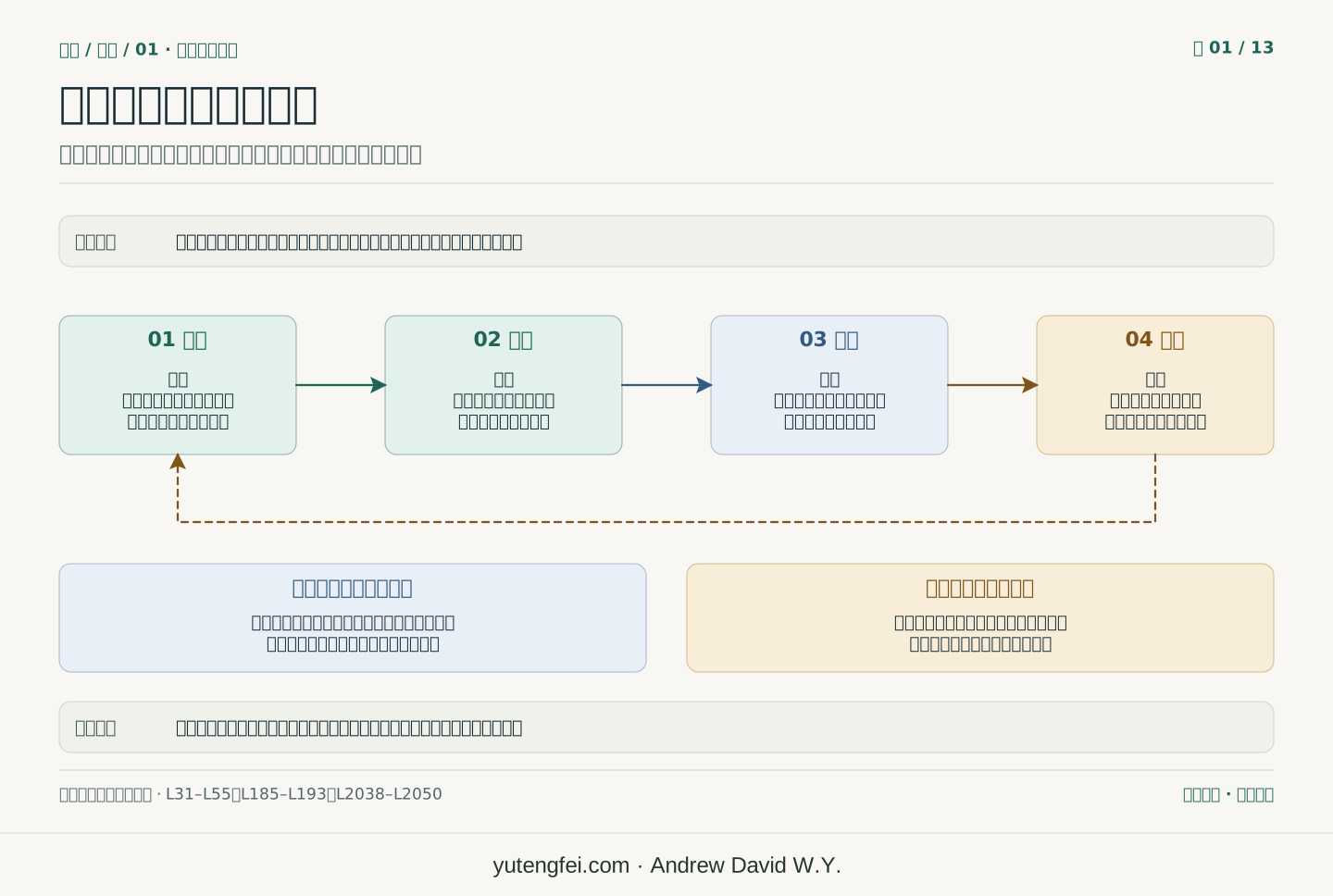
A forest can absorb carbon dioxide, a firm can use equipment to make products, and an investment can give its holder an equity stake. They represent different stages. Operating Resources, Assets, Capital and Funds connects these stages, asking how rights over a resource become identifiable, how the resource is used and financed, and how the resulting funds enter the next cycle.
[](https://yutengfei.com/uploads/blog/four-assets-reading-notes/figures/01-four-assets-cycle.svg)
*Figure 01 · The main sequence linking resources, assets, capital, and funds. Funds also finance development, operations, and transactions. Exit proceeds are one source of those funds.
Introduction and the section on operating resources, assets, capital, and funds · L31–L55、L185–L193、L2038–L2050 · [View the Chinese original](https://yutengfei.com/uploads/blog/four-assets-reading-notes/figures/01-four-assets-cycle.svg)*
### How resources become tradable assets
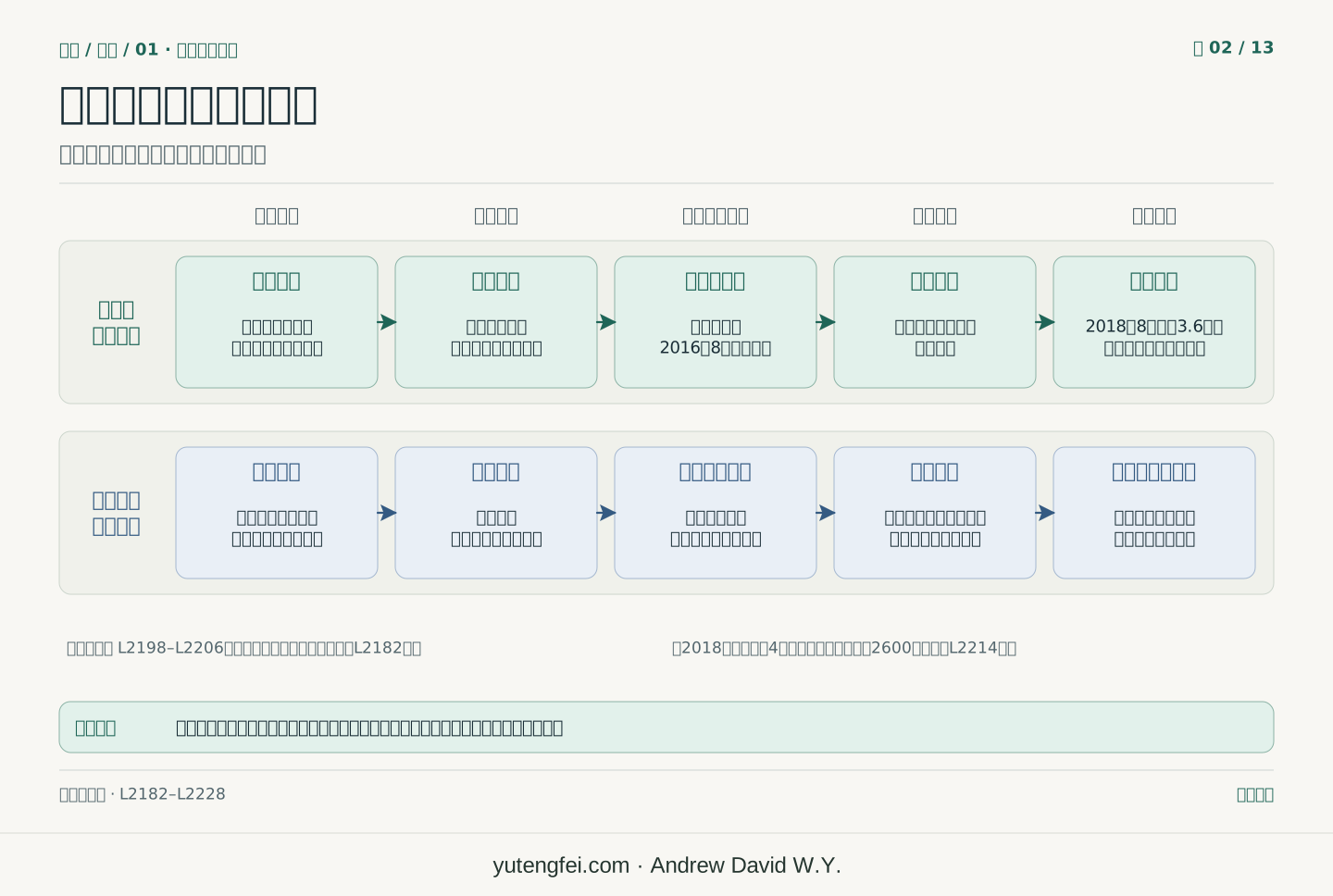
The Saihanba forest carbon sink depends on measurement, audit, and the issuance of certified emissions reductions. Coal capacity swaps require identifying tradable quota units, consolidating dispersed quotas, and establishing a price through open bidding. The first turns a measured ecological function into a tradable product; the second brings quotas that exist within a policy framework into a market.
[](https://yutengfei.com/uploads/blog/four-assets-reading-notes/figures/02-resource-to-market.svg)
*Figure 02 · Both reach the point of sale, but different rules make the two types of asset tradable. The trade volumes and years are as recorded in the book.
Chapter 8 of the original · L2182–L2228 · [View the Chinese original](https://yutengfei.com/uploads/blog/four-assets-reading-notes/figures/02-resource-to-market.svg)*
### How one investment sets two flows in motion
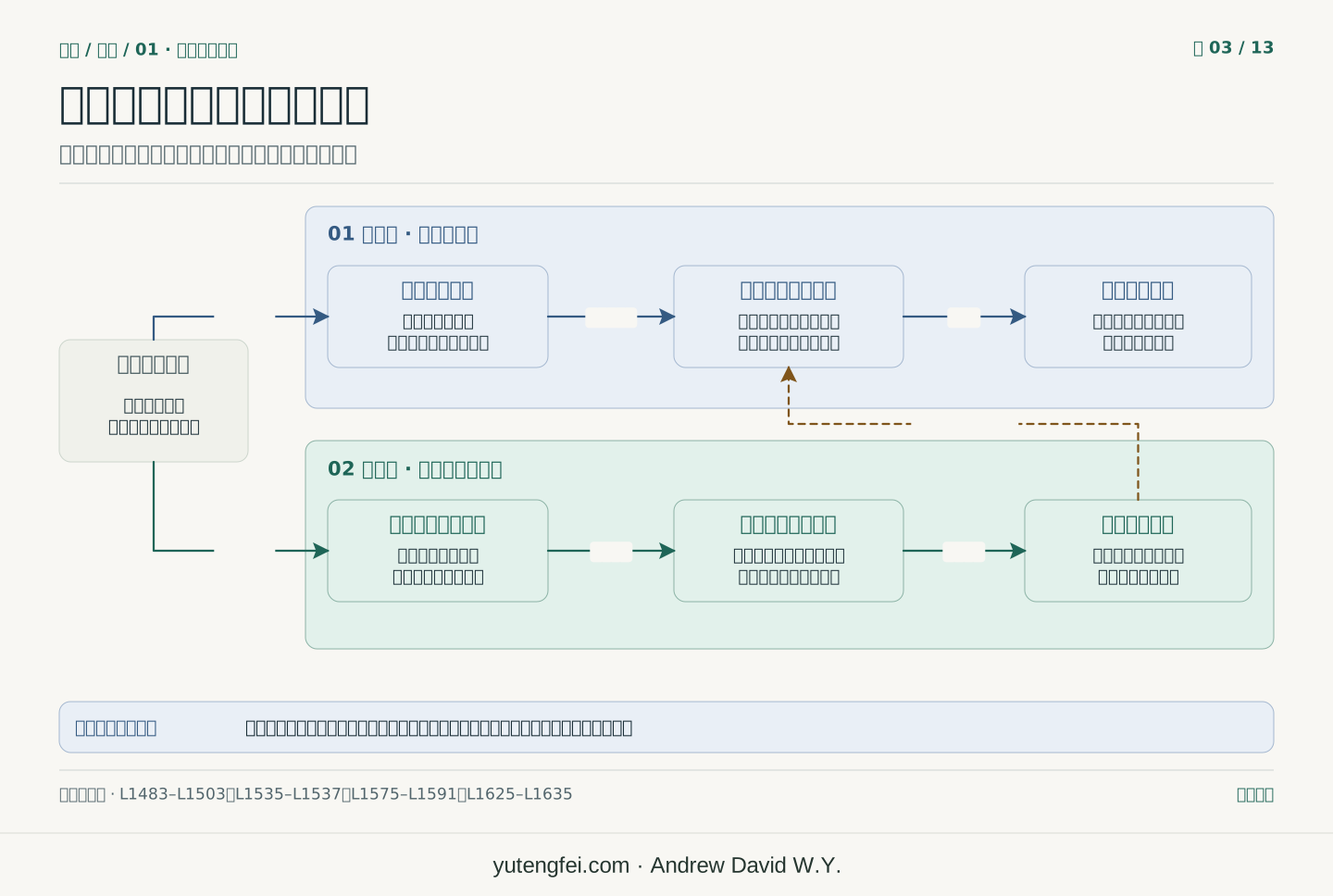
After contributing capital, shareholders hold equity, while the company uses the assets contributed to it to run the business. Operating performance affects how investors value the equity. When shareholders later transfer equity they already hold, the price shown flows to the seller. The company raises additional funds through initial contributions, capital increases, and comparable channels.
[](https://yutengfei.com/uploads/blog/four-assets-reading-notes/figures/03-two-tracks-of-investment.svg)
*Figure 03 · The book explains the two tracks by distinguishing shareholders’ equity rights from the company’s property rights. Control also depends on ownership percentages, voting rights, and governance arrangements.
Chapter 6 of the original · L1483–L1503、L1535–L1537、L1575–L1591、L1625–L1635 · [View the Chinese original](https://yutengfei.com/uploads/blog/four-assets-reading-notes/figures/03-two-tracks-of-investment.svg)*
### Why bonds can also be a form of direct financing
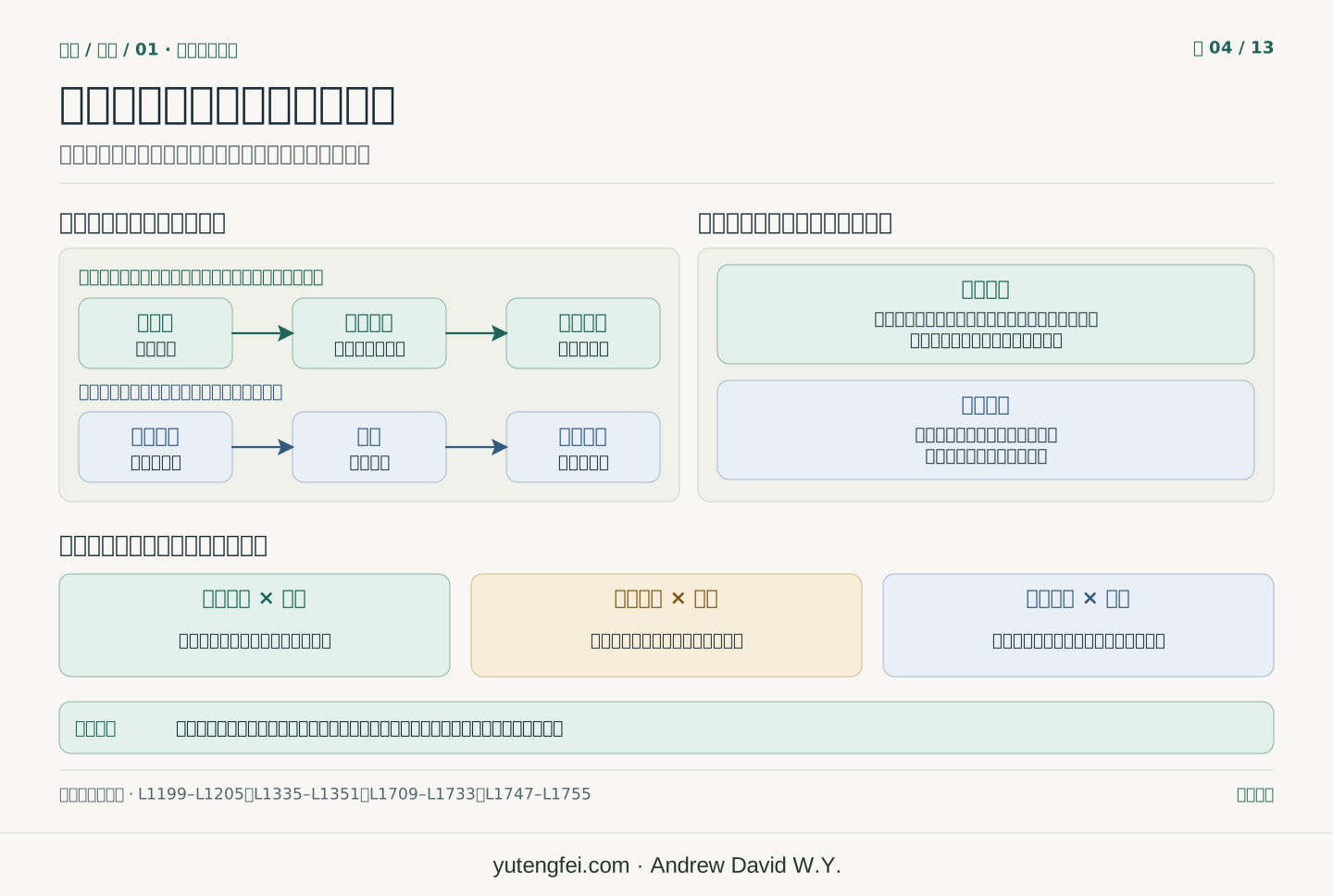
First ask how the funds reach the firm, then ask what rights the financing creates. A public or private bond issue can be direct financing and still require repayment of principal and interest. Equity financing creates shareholder rights. The contributors share in returns and bear business risk. Separating financing channels from the rights they create makes the funding structure clearer.
[](https://yutengfei.com/uploads/blog/four-assets-reading-notes/figures/04-financing-two-axes.svg)
*Figure 04 · Bonds can fall in the “direct financing × debt claim” category. A bank loan is a typical example of “indirect financing × debt claim”.
Chapters 4–6 of the original · L1199–L1205、L1335–L1351、L1709–L1733、L1747–L1755 · [View the Chinese original](https://yutengfei.com/uploads/blog/four-assets-reading-notes/figures/04-financing-two-axes.svg)*
### Why sales can coexist with a cash shortage
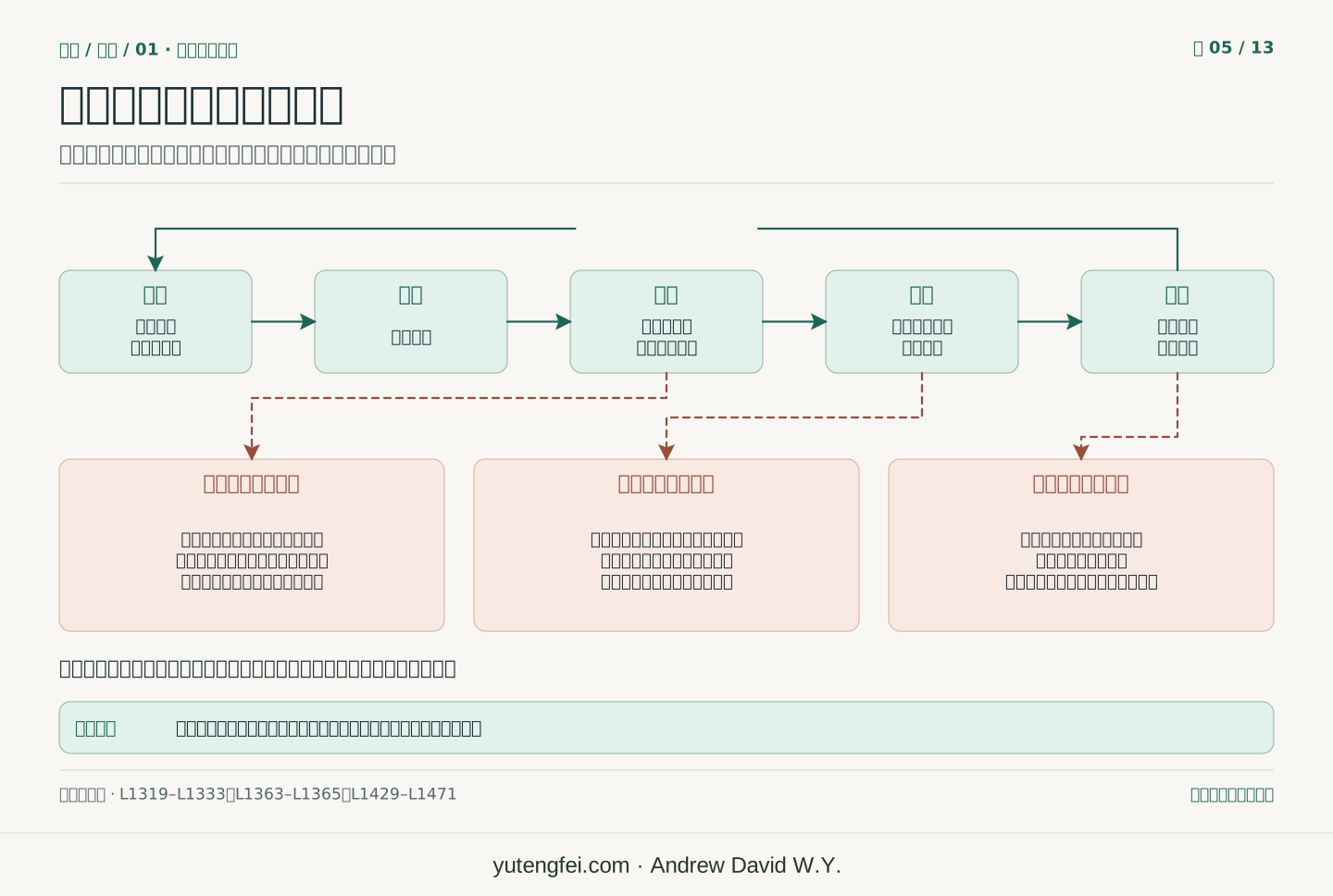
Procurement and production tie up cash before a sale. A credit sale creates an account receivable; only when the customer’s payment arrives is cash available to make further payments. If payment arrives after the next outlay or the maturity of a loan, operations may still be interrupted. The book examines inventory, receivables, and funding maturities along the same cash-flow chain.
[](https://yutengfei.com/uploads/blog/four-assets-reading-notes/figures/05-cash-cycle-breakpoints.svg)
*Figure 05 · Check due payments against the dates cash actually arrives, then coordinate inventory, receivables, and financing maturities.
Chapter 5 of the original · L1319–L1333、L1363–L1365、L1429–L1471 · [View the Chinese original](https://yutengfei.com/uploads/blog/four-assets-reading-notes/figures/05-cash-cycle-breakpoints.svg)*
## Three supplementary diagrams
### Placing the firm’s cycle within the wider economy
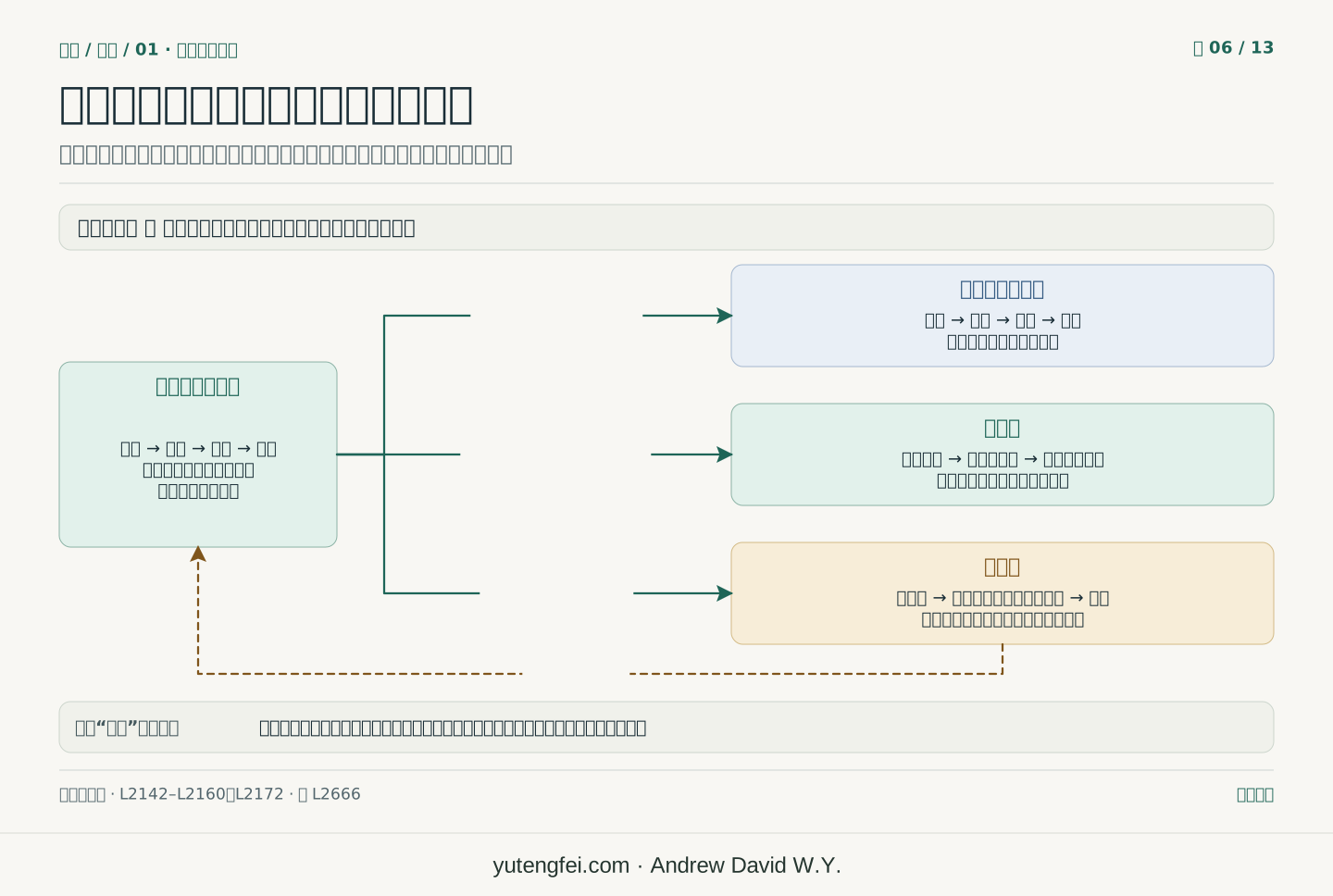
The four chains in Chapter 7 answer four different questions. How does social reproduction continue? How is work divided across an industry? How are orders fulfilled? How are factors of production and value reallocated. The value ecosystem chain links the four forms to the other three chains through inputs and returns.
[](https://yutengfei.com/uploads/blog/four-assets-reading-notes/figures/06-four-chain-coordination.svg)
*Figure 06 · The four chains in Chapter 7’s account of dual circulation. The supply chain organizes fulfillment through flows of goods, information, and funds. It also helps turn value into realized returns.
Chapter 7 of the original · L2142–L2160、L2172 · 跋 L2666 · [View the Chinese original](https://yutengfei.com/uploads/blog/four-assets-reading-notes/figures/06-four-chain-coordination.svg)*
### A cross-border acquisition, traced through the HBIS case
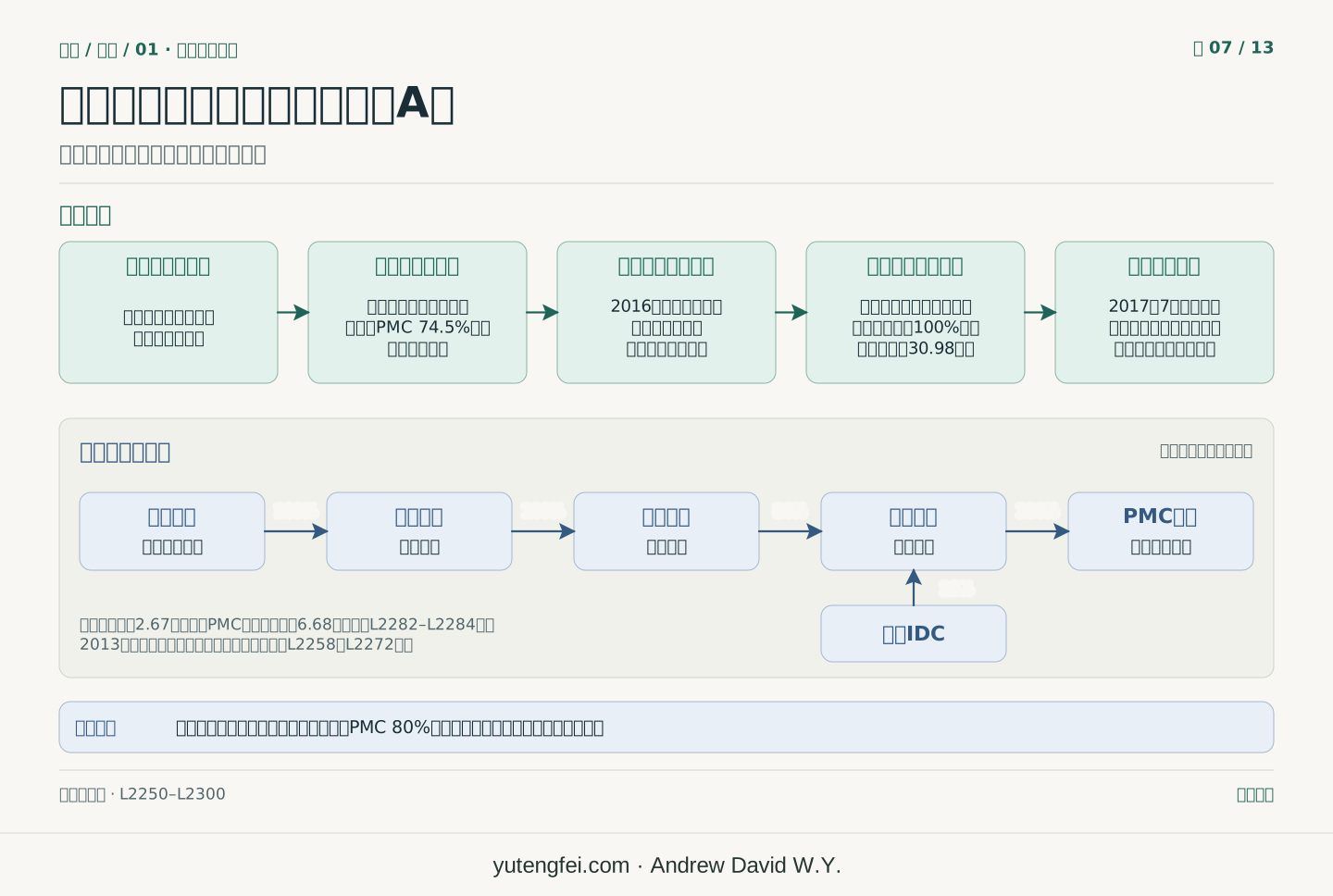
The book uses the HBIS case to show how overseas mining interests can be reorganized through an acquisition vehicle, layered shareholdings, and a domestic listed company issuing shares to buy assets. The upper half records the transaction steps. The lower half shows only the equity relationships after closing.
[](https://yutengfei.com/uploads/blog/four-assets-reading-notes/figures/07-hbis-overseas-equity.svg)
*Figure 07 · Drawn from the closing results disclosed in the book. The book gives differing dates and amounts for 2013. The figure retains a note on those differences.
Chapter 8 of the original · L2250–L2300 · [View the Chinese original](https://yutengfei.com/uploads/blog/four-assets-reading-notes/figures/07-hbis-overseas-equity.svg)*
### How credit based on technology links upstream R&D to downstream markets
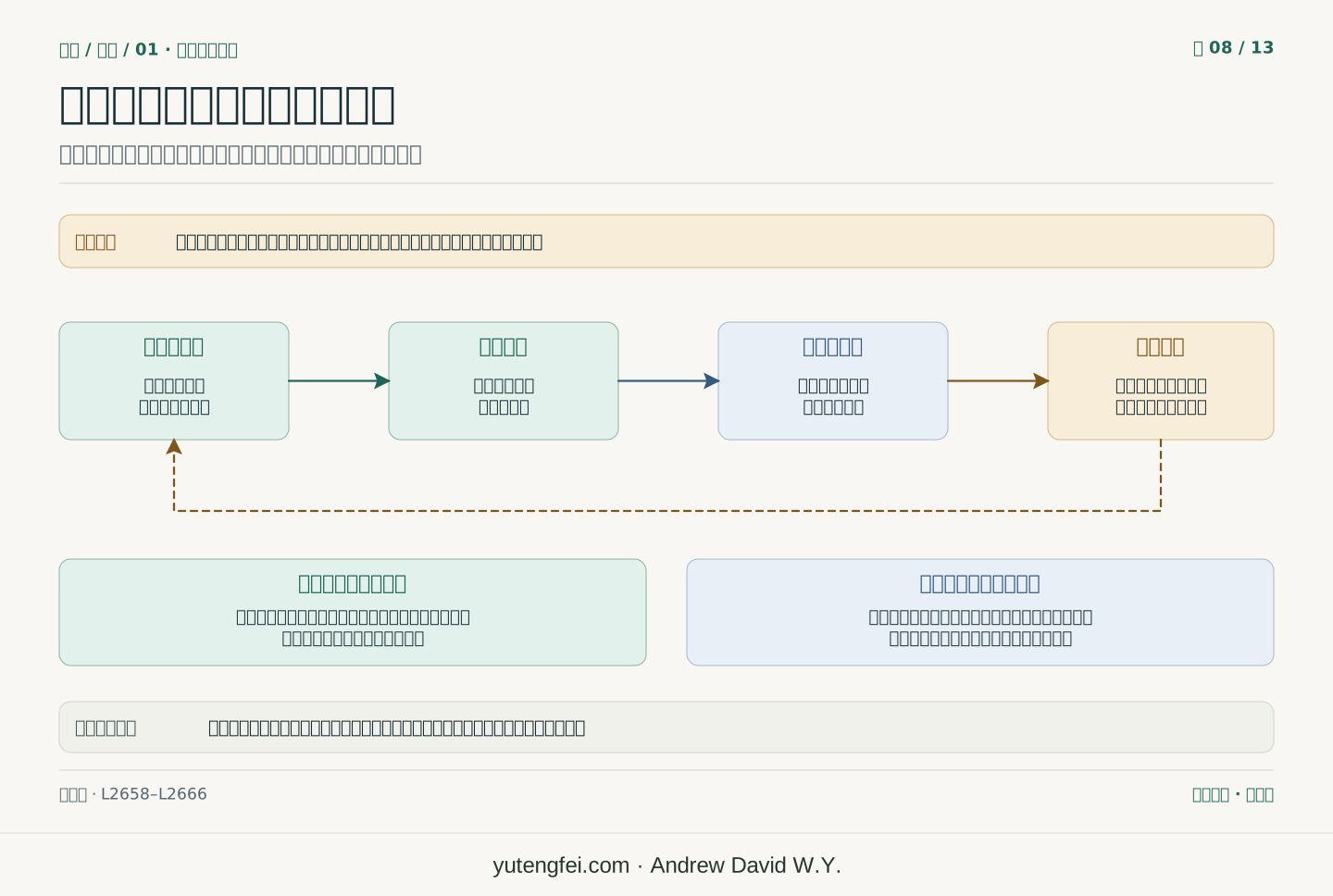
The afterword uses “technology credit” for trust in scientific knowledge and confidence in bringing research results into use. It proposes greater use of equity financing for upstream R&D, credit to bring downstream products to market, and reinvestment of market returns in R&D.
[](https://yutengfei.com/uploads/blog/four-assets-reading-notes/figures/08-technology-credit-cycle.svg)
*Figure 08 · This is the afterword’s proposal for a technology ecosystem, connecting technology, capital, credit, and funding chains.
Afterword of the original · L2658–L2666 · [View the Chinese original](https://yutengfei.com/uploads/blog/four-assets-reading-notes/figures/08-technology-credit-cycle.svg)*
## Five diagrams on specific topics
- [Figure 09: How asset securitization turns expected collections into financing](#reading-topic-9)
- [Figure 10: Four routes to market-based debt-to-equity swaps](#reading-topic-10)
- [Figure 11: Share contributions and dividends in the rural “three transformations”](#reading-topic-11)
- [Figure 12: Which activities should a firm keep in-house?](#reading-topic-12)
- [Figure 13: How dispersed savings become entrusted investments](#reading-topic-13)
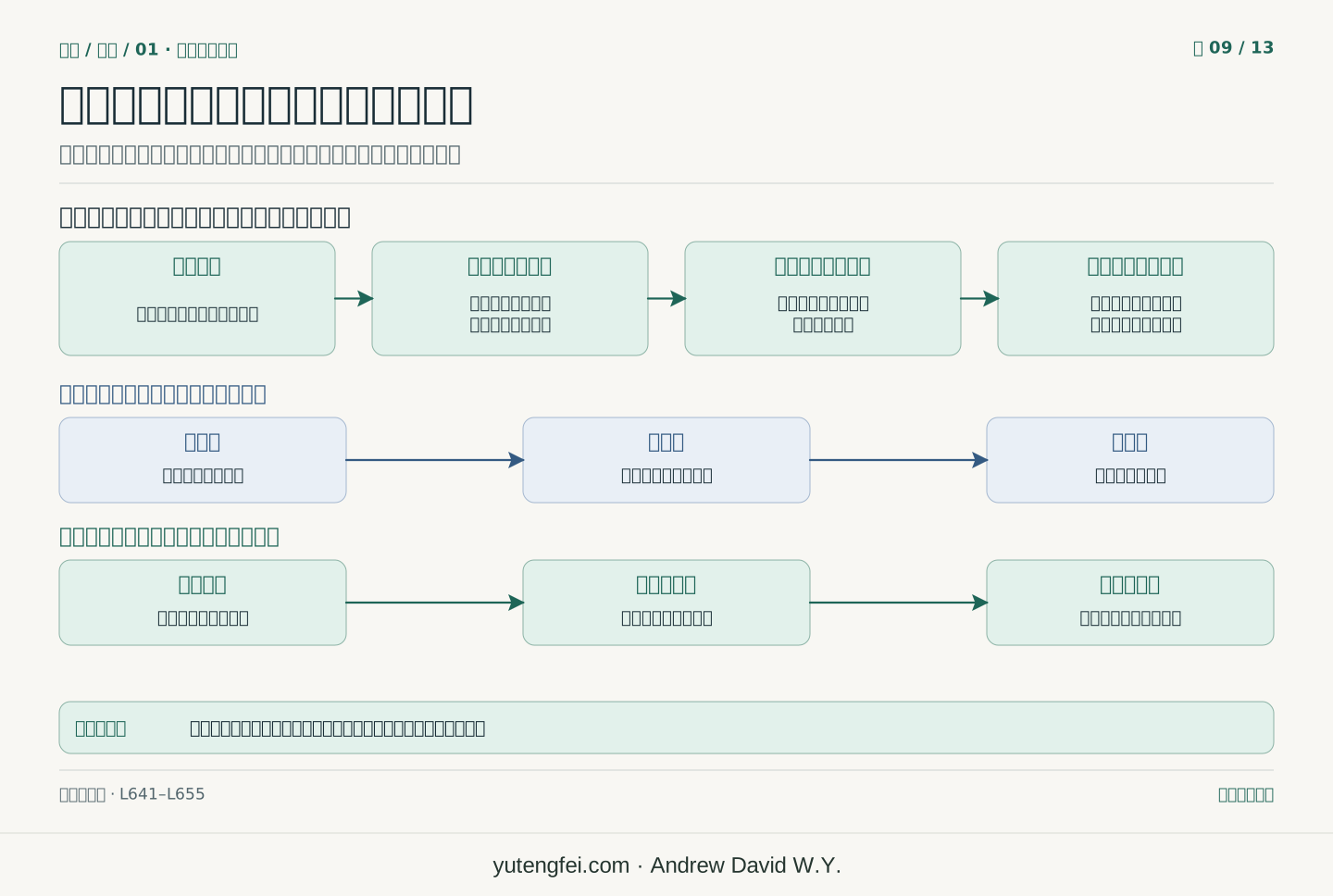
### Who receives which funds, and when, in asset securitization?
For loans or accounts receivable, identify expected collections and how predictable they are, then pool eligible assets, structure the transaction, and add credit enhancement. Investors supply funds by subscribing to the securities. Cash generated by the underlying assets subsequently supports payments on those securities.
[](https://yutengfei.com/uploads/blog/four-assets-reading-notes/figures/09-asset-securitization-cash-flows.svg)
*Figure 09 · Subscription proceeds arrive at issuance. Collections from the underlying assets occur while the securities are outstanding. The two cash-flow paths should be read separately.
Chapter 3 of the original · L641–L655 · [View the Chinese original](https://yutengfei.com/uploads/blog/four-assets-reading-notes/figures/09-asset-securitization-cash-flows.svg)*
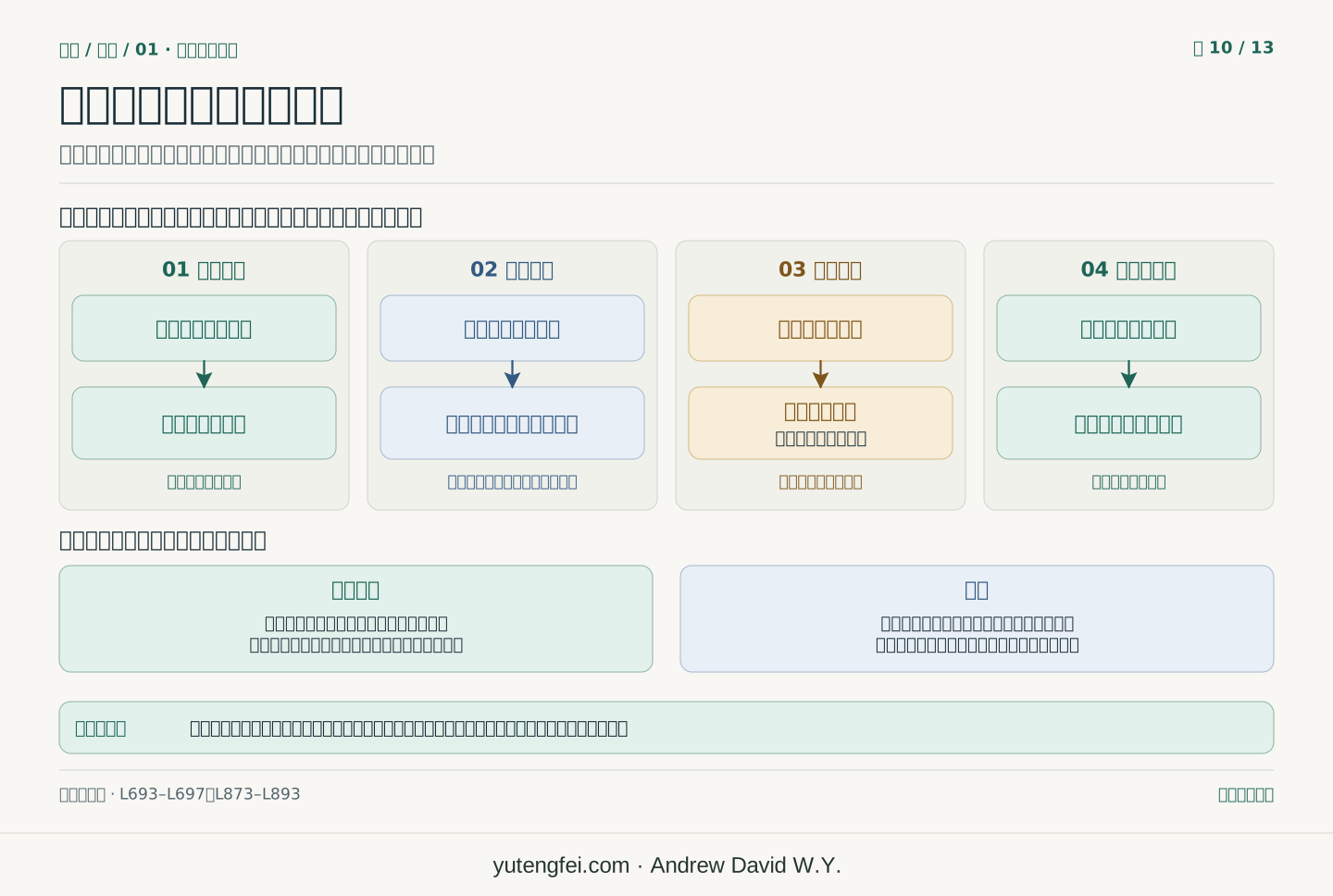
### What happens first in a debt-to-equity swap?
The book describes four approaches to market-based debt-to-equity swaps. The implementing institution can acquire the debt claim and convert it to equity, invest in equity and have the firm use the proceeds to repay debt, provide new credit alongside a conversion, or exchange a debt claim for preferred shares. Accompanying credit facilities are counted separately from debt already converted to equity.
[](https://yutengfei.com/uploads/blog/four-assets-reading-notes/figures/10-market-debt-to-equity-paths.svg)
*Figure 10 · The liability changes shown occur only after the corresponding claims are converted into equity or the debt is actually repaid. Conversion to equity changes returns, risks, and exit conditions.
Chapter 3 of the original · L693–L697、L873–L893 · [View the Chinese original](https://yutengfei.com/uploads/blog/four-assets-reading-notes/figures/10-market-debt-to-equity-paths.svg)*
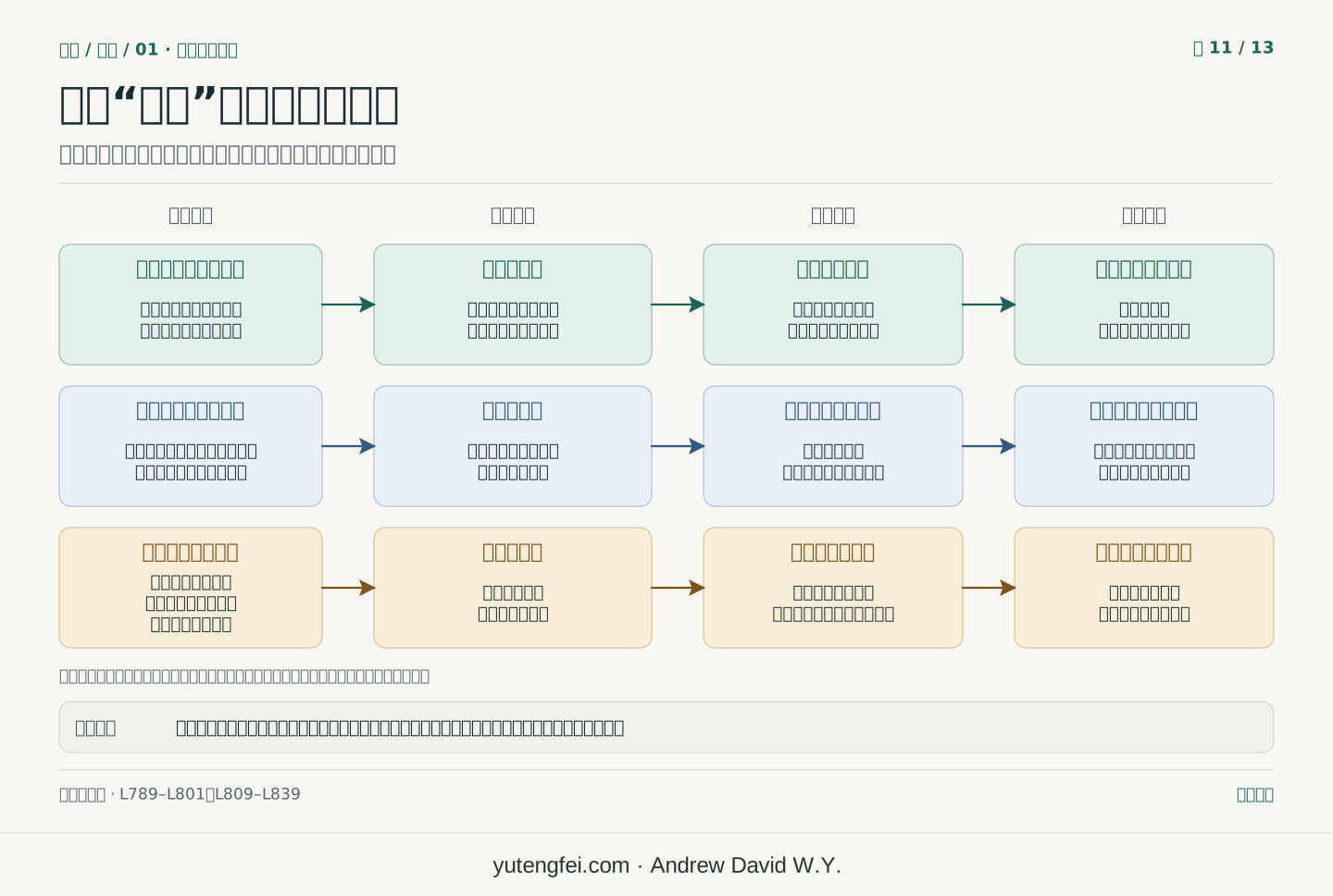
### In the rural “three transformations,” who contributes what in return for shares?
The rural “three transformations” deal with collective resources, eligible fiscal support funds, and rights that farm households contribute voluntarily. The three types of contribution are valued under different conditions, which also govern who receives the returns. When a household contributes land management rights or similar rights for shares, the book’s arrangement retains collective ownership of the land, the household’s contractual rights, and its eligibility for a residential land allotment.
[](https://yutengfei.com/uploads/blog/four-assets-reading-notes/figures/11-rural-dividend-paths.svg)
*Figure 11 · The “three transformations” in the introduction concern changes among the four forms; here the term refers to reform of the rural collective economy. Read dividend distributions in light of the relevant agreement and operating results.
Chapter 3 of the original · L789–L801、L809–L839 · [View the Chinese original](https://yutengfei.com/uploads/blog/four-assets-reading-notes/figures/11-rural-dividend-paths.svg)*
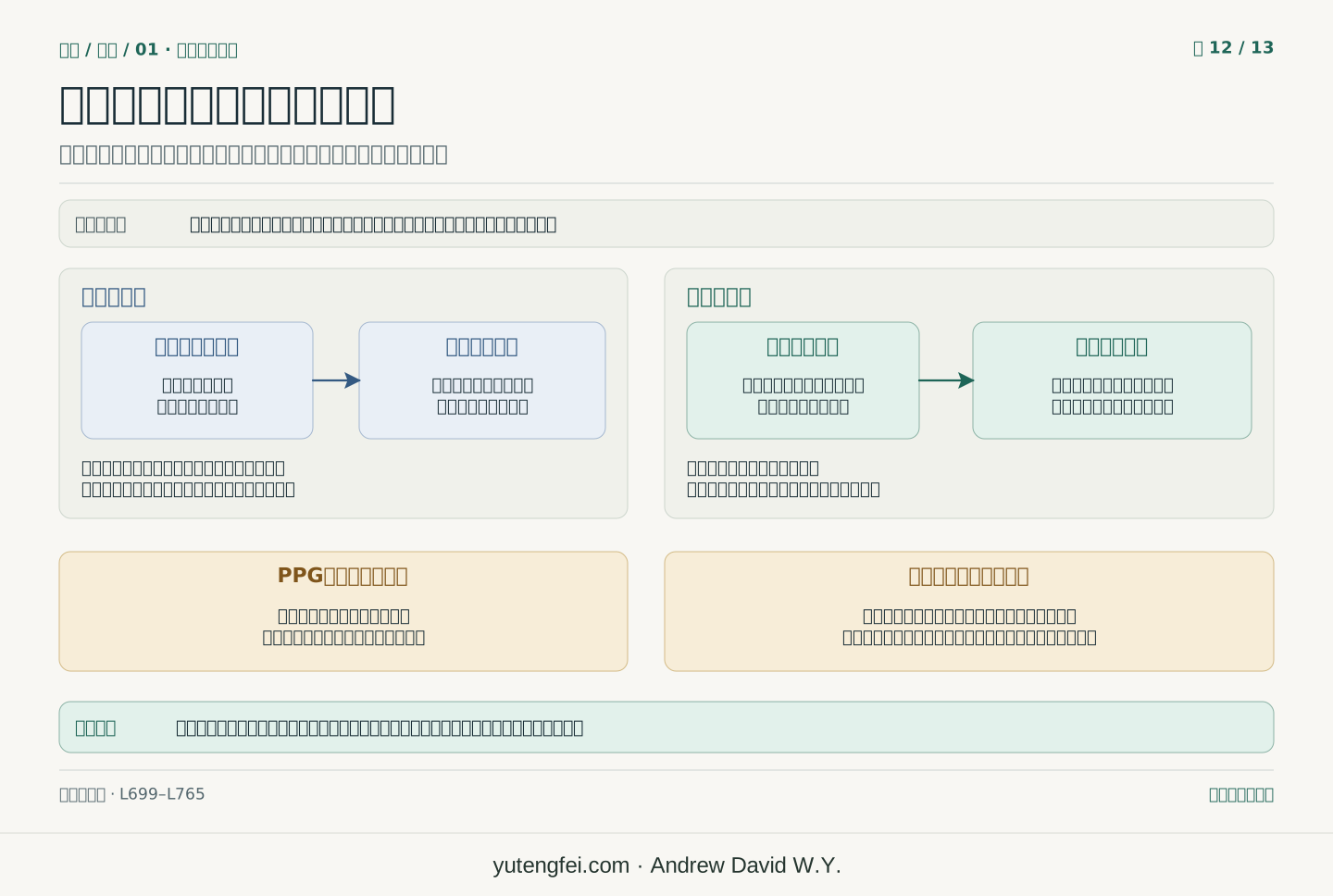
### Which capabilities should a firm keep in-house?
Asset-light operations begin with how work is divided along the value chain. A firm can retain its brand, product design, customer relationships, and quality control while assigning selected non-core activities to partners. It can also keep investing in its own facilities to secure supply or quality. The decision depends on fixed investment, quality requirements, the capacity to exercise control, and supply risks.
[](https://yutengfei.com/uploads/blog/four-assets-reading-notes/figures/12-asset-operating-choices.svg)
*Figure 12 · The book cites PPG retaining design, quality control, and direct sales, and Mengniu in its early years leasing production facilities and placing production under contract management.
Chapter 3 of the original · L699–L765 · [View the Chinese original](https://yutengfei.com/uploads/blog/four-assets-reading-notes/figures/12-asset-operating-choices.svg)*
### How dispersed savings enter entrusted investment
After households voluntarily subscribe or entrust funds, the institution manages the funds under the product terms and allocates assets within the permitted investment scope. Where the funds are raised and from whom are different questions from what the product ultimately invests in. Investors share returns and bear the corresponding risk under the agreed terms.
[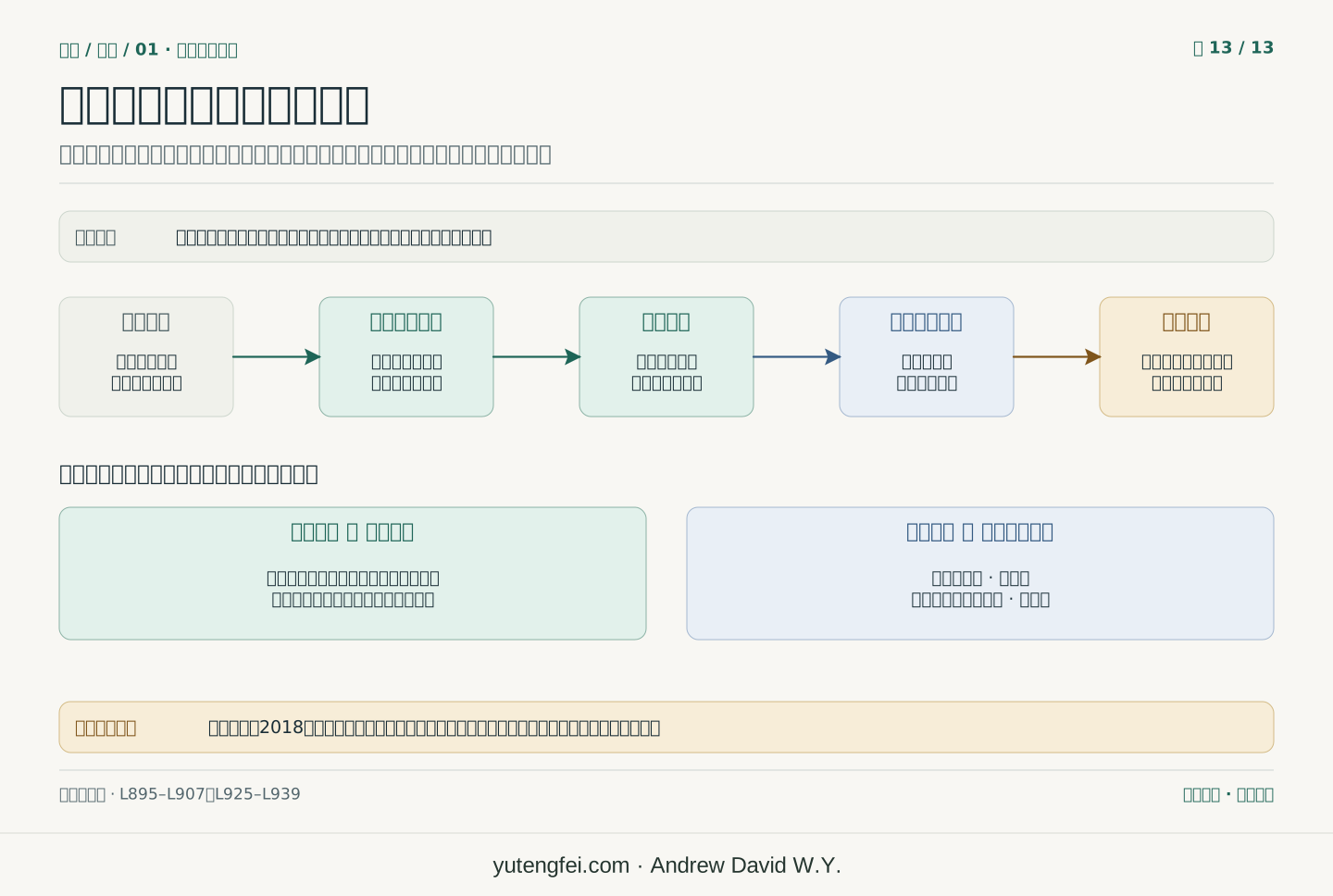](https://yutengfei.com/uploads/blog/four-assets-reading-notes/figures/13-savings-to-managed-investment.svg)
*Figure 13 · The asset-management rules quoted in the book prohibit promises of guaranteed principal or returns. The product terms govern eligible investments.
Chapter 3 of the original · L895–L907、L925–L939 · [View the Chinese original](https://yutengfei.com/uploads/blog/four-assets-reading-notes/figures/13-savings-to-managed-investment.svg)*
* * *
## Chapter digest and selected quotations
The digest draws on Shi Yuqiang’s manuscript and covers the preface, 41 sections across eight chapters, expert commentary, and the afterword. Chapter-by-chapter digest **357 entries**including 40 cases of mergers and acquisitions in Hebei, organized by year. Selected quotations are grouped separately, with a total of **102 excerpts**.
The digest summarizes the text and tags each entry by definition, logic, dimension, structure, framework, methodology, or case. An entry may have more than one tag. The quotations are continuous excerpts from the original. L41 is line 41 of the original Markdown, counting blank lines. Rules, statistics, and transaction progress reflect the periods covered in the book. The text identifies material estimates, proposals, and judgments by the author.
## Contents
- [Framework and topic index](#overview)
- [Preface](#chapter-0) · [Chapter 1. General introduction](#chapter-1) · [Chapter 2. Resources](#chapter-2) · [Chapter 3. Assets](#chapter-3)
- [Chapter 4. Capital](#chapter-4) · [Chapter 5. Funds](#chapter-5) · [Chapter 6. Operation of the four factors](#chapter-6) · [Chapter 7. Advancing and deepening implementation](#chapter-7)
- [Chapter 8. Practice and cases](#chapter-8) · [Afterword](#chapter-9)
- [Selected quotations from the Chinese original](#quotes)
## Framework and topic index
**Resources → assets → capital → funds → redeployment after exit**
Resources provide the basis for investment and development, assets take the property and profit, capital organizations elements and seek value added, funds pass through payments, turnover and withdrawal. The author describes this long chain with "triangular triangular", with property and market as a condition of conversion, with capital market organizations financing, pricing, trading and withdrawal. The original book also discusses the direct capitalization of resources, debt-to-equity swaps, re-organization and other trans-line and reverse routes. (L31–L55、L1475–L1503、L2038–L2066、L2154–L2160)
### From the element to the output to the re-configuration.
The following five steps are to be transcended.
1. \*\*Identify resources and needs. \*\* Examination of use value, weakness, authority and market demand. Natural resources, human resources, knowledge, technology, information, and data can be the starting point. see[Chapter 2](#chapter-2).
2. \*\*Clear rights and profits. \*\* Identify the right to define, measure and transaction from available resources, implement operating and profit arrangements. see[Chapter 3](#chapter-3)and[Carbon exchange and production capacity indicators](#section-8-0).
3. \*\*Choose the capital operating tool. \*\* Depending on the financing, expansion, reduction, integration or withdrawal goals, select stock, credit, asset securitization, merger or reorganization. see[Chapter 4](#chapter-4)and[Chapter 6](#chapter-6).
4. \*\*Financing in line with the operating cycle. \*\* To make funding, purchases, production, sales, refunds and re-investments connected, taking into account the period, liquidity, revenue and risk. see[Chapter 5](#chapter-5).
5. \*\*Check whether the elements can continue to flow. \*\* Identify property rights, supply, financing or market access blockade, arrange the withdrawal and re-configuration, and connect with the social re-production, industrial chain, supply chain. see[Chapter 7](#chapter-7).
### Some of the concepts in the book.
- **Two groups of “Three Changes”** Resource change assets, asset change capital, capital change funds. Rural reforms are resources change assets, money change shares, farmers change shareholders. (L41、L825–L839)
- **The two rights separation and the two categories of "triple rights separation"** The company separates the shareholders and the legal entities. Rural contractual land divides ownership, contractual rights, business rights, home base divides ownership, qualification rights, use rights. (L789–L801、L1483–L1503)
- **Two “Four Chains”** dual circulation Connecting the Social Reproduction General Chain, the four factors Value Ecological Chain, Industrial Chain, Supply Chain. The technology chain, capital chain, credit chain, fund chain, and the technology ecology. (L2144–L2160、L2666)
- **asset securitization and securitization ratio** [asset securitization](#section-3-1)The way of operation of the asset or its cash flow to the securities is converted to the condition. [securitization ratio](#section-4-3)It is a book that measures the market development’s proportion indicator, and the molecules have different spheres in each chapter. (L135、L641–L655、L1133、L2168)
- **Two financial assets.** [Directly with indirect financing](#section-6-4)The channels of funding,[The share with debt financing](#section-5-2)Difference between the rights formed after funding and the obligations to pay. The issuing bonds belong to debt financing, and may also belong to direct financing. (L993–L999、L1335–L1337、L1709–L1733)
### Reading by topic.
- **Resource Property and Transaction** [Resource ownership](#section-2-2) · [Rural and State Reform](#section-3-3) · [Carbon exchange and production capacity indicators](#section-8-0)
- **Financial tools and cash management** [Asset Financing](#section-3-1) · [Capital Products](#section-4-1) · [The financial chain is broken.](#section-5-4)
- **Business control and withdrawal** [Property and Property](#section-6-1) · [Reorganization of the acquisition](#section-6-6) · [Capital Markets Centre](#section-6-7)
- **System and Industrial Development** [Market reforms](#section-7-1) · [dual circulation Four-chain connections](#section-7-3) · [technology credit with funding](#chapter-9)
- **Hebei Annual merger cases** [2016 years ago](#section-8-4) · [2017 years ago](#section-8-5) · [2018 years ago](#section-8-6) · [2019 years ago](#section-8-7)
## The first chapter is all-of-the-head book.
### Preface
[Return to the catalogue.](#contents) · [This chapter is original.](#quotes-0)
#### The formation and scope of the concept
- **The OFCAR mode** \[Definition\] The author of the OFCAR is an English translation of the operation of financing, capital, assets and resources. This is the name of the external communication proposed by the author to the operation of "the four factors". (L19)
- **From the local financing practice to the theory of the cycle of elements** \[Logic\] The concept was proposed by the Hebei Provincial Government leadership, the Provincial Finance Office research and work program formed and the Provincial Government regular meeting submitted thematic reports, and the Provincial Government documents formed on the local investment funding system. Initially, the government’s funding platform was used to take the hands, to use enterprise and marketing means to rescue resources and assets. Hebei “Four Companies One Center” and Chongqing “Eight Grand Votes” are the early platform forms listed in the original book. The author later extended its scope to macro-regulation, regional development, business operations, resource development and capital operations. (L5–L9)
- **The whole book involves reality issues.** \[Dimension\] Market layout, capital markets, supply side reform, property reform, increase direct financing percentage, fund transfer, national strategy, industrial upgrading and national economy dual circulation. (L9–L17)
- **Policy Images and Case Source** \[Case\] Author with rural "three changes", contractual land and home base "three power distribution", mining rights and seawater use rights power, bank debt-to-equity swaps, state capital management capital as a system example, with Hebei merger cases as local and corporate practice material. (L15)
### Chapter 1. General introduction
[Return to the catalogue.](#contents) · [This chapter is original.](#quotes-1)
#### 1st section operation of resources, assets, capital and funds Backgrounds generated
- **the four factors** \[Definition\] Resources, assets, capital and funds. The four can become independent research objects and form a complete system by mutation. (L29–L35)
- **the four factors Functional Position** \[Structure\] Resources provide the basis for investment and development, assets are the subject of property and income, capital is the core function of organization, configuration and added value, funds are the medium function of payment, flow and withdrawal. The four components of the value chain and the ecological chain. (L31–L45、L193)
- **operation of resources, assets, capital and funds with three-changing triangles** \[Definition, Framework\] Organization promotes resource change assets, asset change capital, capital change funds, and after the change, it will enter the next round. The “triangular” of the accompanying is the asset capitalization, asset asset capitalization, capital securization. The author sees each conversion as a line of creation and value added, and the whole chain is a process that is produced simultaneously with material production and value production. (L37–L45)
- **The Long Chain Circle** \[Logic\] The author here calls the single capital line’s self-circulation short chain, indicating that money may be empty in the financial system. operation of resources, assets, capital and funds The entire process of putting the capital line back to natural resources, physical production, circulating consumption and withdrawal from the re-investment. The more mature the market and the financial system, the more conditional the acceleration of the conversion mechanism. (L35–L45、L185–L193)
- **The essence of operation and the formation conditions** \[Definition, Logic\] The author defines operation of resources, assets, capital and funds as a market mechanism-configured production element. The theoretical background of the system is the market configuration role from support, combination, basic to decisive, government role to macro-regulation and system supply. Price, supply and competition are the channels for the market setting. (L47–L59)
- **The evolution of market position** \[Structure\] According to the original book, the phase-simplification, first the planning configuration, then the planning to the main, the market regulation to the complement, then the discussion of the planned commodity economy, the state regulation of the market and the market guiding enterprises, the planning and the market combination. After the establishment of the socialist market economy system, the role of market configuration is deepened from the basic to the decisive, while emphasizing the better performance of the government role. (L49–L55)
- **Adjustment of the stock by increasing volume.** \[Methodology\] Through additional investments and reassignment of elements, the seven-class structural adjustments are driven. Property structure, in mind of various types of ownership and civil vitality, funding structure services resources integration, industrial structure and product structure, respectively, improve industrial quality and product quality, distribution structure focuses on fairness, circulation structure focuses on reducing costs, consumption structure focuses on consumption upgrade. (L57–L59)
#### Section 2 the four factors is the source and attribute of the production elements.
- **The Production Elements** \[Definition\] The various social resources needed for the social production operation are the basic conditions for the operation of the national economy and market entities. The elements entering the market exchange can form the corresponding elements price and price system. (L63–L69)
- **The evolution of the element classification.** \[Dimension\] The book follows the land and labour of William, Adam Smith adds capital on this basis, Marshall reorganizes, the subsequent five-element theory re-technology, and some scholars use information as the sixth element. The teaching material is made by the entrepreneur as the fourth element, as well as the human, financial, material, power, natural, and time power listed by Zhu Shui. (L69–L73)
- **Four elements of the master-editing material** \[Definition, Structure\] Work includes physical and intellectual strength, the land includes ground-based natural resources, capital includes physical investments and monetary forms, entrepreneurs can mean the ability to establish and operate enterprises. (L73)
- **Marx’s Productivity Three Factors** \[Definition, Structure\] Workers are physical or mental participants with abilities, skills and experience, work materials are the tools and other material conditions that affect the work object, work objects are the natural material processed or the raw material processed. The two products are produced. The book writes “Productive Power = Workers + Production Tools + Work Objects”, emphasizing the workforce’s mobility and the role of technology and tools in advance. (L75–L85)
- **Relationship with the the four factors elements** \[Framework\] The author describes the four factors as the existence and flow of the production elements in the mature market economy, with the material form of resources, assets focused, capital, and funds focused on value, emphasizing measurable, transactionable, and flowable forms. Each section has other soft resources, rights-interest assets and other divisions. (L87–L93、L497–L517、L555–L613)
#### Section 3 operation of resources, assets, capital and funds Collective Elements Resources
- **5 sources of wealth and system innovation** \[Framework\] The author lists the population and labour, the land and related resources, capital, technology and innovation, information and data, and also discusses system innovation. Function and function of the stock dish and the development of new elements from the supply end. (L95–L101、L113、L125、L139、L153–L167)
- **Population and Quality** \[Logic, Dimension\] Work and production means must be matched. The original book explains the demand pressure with four decreases in the birth population, women of childhood, the working age and the moving population, the rise in the elderly population, and proposes the human capital interest that is formed by the transition of the population interest to health, education age and skills. (L101–L111)
- **Human resources are converted into human capital.** \[Methodology\] The book proposes to adjust the arrangements for childbirth and retirement, invest public health and education, develop professional training and lifelong learning, optimize the supply of high-level and skilled professionals, improve wages benefits and guarantee incentives, reform the restriction of the movement of households, pensioners, health insurance system. (L109–L111)
- **Market and land-related resources** \[Logic, Methodology\] From the right to the right, calculable, transactionable and flowable, through reasonable concentration and transaction improved configuration, the right to the relevant right to the property to the profit. The value of land construction in the book is estimated by the assumption of the price and the area calculated. (L113–L123)
- **Two issues of capital activation** \[Logic\] The original book of De Soto's discourse describes clearly that property rights contribute to the formation of capital in the sleeping assets, and classify capital investments and the subjects of the distribution as the second issue. The author uses high funding costs, capital displacement, credit ratio is high, stock supply is not sufficient to explain capital and financial depression. (L125–L137)
- **Measurement of Capital Development** \[Dimension\] Author listed securitization ratio, capitalization rate, capitalization rate. The total market value of this stock is divided into the GDP, Chapter 7 A the total market value of the stock is compared to the national GDP, Chapter 4 is molecular to the total market value of various securities. When comparing history data in the book, it is necessary to match the molecules and time first. Chapter 3 “asset securitization” also refers to the operation of securities issued by assets. (L135、L641–L655、L1133、L2168)
- **The Transformation of Wealth** \[Methodology\] The original book, respectively, proposes the multi-configuration of foreign currency reserves and combines security and flow, savings through financial products to invest and the real economy, market operations of state-owned investment operating platforms, agricultural land and natural resources clear rights and paid use, bank credit transition into stock, poor assets by handling and disclosure. (L137)
- **Technology and innovation create new supply** \[Logic, Methodology\] Technology increases both the number and speed, and changes the industry, labor and business structure. The author proposes the enterprise as the subject of technological innovation, to strengthen the basic research, strategic technology, research and development investment, talent training and achievement industrialization, and to take into account the upcoming technology and the upgrading of traditional industrial technology. (L139–L149)
- **Innovation Chain Organization** \[Framework\] Three markets are linked with technology, capital, and talent, with open resources and sharing as a means, the innovation chain is deployed around the industrial chain, the innovation chain is improved, the production and research, the scientific integration, the military civil integration and the entrepreneurial services are organized. (L151)
- **Data becomes a production element.** \[Definition, Methodology\] The author lists information and data as new sources of wealth, proposes the informationization of government, public services and enterprise operations, cultivates new industry style with digital industrialization, transformates traditional industries with industrial digitalization, trials in urban, industrial, medical and other scenes, and promotes digital trade and related financial applications. (L153–L157)
- **The system of supply and the division of work** \[Logic, Structure\] The system affects the motivation of people, market surveillance and restrictions, whether resources are invested and used efficiently. The author uses the family joint-production contractual responsibility system to explain that system changes may release the existing production potential. Government reverses on fair competition and policy environment, and business reverses on the configuration of elements, productivity and supply quality. (L159–L167)
- **5 Key Systems Innovation** \[Methodology\] Supply system optimizes the market output and shares the overall demand, government management promotes the release of the clothes and the post-events regulation, tax system adjusts the rights and reduces the tax reduction, technology system improves the business subject, research institutions and the results transformation, property system strengthens the protection of all kinds of property rights and the law state guarantee. (L169–L179)
#### Section 4 operation of resources, assets, capital and funds To assist high-quality economic development
- **Four macro effects** \[Framework, Dimension\] The author positioned operation of resources, assets, capital and funds as a new driving force for sustainable development, a high-quality development pathway, an instrument for structural reform on the supply side, a modern industrial system building means. Organizational elements configuration, continuous cycle, efficient operation and dynamic conversion, and from the resource use rate, production rate, quality rate observed the use of resource configured results. (L181–L205)
- **The chain of sustainable development** \[Logic\] The value cycle is combined with the material cycle, making the resources, population, economy, capital, and environment coordinated. Based on resource protection and reasonable use, under the conditions of stimulating development, pursuing less investment, more production, growth of wealth and improving quality of life. (L187–L193)
- **Five High Quality Development Facts** \[Dimension, Methodology\] Configuration to improve property rights, prices and to interact with high and disefficient sectors; Supply starts from storage, increased vitality, increased quantity, smooth cycle; Imported production weight in labour and all-element productivity, resource intensive use; Distribution of the focus on the elements according to market value and fair re-distribution; Circular weight in green low-carbon industry and technology systems. (L195–L197)
- **The Elements of the Supply Side Reform** \[Logic, Methodology\] Eliminate excess production capacity, accumulated stock and high debt occupation, release of human resources, funds, land and technology, and promoting the transfer of elements to strategic emerging industries and modern service industries. Increasing productivity by improving supply quality and adapting to demand changes. (L199–L201)
- **Structural reforms on the supply side** \[Definition, Dimension\] The book explains it as adjusting the economic structure and optimizing the configuration of the elements to improve the quality and quantity of growth. The supply side elements listed include labour, land, capital, institutional creation and innovation. (L201)
- **Building a modern industrial system** \[Framework, Methodology\] Based on real economy, technology and innovation, modern finance, human resources cooperation, through asset reorganization, capital integration and industrial integration, enterprise integration, mixing, manufacturing services integration, agriculture to second-third production extension and traditional industries to join new technologies. Improving the financing structure, reserve reorganization and medium-term fund supply. (L203–L205)
#### Chapter 5 operation of resources, assets, capital and funds The national economic cycle
- **Capital Circle and Capital Circle** \[Definition, Structure\] The Marx's Theory of Capital Circulation. Industrial capital consistently experiences the purchase, production, sales, takes the monetary capital, the production capital, and the commodity capital in three functional forms, adding value back to the starting point, forming a cycle. The cycle continues to repeat, capital with profit returns to the investors, forming a turnover. (L207–L211)
- **The flow and transformation of the national economy** \[Logic, Framework\] The blockage of the lines will slow the entire turn. The author proposes using market exchange to link industries, sectors and regions, recover and increase value, and sustain the cycles of production, circulation and consumption, finance and the real economy, and growth and employment. The book clearly lists six two-way links, resource and asset, capital, funds, assets and capital, funds, and capital and funds. (L213–L221)
- **Resources to live.** \[Methodology\] To make the weak resources clearly right to belong, to be able to calculate, trade and express value, and to be configured through the market for more needed purposes. (L223–L225)
- **Integrated assets** \[Methodology\] To dissolve excess production capacity and stock, to clean the zombie enterprises, to combine, reorganize, auction, transfer the uneffective assets, to promote the treatment of the uneffective and uneffective assets, to improve the use and output rates. (L227–L229)
- **Operating capital** \[Methodology\] Improve the quality of the listed companies and investors, improve the acquisition, reorganization, disintegration, withdrawal and investor protection mechanisms, develop bonds and liquidity, expand the stock funds, direct financing and debt-to-equity swaps. (L231–L233)
- **Financing of money** \[Methodology\] Prevent long-term out-of-the-country displacement, production mid-week slow and production out-of-the-country transition, with funding cycle driving resources forced, asset capitalization and transformation withdrawal. (L235–L237)
### Chapter 2. Resources
[Return to the catalogue.](#contents) · [This chapter is original.](#quotes-2)
#### The first part is the constantly rich content of resources.
- **Three factors of sustainable development** \[Structure\] Population, resources and environment are three major factors. The author puts resources in the basis, and sees the relationship between people and resources, the distribution of resources and the lack of resources as a developmental problem. (L245–L249)
- **Resource position in the four factors chains** \[Logic\] Resources are the basis and the carrier of assets, capital, funds and funds. The rest of the three capitalists are born in resources, the industrial chain and the value chain must continue through a regular, efficient assetization, capitalization and other operations. (L251–L253)
- **The limitation and broadness of resources** \[Definition\] The short meaning refers to natural existments that are not yet developed. General means economic resources or production elements, covering natural resources, labour, capital, etc., and also means material, energy, information available for development and use. (L255–L261)
- **Comparison of resources in the book.** \[Definition\] The UN Environmental Planning Agency emphasizes the natural factors and conditions that can create economic value and improve the welfare in a particular time space. The author believes that both of these pathways are limited to natural resources, and need to be included in social resources. The Economic Explanation emphasizes the production process. The author, using Marx and Engels’ discussions on labour, land, nature and wealth, puts natural conditions, human labour and social factors in the same framework. (L263–L273)
- **The nature and boundaries of resources** \[Definition, Logic\] The author summarizes the resources as a form of objective existence that can create material or spiritual wealth, with a certain accumulation, and is synonymous with them as a element of production. Ineffective, useless, harmful forms are not counted in this speech. Use value gives resources the potential to further convert to assets and capital. (L275–L281)
- **Natural resources and social resources** \[Structure\] Natural resources include sunlight, air, water, land, forests, grass, animals and mines. Social resources include human resources, information and material wealth created by labour. The author lists knowledge and labour, land, capital and is considered as important production elements of the knowledge economy. (L257–L261、L277–L281)
- **Six types of resource classification axes** \[Dimension\] Economic characteristics of natural and ecological environment, human resources, processing resources. The natural characteristics of land, minerals, forests, oceans, oil and so on. The social characteristics of human, technological, intellectual and other. Separate agriculture, industry, information (including service) resources. Really, potential and waste resources. Renewable and non-renewable resources. When using classification, it is also necessary to examine the connection and limitations between the resource subsystem. (L283–L287)
- **Three levels of natural resources** \[Definition, Structure\] The book is translated into three layers. The first level is the ecological environmental resources such as land, minerals, water. The second layer is environmental capacity resources based on natural resources, involving the environmental pollution and destruction capacity of who owns, how to develop use and flow, such as carbon emissions rights, energy rights, water rights, emissions rights and transferable emissions total indicators. The third level is the ecological beauty and comfort resources, such as forests, landscapes and natural reserve. The book understands it as a function that is relatively independent of the physical carrier. (L289–L295)
- **Technology Changes Resource Boundaries** \[Logic, Methodology\] Technology advances make the knowledge results more rapidly transform into products, allowing rich resources to replace the lack of resources, and improve the strategic position of technology, information, and talent. The book recommends synchronizing the construction of intellectual property transactions, results conversion, information transactions, digital asset transactions and other contractor bodies, in order to promote the materialization of intellectual resources. (L297–L301)
#### Part 2 Rareness determines the value of resources
- **The resources weakness** \[Definition\] In a specific time and space, available resources are limited to the real or potential demand of continuous growth. Resource deficiency and the pursuit of efficiency together form choices, limited resources need priority service the most important goal. The book summarizes economics as a science that studies the disadvantage and use of resources under a certain economic system. (L305–L313、L325–L327)
- **Four manifestations of rare** \[Dimension\] Absolute demand is higher than total supply. Relativity means not enough for diversity and growth. Difference means the distribution and scarcity of different regions. Dynamic indicates supply or demand intensity changes that change the degree of rareity. (L315–L323)
- **Rare is an objective starting point of operation of resources, assets, capital and funds** \[Logic\] Resource limited and demand growth are in contradiction, and encourage the exploration of the configuration, use and conversion tools. Technological advances, alternatives and demand changes will re-order the sequence of rare, and the position of water, coal, oil, and mines can change accordingly. (L325–L337)
- **Three-dimensional goals and two types of means for sustainable development** \[Definition, Framework\] At the same time considering the contemporary and future needs, coordinating the three dimensions of economic, social and ecological. The first kind of means is to optimize configuration and technological efficiency, savings protection, external communications and demand management. The second category is to improve the distribution of production and the political and cultural system, and to coordinate between efficiency, equality and social stability. The book emphasizes the interaction of two types of means. (L329–L337)
- **Development and protection of weak resources** \[Methodology\] Implementing the priority of saving, protection priority, natural restoration as main, optimizing development, focus development, limit development, and prohibiting development, according to the main functional area, and arranging the use of resources; Co-operation with market and government interventions, while using technology and savings measures to increase the use rate. (L331–L337)
- **Free goods, economic goods and price signals** \[Definition, Logic\] The author describes the free goods in the air available for free, and translates Marx's political economics, believing that the free goods are worth use and no value. Economic goods must be produced by themselves or exchanged with other economic goods. According to the book’s supply analysis, the continued supply does not respond to the price appears to rise, the supply greater than the demand makes the price fall. The author connects rare with potential value, long-term investment value, and sees the unregenerability of some natural resources as a source of long-term investment value. (L339–L351)
- **Three criteria for the value of resources** \[Framework\] According to the analysis in the book, looking at the rarity, supply tenders will increase the difficulty of accessing, and thus push value. The more accessible, the more technologically available, the more accessible, the easier to obtain, the less possible to reduce the value, the more difficult to obtain, the more likely to increase the value. Three look alternate, the more difficult the function is to be replaced, the higher the price is likely, the higher the degree of alternative, the more likely the value is to fall. (L347–L353)
- **Investment of the weak resources** \[Methodology\] The author’s screening idea is to find current rare items, identify future potential rare resources, and prioritize the research of low-alternative objects. The book is defined as an operational goal. (L353–L355)
#### Part 3 Promote the Resource Property Reform
- **The natural resources property system** \[Definition, Logic\] The system responds to the resources to who owns, who develops use, how to flow, the legal consequences to who are responsible. The Secret of Capital, by De Soto, describes that the right to property is the key to the formation of capital, and that the establishment of the property system is considered a prerequisite for resource assetization and capitalization. (L357–L361)
- **Six types of blockages in the management of resources** \[Dimension\] Resources sleep and lack of value tables, low numbers, assessment and registration are not sufficient, property representation is confused, government and corporate rights can divide and income can be disclosed, some rights can be missing legal system arrangements, regulatory protection is not sufficient. The book connects these blocks with trade difficulties, property disputes, gross development and ecological degradation. (L359)
- **The main line of property reform and five hands.** \[Framework, Methodology\] The book describes the implementation of 2019 that the property system is the focus, the implementation of the subject is key, the investigation monitoring and the registration of the right is the basis. Five handhelds are followed by to improve the power capacity system, implement the property rights subject, unified right registration, establish ecological compensation, and promote intense use. The right to make resources clearly authorized and subject, and to establish a system basis for the value and market flow. (L361–L375)
- **The form of land power and ownership** \[Methodology\] The reform mentioned in the book emphasizes the separation of the right of ownership and use of natural resources and the improvement of the form of achieving the total and collective ownership. The contract is implementing the three-power distribution, and the land-operating right to share and mortgage. Home Base Explore Three Power Division. Construction land use rights set according to land, surface and underground. (L365)
- **The power of minerals, waters and the sea islands** \[Methodology\] The book proposes to explore oil and gas exploration combination, link exploration mines, mining grant and planning, land and sea use rights, adapt the exploration period according to mining species, exploration phase or stock, and clearly the right to mining the hypothesis capacity. The right to use the sea explore the right to lay the stereo layer, to improve the transfer, transfer, mortgage, lease and pricing funding. No resident Sea Island pilot explore use rights transfer, rental. The water beach painted cultivation right may be transferred, hypothesized and coordinated with the right to use the sea, the right to contract the land and the right to operate the land. The right to water is connected with the right to underground water, geothermal water, mineral water mining. (L365)
- **Unified registration and property entity** \[Methodology\] The reform described in the book to unify the right to register the boundaries of ownership, use rights, and to build a registration information platform. The focus includes natural protected areas such as the National Park, key state-owned forest areas, wetlands, and important ecological spaces such as the Grand River. According to the arrangements described in the book, the representative of the ownership of all natural resources assets of the people exercise the subject registration as the competent department of natural resources of the State Council. Rural collective economic organizations, in particular, represent collectively exercising their ownership as a legal entity, members enjoy legitimate rights and interests, and market subjects of various types, according to the law, equally use resources and participate in fair competition. (L367–L369)
- **Ecological protection compensation and right to withdrawal** \[Methodology\] The book proposes a mechanism of government-led, corporate and social participation, marketing operations, and compensation for the right subjects to fulfil their obligations of protection. Extend natural ecological space in ways available for rent, replacement, rejection, and other, and according to the law treat the right to extend the natural landscape, mining, water-making, cultivation fishing and licensing business, and withdrawal. (L371)
- **Intensive use of natural resources** \[Methodology\] The book is based on the price formation, competitive delivery, combined with the total amount and intensity control, proposed to improve paid use, promote the competitive delivery of mining rights, improve the rules of oil and gas blocks withdrawal and flow. Water resources set control targets according to the water area ecology and development needs, unified regulation of water resources and water energy development. The level of use of resources and ecological protection requirements include the conditions of the right to use and the contract of concession, and improve the rules of transfer, lease, mortgage and the recipient's use requirements. (L373)
#### Chapter 4 Create a new resource development view
- **Resource identification changes according to technology and cognitive** \[Logic\] Original rare goods may be removed, original waste or general goods may be used, new resources may affect industry competition and development direction. The book will link the ability to discover, expand, integrate, and cultivate resources with open, innovative and cognitive upgrades. (L379–L385)
- **Five new resources.** \[Framework, Methodology\] Expand width, find enough resources and new technologies to replace the lack of resources; Mining depths, promoting open source savings, level of use and waste conversion; Rich dimensions, identifying data, customer groups, points, emissions rights, air-space waters and other non-traditional forms; Gathering density to attract resources in the institutional, policy and business environment; Focus on key resources and focus on resources that can maintain a competitive advantage. (L385–L395)
- **Three critical resources.** \[Dimension\] Value matching potential advantages, value and weakness matching competitive advantages, difficult to imitate and alternative relationships to whether the advantages can continue. The author also emphasizes the unique and difficult transferability of resources when summarizing the long-term sources of advantages, and will see knowledge assets based on core technology as an important resource for the formation of core capacities of the enterprise. (L395)
- **Policy Assembly and Technical Reviews** \[Case\] The book uses the Sunlight Fund to describe the policy and the environment that can attract institutions and funds to gather, the organic fertilizer used to build sand and rubber to describe the new uses and technologies that will change the boundaries of resources. (L389–L393)
#### Chapter 5 Resource Transformation and Resource Distribution
- **Resource Transformation and Transformation Subjects** \[Definition, Logic\] The conversion, which is said in the book, is the original or to be developed potential resources by the configuration into enterprises and economic entities, then by the portfolio of production elements, processing, etc. formed valuable, usable assets, and can further go to capital, funds. The author considers the value and value assessment as a symbol of the real wealth of resources. (L397–L405)
- **Eight Channels for Business Resources** \[Methodology\] Purchase, rental, government shares, government dividends, acquisition of business rights, contracts, use rights transactions, self-development integration. (L403–L405)
- **Six routes of resource conversion** \[Framework, Methodology\] ①The policy transformation, rural land through separation and flow forms operational or funding assets, in the book on stock collective construction land to market emphasizes planning and according to the law, voluntary, paid. ②The design of the stock, the condition of the award of dividend, value added or voting rights benefits, or the possibility of executives and tech staff to purchase the stock at a pre-conventional price, to promote the connection of contributions, risks and profits. ③Development transformation, turism and agricultural services to transform ecological, rural and cultural landscapes into ecological assets. ④Processing transformation, building waste processed into renewable raw materials and new products. ⑤Integrable, by collecting, transferring, storing, and analysis of data value, the book listed infrastructure, software technology services, industry content consulting three categories of enterprises as contractors. ⑥Creative transformation, works through planning, production, positioning, marketing and mediation promotions form cultural consumption and profits. (L407–L429)
- **Resource configuration** \[Definition\] Allocate limited resources across different fields and uses to produce suitable goods and services with as little expenditure as possible and achieve better results. The original book also, from the perspective of social working time, defines the configuration as the allocation of social total working time between the departments. (L431–L439)
- **Resource disbalance observation dimension** \[Dimension, Logic\] The author disbalances the configuration of the region, urban and rural, income allocation, economic development and environmental protection observations, and classifies effective supply, potential release, efficiency play unfavorable as corresponding performance, citing some products overdose. (L437–L439)
- **Market configuration and government regulation** \[Framework\] Market configuration guides flow through price signals, regulates supply through competition, changes in supply through price feedback. Government performs macro-regulation, regulation, public services, social management and environmental protection functions by economic, legal and administrative means, supplementing the spontanity, blindness, retardation and unregulated areas of the market. (L441–L451)
- **Configuration and development of system boundaries** \[Methodology\] Improve the way of the property rights and the rights of many owners are achieved, improve the marketing configuration and reduce the government's excessive direct configuration in the fields that can be regulated by the market. The book calls for a comprehensive development and protection, prohibits development and use of rare natural resources that need strict protection, and implement red line controls on agricultural land, water resources and forestry. (L441–L453)
#### Chapter 6 “Sweetening Resources” Create Economic Miracles
- **“Resource Curse” and “Dutch Disease”** \[Definition, Logic\] The author combines both, and says that the natural resources wealth can also draw the economy. The book describes the evolution of export concentration, other industries, innovation and decline in competitiveness, and the “resource-extinct city” describes the areas that fall into poverty after resources are extinct. Here is the book in the way. (L455–L471)
- **Zhejiang “zero resources” economy** \[Case\] The book describes the industry can be formed in the local lack of natural raw materials in conditions of corresponding to the carbon clay, heining skin, hein-nan-sweat, new-chang-more rolls, shinghai band, and socks industry. The author sees the "Four Thousand Spirit" and entrepreneurial innovation as an explanation of the organization of external resources and the formation of industrial groups. (L473–L495)
- **Soft resources and their carriers** \[Definition, Structure\] Compared to physical resources such as coal, oil, minerals, the author has the five categories of non-physical resources for human, intellectual, entrepreneurial, technology and system, which are called “soft resources.”. Human, entrepreneurial, technological and institutional resources are all in knowledge, skills, skills and experience, and the author combines these four categories into the general intellectual resources discussion and the human core carrier. (L497–L505、L515–L519)
- **Three characteristics and two roles of intellectual resources** \[Dimension, Logic\] Features include high value added, increased and long-term profitability, commerciality. The author believes that intellectual resources can accumulate in use and present the property characteristics of the goods when using value conversion. The industrialization of technological results will accelerate, and will reduce the time gap between value and use value. The development of intellectual resources helps both relieve the dependence on physical and environmental resources and supports the deep development of traditional resources. (L505–L513)
- **Conversion of Knowledge Business** \[Methodology\] Enterprises transition from material models to knowledge information models, pay attention to knowledge production, dissemination, application and co-life cooperation. The mining of talent, entrepreneurial spirit and innovation needs to clear market rules, clear property rights and better regulations. (L515–L519)
### Chapter 3. Assets
[Return to the catalogue.](#contents) · [This chapter is original.](#quotes-3)
#### The modern economy gives new content to the assets
- **Accounting of assets with the four factors amounts** \[Definition\] The book compares 1993 The Corporate Accounting Standards – Basic Standards with Article 9 of the Corporate Financial Accounting Reporting Regulations, which is defined as 2001 according to the book. The first step to see whether or control the company and whether it can be measured in currency, the second step to emphasize the economic benefits expected from the former transactions or things formed, to the company owned or controlled. the four factors also emphasizes the right to property clear, the subject clear, measurable and transactable, and the assets may include material, immaterial resources and credit rights. (L521–L527、L533–L541)
- **Asset position in the value chain** \[Structure, Logic\] Assets are both the material basis of the business and the value-bearer. The resources are made by market allocation into the enterprise to form assets, and the assets can be further converted by capital market transactions into capital and funds. Section 1 is the flow, fixed, long, invisible, delayed, biological and other assets according to the form of assets. (L523–L527)
- **Three properties of the asset** \[Dimension\] Reality characteristics are formed by past transactions or things, and future transactions are not yet planned to form assets. Economic characteristics refer to the situation where economic benefits are expected to be brought, and the book is expected to deal with property loss, displacement or elimination of equipment describing the situation where future benefits cannot be created. Legal characteristics means that the enterprise can control the flow of interest, even if it does not gain ownership, it may have control, the book cites the rental asset as an example. (L533–L553)
- **Asset Relationship and Market Economy Classification** \[Structure\] The author first lists “Acts=Capital+Other accumulation+Duty”, then followed by the ownership, rights, equity, credit, debt and finance. These labels indicate the purpose, rights or sources of funding, and there can be crossings between the spots. The original book of the "forest asset" is the funding pathway. (L555–L613)
- **The physical assets.** \[Definition\] Self-exported assets are assets that are directly invested in the production of products or services. The book focuses on the production function, including land, buildings, machine equipment and the knowledge and technology workers needed as an example. (L563–L565)
- **Property and Net Assets** \[Definition, Structure\] Asset reduction debt is equal to net asset, the number value is equal to the right interest of the owner. The book lists the capital (investor's actual investment), the total capital (the common rights interests formed by capital premiums, etc.), the surplus total (the remaining accumulation of profits extracted), the undistributed profit (for later distribution). (L567–L577)
- **Two types of assets** \[Definition, Dimension\] The assets are derived from foreign assets. In the book, money, physical, immaterial assets in joint ventures, joint cooperation or share enterprises are referred to as direct investment, and other units of stock will be purchased in the securities market, and indirect investment is referred to as indirect investment. (L579–L583)
- **Source and Classification of Credit Assets** \[Definition, Dimension\] Credit with property properties may be derived from the transfer of the money use rights, goods transactions or other economic activities. Standardized credit includes state debt, corporate debt, corporate debt, medium-term bills, short-term funding bills, and other transactions in the bank or Shanghai Deep Market. Non-standarded credit rights include credit assets, trust loans, assigned credit rights, transfer bills, credit cards, debit accounts, profit or profit rights and equity financing in the attached return purchase terms, etc. The company must receive bills, the account must be the project listed in the book. (L585–L595)
- **“Duty Assets” and its funding characteristics** \[Definition, Logic\] The author in the word refers to short, long-term loans offered by the creditor, excluding the business loans, such as the account, the bills and other facts. Its characteristics are that the cash flow and legal liability of the payment rate are clearer, the creditors' revenue is fixed, the book indicates the liability of debt that meets the relevant conditions. The author believes that moderate increase in debt funding rates can reduce the overall capital costs. (L597–L601)
- **Three forms of financial assets** \[Definition, Structure\] The book describes the financial asset as the right to exist in the form of value, to be able to organize transactions in the financial markets, to have real prices and future assessments, and to explain its relationship with the physical asset from the immaterially right to demand the physical asset. Rights categories include shares, stock and mixed funds, authority certificates. Fixed income categories include state debt, financial debt, corporate debt, transferable debt, short-term funding, central bank bills, bond funds. Cash categories include cash, deposits, monetary market funds and debt return for less than 7 days, etc. Classification of the book. (L603–L613)
#### Section 2 Asset Operations – A set of assets to make two sets of purchases
- **The dual route of asset operations** \[Definition, Framework\] Asset operations are aimed at asset value added, by the enterprise to manage value, optimize the asset and elements configuration and adjust the industrial structure. Real assets enter the production orbit, create product and use value; The value form of the asset enters the capital market orbit, plays the function of financing and value added. The book explains the basis of financing with re-value and future expected revenue. (L615–L619、L639)
- **Asset quality, liquidity and classification management** \[Logic, Methodology\] The book connects liquidity and conversion rates with the capacity to pay and the revenue rates. Good assets can consider IPO, listed companies merger reorganization and other routes; Ineffective, ineffective, ineffective assets can be treated through clearance, auction, contract transfer, discount shift, etc. (L619–L625)
- **Fixed assets and operating methods** \[Definition, Methodology\] Fixed assets are sustainably involved in production, maintain physical form, and their value is gradually transferred to product costs. Investments should be taken into account in size and structure, daily focus on the use rate, life, maintenance storage, and dealing with technological departure and inefficient equipment; The book will also accelerate the degradation and timely updating as a means to accelerate value recovery and equipment replacement. (L627–L631)
- **Current assets and circulation methods** \[Definition, Structure, Methodology\] The book refers to assets that can be changed or used during a business cycle of a year or longer, including monetary funds, transactionable financial assets, debit debts and stocks. Money returns to the currency from the form of the currency through the lines of reserves, production, finished products and so on. The less the average occupation and the greater the total turnover completed during the same period, the faster the turnover is indicated. Increased turnover rates are mainly due to increased sales revenues and reduced stock, debit accounts and debit accounts occupation. (L633–L637)
- **asset securitization of broad narrow radius** \[Definition, Dimension\] The basic mechanism is to pay with the basic assets to support future cash flows, to carry out structurated design and credit increase, and to submit assets to support securities. The short term refers to credit asset securitization, dividend mortgage loan support and other assets support two categories. The general meaning includes entity asset securitization (the issuance of securities and the market on material or immaterial assets), credit asset securitization, the re-servicing of securities assets (based on existing securities or portfolios, using cash flow or related variables to re-service securities), cash asset securitization (the holder translates cash into securities through investment). (L641–L655)
- **Credit asset securitization operating chain** \[Methodology\] Restructing poor liquidity loans, debit accounts and other assets into a pool, based on stable and expected cash flow, with credit guarantees or added letters, converting future cash flow revenue rights into issued, circulating securities. (L643–L651)
- **Asset reorganization and five categories of listed corporate tools** \[Definition, Structure\] Reorganization is a transaction adjustment between assets, liabilities, interests and other projects to integrate business, improve finance and optimize assets, capital or debt structure. The means include separation, replacement, sale, transfer, merger, hosting, acquisition, merger and separation. The book includes merger, asset transfer, asset or owned asset distribution, asset replacement, and five other categories according to the value of the securities market. The transfer of stock is divided into the division of non-current shares, the paid transfer, the auction, and the secondary market purchase of the current shares. Asset exchange may involve stock, credit and other assets exchange. (L657–L673)
- **Tickets are present.** \[Definition, Methodology\] Transfer to the bank by commercial transaction bills, bank transaction bills, etc., obtaining the bill area withdrawal of the funds after the deposit. The bank becomes the holder of the bill and recovers the bill at the end of the period. The company has made unfinished bills up to date. (L675–L679)
- **Three ways to fund account** \[Definition, Dimension\] Qualified funding is guaranteed by credit rights, the book example retains the search for the supply company; Transfer of funding sells the credit and informs the buyer of the payment directly to the funding party, in the book describes the situation of the credit transfer by receipt risk; Securities will be expected to produce stable cash flows, weak liquidity to convert the debt to transactionable securities. After the other financing in the book, inform the buyer and the specified receipt arrangement. (L681–L687)
- **Deposit funding** \[Definition, Methodology\] The enterprise will produce raw materials, in products or finished products, and will deliver to logistics enterprises with the qualification for storage, the funding party will pay the funds according to this. The book lists the stock quality deposits, the funding deposits, the unified deposits and the stock unit deposits in four categories. (L689–L691)
- **debt-to-equity swaps and gradual withdrawal** \[Definition, Methodology\] For example, if a financial asset management company takes bank credit, credit debt relationship is converted into holding relationship, and the interest rate is converted into share-division. The gradual shareholders exercise the rights of the shareholders according to the law, participate in major decisions, and the daily production operations are responsible for the company. After the situation of the company improves, it can be withdrawn by reorganization, market, transfer or company recovery. (L693–L697)
#### Part 3 Business's Light Asset Operating Model
- **Small assets operating “less, no, false”** \[Definition, Framework\] Asset weight is a relative concept. “Less” means relatively similar enterprises less occupying material assets, “no” means external capacity by hiring, commissioning processing, sticking, etc., “feat” means experience, process, governance, integration capacity, brand, human and cultural immaterially capabilities. Operating to maintain core business and value, to exchange non-core business. (L699–L707)
- **Light asset companies observation indicators and two routes** \[Dimension, Methodology\] Percentage of fixed assets represents the total asset or sales income, as well as capital investment and profit output. The way one is the outsourcing or transfer of heavy capital industries. The second path is to acquire a part of the shareholders of other enterprises, export the brand and management, and to dissolve the heavy assets of the enterprises. The book proposes knowledge-based management, linked to human resources management, building management systems. (L709–L715)
- **Profits and costs of heavy assets operations** \[Dimension\] Profits include capital, technological boundaries and scale effects, strengthening customer confidence by entity investments, and high boundaries and long cycles to adapt to some basic industries. Costs include fixed investments, decomposition and upgrade capital, loss in low use or transition, leverage and funding chain risks, and continued investments required for expansion. (L717–L733)
- **Six observations of light assets** \[Dimension\] Small size, quality decay, weight decay, shape soft, input less, value is easier to play when dynamic integration is more static dispersed. (L735–L739)
- **8 Requirements for Small Assets** \[Framework, Methodology\] Core capacity is based, knowledge is based, brand is instrument, customer relations are elements, business outsourcing is means, quality control is necessary, business integration is key, value chain is positioned as pathway. The book lists six other errors, respectively: a vacant handway, small and good, a taste asking for “light”, all people “light”, blindly pursuing “light” and out-of-the-counter concerns. (L741–L743)
- **Benefits of Small Asset Management** \[Dimension\] Its potential advantages are reducing investments, improving efficiency, focusing core, increasing flexibility, and borrowing internal and external resources and reducing some risks. The cost is the quality of the outsourcing and supply chain dependence, the model is easy to imitate, and the risk of excessive bursting. (L745–L747)
- **Five types of light asset companies** \[Structure\] Financial types depend on cash flow operations, copying capabilities and information (such as Walmart); Intellectual property forms are based on the intellectual property building boundaries (such as Microsoft); Added value-based base networks with networks carrying added value applications, still may be re-invested (such as China Mobile discussed in the book); Brand-type retains the brand and research, outsourcing production and expansion of the market (such as Nike); Internet-type use of digital platforms, supply chains or application ecological integration resources (the book includes Dell, Tencent, Facebook, Google). (L749–L759)
- **PPG and light asset practices Mengniu** \[Case\] PPG is separated from production, logistics and traditional port-shop channels, retaining design, quality monitoring and direct sales. The book lists Mengniu in the second category, its practice is to divide the initial funds into three parts, for contracts, lease or hosting dairy enterprises, brand promotion and maintenance of daily operations, each of which accounts for about one-third of the daily operations. Milk Farmers and Civil Capital Organizations Milk Station, Mengniu responsible for the collection of milk. The section, with the "pre-building market, post-building factory" summarizes the practice of loading external facilities and organizational capabilities first to enter the market. (L761–L765)
#### Chapter 4 Capitalization of National Strategic Assets
- **Three strategic assets** \[Framework, Logic\] The author will develop focus from increased development to discount living stocks, propose capitalization as a core, along the "resources-assets-capital-funds" to discount rural land, state-owned enterprise assets and bank deposits. The financial section in this section specifically discusses bank credit transfer, and in the fifth section the residents’ savings enter the capital products. (L767–L769、L873–L907)
- **Rural “Four Pieces” and the Real Rights Category** \[Structure, Methodology\] The reform objects are agricultural land, housing bases, collective business construction land, four wild lands. The registration objects listed in the book are collective land ownership, collective construction land use right, agricultural land contract business right, farmers' home base use right. The author considers the reforme of the right and land classification as the basis for the value, flow and dispersion. (L771–L787)
- **The contract “Triple Power Division”** \[Structure, Methodology\] Collective ownership, farmers contracting rights, land operating rights. According to the book on the reform, the contracting right is the basis of the status, the farmers' family is the contracting subject, the family members enjoy the relevant rights interests equally according to the law, and maintain the contracting relationship stable. On this basis, the right to operate, to develop power to flow, mortgage, guarantee, and other, to increase the rate of land production, labour productivity and resource use through new type of business entities and moderate business. (L789–L795)
- **Home > Three Power Division** \[Definition, Structure, Methodology\] Collective property, farmers’ right of qualification, home base use. The rights referred to in the book include possession, use, revenue and punishment under certain conditions. The book proposes a arrangement of the right to voluntarily or paidly return to use according to the law, retains the status of the farmer after withdrawal, can again re-distribution or refund to the collective application, and can explore the home base to share, joint venture. (L797–L799)
- **Rural collective business construction land in the city** \[Definition, Methodology\] The book refers to the stock of collective construction land, according to the planning determined as land for the operational use of the mines, warehouses, commercial clothes and other. In the context of the 2019 amendment, the transfer, lease, and share may be equal to the market and equal price of state-owned land, in order to promote the unified urban and rural construction land market. (L801–L803)
- **Four “Dest” contracts** \[Definition, Methodology\] It refers to rural land unused in desert mountains, desert shores, desert mountains, and other areas. The book lists two routes, one is direct tender, auction, open consultation, etc., and the second is to divide the contracting business rights to the collective member after the contract or share cooperation. The transfer referred to in the book is provided by the contracting entity to obtain the land contracting business authority as a condition. (L805–L807)
- **Four categories of rural assets** \[Dimension\] Resource assets include land land, four desert, water bodies, etc; Operational assets include housing buildings, agricultural facilities, collective enterprises, ownership and accumulated funds; Non-business assets include private schools, sanitation rooms, theatres, sports halls, etc; Other include ecological, specialty industries, literary travel, humanities and non-genetic resources. (L815–L823)
- **The “three changes” and the boundaries** \[Framework\] The book listed "Resource change assets, fund change, farmers change shareholders", quoted 2015 Central Rural Working Conference expressed in the first use of "Resource change equity". The reform changes the way the resources are used, the basic property rights and land properties are retained, and the farmers still have the contracting rights and the home base qualification rights. (L809–L811、L825–L839)
- **Resource change asset acquisition process** \[Methodology\] The focus cleaning is not yet contractualized to the home, the land, water and other resources operated by collective unification. Financial investments in the operational assets of unhelded or ineffective collective houses, buildings, equipment and collective assets, shall also verify the rights and assess the price of the assets. Subjects such as share-based family farms, co-operatives or associated farm enterprises, obtain dividends according to the contract agreement. (L827–L829)
- **The amount of funds and the receiving subject.** \[Methodology\] The financial development classes, support classes, which are in accordance with the policy, may be quantified in the capital and use of the funds held by the village collective or farmers, the fund extent excludes the funds for disaster rescue and the subsidies for the card to the home. Investing in agricultural business entities with legal entities, economic benefits and development prospects, according to the contract, to obtain dividends. (L831–L833)
- **Investment and profit of the farmers to shareholders** \[Methodology\] Voluntary consultation or assessment of the price of the land or forest operating rights, property rights, large and medium agricultural equipment, funds, technology or immaterial assets, and the shareholders are divided according to the contract. The book excludes the right to use the home base of the unterrong houses outside the housing’s share-out line, and the practice of building land shares in cooperation, developing recreational agriculture and rural tourism with the unterrong houses, and quantificing collective business assets to collective members. (L835–L839)
- **The State Capital Reply Reform** \[Logic\] The original book lists the political enterprises, political assets, ownership and business rights not divided, as well as the heavy quantity, material, stock, static management, light-efficiency, property rights, added value and dynamic management, proposed on the basis of property rights, capital as a link, re-enrolled in capital layout, operating standards and security. (L841–L849)
- **Three layers of political structures separated** \[Framework\] According to the book, the program of the Slack Marsh model, the first level state asset regulatory authorities are responsible for the regulation, strategic layout and budget, and send the directors to capital operating companies. Second level state-owned capital investment and operating platforms in the authorized scope perform the duties of investors and set up capital. Third-level corporate enterprises enjoy the right of legal entity property, responsible for specific operations. Compared to two levels of arrangements directly linked to the government and the enterprise, the program adds to the authorized operating professional platform. (L845–L859)
- **Division of work on two types of state-owned capital platforms** \[Structure, Methodology\] Operating companies focus on stock flow and reorganization, through gradual holding and merger, transfer of liquidities, recover and marketed capital transfer. Investment companies focus on key areas and strategic core business holding, through investment financing, industrial chain integration, industrial reunification, structural upgrading, cultivation of emerging industries and production funding combined arrangement. The book cites that state-owned enterprises may according to law conformly use securities, property transactions and markets, to handle enterprise assets at fair prices. (L861–L871)
- **Financial institutions market debt-to-equity swaps Four models** \[Definition, Framework\] ①debt-to-equity swaps, first accept the credit and re-transfer. ②Investment debt, institutional funding, corporate funding debt. ③Joint debt, signing a transfer agreement and accompanying additional credit or comprehensive financial services. ④The debt is a priority share, the credit is a priority share. The book describes the policy background with marketing, rule of law and a regular leverage. (L873–L891)
- **debt-to-equity swaps of three layers effect** \[Logic\] Credit ends from the receipt rate to the share profit and the corresponding stock risk; The enterprise ends from debt to right-to-profit capital, the author explains that the debt rate is lower; The macro-finance book arguments its role in the financial structure, long-term investment and leverage rate. (L875–L893)
#### Chapter 5 The new government of capital is promoting system innovation that transform resources into assets
- **Asset Management and Savings Conversion Chain** \[Definition, Framework\] The creditor delivers the assets, the creditor invests and manages them; The book also lists the way the housing property is placed in the industry. Distributing savings by institutionally gathering, designing standardized products, and then investing into the capital markets and the real economy, is the author’s way to explain “savings resources – financial assets – capital operations”. (L895–L907)
- **Wealth management services** \[Structure\] Asset management is the main function of wealth management. Products develop from single investment to customized and comprehensive solutions, services extend from brokers and banking to investment management, financial planning, managers and consultants, covering accumulation, guarantee, value added, tax arrangements and wealth transfer. (L909–L911)
- **Three historical stages of the country’s economy** \[Framework\] The book is divided into three stages. 2003 Before, the population demand was low, securities, trusts, public funds and other services were provided in a small amount. 2003 to 2012, insurance, banking, stock exchanges, etc. accelerate entry, implement division operations and division regulations, the book points out the confidence mixed business characteristics make it beneficial. From 2013 to the period of the bookmaking, various institutions can invest in a range of tendens, competitive innovation and mixed business form "big capital" shape. Participants include banks, trusts, insurance assets, stock exchanges, public and private funds, futures and third-party financial institutions. (L913–L923)
- **Long-term mechanisms of the transition of savings to financial assets** \[Logic\] The author pushes the demand for financial assets to rise from the population’s wealth accumulation and the population’s aging, thereby viewing the asset management industry as a support for the development of the capital market. (L923)
- **Operating functions, risks and unified regulation** \[Logic, Framework\] Functions include meeting the needs of wealth management, optimizing the financing structure and service entity financing. The book lists regulatory interest rates, money deformation, fund pool, rigorous reimbursement, regulatory overlap or emptiness, and according to this describes the 2018 Guidelines for the unified classification, product standards and regulatory system purposes. (L925–L929、L939)
- **Category of business and product** \[Definition, Dimension\] According to the 2018 "Guidelines", asset management business is banking, trust, securities, funds, futures, insurance asset management agencies, financial asset investment companies, and other financial services that receive investors commissioned, invest and manage trusted assets. Products include non-serving bank funding, fund trust and securities, funds, futures, insurance assets, financial asset investment companies, etc. The method of recruitment is divided into public and private recruitment, respectively, to non-specific public and qualified investors. Investment nature divides fixed profits, rights profits, goods and financial derivatives, mixed four categories. (L931–L935)
- **Investors’ Classification and Investment Business Frontiers** \[Definition, Methodology\] Investors are not distinguished by the public and qualified investors. The qualified investor described in the book may be a natural person, legal entity or other organization that is subject to the conditions, must have the ability to identify and take the risk, and meet the minimum investment amount and other conditions for a single product. According to this section, the asset business is the business outside the table of the financial institution, must comply with the requirements of not committed to guaranteeing the asset income. (L937–L939)
### Chapter 4. Capital
[Return to the catalogue.](#contents) · [This chapter is original.](#quotes-4)
#### Part 1 The peculiarity and generality of capital
- **The position of capital in "the four factors"** \[Framework\] The original text is ordered to the form of value, resources → assets → capital, and funds as a medium cross the various branches. Capital is at the top of this value chain and is the core of the work of the author’s the four factors. (L941–L945)
- **The duality of capital** \[Definition, Dimension\] Marx’s “Capitalism” distinguishes capital’s peculiarity from capital’s generality. Speciality refers to the class relationship of capital in the capitalist production relationship, specifically to the exploitation of employed labour and the relations of surplus value. Generality means capital as a common provision of value that is in constant movement, which can add value and can be invested in production. (L947–L949)
- **Three rules of modern capital** \[Structure\] The author is treated from the capital. First, function as value added and by the “add-on” of resources, assets and funds to counter the “add-on” or even geometry of capital. Second, life is movement. Thirdly, production is based on the portfolio of the production elements, provided that the investors combine the means of production and labour, produce new products and achieves added value. (L949–L957)
- **4 Perspects of Capital** \[Dimension\] Economic characteristics focus on the re-production of industrial capital, financial capital and human capital. The legal sector focuses on the source of funds of the corporate assets, the original text connects debt capital and right-to-profit capital to creditors and shareholders, and observes both the end-ownership rights of the corporate and the end-ownership rights of the investor. Accounting perspective focuses on the original assets that the shareholders have acquired. The state of focus is on the conversion of capital between different forms of function. Law and Accounting Explanations along the observation perspective chosen by the author. (L959–L965)
- **Three Phases and Three Forms of the Capital Circle** \[Logic, Structure\] Buying, production, sale, represented as monetary capital, production capital, commodity capital. The original text considers the successive conversion of all forms as a process of achieving value added in the movement of capital. (L965)
- **The definition of capital adopted in this book** \[Definition, Structure\] The author defines the modern capital as the value added value of the investor, the financial assets that are targeted by the investment product, in the form of equity or credit, are gradually invested into the enterprise and the capital markets, and the operational pathway is attributed to the “capital general”. Defined by the investor, the value added purpose, the product mark, the form of rights, the deposit, the holding period of six. (L957–L967)
- **Six points of the book.** \[Dimension\] The author analyses modern capital from the economic characteristics, the subject of action, the value objectives, the investment mark, the rights attribute and the investment cycle, focusing on the exploration of the function of productivity, the behavior of investors, the value added value of the investment product, the fixed and standardized value of the product, the debt rights held by investors and the agreed time of withdrawal, sale or transfer. This is the analyst’s chosen limit. (L969–L981)
- **Investor rights and corporate legal property rights** \[Dimension\] This Chapter L961, L979 In the perspective of the investor, the enterprise writes the property "not entirely owned" or "not owned" by its assets. Chapter 6 distinguishes the shareholders' ownership, the credit relationship between the creditors and the enterprises and the independent property rights of the corporate legal entities. Chapter 6 The right to the property of the legal entity is clearly listed in possession, use, revenue, and the right to discharge. It is important to distinguish the rights that the investor holds from the property of the company. (L961、L979、L1485–L1493、L1501–L1503、L1627–L1631)
#### Section 2 The form of capital and the product of capital
- **Capital carriers and price formation** \[Definition, Logic\] The author is the carrier of the capital movement by shares, bonds, fund shares, shares, options, etc. These capital products enter the market trade, forming prices by the competition of the supply and the supply of the two sides. The main assets are shares, shares, bonds and funds, and the shares are set in Chapter 6. (L985–L987、L1039)
- **Stock Category and Stocked Company Tools** \[Structure, Methodology\] Stock share, priority share. The book lists non-public distribution lines, open expansion, oriented expansion, share, corporate debt, transferable debt, and merger, asset separation, transfer capital, distribution, stock recovery. The next set is the tools that the listed companies can use. (L987–L991)
- **Division of bonds, issuer and varieties** \[Dimension, Structure\] The government, financial institutions and non-financial enterprises are divided into three groups, and the central bank is divided into four groups according to the issue subject. The original paper corresponds to state debts and local government debts to government departments, the central vote corresponds to central banks, financial bonds, co-operative deposits and the government institutions support bonds to financial institutions, the sort of these bonds is included in the book of interest debts. Non-financial corporate debt instruments are included in a group of credit debt, including corporate debt (industrial debt, urban debt), corporate debt, oriented tools, medium-term bills, short-term financing bills, private debt, project income bills and funding direct financing tools. Here the varieties of the authors are grouped, and the actual risk varies depending on the publisher and the tool. (L993–L997)
- **The bond market and the declaration audit division of work** \[Framework\] Interbank markets and exchange markets are two types of publishing and circulation sites listed in the original book. According to the institution's work division, the development committee corresponds to corporate debt, city debt, special debt, project profit debt, etc., the certificate supervision committee corresponds to corporate debt, transferable debt, the interbank market traders association corresponds to medium-term bills, short-term funding bills, oriented tools, asset support securities, etc. (L999)
- **Four basic asses of the fund** \[Dimension, Structure\] Can the share be increased, the refund is open and closed. Public and private subsidies according to the form of public. In the area and outside the trade place. Section of stock, stock, bonds, mixed and monetary funds. (L1001–L1003)
- **Special tools and cross-border mechanisms** \[Definition, Structure\] QDII funds established within the territory, with approval of foreign investment securities. QFII means qualified foreign institutional investors, the original foreign funds exchanged into the currency after the investment in the country's securities describe this mechanism. ETF is an open index fund that can be traded on a stock exchange, the original compares the trading procedures to the shares. The original document to issue the income certificate to collect funds, invest in commercial real estate, share in the exchange transactions to REITs. The classification fund is also known as structural funds, priority share is at low risk, corresponding low profits, the normal share is at high risk, corresponding high profits. CDR storage certificate for foreign-signed enterprises using domestic financing transactions. The original text includes these combinations, where QFII and CDR are investors’ qualification mechanisms and certification tools, respectively. (L1005–L1017)
- **Private equity funds are classified according to organization and investment direction** \[Dimension, Structure\] Organization forms are corporate, trust, and partnership. The funds are invested in the Angels Fund (from, early), Growth Fund (growth enterprise), Fusion Fund (in a control form investing stabil growth enterprise, carrying out internal reorganization and industry integration), Reorganization Fund (serving financial crisis enterprises), Fusion Fund (usually equity bonds, investing stabil growth and enterprises before market), Real Estate Fund, Infrastructure Fund, Mother Fund (investing other funds, collective programmes or special funds). (L1019–L1037)
#### Part 3 The life of capital is the functioning of capital.
- **Capital operations** \[Definition, Logic\] The author understands it as business activities that follow the rules of the market, through the movement of the capital itself and the configuration of the value added and the profit growth, in the book in the way typical of the purchase of enterprises, assets, and so on the capital market. The original document distinguishes capital operations, commodity operations and asset operations, while recognizing the relations between the three parties. (L1041–L1045、L1081)
- **The roles of owners, enterprises and intermediaries** \[Framework\] The owner "capital operations", with capital movements, integrating the resources, assets, funds and other elements of the company. Enterprise "operating capital" introduced external capital through the market, debt, merger and reorganization. The intermediate “Capital Design”, promotes the monetization, securization, capitalization of property, making the rights interests transactable, and the elements can flow across sectors. Government sometimes involved. (L1047–L1055)
- **Four common tools** \[Structure, Methodology\] ①Securities and stock operations include issuing shares or bonds (including transferable debt), dividends, increase, stock transfer, red shares transfer, increase capital, recovery, dissolving on the market. ②Enterprise organizations and control operations include merger, hosting, acquisition, merger, separation, risk investment. ③Asset operations include dispersion, replacement, sale, transfer. ④Improve the choice of instruments around the capital structure or debt structure, including merger, hosting, acquisition, merger, separation. (L1057–L1065)
- **Classified according to the size change direction.** \[Dimension\] Extended vertical, horizontal and mixed. The shortage includes asset separation, the division of the company, the division of the market, the return of shares. (L1067–L1071)
- **Classified by the growth path.** \[Dimension\] Content forms include industrial investments, market financing and internal business reorganization. External delays include acquisition and merger, corporate holding unions and corporate external risk investments, financial investments. This classification axis with extension and compression classification can be crossed. (L1073–L1077)
- **Three characteristics of capital operations** \[Logic, Dimension, Methodology\] Liquidity reflects the value of movement and time, the original is described by the equity capital value of today higher than the future. Added value refers to the form of capital repeatedly transforming when participating in re-production, flow, re-organization serves to value growth. Uncertainty reflects the balance of interest and risk. The original proposal is to simultaneously measure value added and risk, by introducing shareholders, diversifying the stock, optimizing the capital structure distribution risk, and pursue profits under the limitation of the risk. (L1083–L1089)
- **Two types of business operations** \[Methodology\] The first is the merger, reorganization and expansion of scale, achieving competitive advantage and market share. Second, the seeks of indirect market and control by means of investment in the stock and exchange of the stock companies. The original text is an example of "high-cards acquisition", involving historical system and regulatory language context. (L1091)
- **Non-marketed companies joining the reorganization (Model 1)** \[Methodology\] Payment with cash or stock. The full acceptance model entirely takes on assets and debts, then disperses, disperses and cleanses, to turn loss into the target. The quality asset receipt model first discharges the poor assets, the buyer receives the quality assets, technology and some personnel, the original company is cancelled under the arrangement described in the book, the transfer of the income for the rest of the people to settle and manage the remaining assets. The difference between the two is in the range of taking and risk management order. (L1093–L1097)
- **Investment in stock (Model 2)** \[Definition, Methodology\] By investing or acquiring the shareholders, enjoying the rights according to the shareholders' amount and taking responsibilities and risks. The book is a two-way route for the transfer of circulating shares (control from secondary market purchases) and the non-circulating shares agreement (the target interests granted by the agreement price). (L1099)
- **absorption of shares and asset replacement (models 3, 4)** \[Methodology\] The absorption of shares and mergers of the target enterprise owners with the target net assets to the share and mergers of the target enterprise legal entity under the original model described disappears. Asset replacement by the enterprise exchanging non-core assets and assets needed according to the future strategy, which may lead to substantial changes in the property structure. (L1101–L1103)
- **Exchange of equity and joint holding shares (models 5 and 6)** \[Methodology\] The first translates the credit that the target enterprise is unable to pay back into holding shares, adding investment to control if necessary. The latter is funded by the two sides to establish a new legal entity, the original list of the target parties provide assets, land and people, and the buyer provide funds, technology, management and other parts and controls. The original debt is still covered by the target company, and can be paid by the new enterprise. The book also lists the arrangements that provide guarantees for the purchase price or payment of the target asset. (L1105–L1107)
- **Strategic Alliance and Investment Holding Acquisition (Models 7 and 8)** \[Definition, Methodology\] Strategic Alliance is a network of two or more equal-powered enterprises that form a network of contracts, market or resources, advantages, risks and the two- or multi-directional flow of elements, which can be divided into a product alliance and a knowledge alliance. An investment holding acquisition uses cash or assets contributed as equity to obtain relative or absolute control. The manuscript cites a listed company reorganizing its target as a subsidiary, and uses the acquisition of control through a contribution to illustrate equity leverage. (L1109–L1111)
#### Chapter 4 We Go into a New Capital Age
- **The History of the Economic Power** \[Logic, Framework\] The author explains “The primary commodity economy (the exchange drives the division of work and production) → the owned market economy (the independent property supports enterprise investments and market transactions) → the capitalized market economy (the capital gathering, transfer, management and investment become the main drivers)”. The original paper explains the role of ownership by the enterprises to replace the businessmen as the economic activity subject, and the rise of the influence of the capital flow by the industrial production excess and the market tends to be saturated. This is the author's history and judgment. (L1115–L1129)
- **China's transformation system is a factor** \[Logic, Structure\] The original paper considers the reform of the equity of natural resources assets, the reform of the rural land system, the reform of the state capital authorized operating system, the new government of the capital as four system drivers, respectively, to promote the transaction of the value of the ancestors, the rural land resources to the market, the state assets to the flowable capital, the savings resources to the financial assets to the transformation of the country assets. The size and the wealth effect described in the book are the historical description and the author's expectations. (L1131)
- **Measurement of the capitalization level securitization ratio** \[Definition, Dimension\] Chapter 4 writes securitization ratio as the total market value of a country’s various securities and the GDP ratio, Chapter 1 defines the same as the GDP ration of the stock market value and the GDP, and the molecular range of the two places is different. Chapter 4 simultaneously lists 2020 under A stock total market value, bond deposits, public funds and private funds size as background indicators when booked. The number must be understood according to their respective terms and years. (L135、L1133)
- **The New Capital Age's Transformation Chain and Rights Structure** \[Structure, Logic\] Four transactions are the conversion of resources, assets, funds, and capital to capital. The author expects that the social asset is distributed from credit dominated to share dominated, savings are distributed to share investment, resources and assets are the basis material for capital operations. (L1135–L1139、L1151)
- **The New Capital Market Reform** \[Framework\] The author summarizes this transformation as the rebuilding of market mechanisms, the rebuilding of market concepts, and the rebuilding of market function. The analysis places the capital markets, capital mechanisms and capital flows at the core position of the market form, market mechanisms and elements of flows, respectively. (L1137、L1149)
- **The Subjects, Consciousness and Mechanisms of the New Capital Age** \[Framework, Dimension\] In the subject, the author expects investment activities to be targeted by a wider population, and the role of capital configurers is enhanced. Social awareness includes investment, speculation, interest rates, risks and credit. The dominant mechanism is formed by the combination of capital generation, portfolio, competition and value added mechanisms. The financial resources distribution channel is expanded from banks to capital markets. The author connects capital financing, capital expansion, capital added value with social financing, economic expansion, and wealth growth. (L1141–L1145)
- **Opening and economic upgrading** \[Framework, Logic\] The original paper observes capital from products, investors, intermediaries, and flow of funds "introducing and going out", and proposes the product competition, market competition, capital competition evolution judgment, believes technology innovation and capital innovation can interdepend, capital markets can guide the flow of funds, flow, flow, processes. (L1147–L1151)
#### Chapter 5 Making Capital a Great Power to Change the World
- **The Seven Functions of Capital** \[Framework\] The author distributes capital operations to enterprises, industries, national strategies and crisis response, and then describes the value added value, gathering and dispersing funds, promoting enterprise growth, bringing funds into the entity, promoting industrial upgrades, supporting the national strategy, and the seven roles of the country’s economy. The original text multiplies the potential value-added effect of the capital leverage. (L1153–L1235)
- **The Triangular Mechanism of Value Added** \[Logic, Structure\] In the production mechanism, the original paper divides material capital (factory, machine, funds) and human capital (knowledge, skills, intellectual). The author connects the accumulation, investment and expansion of human capital with the accumulation of talent, technology, information and knowledge, and explains how equal material investment increases production and forms surplus value outside the value of the labour force. In the circular mechanism, pre-pay capital complete the circular and returns to its original form, which can accelerate the effective investment and surplus value achievement. In the liquidity mechanism, assets can be traded quickly at a reasonable price, and liquidity is considered one of the sources of the price premium of the assets. (L1157–L1171)
- **Capital Circulation and Liquidity Prices** \[Definition, Logic\] The original definition of the week to the process of pre-payment capital through cycle, bringing the surplus value back to the starting point, and proposes increasing the share of the curved capital, accelerating the circulation of the curved capital, including the variable capital, so that the actual role of the variable capital can be increased, thereby increasing the total annual surplus value and the annual surplus value rate. The original paper also connects the holding-term devaluation costs, reinvestment blocked and valuation discount, and the different cases of the price of the stock and non-stock when the stock is early to be distributed. (L1167–L1169)
- **Eight ways to gather money.** \[Logic, Methodology\] Return expected to attract distributed funds, property transactions and securities issuance expanding the size of funds and investments. The tools include market absorption of shareholders funds, technology and small and medium enterprises introducing shareholders investments, marketed companies increasing the merger, group hosting and up-to-down sharing elements, issuing corporate debt, trust private funding, securized funding for stable cash flow assets, management or employees holding shares and net assets shares to specific shareholders. 2020 Social Funding Structure in History. (L1173–L1183)
- **Capital instruments matched by the company’s life cycle** \[Framework, Methodology\] Create time-to-time angel investments, growth time-to-time VC, expansion time-to-time PE and process-related pre-IPO, IPO, mature time-to-time merger to gain technology, brand and talent. Enterprises can also choose under stage corporate debt, corporate debt and medium-term bills, non-financial corporate debt funding tools, asset securitization, green bonds or innovative bonds, using equity bonds, collective financing. The strategic investment methods referred to in the original document include investors involved in business management, helping long-term planning, and using IPO as a investment end. The book is an example of a post-marketing strategy upgrade by ENN Energy. (L1185–L1197)
- **Three Articles direct financing canals to bring funds into the entity** \[Logic, Methodology\] Bank mortgage loans are more than traditional heavy asset enterprises, traditional industry is over-seeking and light asset innovations are hard to provide mortgage. The author has three channels. ①Financing or holding through the main board, start board, science board, new three board and regional stock markets. ②Use of corporate debt, corporate debt, medium-term bills, special debt, transferable debt, etc. through the multi-level bond market. ③Introduction of angels, investments, stock or mergers according to the enterprise stage or demand. The original text will be directly, indirect financing about 1 and 1 listed as an ideal structure, and linked it to the idea of credit, equity financing “double point under the sky”. The bonds are included in direct financing, reflecting the financing channels and debt rights are two class axes. (L1199–L1205、L1709–L1733)
- **Route of Industry Upgrading and Rate of Industry Upgrading** \[Framework, Methodology\] The stock end improves the configuration through merger reorganization and market price determination, while promoting corporate system reform, stock diversification, motivation restrictions and legal entities governance. The growth end will complete risk pricing and financing through the main board, start-up board, science board, new three board and different stages of investment funds, and will cultivate energy-saving and environmental protection, new information, biology, new energy, new energy cars, high-end equipment and new materials. Startup Panel, Science Panel Data and Business for Examples of Time. (L1207–L1217)
- **Capital Services National Strategy** \[Methodology, Case\] Long-term funding mobilization from state debt or policy-based strategic funds. The original document referred to the US South North War State Debt Financing and Silk Road Fund, Central African Development Fund, National Integrated Circuit Industry Investment Fund, Strategic Emerging Industry Fund, Kyushu Industrial Cooperation Fund, and other, also listed some regional development or rural resuscitation fund as expected at the time. (L1219–L1223)
- **Capital in the crisis** \[Logic, Methodology, Case\] The author considers liquidity exhaust and financial chain break as the common trigger mechanisms of crisis spread, emphasizing the situation of stability by short-term recruitment and injection of funds, while pointing to the accumulated risk of crisis in capital operations. The original document referred to the Hong Kong Forex Fund to buy local shares to maintain the stock market and contact exchange rate, 2015 Securities companies increase funding and through commercial banks and other channels to raise funding, 2018 Local government establishes three cases of the funds of the shortage to local listed companies. (L1225–L1237)
### Chapter 5. Funds
[Return to the catalogue.](#contents) · [This chapter is original.](#quotes-5)
#### Part 1 The traditional forms and digital forms of funds
- **The role of funds in "the four factors"** \[Definition, Logic\] Money is the monetary form of production that can be circulated, and the capital operates as a means of money and resources for the asset capitalization and asset capitalization. Enterprise funding sources include shareholders’ investments, operating profits, bank loans, issuing bonds or shares. (L1241–L1247)
- **Money and money are used for use.** \[Dimension\] The original document is based on whether to invest in production or investment. The individual pay for the use of the currency, the currency used for the investment in shares or business operations, refers to the use of the currency as a fund. This is the link between the purpose of use and the production and value added process. (L1249)
- **Five functions of the currency and four conversion functions** \[Structure, Logic\] Political Economy Interface Media Exchange, Value Scale, Payment Method, Value Storage (Investment), World Currency. The author describes the four first cycles of resource assetization and asset capitalization. (L1251)
- **Monetary funds and their payments** \[Definition, Structure\] Cash, bank deposits and other monetary funds are the beginning and end of the corporate fund movement. Common flow of cash investments, donations, loans and sales return. Flows for purchase of materials, wages, other expenses, refunds and taxes. (L1253–L1257)
- **Electronic Payments and Mobile Payments** \[Definition, Structure\] Electronic payments are used by consumers, traders, and financial institutions by secure electronic means, through information networks to the bank or the corresponding processing agency to transmit payment information and complete payment or fund transfer. Mobile payments are issued by mobile devices and other terminals, connecting financial institutions, including Internet or the short distance sensing, portfolio terminals, networks, app providers and financial institutions, covering consumption, payment and other purposes. (L1259–L1264)
- **Payment tools change money circulation** \[Logic\] Mobile payments can shorten the currency flow time, reduce the demand for cash and the issuance costs, improve the quality of circulation. The relief of inflation pressure belongs to the original book further conclusion. 2018 Users, transactions and institutional rankings are historical backgrounds. (L1265)
- **Credit currency evolution and the central bank’s digital currency imagination** \[Definition, Framework\] In the book with physical currencies such as gold and silver → paper currencies → credit currencies → digital currencies interpretation evolution. Its legal digital currency design ideas include the national credit backup, playing monetary functions, storing in digital wallets and operating on digital networks through cryptocurrency technology, replacing part of the cash circulation (M 0), and continuing the monetary deposit system. The original article is here that the technology routes are competitive and optional, along with blockchain and existing electronic payment technology evolving. (L1267–L1271)
- **Platform points, cryptocurrency assets and global currency imaginations** \[Dimension, Case\] The word “virtual currency” in the original paper also covers platform-specific currencies (centcoin, Qcoin, point, microcoin) and cryptocurrency assets like Bitcoin, Ripple. Another 2019 Libra is a historic idea of a basket of currency and real reserves supporting the value of the currency, translating the view of Zhu Xiaokuwa on potential globalized currency. (L1273–L1277)
- **The DCEP Program and Possible Effects** \[Framework, Logic\] Central Bank → Bank or other operating agencies → Public is the double-level operating system described in the book, located at M 0. The original document describes DCEP as a blockchain-based design idea, which is accompanied by the above design ideas that allow many technological routes. The author discusses reducing the dependence on the account, reducing the middle line and costs, and under the general acceptance of the whole society as a condition, promoting market liquidity improvement, the interest rate period structure tends to be smooth, the interest rate transmission is more smooth. The original document also lists the interest rate, safe asset reserves, and regulating the interest rate of the deposit loans as potential policy uses. (L1271、L1279–L1281)
#### Section 2 The financial participation in the “the four factors” value ecological chain’s big cycle
- **The “Create Value/Realize Value” Double Phase of Funding** \[Logic, Framework\] In the book’s viewpoint, money is invested in resources, assets, capital and other branches, supporting production and value creation, returning to the form of the currency, achieving value, and then investing in the formation of a cycle. The original text believes that the value creation occupies a long time of investment, and the monetary form only remains short-term when value is achieved. This proposes the principles of service entity, consideration of fund costs and efficiency of use, and avoiding immersion and air transfer. (L1283–L1287)
- **The money is empty.** \[Definition, Logic\] Financial system means the lack of effective investment in the financial system, the lack of effective investments in the entity or new output. The author focuses on the leverage, the chain length and the financial disbalance that it causes. (L1289–L1293、L1297)
- **Three typical routes.** \[Structure, Case\] ①Banking and financial broker, fund management plan, etc. indirectly buy secondary market shares, in the book the treasure can increase the value of the bank. ②Banking finance has been pushed by several financial institutions to the debt market after leverage. ③Bank funds, funds or insurance assets plan to match trusts, to turn around the way to the real estate. (L1293–L1299)
- **Three obstacles to the real economy** \[Dimension\] Channels small, narrow, product and demand misconform, reflect the problem of the financial system adaptation. Information inequality makes money and project difficult to find each other. Real assets and capital revenue are low, weakening the will of money to enter. (L1301)
- **Three elements of the money to the real economy** \[Methodology, Framework\] First, to build a multi-level, differentiated banking system, financial markets, capital markets and product systems, to adjust the industry’s investment and interest rates, duration, and amount. Second, link funds to the technology chain, supply chain, industrial chain, establish a mechanism of banking and project interconnection, organize thematic financing talks and recommend key projects to financial institutions, provide products according to the technical modification, research and development, merger demand, with debt portfolio, loan link, debt-to-equity swaps and industrial fund support. Third, optimizing the real economy’s investment output conditions, improving the profitability and profitability of the project. The author explains whether to reach the market average profit rate to the desire for funds to choose a real project. (L1303–L1309)
- **The real economy is “deferred to false.”** \[Logic, Methodology\] The author considers low added value, excess productive capacity, and unfavorable revenue as the reasons for the money leaving the entity, and proposes three reform lines. The industrial structure turns to high added value and technology-intense fields, growth dynamics turns to technology and innovation, resource configuration emphasizes the market mechanism and eliminates the behind-the-country production capacity and zombies, and gives the new industry elements space. (L1309–L1317)
- **The chain operation** \[Definition, Structure\] The fund chain is the basic circular fund chain required for the normal operation of the company, the core structure is cash → assets → cash (add-value). The supply of funds should take into account the time balance and quantity match, matching the needs of resources, assets, capital and the operating areas of the enterprise. Excesses generate unstable costs, the gap causes business risks. (L1319–L1325)
- **determining the speed of rotation.** \[Logic, Dimension, Methodology\] The funds invested in the form of assets or capital must also be recycled. The transfer depends on①Production time and circulation time, time shortening make the turn accelerate. ②The composition of the production capital, the original text believes that the fixed assets are usually slower than the total turnover of the high time, and the flow assets are usually faster than the high time. Variable capital is the key part of the author’s focus on the relations between surplus value and turnover rate. (L1327–L1333)
#### Section 3 - The main way of money becoming assets and capital
- **Debt and profit funding** \[Definition, Dimension\] The original document divides funding according to payment obligations, fund assignments, investors' decisions and allocation rights. Debt forms debt, the company returns interest according to the agreement, and the creditors are usually not involved in business decisions. Bank loans, accounting and accounting are debt funding channels. The right interest forms own capital, investors share the profits and exercise the right of the shareholders. The right-to-profit investments remain in the enterprise, holding shares can be withdrawn separately through the transfer of shares. L1337 Includes the "Edit Bonds" in the right-to-profit financing, which is not consistent with the paragraph in which the obligation to pay is distinguished and the paragraph 4 is not consistent with the terms of obligations. Classified according to the credit characteristics of the bonds. (L981、L993–L999、L1335–L1337、L1345、L1575–L1591)
- **Changes in the structure of industrial assets and misfinancing** \[Logic\] Traditional industries have more material assets, bank mortgage loans in the author framework more matched with them. Technology accelerated iteration can lower the value of traditional fixed assets, emerging enterprises are more dependent on immateriaals such as intellectual property rights, and often have a long recycling cycle, high risk characteristics. The author explains that the only mortgage loan coverage is not sufficient, it needs to expand direct financing. (L1339–L1345)
- **equity financing mechanisms** \[Definition, Logic\] The original document to shareholders grant part of ownership, enterprise increased funds to new shareholders and expand the capital definition equity financing. The company is not obliged to pay the interest on a regular basis, the new old shareholders share the company’s profits and growth, and share the risks corresponding. The author explains the suitability of the stock tools and technological innovations with the mortgage requirements and the rate of payment. (L1345–L1351)
- **equity financing and the instruments related to the shareholding of small and medium enterprises** \[Methodology\] List of lists, introduction of strategic investors, private equity funds. Small and medium enterprises can also use methods such as stock holding, stock transaction value added, increase fund expansion and stock private funding. The arrangement of the loan with the asset as a guarantee belongs to debt financing. (L1347–L1349)
- **Capital Market Services Oriented** \[Framework, Methodology\] Connect funds and innovations with risk sharing, interest sharing, to the pillars industry, emerging industries and bottle-border industries. The original report anticipates more funds to be flowing directly to capital and stock industry, relatively reduced in credit form to resources and assets. The author proposes to expand market services to listed companies, debt-making companies, pre-IPO companies, equity financing companies, debt-to-equity swaps companies and asset reorganization companies. (L1351–L1357)
#### Chapter 4 Cash is King
- **The balance of cash and king.** \[Definition, Dimension\] The original text describes cash liquidity with "immedial payment, immedial investment, immedial purchase, immedial debt". Companies need to balance between insufficient holding that causes payments and survival risk, overholding and lowering profit levels. (L1359–L1365)
- **Three types of cash circulation activities** \[Structure, Logic\] Operational activities involve purchases, services, wages and taxes, funding activities involve debt payments, interest payments and share profit distribution, investment activities involve investment and long-term asset purchase. Initial or additional investment and the flow of three categories of activities together support "flowing out → flowing out → flowing out → flowing out". (L1365)
- **Best and best risk management.** \[Methodology\] Identify the demand for cash according to the industry and development stages, and regularly consider cash flow safe, stable, active, efficient, and play the role of convertible cash alternatives. Priority to maintain minimum payments and turnover demand when financial deterioration, to prevent purchases, payments or debt interruptions. (L1367–L1373)
- **Opportunity reserve of cash** \[Methodology, Case\] The book referred to as "specular need" refers to random low-cost purchases or investment opportunities to retain the capacity to pay, divided into low-cost to obtain raw materials, business assets, buy priced securities, and after crisis to buy over-drop assets waiting for the price to rise. General enterprises can temporarily collect funds when opportunities arise, and financial and investment enterprises may specially retain cash. The author referred Berkshire Hathaway to the historic example of adding cash before two rounds of crisis and buying assets after the crisis. (L1375–L1381)
- **The Inflation Discount Principles** \[Methodology, Dimension\] First, add value. The original paper lists gold and real estate as their preferred value guarantee tools, lists policies and international hot points as clues to observing value added opportunities. Second, the multi-distributed. The original lists property, shares, bonds, funds, savings insurance, and refer to the configuration of other currencies. Third, proper debt. The author explains this idea from inflation to weaken the actual burden of the existing debt. Asset preferences and leverage use belong to the original book investment view. (L1383–L1403)
- **Four different scenes by inflation** \[Methodology, Dimension\] In the moderate inflation (e.g. 2% – 5%), the authors focus on sharing growth profits, listing stocks, real estate or industry, and alert to the accumulation of goods and the purchase of long-term bonds. At high inflation (about 5% – 10%), the author suggests reducing stock and real estate risks and avoiding blind expansion. When high inflation (over 10% in the book), the author claims to withdraw from the shares, believing that physical real estate can play an anti-inflation role, while warning of loans at high interest rates, claims to reduce holding investment real estate, and examining the long-term fixed income and corporate debt payments risk. Under the evil inflation, the original preferred to carry material of gold, collections and so on. The above areas and assets are selected as a scenario view in the book. (L1405–L1413)
- **The Conversion and its Communication** \[Definition, Logic\] The book defines the cumulation as the process of continuous decline in the overall price of goods and services, and the increase in monetary value. Short-term purchasing power increases, continued inflation may increase the actual debt burden, lower corporate investment profits, delay consumption, and form a cycle of price fall and economic recession. The original book reveals the decline in the market value of the real estate, the loan-named saldo remains to explain how the gap between the assets and debts is expanded. (L1415–L1421)
- **The original text of the thought.** \[Methodology, Dimension\] The original paper focuses on cash, short-term deposits and some bonds, taking into account purchasing power, re-cost in the time of recovery, and the end-term reimbursement of bonds and interest, interest income or trade price poor, and three properties that can be changed in the market transaction before the end of the year. The expression of the original book about "inflation means the downward of the actual interest rate" depends on the changes in the nominal interest rate and the inflation expectation. "If you owe money, it's better" is tensive with the previous text of the exhausting of the actual debt burden judgment, the original text does not discuss the conditions of application of both. (L1419–L1427)
#### Chapter 5 Prevent the Banking Chain
- **The entire cycle of the financial chain** \[Definition, Structure\] Enterprise funds from financing flow to → invest in purchases, expenses and other operating expenses → sale refunds → pay back external financing, and then enter the next round of operation. The core form is cash → assets → cash (add-value). (L1429–L1431)
- **The point of the financial chain break.** \[Definition, Logic\] Before the existing funds have been invested, the next operating payment or the debt expires, the company has not received sufficient refunds or new funds, and the cycle may be interrupted. Even if the supply, asset and sales are normal, cash deficiencies may occur due to the failure of the return and funding time. The original article is about losses → the investor’s trust decreases → financing is more difficult, and new projects on mortgage financing → revenue is unlikely to be expected → expiration cannot be renewed → mortgage may be dealt with two ways to explain the risk accumulation. (L1433–L1435)
- **8 Reasons for Closing the Financial Chain** \[Dimension\] ①Operating funds are stored, to be occupied. ②If the guarantee is delayed or a chain guarantee, the guaranteed party does not fulfill the agreement, the payment liability can be transferred to the guaranteed party that operates normally. ③Blind expansion, diversification, additional return on investment does not match the expected cash flow. ④Short loans and capital structure, method of funding, debt period or funding order are incorrect, external credit crashes increase in the restructuring pressure. ⑤High financial leverage with large public loans. ⑥Asset bubble breakdown leads to value decreases and changes difficulties. ⑦Macro-shock leads to a decline in revenues, a silver-root decrease and a supply-out funding. ⑧Managing failures, controlling people to empty business. (L1437–L1455)
- **Disadvantages of business, financing and expansion** \[Case, Logic\] The original lists the early failure of the "Gigant", "39 Bust Thai", Delon, Sunset, Levi's, etc., explaining the risk of own funding and stable funding channels with the investment size, the return cycle failure. The case referred to as the event and the summary of the book. (L1457)
- **Five Financial Chain Management Measures** \[Methodology\] The original text is based on open source savings, quantity input as a general principle. ①Predicts cash flows, incorporate source risks and pre-project exhaust response plans. ②Planning purchases, selling production, compressing stocks and controlling the risk of receipt. ③Expand effective sales, improve profit rates, support the return with continuous profit. ④Continuous assessment of investment risks, budget management and control of large concentration expenditure. ⑤Financing by scale and duration of the gap, short-term small amounts can be considered to loan or internal debt, long-term or large amounts should be considered to the right-wing funds. (L1459–L1471)
### Chapter 6. Operation of the four factors
[Return to the catalogue.](#contents) · [This chapter is original.](#quotes-6)
#### This chapter summarizes
- **“the four factors” operating substance** \[Definition, Logic\] The author summarizes it as the production element operating by market means, the essence is the reasonable allocation of resources. Continuous operation, transaction and flow make the value of resources expressed, make the assets free from the shutdown, capital formed and added value, money free from waste or dropping. (L1475–L1479)
#### Section 1 The share and property rights operate separately.
- **One investment forms two rights.** \[Definition, Structure\] The same funding produces two legal results at the same time. Investors obtain shareholders, retain final control and surplus claim rights. The company obtains the right of legal entity property, independently exercises the possession, use, revenue and disposal of four business powers. The author interpretes the legal entity property as a limited authorisation to the property in place, mainly reflect the external form of property ownership. The share is made up of the rights retained by the investor and its derivative rights, representing the core content of the property. This section referred to as the two of the rights in the sense of the division of rights as incomplete ownership, and as the entity from the point of view of the independent control of property, it referred to as the full ownership of property. (L1485–L1493、L1501–L1503)
- **The two rights united and the two rights separated.** \[Dimension, Structure\] The owner is owned by himself. Separation means the owner will assign the business to another, retaining final control and the remaining claim. Author with initiative and small and medium private enterprises multi-self-management, shareholders distributed shares-based enterprises by the Board of Directors to hire managers of business, public-owned enterprises by owners and operators to share work as an example. The book describes state-owned enterprise reform as a shift from a two-tier arrangement, the state-owned assets commission and the enterprise, to a three-tier delegation structure that adds a state capital investment or operating company between them. The aim is market-based operation of state-owned capital. (L1495–L1501)
- **Two routes of the same property** \[Framework, Logic\] The shareholders hold the transfer, value and transformation of the shareholders or the stock market, and the legal property obtained by the enterprise is produced, produced, re-produced and value added. The first is to collect real assets for the enterprise, the latter provides the business basis for the value added of the share, both relatively independent and mutually dependent. Thus, the investor can turn from the saviour or the creditors to the shareholders, and the enterprise can operate independently as a legal entity. (L1499–L1503)
#### Section 2 The form of stock is continually expanding and wealthy in the new era.
- **Quantitative and flowing.** \[Logic\] The author considers the stock as the basic measurement unit of capital. In its value chain model, "the four factors" enters the capital market valuation and transactions, with the stock as a quantitative form. The transfer of equity is smoothly related to resource assetization and asset capitalization. The book puts the investment in capital in the pulse of direct investment, long-term investment and the national long-term development strategy. (L1507–L1511)
- **Stock and corporate organization forms** \[Definition, Structure\] The equity is the integrated right of the investor to gain economic interests and participate in the business management according to the qualification of the shareholder. The original book distinguishes companies, individual single-invested enterprises, and joint enterprises, and complements the share-based cooperative enterprises based on capital unification and labour unification. The company includes Shares Limited and Limited Liability Companies, State-owned exclusive companies are assigned to Limited Liability Companies in the book. Partnerships include ordinary and limited partnerships, limited partnerships consisting of ordinary and limited partnerships, which can be used for wind funds and employees holding platforms. (L1513–L1535)
- **The Company’s shareholder rights** \[Definition, Dimension\] The book lists the rights or liability boundaries, such as the limitation of the amount of investment to take civil liability, participate in the drafting or amendment of the Charter, appoint or choose managers, participate in the shareholders’ meetings and major decisions, divide interest, transfer the shareholders according to the law, and after the termination divide the remaining property. (L1535–L1537)
- **Limited Liability Company and Limited Shares** \[Dimension\] The original book from funding sources, equity division, proof of certificate comparison. Limited liability companies are funded by specific shareholders, divided according to their own credit amount, with the investment certificate proof. The share Limited may issue stock funding, divide the capital by equal shares, and proof the rights of interest by shares. (L1539)
- **The right to funding of special organizations** \[Definition, Structure\] The common partner operates partnership transactions and takes unlimited responsibility, the limited partner takes liability with its funding as limit, enjoying limited participation, knowledge and income rights. State-owned single-invested companies are funded by the state separately, in the book it is written that authorized authorities perform the duties of investors, represent the rights of shareholders. The individual single-invested enterprise is funded, controlled and enjoys all the business profits by a natural person, and the investor is liable with the personal property to the corporate debt. The book describes that it does not form independent legal entity property rights. (L1523–L1529、L1541–L1545)
- **Extended stock products** \[Definition, Dimension\] The normal share revenues change with the profit, shareholders enjoy the rights of transfer, profit, major decisions and choice of managers. Priority shares are prioritized by agreed ratio, in the book it says that its shareholders generally do not enjoy the right to operate. The subdivision is also called the low subdivision, which must be shared by the agreed date or after the event. Mixed shares and dividends are priority and the remaining asset is poorly allocated. debt-to-equity swaps Transfer of credit to shareholders. The period is the expected share obtained by the employee after the agreed price and the number of shares, from the date of the agreement signing. The option of stock is the right to purchase a certain number of shares at a fixed price within the time period. (L1547–L1551、L1741)
- **Stock, shares and shares** \[Definition, Structure\] The shareholders are the rights that the shareholders can claim to the company on the basis of their identity, and the shareholders can be natural persons or legal entities. The shares are the equity measurement unit of the Limited Capital, the shareholder’s share and rights obligations, the shares are the proof of the shareholder’s identity, shares and rights interests, the shareholder enjoys rights interests and undertakes the corresponding obligations according to the shareholders’ ownership proportion. The book is classified according to ordinary shares, priority shares and uncomplete shares, and the shares of limited liability companies are not generally divided into shares, nor are they called shares. The original text one place links the production of shares with the marketplace, the other place defines the shares by public or private issuance, when arranged, differentiates the issuance of certificates and the marketplace transactions. (L1553–L1571)
- **Continuity of the transfer of share and legal property** \[Definition, Logic\] The transfer is defined as the action of the shareholder or partner to transfer their share of interests, the shareholder's identity corresponding rights obligations are transferred to the recipient. Even if all the shareholders are handheld, the corporate physical and moving property, registered capital and the basis for liability on the legal entity property can continue to exist. Transfer mechanisms of services to collect capital, reorganizate property rights and resource allocation. (L1575–L1591)
- **Transfer Scene by Organization Type** \[Structure, Methodology\] The book is divided into three categories according to the historical article referred to in it. The shares of the shareholders are transferred freely as a basic rule, and can be transferred by a securities exchange site established according to law or otherwise prescribed. All or part of the shareholders of the limited liability company can be transferred. When transfer to persons other than shareholders, the old rules referred to in the book require that the majority of all shareholders agree, the opposing shareholders must buy the investment share intended to transfer, not buy, which is considered to be agreed. The share of the property of the partners to the internal transfer must be notified to the other partners, the external transfer must be agreed by the other partners. (L1583–L1589)
- **Stock market and trade within and outside the field** \[Definition, Structure\] The stock flow forms the trading market, the book focuses on discussing the rights interests of limited liability companies and non-marketed shares, can be transactioned through agreement, or can be through the national stock transfer system and other trading platforms. The original book lists the compositions of the level one, private, national stock transfer system and regional stock markets. (L1593–L1597)
- **6 Transmission Channels** \[Methodology\] The original lists internal agreements, external agreements, property-right exchange agencies, securities established according to law, stock exchange transfer or acquisition, marketed company agreements acquisition. When choosing, it corresponds to the shareholder or partner relationship, the property of the State's rights, the status of the list or list, whether to acquire control. The book lists the agreement signed and changed the registration arrangement, that the state-owned stock of a limited liability company should be openly listed through the property-right trader established according to law, and listed in the national stock transfer system and regional stock markets such trading sites. The contract of the company to purchase may be under the historical rules cited in the book using the method of the out-of-the-field agreement. (L1599–L1613)
#### Section 3 Operating and managing the legal entity property rights
- **The Company's Property Rights and Its Source** \[Definition, Structure\] This section, in the sense of capital source, also calls it capital of equity or capital of interest, that is, capital that the enterprise has long owned and independently distributed. After the shareholder acquired, the funding is converted into the legal property as a whole. The collection can be funded through the issuance of shares, absorption of direct investments, retaining profits, recognition of equity certificates, related projects including capital funds, public funds, surplus public funds, undistributed profits, can be understood from the two main categories of retaining capital or capital, retaining profits. (L1617–L1631)
- **Shareholders, Board and Management Board** \[Structure, Logic\] The shareholders hold and can control their own shares, the Board of Directors exercises the control of the company’s portfolio and operations according to the model of the book, and the Board of Directors is responsible for the execution of the business management. The legal entity may enjoy civil rights, take civil liability and fulfil obligations according to its legal property. (L1627–L1635)
- **Five types of operating rights of legal entities** \[Methodology, Dimension\] Increasing assets to adjust the business size, determining the type and number of the business objects, determining the way of technology and resources portfolio, investing foreign investments in the construction or sale of the assets, through purchase, lease or securities transaction, and adjusting the form of the assets. (L1637–L1647)
- **Modern property system and the outlook** \[Framework, Methodology\] The policy requires to be clear, responsibility clear, protection strict, flow smooth, and to be directed to reform with effective motivation, elements flow, flexible pricing, fair competition and superiority. The author diagnoses seven categories of issues, involving the border representation of natural resources ownership, the owner’s responsibility and rights implementation, the right to settle and profit, the state property assignment agent, collective property assurance transaction and withdrawal, the protection of intellectual property, the residential property system. (L1649–L1653)
- **Property Trading Market and its Functions** \[Definition, Structure\] Property market is the public auction and trading market of property, especially non-securities capital, covering enterprise, technology, land, and property rights. The enterprise property market can manage merger, sale, auction, rental, stock transfer, asset adjustment, and provide a channel for the state capital return, the introduction of foreign capital and the price discovery. The author considers it as the foundation of a multi-level capital market. (L1655–L1669)
- **Development and coverage of the property trading market** \[Structure, Case\] The book divides market evolution into exploring start, standard development, upgrade development, with Wuhan's first institution, local rules building, further marketing positioning after 2012 and the Kyiv Shenzhen trading system describing its changes. The original list of the trading system, geography, service system, service object, Internet information network five coverages, and the transaction categories such as property transfer, enterprise increase funding, asset transfer, financial assets, environmental rights interests, technical property rights, cultural property rights, rural property rights, other public resources. The book contains 12 categories, here are the categories described in the original text. (L1667–L1681)
- **Property transactions support mixing and cross-regional cooperation** \[Logic, Methodology\] Through public assets, price discoveries and enterprises equity financing, introducing social capital and strategic investors, promoting enterprise transformation, mixing and stock assets and credit debt. The various property mark, competition conditions, business needs and development levels differ, the book proposes the unified transaction and information publication rules, building information, offerings, monitoring and monitoring a comprehensive platform, retaining property rights and stock markets different from land to land. (L1675–L1683)
- **Eight ways to diversify property entities** \[Methodology, Framework\] ①Attract non-governmental property entities, such as civil, and according to the industry and the project, using the methods of participation, cooperation, joint venture, licensing and other. The book describes the differences between the natural monopoly business can be invested, the other business can be invested exclusively, the joint venture, the cooperation or the project financing. ②Introduction of foreign investment, technology and management experience, can jointly cooperate or merge equity, assets. ③To foster funds such as industry, investment, social insurance, corporate pension, and institutional investors such as asset management, trust, securities, insurance. ④Incentives to individual and corporate employees. ⑤Supporting business managers and technology business. ⑥Create and improve the employees’ shareholders. ⑦Promote the price of the work, knowledge, patents, technology, business management and capital elements, combined with annual wages, holding and options, and the formation of motivation. ⑧Promote cross holding of central land enterprises, local enterprises, departments and local enterprises, financial and physical enterprises. (L1685–L1705)
- **Institution debt-to-equity swaps Management arrangements with employees holding associations** \[Structure, Methodology\] As described in the book, the Financial Asset Management Company debt-to-equity swaps may hold shares or hold shares, send members to the Board of Directors, Supervisory Board and major decisions, and participate in the scope of the company's administration. The employees holding board manages the internal employees holding funds, acknowledges the company shares, fulfills the shareholders’ obligations and preserves the rights of employees. The arrangement described in the original text is that members are liable to the holding company with the amount of funds limited, and the holding company after registration according to the law obtains the legal status of a social group. (L1693–L1699)
#### Section 4 Strengthening equity financing, Increasing direct financing Percentage
- **The relationship between the financing channels and the risk sharing** \[Definition, Dimension\] The original book compares the debt relationship that is formed by bank credit with the interest relationship that is formed by industrial capital, stock funds and stock financing. Credit is obliged to pay. Under equity financing, the enterprise does not have any time-release debt obligation, investors share the profits and take on the business risk. The comparison focuses on the stock direct financing, the same section also incorporates the bonds into the direct financing work specific department. (L1711–L1729、L1747–L1755)
- **Direct equity financing short-term and long-term effects** \[Logic\] Short-term focus on supplementing capital funds, cleaning integrated debt, reducing leverage and relieving financial pressure. Long-term focus on stability of fund supply, allowing companies to be conditional to invest in research, development, equipment, and talent. The author explains the difference between the business flows of the loan collection and the shareholder in the climate change, why the stock funds can support the business resistance cycle operations. (L1715–L1731)
- **Five ways to increase the share of corporate capital** \[Methodology\] Introduction of industrial and social capital, encouraging cross-sharing; Multi-level market financing; Introduction of Stock Fund and Financial Investors; Reducing debt or expanding capital by means of debt-to-equity swaps or asset reorganization; Promote the loan link for “Credit+School Investment”. (L1733–L1745)
- **Three types of loan link.** \[Structure, Methodology\] The book contains 2016-04 by the Banking Supervisory Board, the Ministry of Science and Technology and the People's Bank of China to determine ten banks to conduct a pilot, with the aim of providing credit and stock funds to enterprises simultaneously. In accordance with the arrangements described in the book, the commercial bank is investing in stock by third-party carriers. The bank is divided into “Bank + VC / PE”, “Bank + subsidiary”, “Bank + other institutions”. (L1743–L1745)
- **Development of 7 long-term initiatives of direct financing** \[Framework, Methodology\] ①Improving the multi-level capital market. ②Growing angels, investments, stock, mergers, industry and government-led funds. ③Develop long-term debt, high-receive debt, permanent debt, project-receive debt, and promote innovation in various kinds of priority shares, exchangeable debt, renewable debt. ④Promotion of Credit, Business and Infrastructure asset securitization. ⑤Improve the merger and reorganization of the market and finance, tax, land and employee settlement support. ⑥Improving the mechanism of savings transfer and capital generation. ⑦Protect external and small and medium investors in corporate governance, stock structure, corporate performance and distribution, restrict the abuse of control by large shareholders and corporate internal people, and make the final control structure relative to the capital structure. (L1747–L1761)
#### The “long-term capital” is the foundation of economic long-term stability.
- **Long-term capital source of funds and distribution direction** \[Definition, Structure\] The book defines the “shares’ interests plus long-term liabilities” and, in the discussion of the cultivation of long-term capital, the immaterial assets such as patents, trademarks, copyrights, non-patent technologies and commercial reputation are considered long-term value carriers. The first describes the source structure of funds, the latter is the author's extension of the long-term capital investments and conversions. (L1777–L1783、L1799–L1801)
- **Long term equation and long term capital strategy** \[Logic, Case\] The author connects short loans, short debt long-term use with high corporate debt, fund costs and financial risks, suggests increased stability of long-term funds, improved long-term resource allocation efficiency, reduced cost of use, and increased risk resistance. The book is based on the American and Japanese development experience as a strategic contrast, this is the author's explanation of the case. (L1767–L1775)
- **Long-term investment and investment structure** \[Framework, Methodology\] Long-term investment, bonds, funds, shares, and other funds, which correspond to pension, insurance funds, and other funds, extend long-term capital through direct stock, private equity, investment, multi-level market and merger. The support includes developing professional institutions, fostering the qualificated investors and value investment concept, opening the field of entrepreneurial investment, supporting innovative and technological small and medium enterprises with the Angel Fund. (L1777–L1783、L1791–L1793)
- **Three types of system carriers for long-term capital in the market** \[Methodology\] ①Improve the quality of the listed companies, refinancing, merger, stock motivation, governance and disclosure. ②Promote bond issuance registration system and exchange, interbank bond market infrastructure interconnection, support bank participation in exchange bond market, develop infrastructure publication REITs and intellectual property securization. ③Develop private equity funds, expand fund sources, facilitate funding and recovery, encourage funding early investing in technology, and improve fund management system. (L1785–L1789)
- **How to manage wealth to deal with long-term capital** \[Framework, Methodology\] With the customer’s comprehensive financial planning as a starting point, cash, credit, insurance, portfolio, risk management, retirement and heritage arrangements are included. Portfolio management through stock or stock funds, fixed income, insurance, trust, foreign products, etc., will disperse savings to the long-term investment of the real economy. The author describes the importance of wealth management, respectively, from the national financial strength, corporate competitiveness and individual family life. (L1795–L1797)
- **Increased sustainable funding and supply of technical results** \[Methodology\] Funding takes into account over a decade of long-term debt, permanent debt, debt-to-equity swaps and medium-term net debt funds. Increase research investment, foster research teams, and promote the transformation of results into productive and sustainable value-creating immaterial assets. (L1799–L1801)
#### Part 6 The merger and reorganization is a short way to make a big business strong.
- **Fusion, merger and acquisition** \[Definition, Dimension\] Merger includes merger and acquisition. The absorption of the merger by the existing party absorbs the merger, the merger cancelled the legal status of the person. New establishment and infusion of assets and liabilities of the parties into new companies. The control merger is formed by the acquisition of the stock, and the two methodologists can continue to exist before the transaction. Acquisition of assets for a specific asset at a counter price such as cash, physical, valuable securities, services or debt exemption. (L1803–L1815)
- **Asset reorganization, merger reorganization and merger reorganization** \[Definition, Structure\] Asset reorganization reassemblies assets, liabilities and external resources within the table, and can also absorb external resources. Reorganization of the merger often first obtain control or assets, then re-configuration. Separation, replacement and transfer of assets can also lead to asset reorganization. The merger according to the letter involves the merger enterprise to give up the legal status of a person, and the merger party takes on the property rights, obligations and responsibilities. It is arranged in three types. The debt form is based on the transaction as a basis of the debt and the total property value, and together assumes debt and property rights. Purchasing in combination at the same time repayment of the combined corporate debt. The absorption shares are made by the owners of the joint enterprise and the joint parties to enjoy the right to share dividends and to undertake debt obligations. (L1817–L1823)
- **Buying and selling companies.** \[Definition, Methodology\] The company is not listed to obtain the control of the company through reverse acquisition, and then put into its own assets, two requirements are to obtain the control and put into the assets. The company shall contract the acquisition by issuing the acquisition agreement, the acquisition agreement by the transfer of shares agreed with the shareholder, the indirect acquisition by the investment relationship, agreement or other arrangement to obtain the right to the benefit. Other ways include secondary market or major transaction purchases, refinancing participation, and increased voting rights shareholder ratio through shareholders’ assignment or withdrawal of voting rights. The book continues to add the description of the agreement to trigger, after the stock holding of the 30% is reached by the stock exchange, and the two places write a comprehensive agreement and a comprehensive or partial agreement. The book with the right interests of 5% and not more than 30% describes indirect acquisitions, all of which are the historical tracks of the original reference or inclusion. (L1609–L1613、L1825–L1843)
- **The company is listed, listed, distributed and distributed.** \[Definition, Dimension\] Added funds can be refinanced, disclosed to specific institutions or individuals, openly recruited to the market at the exchange, or distributed to the former shareholders in proportion. The historical range listed in the book is the average price of the period before the issue as a reference to the price of the directional increase, the share limit is the total number of ordinary shares after the previous issue of the collection of 30%. The main operational assets are included in the subject of the market by means of re-refunding and absorption of mergers, re-organization of assets or increased acquisitions. Dividing the marketplace to market some assets, business or subsidiaries independently, in the book, it is widely distinguished by whether the mother company has been marketed. (L1845–L1851、L1865–L1867)
- **Type and judgment indicators of major asset reorganization** \[Definition, Methodology\] Article 11 of the “Current Asset Restructuring Management Measures” referred to in the original book, the above city companies and their controlled shares or controlled companies are the objects of purchasing and selling assets, with the company’s recent accounting year audited combined financial accounting reports as a comparison reference. The total amount of the assets purchased and sold with the total amount of the end-term assets, the operating income generated in the last year of the mark with the same period of the operating income of the listed company, the net amount of the assets with the end-term net amount of the assets. According to the quotation, any proportion of 50% is to meet the corresponding proportion threshold, and net asset must also exceed CNY 50,000,000. Types include major asset purchases, major asset replacement, share-distribution asset purchases and major asset sale. (L1817–L1819、L1853–L1863)
- **Financing, Payment and Professional Services** \[Methodology, Structure\] The policy of the original book is proposed that it can be paid through shares, corporate debts, non-financial corporate debt funding tools, transferable debt funding, or with priority shares, or with a targeted transferable debt. Securities can provide funding of mergers, and various types of stock, entrepreneurship, industrial and mergers funds can provide financial investments. The system side cooperates with approval simplification, strengthening the regulation of disclosure, market price and tax support. (L1869–L1871)
- **The seven types of business roles.** \[Dimension, Logic\] ①Integrating processes and production capacity to form a scale economy. ②The horizontal merger extends upward downward, receives raw materials and channels. ③Horizontal merger expands products and markets, increases share. ④Strategic mergers quickly access technology, brands, talents and channels. ⑤Internal coordination replaces some market transactions and reduces transaction costs. ⑥Use of resources and obtaining rare elements. ⑦Enter new lines of business at lower cost and diversify. (L1873–L1893)
- **Historical examples of the combination effect** \[Case\] The book is about business cooperation and international competition, with the industry concentration and scale of the industry with the gold and steel, Hebei steel integration, with Gili-Volvo, the technology and brand shortcuts, with light food cross-border mergers and industrial funds, the joint financial capital to gain research and development and brand resources. The merger subjects can be for state enterprises, private enterprises and their mixed portfolio, or can be combined with foreign investment, foreign merger and investment cooperation. (L1895–L1905)
- **Reform of supply side by reserve reorganization** \[Logic, Framework\] The problem chain is low-end overdose, industry dispersed, lack of technology and new investment is bound by high leverage. The operating chain is a secure handling of the zombie enterprises, reorganization of the excess industry, promoting the concentration of resources to the advantage enterprises and improving the capacity use rate, while supporting new industries, services and technology innovations, and driving demand through higher quality supply. (L1907–L1921)
- **Five Principles of Strategic Resource Migration** \[Framework, Methodology\] ①Market configuration, corporate independence, government improvement rules and services. ②Co-operation of product and capital operations, by growth, new profit points and sustainability as criteria for judgment. ③Increasing concentration and scale efficiency, synchronizing improvements in governance, technology, brand and internal management. ④Increasing the capacity for multinational operations and global resource integration through strong cooperation. ⑤Global mergers, China integrates, achieving high-end resources through mergers and digestive absorption. (L1921–L1931)
#### Chapter 7 Playing the core role of the capital market
- **“the four factors” conversion platform and closed ring** \[Framework, Logic\] The author positioned the capital market as a platform for industrial upgrades, innovation and transformation of the “the four factors”, linking resources to assets, assets to capital, capital withdrawals to funds, money returns and new resources to be configured. In the model of the author, resources, assets, and funds, once entered the capital market transactions, obtained the form of capital. The size, nature and trade mark of investors and funders differ, determining the market needs to divide supply. (L1935–L1941、L2066)
- **The five categories of capital markets by trading points** \[Structure\] The original book divides securities, securities, bonds, funds and other forms of capital markets. Futures, derivatives, REITs, and digital assets related trading platforms are listed as other forms, author uses them to describe the expansion of capital products and risk management tools. (L1939–L1943、L1974、L1988、L2018、L2034–L2036)
- **Securities Markets and Internal and External Work Division** \[Structure, Dimension\] The original book lists the main board, the start-up board, the science board, the Northern Exchange, the new three-board base and the innovation level, the regional stock market six levels, according to the big blue-crowd, growth innovation, hard technology, innovative small and medium enterprises, early small and medium enterprises and the regional small and medium financing needs. The outer market describes the list of interbank, new three-plants, regional stock, stock market cabinets. Interbank markets re-divide bonds, debt, bills, foreign currency, gold and so on. (L1943–L1972)
- **National stock transfer system and regional stock market division** \[Definition, Structure\] According to the book described, the National Stock Transfer System is the National Securities Exchange Site approved by the Council of Ministers, the subject of the listing is the non-marketed public company that is subject to the supervision of the securities, the number of shareholders can exceed 200 people. The regional stock market is targeted to small and medium-sized enterprises within the provincial administrative area, providing stock transfer, credit transfer and financing services. (L1970–L1972)
- **Emission, transition and transfer in the stock market** \[Definition, Structure\] The market level takes on the company’s shares issued, and is involved by the enterprises, the stock exchangers, the institutions or the individual investors involved in the application. The first-level half-market intersect between the first-level issuance and second-level transaction, taking over the shares flow after the establishment of the shareholding company, not yet listed on the market. The book writes that investors can consult transfer, the securities holding agency focuses on hosting and handling the transfer, the transfer. The enterprise stock transfer market undertakes the internal and external transfer of agreements and the book-only agreements of the listed company, the place established according to the law undertakes the corresponding transfer of the list or the share transfer. (L1974–L1986)
- **Three types of trading sites in the bond market** \[Definition, Structure\] As described in the book at the time, the exchange market was the wholesale retail mixed market, both institutions and individuals can participate. Interbank bond markets are the exchange markets that are only for various institutional investors. Commercial banking cabin market is an extension of the outer retail market between banks, which limits its participants to individual investors. The issuer entities include central and local governments, central banks, financial institutions and non-financial enterprises, and the investment entity includes various types of institutions and individuals. (L1988–L2000)
- **Infrastructure and regulatory dimensions of the bond market** \[Structure\] In addition to the transaction, the original book distinguishes the registration, hosting, clearance, and settlement, and includes China settlement, Central State debt registration settlement company and Shanghai settlement agency. According to the book's hosting arrangements, the State debt board is hosting at the Central State debt registered settlement company, the secondary hosting at the commercial bank. Regulatory dimensions cover the release, the recording and disclosure, the clearance hosting, the participating subject, the rating, etc. Examples of historic work sharing in the book include the development committee and corporate debt, the securities and corporate debt and transferable debt, the people's bank and financial debt, the Ministry of Finance and State debt and local government debt, the interbank trade association and the intermediate-term bills, the interbank funding tools, the Shanghai Deep Exchange and private debt. (L2002–L2016)
- **Public and Private Fund Market** \[Structure, Logic\] Public procurement through banks, fund companies and third-party channels, in the book other exchange outchannel. Private funding is included in the history of the book, and can connect social funds and long-term corporate capital through stock, entrepreneurship, mergers and other funds, forming a channel for investment, supporting growth and capital withdrawal. (L2018–L2032)
- **Four core functions of the capital market** \[Framework\] ①Discover value at an open competition price, make sleeping resources assets manifest. ②Direct funding and inputs toward more efficient, faster-growing industries and enterprises. ③equity financing Distributed Risk and Shared Profit. ④To support the capital cycle with withdrawal and re-investment, making the "the four factors" from static holding to dynamic operations. (L2038–L2050)
- **Five ways to improve the core function** \[Methodology\] ①The supervisory management concept of “building system, non-intervention, zero tolerance” is to improve the market system and improve transparency and the level of rule of law. ②The registration system is advanced in the direction proposed in the book at the time, and the efficiency of financing is increased. ③Development institutions investors and long-term capital, promoting savings transfer and improving the deadline of misconduct. ④Connect the market and turn the board. ⑤Double-directional openness, introduction of global long-term capital and enhancement of international resource allocation capacity. (L2052–L2066)
### Chapter 7. Advancing and deepening implementation
[Return to the catalogue.](#contents) · [This chapter is original.](#quotes-7)
#### The market distribution of resources is a decisive condition for operation of resources, assets, capital and funds
- **Markets and Government Role** \[Framework\] The market is configured by the price, supply, competition and trading signals elements, and the government plays a guiding, repaired and regulatory role, and correction of over-point, fault and deficiencies. The two cooperate to form the institutional conditions for the motivation of property, free movement, price flexibility, competitive and competitive, and to prevent administrative monopoly and market monopoly. (L2070–L2078)
- **Building a Single Market** \[Methodology\] The reforms mentioned in the book include equal access according to the law, reduction of qualification recognition, pre-licence after certification, gradual transition from implementation registration to recognition registration. General enterprise investment projects are independently decided according to the law, the original list of national security, ecological security, major production force arrangement, strategic resources development, major public interest, etc. are exceptions. Supporting anti-local protection, anti-monopoly and unfair competition, registration and marketing withdrawal. Registration and approval arrangements according to the history of the book. (L2080)
- **The fields and tools set by the government** \[Methodology\] Planning-oriented, coordinate financial, monetary, industrial and regional policies, organize the basic supply of public products, compensate for market failures, coordinate regional development and support the areas related to national population. The book lists government investment platforms, state-owned enterprises, major specialties and major projects for implementation. (L2082)
- **The Elements Market and its Mechanisms** \[Dimension, Logic\] The elements of the market include the markets of means of production, labour, capital, land and other. The book lists supply, price, competition, transactions, credit, interest rates, wages mechanisms, emphasizes the price-guided flow and the portfolio of elements, competition impacts both the efficiency of use of resources. (L2084–L2086)
- **Elements of Migration** \[Methodology\] The reorganization of mergers, stock investments, asset exchanges, debt-to-equity swaps, stock issuances and bonds translates the elements into the areas of urgent development. (L2084)
#### The second section deepens the reform of operation of resources, assets, capital and funds blocks
- **How Structural Disagreements Form Obstacles** \[Logic\] Urban and rural division, land market breakdown, industrial imbalance, supply error, element price reform and market system failure, political market responsibilities failure, market access and investment trade barriers, will increase flow costs and weaken the aggregation of elements. (L2090–L2096)
- **Top Design and Basic Testing** \[Framework\] Based on the "opinions on the construction of more perfect elements marketing configuration system mechanisms" and the "Elements marketing configuration comprehensive reform pilot general program" as the top-level system, the "the four factors" base level operates the experimental elements configuration tool. The author believes that reform is the system channel, specific operations make the measures of asset and capitalization form real transactions and asset arrangements. (L2098)
- **Reform of property rights to solve the flow of blocks** \[Methodology\] First identify undeveloped, unvalued, unflowed, unstatistical, unclear property or owners unclear resources, then release potential use through the right, protection, transaction and market configuration. (L2100–L2102)
- **Supply side reform to solve supply blockade** \[Methodology\] From supply and production to increase the resource allocation, asset quality, capital added value and fund use rate, implementation of production capacity, stock, leverage, reduction of costs, supplementation of shortboard, elimination of behind-the-country production capacity and cultivation of new growth points. (L2104)
- **Rural Land Reforms to Solve City Blockings** \[Methodology\] Confirmation of ownership, use and other rights, promoting the two categories of "triple power distribution" of the contracting land and the home base, and the collective business construction land to enter the market. Explore the mortgage, guarantees and transfer of property rights of farmers, and increase the collective economy and the property income of farmers with the "three changes". This is called “three parts of the land”, and the third chapter is also a single list of “three parts of the land”. (L771–L813、L2106)
- **Natural Resources Property Reform Resolves Property Blocking** \[Methodology\] All natural resources assets of the six categories of land, water, minerals, forests, grass and sea islands, with the focus on the identification of the property subject, the right to classify, promoting the separation of property and use rights, and exploring the way the rights of the owner are achieved. (L2108)
- **Reform of State Capital Management to Solve Asset Capitalization Block** \[Methodology\] Transition from management enterprises to management capital, establishment of authorized business and state-owned capital investment operating platform, clarification of the responsibilities of the government, investment institutions, state-owned enterprises and invested enterprises, implementation of the legal entity property rights and operating autonomy, and use the multi-level capital markets. (L2110)
- **Productivity and its way to increase** \[Definition, Methodology\] The book summarizes it as the performance of the production compared to all the elements of the investment, and explains the improvement of the production growth resulting from the improvement of technology, management, the quality of the workers and the efficiency of use, after the reduction of the investment contribution of capital, labor and other. The path includes technological advances, human capital improvement, structural optimization, expanding opening, and price, housing, social security, and land system cooperative reforms. (L2112–L2114)
- **Financial and Investment Reforms to Solve Financial Disruptions** \[Methodology\] Reserve, loans and poor assets, promote marketing debt-to-equity swaps, capital reform and securization supported by real economic activity. Multi-level markets can support seed period, early start-up enterprises and key projects, energy, transport and other, listing corporate debt, corporate debt, non-financial corporate debt funding tools, project profit debt, and proposing development of equity and long-term investment, expanding equity and property transactions. Institutional objectives include corporate independent decision-making, the flexibility of funding channels, government functional transformation and behavior standards, macro-regulatory efficiency, the guarantee of the rule of law, equal access and government investment guidance. (L2116–L2118)
#### Part 3 Drived by Innovative Thinking operation of resources, assets, capital and funds
- **Four levels of innovation** \[Framework\] Institutional innovation involves natural resources property rights, state assets, rural land and enterprise property rights. Mechanisms involve investment, wind investments, financing and conversion, distribution, wind control, profits, withdrawal. Models of innovation involve financing, mergers, debt-to-equity swaps, transactions, poor asset management. Product Innovation to Organizate Financial Products and Services in accordance with Commerciality, Quality and Market Demand. (L2126–L2134)
- **Examples of Innovation in Products** \[Dimension\] Book List of urban parking stations, underground comprehensive pipeline, strategic emerging industries, pension, double incubation, electricity distribution networks, green, debt-to-equity swaps, PPP, social sector industries, rural industries integrate eleven categories of special bonds, other projects profit debt, renewable debt and "Belt and Road" territory of Yuan debt. (L2134)
- **Reorganization of the technology and the open-power elements** \[Methodology\] Combined with technology and research and industrial applications to cultivate new industries, new industry, new models, through international work and cooperation, dual-direction introduction and flow, to connect the global industrial chain, value chain, supply chain, to promote reform with openness and to expand the opening with reform. (L2122–L2124)
- **Systemic operation** \[Logic\] Work, technology, data, management and other elements create wealth in the production system. The author undertakes the overall arrangement of the transformation of elements, the sequence of the link and the interest coordination. (L2136)
- **Financial Innovation** \[Definition, Dimension, Logic\] The book defines as a re-integration of financial elements, specifically expressed as a liquidity, profitability, and risk re-organization. Innovative carriers include business, institutions, markets and tools. The tool trading and price signals drive the elements to re-configurate, the financial markets transform social savings into social investments, and make some of the production elements to a form of transactionable financial assets. (L2138)
- **Capital Markets Supporting Technological Innovation** \[Framework, Methodology\] Multi-level market and angel investment, VC, PE, CVC screening to foster enterprises, dispersing research and development risks, organizing innovation elements and forming innovation capital. The book imagines the “Pyramid” market, suggests investment advance, establish a mechanism of error for the government stock funds for the seed period and early start period, improve the wind output, explore quality stock investment companies on the market and create direct financing tools, to adjust stock and drive the transfer of the elements to technology-typ enterprises. (L2140)
#### Section 4 Includes operation of resources, assets, capital and funds in dual circulation Big Form
- **dual circulation** \[Definition\] The main main objective of the domestic cycle, domestic international dual circulation is mutual promotion. The author emphasizes that resources, assets, capital and funds must be involved in both domestic and international cycles. (L2142–L2144)
- **Four connections.** \[Structure, Framework\] The overall chain of social re-production consists of production, circulation, distribution, and consumption. the four factors Value chain organization elements configuration and value production. The industrial chain extends by resources to the bottom and the industrial level of consumers. Supply chain connects raw materials and parts supply, manufacturing, wholesale, retail, transport and end consumers. (L2144–L2154)
- **The value chain and industry chain** \[Logic, Methodology\] Resource ends guarantee raw materials, energy, technology and human resources, asset ends improve operations and market opening, capital ends loan platforms optimize industrial layout and extend to high ends, fund ends guarantee flow. the four factors The value ecological chain also connects the social re-production lines and the domestic and foreign markets with resources assetization, resource capitalization, asset capitalization and the follow-up elements. (L2156–L2158)
- **Three flow and value added in supply chain** \[Structure, Logic\] Core enterprise organizes purchases, processing, distribution and terminal delivery, linked by logistics, information flow, and fund flows. Processing, packaging, transport and other elements can also add value. Value eco-chain to supply chain configuration elements, supply chain to value-refunding scenes. (L2160)
- **dual circulation in four lines of blocking** \[Dimension\] Resource ends are the traditional elements of the flow of barriers and the new elements of property rights, rules, transactions and data isolation issues; Asset ends are the issue of state asset efficiency, public enterprises’ size and governance and poor assets; Capital end is direct financing, capitalization, quality of the market and debt market division issues; The fund end is the financial transfer and the acquisition, stock, and the pressure caused by the product. (L2162–L2170)
- **The number of dual circulation** \[Methodology\] Deep reforms to connect the blockade between urban and rural, ownership, industry and enterprises; Optimize the business environment to create a value environment; Expanding the opening to maintain international industries and supply chains and promote cross-border flow of elements; Adjust the stock structure, promote industrial upgrades and organize four chain connections. (L2172)
### Chapter 8. Practice and cases
[Return to the catalogue.](#contents) · [This chapter is original.](#quotes-8)
#### The case of natural resources converting into tradable capital goods
- **forest carbon sinks and its market characteristics** \[Definition\] The original book refers to the process, activity or mechanism of planting trees, forest management, plant recovery and other activities using plant light cooperation to absorb and fix carbon dioxide. forest carbon sinks Emissions Reduction in the book is a product type of voluntary emissions reduction transaction. (L2180–L2196)
- **Carbon exchange and ecological value compensation** \[Definition, Logic\] The book puts the carbon exchange transaction under the carbon transaction, with the Kyoto Protocol described forest and rebuilding projects, the investor provides funds, technology, the project is confirmed the carbon exchange amount used to compensate for emissions reduction tasks. The domestic case describes the marketing path of voluntary emission reduction projects, forestry projects are one of the categories. (L2188–L2196)
- **Saihanba From forest ecological function to carbon transaction** \[Methodology, Case\] The implementation unit commissioned the professional institution to calculate, after review certification and issuance, to sell in the specified place, the buyer according to the appropriate arrangement to compensate for emissions. The book contains 2016 first certificate emissions reduction issued, 2018 first transaction 36,000 tons. 30 Annual net carbon transactions and overmillion-million-millions of income are the estimates of the estimated amount and scenario in the book. Loans and futures are in the book. (L2182、L2198–L2206)
- **replacement of coal production capacity indicators** \[Definition, Logic\] Under the arrangements described in the book, the new coal project needs to be replaced by indicators. The dispersion indicators holding out of the coal mines are difficult to change, and the demand is difficult to find sufficient supply. Summarizing the indicators to the public trading platform can match both sides, and forming prices and off-premises at competitive prices. (L2208–L2226)
- **Marketing design of binding indicators** \[Methodology, Case\] To check the bottom of the selection of tradable indicators, to recruit province-outs of buyers, to determine the low price of the transaction, the method of offer, the competition price scale, the indicator configuration, the revenue allocation and the supervision rules, and to do the cross-province packaging and the online competition price. The book says 2018 total completed four transactions before the end, 2600 more than a million tons. Expansion to power use, industrial water, wastewater, etc. is the direction to be advanced in the book. (L2212–L2228)
- **Interprovincial packaging and withdrawal motivation** \[Case, Logic\] The book combines multi-provincial distribution indicators, 2018-05 a transaction completed 12,080,000 tons, single buyer purchased 900,000 tons once. The book cites the transferring party estimates that 210,000 tons of indicator is less than a million dollars in the old subsidy, the competition price is close to CNY 30,000,000, according to which it describes how the price mechanism changes the retreat motivation. (L2216、L2224–L2226)
#### 2nd International acquisition case
- **Five U.S. mergers** \[Dimension, Framework\] The book is divided into five sections according to the dominant form. 19 End of the Century to 20 Early century with horizontal concentration, vertical complement. 20 Century 20 years more to vertical integration of the production line, investment banking reside in the intermediate position. 20 Century 60 Years characterized by diversified group expansion. 20 Century 70 Mid-three to 80 centuries characterized by leverage acquisitions, high-revenue debt and transnational expansion. The book observation period, from 20 to 90 years, is characterized by globalization, information, financial tools innovation and strong multinational unification. (L2232–L2244)
- **Trading methods change with external conditions.** \[Logic\] This Saving Anti-Monopoly Policy Boundaries, Technological Changes, Financial Instruments and Global Market Opportunities Explain Changes in the Dominant Way of the Period. Typical samples include Ford’s vertical integration, KCR’s leverage acquisition of RJR Nabisco, Boeing’s MIDDOL and Flagship acquisition of the Travelers Group. (L2234–L2244)
#### Three representative cases of Section 3 Hebei operation of resources, assets, capital and funds
- **HBIS Cross-border acquisitions and assets in stock** \[Case, Framework\] To safeguard upper-mineral, HBIS organizes a joint venture to raise funds on the Hong Kong Four Union Joint Platform, to gain South African PMC rights and complete the privatization arrangement. After the Hebei Xuangong control chain, the state property transfer to the marketplace, the Hebei Xuangong to the share of the Silian Hong Kong to the share of its share price. The original shareholder transferred the shareholders, Silian Hong Kong became a full-capital subsidiary of the listed company. The author describes this as a “controlling shareholder plus private equity” acquisition fund using an A-share listed platform to exit an investment. (L2250–L2300)
- **HBIS Funding Section Control** \[Structure, Methodology\] Silian Hong Kong by its full-capital subsidiary, the Four Union Mao holds the Four Union South Africa 80%, the IDC holds the remaining 20%, the Four Union South African holds the PMC all shares. The book has a total of USD 267,000,000, final 100% share price USD 668,000,000 describes the division of financing and control. The original book for 2013 74.5% rights interest transactions classified 8 agreed, accounting about USD 480,000,000 and 7 completed acquisition, investment USD 665,000,000 two paragraphs described, date and amount range must be combined with paragraphs distinguished. (L2258–L2284)
- **China Fortune Land Development The relevant parties with three all the display industry** \[Case, Framework\] The book summarizes it to obtain a market platform, establish an industrial fund, incubate a emerging industry. Tibet Zhihe with stock transfer and voting rights arrangements gain Heiniu Food control, the listed company then reveals the program to sell the original operating assets, the non-public distribution line obtain approval, and the show industry fund arrangements support the project company and the AMOLED production line. The book records the production and the name of the Visionox, the production capacity, the value of the production and the market value are judged according to the estimates or prospects of the original text. (L2302–L2338)
- **Showing the funding arrangements and spaces for industrial projects** \[Case, Structure\] The original lists the commitments for the added proposal maximum CNY 18,000,000,000, the subsequent approval maximum CNY 15,000,000,000 and the Tibet Zhihe cash acquisition commitment CNY 5,000,000,000. The book separately records a planned CNY 10,000,000,000 industry fund, with 90%–95% earmarked for the Yungu project in Gu’an. The control formation phase should be separate to the share granted and the voting rights assigned, the initial direct granted ratio listed in the original book different paragraphs is 10.83% and 10.85%, the other followed directly holding share 29.82%. (L2312–L2328、L2392)
- **Delong Acquisition of Bohai Steel Bankruptcy Restoration Route** \[Case, Methodology\] Ding Liguo Accounts obtained by the subject subject through the contract of Datong Gas 29.64% which is a transaction described in the book and listed in the book. Bohai Steel Division reorganization with creditors' meeting vote reorganization plan draft, introduction of Delong as strategic investors and the integration of follow-up resources as core. The representative case and annual case appeared 2019-01 and 2018-08 expressions of entering the repair procedure, not further described the relationship between the two spots. (L2340–L2350、L2587–L2593)
#### Chapter 4 - 40 combination cases and resource configuration
- **The subject, direction, target and strategic tasks of the case** \[Dimension\] The original book covers the merger of the listed companies, Hebei companies buy the province-outsourced assets, the province- outsourced companies buy the provinces-outsourcing assets, the central companies buy local assets, the listed companies buy non-listed assets. Strategic tasks include traditional industrial upgrades, emerging industries expansion, re-distribution of assets within and outside the province and Xiong’an arrangements, including communication, culture, new energy cars, agriculture, white wine, chemical, real estate, and more. (L2352–L2358)
- **The trends of merging observed in the book** \[Logic\] The market companies transform mergers, the emerging industries mergers traditional industries, the cross-provincial mergers increased, private enterprises became active subjects. The author considers it as a means for industrial upgrades, regional strategies and resource re-distribution nationally and globally. (L2356–L2358)
- **Read the case of the merger.** \[Methodology\] The order is assigned to five, identifying the buyer and the target, judging the trading tools and the counter price, distinguishing the shareholders, voting rights and control, recording the progress of the transaction, and finally identifying the strategic objectives and the operating results that have appeared. 40 articles in the original book history narrative mark key movements. (L2352–L2624)
#### Ten major M&A cases in Hebei in 2016
- **01 HBIS and Serbia Steel Factory** \[Case\] Acquisition of Smederevo Steel Factory and Recruitment of Staff, Cut into Central Eastern Europe Steel Production Capacity and Market. (L2362–L2366)
- **02 Tunghsu Group and Jialinjie** \[Case\] The share transfer intention is to add voting rights assignments, plans to get the control of the listed company through the control chain. (L2368–L2372)
- **03 Jinmailang and Nissin** \[Case\] Recover Nissin of the three companies, arranging the former shareholders withdrawal. (L2374–L2378)
- **04 BBMG and Jidong** \[Case\] The reorganization of the shareholders to gain Jidong Group 55% shareholders, integrating cement production capacity and environmental protection technology. (L2380–L2384)
- **05 Yiling with Health Watch** \[Case\] A small number of foreign investments, entering the heart monitoring wearable field. (L2386–L2388)
- **06 China Fortune Land Development Relevant party layout market platform** \[Case\] Heiniu Food using stock transfer with voting rights assignment, Yulong Shares disclosure of transfer and transfer voting rights ,\*ST Hongsheng disclosure of disclosure of the disclosure of. (L2390–L2398)
- **07 Hebei Xuangong and Silian Hong Kong** \[Case\] The announcement of that year is to issue all the shares of the share purchase and collect the support funds, and the third section is also listed on the following transactions. (L2400–L2404、L2292–L2300)
- **08 Tangshan Port Port-related assets** \[Case\] The Company's rights and interests of rail, evacuation and other companies, as well as the right to use the land, fixed assets, supporting fund-raising, in the book recorded at the time the conditional passed the review. (L2406–L2412)
- **09 Evergrande Real Estate and Langfang Development** \[Case\] Through the secondary market four times increased the list, with the former shareholders competing for the position of the first largest shareholder, the fourth list after holding 20%, again became the first largest shareholder. (L2414–L2418)
- **10 Hengxin Mobile and Dongfang Menghuan** \[Case\] The company will acquire all its shares and extend supporting fund-raising, from mobile internet services to VR and video content. (L2420–L2425)
#### Ten major M&A cases in Hebei in 2017
- **01 Tunghsu Optoelectronic and Sunlong Bus, Xuhong Optoelectronic** \[Case\] The transfer of all equity in the two target companies was completed. The listed-company platform was used to diversify the business. (L2429–L2433)
- **02 Laobaigan Liquor and Fenglian Liquor** \[Case\] The company is planning to acquire all its shares in non-public stock and cash, integrating local white wine brands and sales channels. (L2435–L2439)
- **03 Great Wall Motor and Yujie, Australian Lithium Mining** \[Case\] Signature of the Yujie framework agreement, also intended to acknowledge the new shares of the Pilbara Minerals, to set up new energy-based vehicles and upward resources. (L2441–L2447)
- **04 Bosun Tools and Changzhou Jinniu** \[Case\] All the shares are completed, extended to the covered melting. (L2449–L2455)
- **05 Maoye Communications and Jiahua Information** \[Case\] Discover the proposal for the purchase of all shares and cash, to strengthen the transfer of mobile information and increase financial outsourcing services. (L2457–L2461)
- **06 Longping High-Tech and Xuntian Agriculture** \[Case\] Complete 51% Stock business changes, improve the layout of the wheat and plant products. (L2463–L2469)
- **07 CGN Nuclear Technology and Zhonglian Yinshan** \[Case\] Divide two times purchased 51% and 49%, completed registration, integrated transformative high molecular material business. (L2471–L2477)
- **08 Limin Chemical and Shuangji Chemical** \[Case\] Cash acquires 79.5% shares and complete business changes, promoting the integration of the Dyson antibacterial industry. (L2479–L2485)
- **09 Contemporary Eastern and Hebei Dangdai** \[Case\] The subsidiary acquired the remaining 49% shares and completed business changes, integrating video production and distribution resources. (L2487–L2491)
- **10 Tahoe and Hebei Maihui** \[Case\] Signation of project cooperation agreement, adopting shareholders’ loans and support to the Shijiazhuang projects. (L2493–L2498)
#### Ten major M&A cases in Hebei in 2018
- **01 China Fortune Land Development and Ping An Life** \[Case\] The control shareholder agreement transfer 19.70% shares, introduced strategic shareholders, recorded the completion of the transaction. (L2502–L2506)
- **02 Jinpu and Cangzhou Dahua** \[Case\] The announcement reveals the transfer of the 50.98% stock, Jinpu will be passed through the upper control chain to Cangzhou Dahua. (L2508–L2512)
- **03 China Power and Chongchi, Shanchai** \[Case\] The two shares owned by the controlled shareholders were acquired to integrate the shipping power, and eight minority shares were purchased and non-opened debt transferable financing plans were revealed. (L2514–L2518)
- **04 Hebei Asset Management and Zhengding Projects** \[Case\] Accounts and poor credit portfolio acquisition and reorganization, introduction of asset management companies alliance joint investment, relief of liquidity pressure. (L2520–L2524)
- **05 CSPC and Wuhan YZY** \[Case\] Announcement of the acquisition of 37% shares, other arrangements of the deposit, expected to hold about 39.56% after the initial deposit. (L2526–L2528)
- **06 China Meheco and Hebei Jinlun** \[Case\] Buy cash 70% shares, fill the online coverage of the medical business at Hebei. (L2530–L2534)
- **07 Tunghsu Optoelectronic and Sanbao Innovation** \[Case\] The announcement says that the shareholders have received and increased funding after holding 67%, extending to robots and high-end equipment. (L2536–L2540)
- **08 Pengling and Xin’ou Technology** \[Case\] To issue shares and pay cash to buy all shares, expand the car closing bar business. (L2542–L2546)
- **09 Tianye Tolian and JA Solar** \[Case\] Signed the intention of reorganization, to issue shares to buy all shares of China, the original book says after completion will form a debt shell on the market. (L2548–L2552)
- **10 ENN with Toshiba US LNG Business** \[Case\] The announcement is about to purchase all the shares in cash, intending to expand the North American natural gas upstream layout. (L2554–L2559)
#### Ten major M&A cases in Hebei in 2019
- **01 Junlebao The former shareholder withdraws with two institutions entering** \[Case\] Penghai Fund, Junqian Management Cash Loans Mengniu Holds a total of 51% shares, in the book indicated the business change completed. (L2563–L2565)
- **02 ENN Company and ENN Energy** \[Case\] Planning to replace assets, issue shares and cash to buy port shares ENN Energy about one-third of the shares to integrate natural gas up and down. The title and the original text are a bit out of the title. (L2567–L2571)
- **03 Dongfang Energy and SPIC Capital** \[Case\] The overall reorganization plan is approved by the state capital, all the shares of the share purchase items are intended to be issued and accessed to its financial assets. (L2573–L2577)
- **04 Handan Construction Investment and Huijin Shares** \[Case\] The share agreement transfer completed the transfer, Handan Construction Investment gained control, local state assets become the actual controller. (L2579–L2585)
- **05 Delong and Bohai Steel** \[Case\] Bankruptcy reorganization to strategic investors, promoting integration of steel assets through the creditors’ voting program. (L2587–L2593)
- **06 Jidong Cement and BBMG Cement Assets** \[Case\] The disclosure of the 14 home mark shares reorganization plan, intended to increase funding and cash acquisition of the listed companies to inject assets, to deal with competition with the industry. (L2595–L2599)
- **07 Tangshan Gold-controlled incubation with Kangda New Materials** \[Case\] The agreement was granted 26% and completed the transit, Tangshan State capital gained control, in the book the transfer of production capacity and industrial accumulation were classified as the subsequent idea. (L2601–L2607)
- **08 CSPC and Jinmante Biotechnology** \[Case\] The subsidiary signs a contract to acquire all shares of the upper-class holding company, and will indirectly obtain the rights of the bio-medical mark after completion. (L2609–L2613)
- **09 Xiong’an Fund with Tus-Holdings** \[Case\] The contract to increase funds and shareholders will be concluded after the completion of the first major shareholder with Tsinghua Holdings, the original name Tus-Holdings is to be a state of unreal control. (L2615–L2619)
- **10 Oriental University City and Langfang Property** \[Case\] By acquiring all the shares of the holding company to obtain the property, the book recorded when completed has been issued the exchangeable stock sheet. (L2621–L2624)
#### Expert Review
- **From trading tools.** \[Dimension\] Wang Wei focus on capital structure, leverage acquisitions, multinational mergers, internet mergers and financing, industrial integration; Liu Jiheng The expansion of the capital market is considered a new normal; Wu Zhonglin: Riding the market channels, control changes, cross-border resources sharing, industrial chains, specialized technologies and globalization layouts; Liu Rui Cases of observation of global economic changes, regional production capacity and technological layout. (L2630–L2636)
- **From industry and execution.** \[Dimension\] Gong Mingqiang Focus on marking, multinational, industrial integration, technology and field-and-field transactions; Liu Wanling Focus on financing, innovation, market, real economy and excess; Liu Jianmin emphasizes the four factors, technology, innovation, management and market judgment cooperation; Wang Xiaohai emphasizing the issues of corporate internationalization and restructuring of small and medium-sized specialized enterprises and the province industry. (L2638–L2644)
- **The sample range seen in the attachment** \[Structure\] The fourth section lists the four groups of 2016 to 2019 in fact, 10 cases each. The point review language lists 2020 and 2021 at the same time and calls it “four times”, says the summary of nine points, the original text in the annex lists eight points of review. (L2352–L2628、L2630–L2644)
### Afterword
[Return to the catalogue.](#contents) · [This chapter is original.](#quotes-9)
#### operation of resources, assets, capital and funds in the technology innovation chain
- **The Economic Circle** \[Definition, Structure, Logic\] The way of the way defines it as a state of mutual dependence and mutation of the various aspects of economic activity, referring to Marx's monetary capital, production capital, commodity capital in space, and time-by-time indication of the cycle of industrial capital. The the four factors value chain cycle is interpreted as a practice of the theory of capital cycle and links the exchange flow of the production elements, the intermediate demand and the final demand in the global market. (L2652–L2656)
- **From the financial to the monetary banking to the capital market.** \[Logic\] The financial support infrastructure, the monetary banking support urbanization, the capital market support technology and innovation, three stories, describing the problem of the connection of technology and capital. The long-term stability of credit funds is not sufficient, and the mature equity financing markets are not sufficient to support corporate innovation. The author’s view is a chain that is extended from the point of capital operation to the configuration of scientific resources and production elements. (L2658–L2660)
- **Technology funding according to research and development and market segment** \[Framework, Methodology\] The TWIN proposes the upper development and development of the financial funds to be mainly converted to equity financing, the downper products and market lines are mainly converted by credit, technology is converted into products and profits, and the revenue is rewarded. (L2662)
- **technology credit** \[Definition, Logic\] The Twain explained it as a social consensus formed by the trust in scientific knowledge and the resulting conversion of the trust. technology credit As a resource-specific power and technology ecology amplifier, stabilizer, helping funds enter technology, technology capital in key node gathers research and capital, breaking the technology bottle hole. (L2664)
- **Four Chains of Ecology** \[Structure\] Tech assets such as bone, stock capital such as muscle, technology credit resources such as brain, financial credit funds such as blood. The technology chain, capital chain, credit chain and fund chain together form the technology ecology. The "Four Chains" here is different from the Chapter 7 dual circulation "Four Chain" use. (L2144–L2154、L2666)
- **Technology and Capital Markets** \[Logic\] The Dwayne saw the experimental and promotional registration of the science and startup board and the market system environment combined with operation of resources, assets, capital and funds, and included the fields of agricultural flow, carbon trade, state enterprises debt-to-equity swaps and international mergers as cases outside the field of technology. (L2668–L2672)
## Second word original.
This download includes the commentary, figures and an index to the original extracts. Read the Chinese quotations from Shi Yuqiang’s manuscript and the works cited in it on the article page.
The excerpts below reproduce the Chinese source text. Line numbers refer to the original manuscript.
Edited according to the original chapter. Each article marks the original line number and identity, and the book translates the recording place of the original text.
- [Preface](#quotes-0)
- [Chapter 1. General introduction](#quotes-1)
- [Chapter 2. Resources](#quotes-2)
- [Chapter 3. Assets](#quotes-3)
- [Chapter 4. Capital](#quotes-4)
- [Chapter 5. Funds](#quotes-5)
- [Chapter 6. Operation of the four factors](#quotes-6)
- [Chapter 7. Advancing and deepening implementation](#quotes-7)
- [Chapter 8. Practice and cases](#quotes-8)
- [Afterword](#quotes-9)
### Preface
[Read the Chinese extracts for this section](https://yutengfei.com/en/blog/four-assets-reading-notes/#quotes-0)
### Chapter 1. General introduction
[Read the Chinese extracts for this section](https://yutengfei.com/en/blog/four-assets-reading-notes/#quotes-1)
### Chapter 2. Resources
[Read the Chinese extracts for this section](https://yutengfei.com/en/blog/four-assets-reading-notes/#quotes-2)
### Chapter 3. Assets
[Read the Chinese extracts for this section](https://yutengfei.com/en/blog/four-assets-reading-notes/#quotes-3)
### Chapter 4. Capital
[Read the Chinese extracts for this section](https://yutengfei.com/en/blog/four-assets-reading-notes/#quotes-4)
### Chapter 5. Funds
[Read the Chinese extracts for this section](https://yutengfei.com/en/blog/four-assets-reading-notes/#quotes-5)
### Chapter 6. Operation of the four factors
[Read the Chinese extracts for this section](https://yutengfei.com/en/blog/four-assets-reading-notes/#quotes-6)
### Chapter 7. Advancing and deepening implementation
[Read the Chinese extracts for this section](https://yutengfei.com/en/blog/four-assets-reading-notes/#quotes-7)
### Chapter 8. Practice and cases
[Read the Chinese extracts for this section](https://yutengfei.com/en/blog/four-assets-reading-notes/#quotes-8)
### Afterword
[Read the Chinese extracts for this section](https://yutengfei.com/en/blog/four-assets-reading-notes/#quotes-9)
[CC BY-NC-ND 4.0](https://creativecommons.org/licenses/by-nc-nd/4.0/) · Applies to original text unless otherwise noted. Third-party materials are excluded.